

Kirjahaku
Etsi kirjoja tekijän nimen, kirjan nimen tai ISBN:n perusteella.
1000 tulosta hakusanalla Boris Maslov



The dramatic story of the beloved son of Bah 'u'll h, who fell from a skylight in the roof of the prison where he, his family and many other Bah ' s were imprisoned, and who sacrificed his life that others might attain the presence of the Manifestation of God and, ultimately, bring about the unity of the world.It is in the nature of the mystery of sacrifice that those who sacrifice themselves are often not aware of the full extent of the spiritual power they are unlocking. And this seems to have been the case with the act of sacrifice that forms the subject matter of Boris Handal's book.When the son of Bah 'u'll h, M rz Mihd , the Purest Branch, fell from a skylight in the roof of the prison where he, his family and many Bah ' s were imprisoned with the Manifestation of God, he was severely injured and likely to die from his injuries. When offered his life by his father, he chose instead to sacrifice it so that the doors of the prison might open and those who longed to see Bah 'u'll h attain their desire.In accepting this sacrifice, Bah 'u'll h prayed for an even greater objective, 'I have, O my Lord, offered up that which Thou hast given Me, that Thy servants may be quickened, and all that dwell on earth be united.'M rz Mihd The Purest Branch recounts the dramatic story of the short life of one whose sacrifice was raised by Bah 'u'll h to the same station as the great sacrifices of humanity's religious history - Abraham's intended sacrifice of His son, the crucifixion of Christ, the martyrdom of the Im m Husayn - and unleashed the spiritual energies need to achieve the ultimate aim of Bah 'u'll h's revelation: the spiritual regeneration of the individual and the unity of the people of the world.
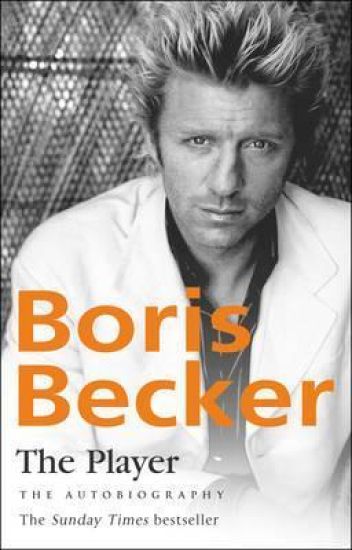
The Player
Boris Becker
Bantam Books (Transworld Publishers a division of the Random House Group)
2011
pokkari
Boris Becker shot to fame in 1985 when at seventeen years old, he became the youngest player ever to win the men's final at Wimbledon. He went on to win two more Wimbledon titles, and a total of forty-nine singles and fifteen doubles crowns, making him one of the greatest players of the twentieth century. But his life off the court has always attracted as much attention as his triumphs on it.Now, in this remarkably candid and thought-provoking autobiography, Boris Becker tells the real story behind the headlines. He speaks of the seconds before the serve that made him the youngest Wimbledon winner of all time, and of the minutes after being sentenced as a tax evader. He talks about his marriage, his illegitimate daughter, and his painful divorce. He reveals his emotions at the end of his tennis career, and his battles with pills and alcohol. He also shares his memories of the good times, the championship wins, the make-or-break matches, and the highs and lows of life on the international circuit.Boris Becker has written this autobiography not just for his fans but also for his children, that they may one day read the true account of their father's remarkable, and often controversial, life.



Modern archaeology and its Reflection in the Value System of Contemporary Culture
Boris Deunert
BAR Publishing
1996
nidottu

As a leading member of the Moscow Popular Front, Kagarlitsky and his associates sought to extend the debate and agitation throughout society as a whole. From the striking coalfields of Siberia and the human chain protests of the Baltic republics to the rallies of the fascist Pamyat and the burgeoning of a Soviet environmental movement, Kagarlitsky listens to and analyses a nation in turmoil.Describing the elections of Spring 1989, Kagarlitsky assesses candidates like Boris Yeltsin, to whom the Popular Front lent critical support. He outlines the way in which the ensuing People's Congress fed a mounting frustration at the gap between promised and actual change. And he points to the dangers of an emerging 'market Stalinism' which could exacerbate social inequity without delivering political freedom.Fall 1989 saw governments throughout Eastern Europe tumble before mass mobilizations of peoples no longer afraid of Soviet intervention. The biggest transformation in global politics since 1945 flowed directly from the opening of discussion between the caucuses of the Soviet Communist Party and the masses it claimed to represent, a debate which is described in these pages with a vividness and insight available only to a participant.Kagarlitsky's testament concludes with a stark account of the escalating difficulties and conflicts facing the government in the early months of 1990 - events signalling, in the author's view, the demise of perestroika itself.

In this book Boris Kagarlitsky offers a trenchant analysis of the break-up of the Soviet Union and the transformation of a section of the old nomenklatura into a new possessing and ruling elite.Kagarlitsky shows that Western commentators have been misled by the street theatre of events like the bungled coup of August 1991 into supposing that a fundamental break has been made with the confused politics and economics of the late Soviet period. He analyses the ill-considered and self-interested attempts made by the nomenklatura to privatize assets and inaugurate a free-market economy, finding an essential continuity between the plans of Gorbachev's and Yeltsin's advisers. He reveals, too, how the new Russian President has displayed a greater capacity to assert dictatorial powers than did the last General Secretary, a tendency which has brought him into repeated conflict with elected bodies.Boris Kagarlitsky is himself a Socialist member of the Moscow Soviet and one of the founders of Russia's new Party of Labour. The Disintegration of the Monolith furnishes both a memorable indictment of the greed and irresponsibility of Russia's new/old rulers and a fascinating account of the slow but unmistakeable awakening of forces of resistance as the peoples of Russia and the other states of the former Soviet Union confront the hyper-inflation, shortages, unemployment and general havoc wreaked by the free-market experiment. Kagarlitsky describes the gradual emergence of a new Russian trade unionism, but warns that popular discontent is also being exploited by nationalist demagogues, such as the leader of Russia's new Liberal Party. For those seeking to understand what has changed in Russia-and what has remained the same-The Disintegration of the Monolith is required reading.

This panoramic account of political culture in the Soviet Union, by one of the leading voices of unofficial radical socialism, examines the way in which cultural life in the arts, philosophy and historiography has been able to withstand the persistent efforts of the "statocracy" to extinguish independent thought.
The collaboration between government and nonprofit organizations is vital to developing and maintaining civil society. Nonprofits & Government challenges simplistic assumptions about what nonprofit organizations can do and how they affect society, as well as how government affects them, and offers tools to guide the development of public policies that affect the nonprofit sector. Practitioners, researchers, and policymakers alike will benefit from the authors' wide-ranging discussion of major policy issues, including a comparison of nonprofit and government resources, regulatory and tax policy, advocacy, devolution, value-based clashes in religion and the arts, non-profits and for-profits, and international perspectives.


Whoo, tarpon, snook, barracuda Florida's saltwaters have always been the best places in the world to catch these and many other feisty game fishes. Now, Boris Arnov, avid Florida fisherman and fishing school proproetor, has written a unique guide to tell you when, where, and how to catch more than 35 varieties of sport fish. Here you'll find the best bait, the best season, the best techniques, and the very best places to make the catch.



Letters Summer 1926
Boris Pasternak; Marina Tsvetayeva; Rainer Maria Rilke
New York Review of Books
2001
nidottu
Edited by Yevgeny Pasternak, Yelena Pasternak, and Konstantin M. Azadovsky The summer of 1926 was a time of trouble and uncertainty for each of the three poets whose correspondence is collected in this moving volume. Marina Tsvetayeva was living in exile in France and struggling to get by. Boris Pasternak was in Moscow, trying to come to terms with the new Bolshevik regime. Rainer Maria Rilke, in Switzerland, was dying. Though hardly known to each other, they began to correspond, exchanging a series of searching letters in which every aspect of life and work is discussed with extraordinary intensity and passion. Letters: Summer 1926 takes the reader into the hearts and minds of three of the twentieth century's greatest poets at a moment of maximum emotional and creative pressure.
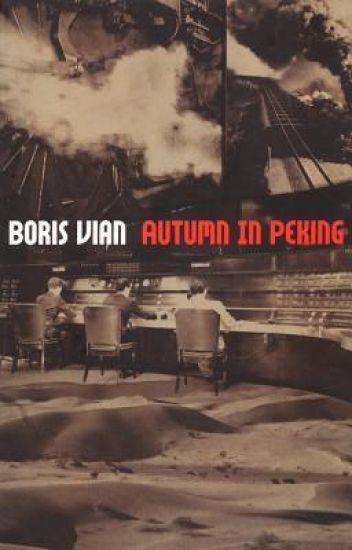
Autumn in Peking takes place in an imaginary desert called Exopotamie, where a train station and a railway line are under construction. Homes are destroyed to lay the lines, which turn out to lead nowhere. In part a satire on the reconstruction of postwar Paris, Vian’s novel also conjures a darker version of Alice in Wonderland.
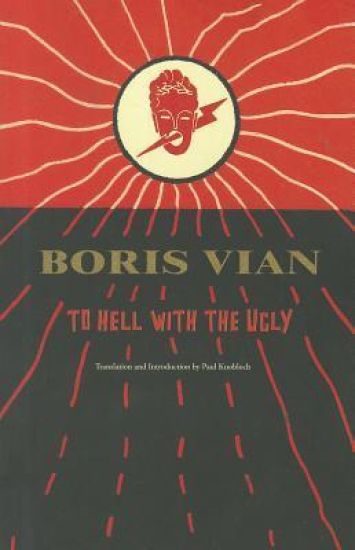
First published in French in 1948, To Hell with the Ugly saw Boris Vian's noir-novelist pseudonym Vernon Sullivan take on Vian's own burlesque pop sensibilities. An erotic crime novel with science fiction tendencies, Sullivan's third outing is described by its translator as "a pornographic Hardy Boys novel set on the Island of Dr. Moreau to a be-bop soundtrack." To Hell with the Ugly recounts the tale of Rock Bailey, a dashing 19-year-old lad determined to hold onto his virginity amidst the postwar jazz-club nightlife of Los Angeles-a resolution challenged by the machinations of the demented Doctor Markus Schutz, who has decided to breed beautiful human beings and found a colony in which ugliness is a genetic crime. Vian's brutal depictions of American race relations in his previous Sullivan novels here give way to a frenetic fantasy of eugenics and uniformity-a parodic anticipation of the cosmetic surgery that was to rule Hollywood over the coming decades, as well as a comic-book reflection on Nazi Germany's visions of a master race. With the novel's breathless domino tumble of fist fights, car chases, kidnappings, and murders, Vian here set out to out-Hollywood Hollywood, serving up a narrative cocktail of Raymond Chandler, H.G.Wells, Brave New World and Barbarella.