Kirjojen hintavertailu. Mukana 12 239 399 kirjaa ja 12 kauppaa.

Kirjahaku

Etsi kirjoja tekijän nimen, kirjan nimen tai ISBN:n perusteella.

1000 tulosta hakusanalla Briel

The Struggle for a Social Europe

The Struggle for a Social Europe

Andreas Bieler

Manchester University Press
2006
sidottu
This book provides a detailed investigation and comparison of the trade unions of five EU member states: Austria, Britain, France, Germany and Sweden, and their positions on Economic and Monetary Union (EMU). Several European-level trade union organisations are also examined. The focus of this project, however, is not limited to EMU as a case study. Rather, EMU is regarded as a vehicle to assess trade unions’ options and possibilities to respond to global structural change in general and to participate in the formation of the future economic-political system of the EU in particular.Two principal hypotheses are investigated. Firstly, that a labour movement’s position on EMU depends crucially on its length and degree of exposure to the competitive pressures of globalisation, and secondly, that those trade unions which lose influence within the domestic institutional set-up are most in favour of the establishment of an industrial relations system and social regulation at the European level to counter global pressures. By contrast, unions which continue to enjoy a strong position at the national level, are less likely to engage in European co-operation.
All Active

All Active

Kiwi Bielenberg

Human Kinetics
2007
pokkari
-Offer 35 creative games and activities suitable for children ages 5 to 12 with and without disabilities-Develop balance, improve fitness, and build locomotor, manipulative, and other skills-Facilitate low-cost or no-cost activities that use common equipment-Use step-by-step instructions and teaching tips to easily implement the activitiesKids love to move—especially when that movement is connected with searching for hidden things, collecting objects, and completing tasks that change the appearance of something. All Active: 35 Inclusive Physical Activities offers ways to get children moving and develop skills by setting fun and challenging goals for them to achieve.Packed with new, creative ideas for facilitating games, All Active offers not just lesson plans but a framework that shows how to use equipment in fun game situations. The games are developmentally appropriate for children ages 5 to 12 years with and without disabilities. Each activity can be customized and adapted, allowing teachers and recreation leaders to use different equipment and adjust the level of difficulty as they create the most meaningful and purposeful setting for their students. The activities can be used in small groups, in a large class, or as stations. An activity finder at the beginning of the book helps teachers and leaders find game ideas.The book includes 37 photos and diagrams to help teachers and leaders see how to set up the activities, and dozens of practical tips make the activities easy to implement. Each activity comes with clear instructions and provides information on objectives, equipment needs, setup, and game play. The “Teacher Tips” at the end of each activity offer suggestions for adapting the game for children with disabilities as well as ways to make the game more or less challenging. Chapter 1 offers a variety of cardiorespiratory activities that also involve the practice of locomotor movement. Chapter 2 provides creative ideas for practicing skills that involve object control, such as throwing, kicking, striking, shooting, and dribbling a ball. In chapter 3, balance and coordination activities will help children work on static balance, body control, and body awareness. Chapter 4 contains games that combine a range of fitness-related skills.All Active: 35 Inclusive Physical Activities will provide teachers and recreation leaders with practical and effective ideas to teach and practice basic motor skills. And it will help kids find purpose—and joy—in movement!
The Latin American Urban Crónica

The Latin American Urban Crónica

Esperança Bielsa

Lexington Books
2006
sidottu
The Latin American Urban Crónica explores the fluid relationship between high and low culture in Latin America. Paying attention to the peculiar development of the cultural fields in Latin America and to the consequences of present processes of globalization, Esperança Bielsa examines the contemporary crónica in Mexico City and Guayaquil and its role in representing unofficial culture in its widest sense. This unique work is the product of the study of numerous texts and interviews with the main writers of crónica and also incorporates extensive research on reception. Essentially interdisciplinary in its approach, The Latin American Urban Crónica is one of the very few publications about this fascinating and understudied mixed genre of the area between journalism and literature, and the first to systematically situate the Latin American crónica within social and cultural theory.
The Latin American Urban Crónica

The Latin American Urban Crónica

Esperança Bielsa

Lexington Books
2006
nidottu
The Latin American Urban Crónica explores the fluid relationship between high and low culture in Latin America. Paying attention to the peculiar development of the cultural fields in Latin America and to the consequences of present processes of globalization, Esperança Bielsa examines the contemporary cr-nica in Mexico City and Guayaquil and its role in representing unofficial culture in its widest sense. This unique work is the product of the study of numerous texts and interviews with the main writers of crónica and also incorporates extensive research on reception. Essentially interdisciplinary in its approach, The Latin American Urban Crónica is one of the very few publications about this fascinating and understudied mixed genre of the area between journalism and literature, and the first to systematically situate the Latin American cr-nica within social and cultural theory.
The Year is '42

The Year is '42

Nella Bielski

Bloomsbury Publishing PLC
2005
nidottu
The year is 1942 and Europe is besieged by war. Germany has defeated most of Europe, is ruling France, and approaching Russia. Three lives are bound together by destiny, although by all appearances could not be further apart. In occupied Paris, Karl, a German officer, has realised that he can no longer ignore the war. An adventurer and traveller, Karl has always avoided politics for the good life, but lately he has begun to question the regime he serves. In Germany, Hans, a fellow officer and old friend of Karl's, has found a way out of the same dilemma. But he knows - with chilling certainty - that his decision can only lead to death. And in Kiev, where the fighting is at its pitch, Katia, a doctor, tries to hold onto her old life as she waits anxiously for her husband's return from one of Stalin's labour camps.
Patriots or Traitors

Patriots or Traitors

Stacey Bieler

Routledge
2003
sidottu
This title sxplores the love-hate relationship between the USA and China through the experience of Chinese students caught between the two countries. The book sheds light on China's ambivelance towards the Western influence, and the use of educational and cultural exhanges as a political device.
Patriots or Traitors

Patriots or Traitors

Stacey Bieler

Routledge
2003
nidottu
This title sxplores the love-hate relationship between the USA and China through the experience of Chinese students caught between the two countries. The book sheds light on China's ambivelance towards the Western influence, and the use of educational and cultural exhanges as a political device.
Onward, Dear Boys

Onward, Dear Boys

Philippe Bieler

McGill-Queen's University Press
2014
sidottu
The Bieler family's vast collection of wartime letters and photographs tell intimate, firsthand stories of five young brothers and their parents. In Onward, Dear Boys, Philippe Bieler skilfully weaves together his own voice with those of his grandparents, his father, and his uncles into a story of war, immigration, and family life. Settling in the province of Quebec, then divided into French-speaking Catholics and English-speaking Anglicans, was a struggle for these devout, francophone Calvinists, but with the unexpected declaration of war in 1914 came an even greater challenge. In 1915 three of the five Bieler boys volunteered with the Princess Patricia Regiment, and in 1916 the fourth son followed. The eldest, Jean, became an assistant to Colonel Birkett, commander of the McGill-financed Canadian Hospital in Boulogne, and the second-eldest, Etienne, was promoted to lieutenant of an artillery brigade. The other two were privates who fought in battles including Sanctuary Wood, the Somme, Vimy, and Passchendaele, and in 1917, the fourth son, Philippe, died at the front. Upon their return to civilian life, the surviving brothers became leaders in government, science, and the arts : the eldest as Deputy Finance Director of the League of Nations, the second as a colleague of Sir Ernest Rutherford in the research of the atom, and the third as President of the Federation of Canadian Artists. The youngest, Jacques, who was too young to go to war, was an instigator of the CCF party, a precursor to the NDP. Enlivened by a wealth of family archival material, Onward, Dear Boys is a poignant story of the experiences of war and its impact on a family of new Canadians during the first decades of the twentieth century.
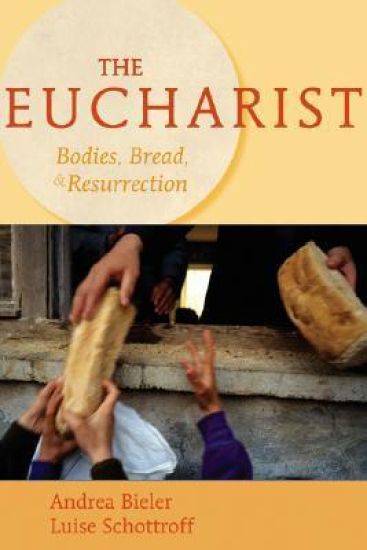
The Eucharist

The Eucharist

Andrea Bieler; Luise Schottroff

Fortress Press,U.S.
2007
pokkari
Bieler and Schottroff bring together the best of contemporary scholarship on ritual theory and practice, Eucharistic origins, the Eucharist and eschatology, the Eucharist and world hunger, the global economy, and the dynamics of torture in a dramatic new vision of the transformative power of the Eucharist for our world. It includes reflection questions that lead readers into the issues raised in each chapter.
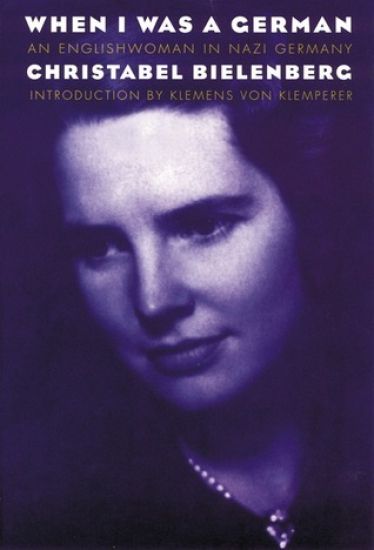
When I Was a German, 1934-1945

When I Was a German, 1934-1945

Christabel Bielenberg

University of Nebraska Press
1998
pokkari
This fascinating glimpse of Nazi Germany is provided by an Englishwoman who was fluent in German and at home in German society, yet not entirely of it. Christabel Bielenberg moved from passive to active resistance as Hitler seized power and the Nazi dictatorship clamped down.
Tramp

Tramp

Joelle Biele

Louisiana State University Press
2018
nidottu
Using newspaper accounts and court records from the late nineteenth and early twentieth centuries, Joelle Biele's poems tell the personal stories of women who left their homes and families to tramp the roads and rails. Driven by poverty, abuse, or a desire for a better life, these women often encountered misery and danger in their quest for freedom, as interviews and printed records attest. In Tramp, Biele weaves these real-life stories into poignant and insightful verse that gives us a window into previously unexplored lives.
The Power of Teacher Talk

The Power of Teacher Talk

Deborah Bieler

Teachers' College Press
2018
nidottu
Blending vivid descriptions of classroom life with equity and language research, the author urges teachers to be aware of and intentional about the power of their interactions with students—in everything from their classroom décor and informal hallway chats to their responses to challenging moments during class and in after-class discussions.
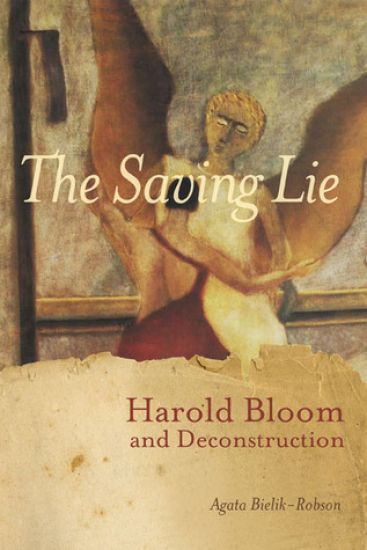
The Saving Lie

The Saving Lie

Agata Bielik-Robson

Northwestern University Press
2011
nidottu
Harold Bloom is our greatest living literary critic. His wide-ranging critical writings have plumbed the depths of Romanticism (The Visionary Company), explored the anxiety caused by the influence of one generation of poets on another (Agon, The Anxiety of Influence), wrestled with the idea of a literary canon (The Western Canon), introduced Jacques Derrida and deconstruction to America (Deconstruction and Criticism), and explored the relationship between religion, especially Judaism, and literature (Kabbalah and Criticism, The Book of J). Bloom is indeed a party of one, a truly strong poet of his own mode of religious-literary criticism, who, in a typically Emersonian manner, makes his own circumstances and sheds influences by incorporating them into his idiosyncratic theory.In this unprecedented full-length study on Harold Bloom, Agata Bielik-Robson explores the many facets of Bloom's critical writings and career. In his work, she argues, Bloom draws on a variety of disparate traditions--Judaism, gnosis, Romanticism, American pragmatism, and Freudianism, but also, especially recently, Victorian aestheticism--that comprise a dialectical, difficult whole in a constant quarrel with itself. Yet, this is precisely the image of life-in-antithesis, which constitutes Bloom's highest speculative achievement, she observes. The Saving Lie brings all these Blooms together and, despite their own tendencies toward dissociation, lets them speak unisono: in one almost harmonious voice that will clearly utter the principles of a new speculative position--Bloom's antithetical vitalism. This study of Bloom and his contributions will not soon be surpassed.
Religious Freedom Under Scrutiny

Religious Freedom Under Scrutiny

Heiner Bielefeldt; Michael Wiener

University of Pennsylvania Press
2019
sidottu
Freedom of religion or belief is deeply entrenched in international human rights conventions and constitutional traditions around the world. Article 18 of the Universal Declaration of Human Rights enshrines the right to freedom of thought, conscience, and religion as does the International Covenant on Civil and Political Rights, which the United Nations General Assembly adopted in 1966. A rich jurisprudence on freedom of religion or belief is based on the European Convention on Human Rights, drafted in 1950 by the Council of Europe. Similar regional guarantees exist in the framework of the Organization of American States as well as within the African Union. Freedom of religion or belief has found recognition in numerous national constitutions, and some governments have shown a particularly strong commitment to the international promotion of this right. As Heiner Bielefeldt and Michael Wiener observe, however, freedom of religion or belief remains a source of political conflict, legal controversy, and intellectual debate. In Religious Freedom Under Scrutiny, Bielefeldt and Wiener explore various critiques leveled at this right. For example, does freedom of religion contribute to the spread of Western neoliberal values to the detriment of religious and cultural diversity? Can religious freedom serve as the entry point for antifeminist agendas within the human rights framework? Drawing on their considerable experience in the field, Bielefeldt and Wiener provide a typological overview and analysis of violations around the world that illustrate the underlying principles as well as the relationship between freedom of religion or belief and other human rights. Religious Freedom Under Scrutiny argues that without freedom of religion or belief, human rights cannot fully address our complex needs, yearnings, and vulnerabilities as human beings. Furthermore, ignoring or marginalizing freedom of religion or belief would weaken the plausibility, attractiveness, and legitimacy of the entire system of human rights.
Independent Intellectuals in the United States, 1910-1945
A new intellectual community came together in the United States in the 1910s and 1920s, a community outside the universities, the professions and, in general, the established centers of intellectual life. A generation of young intellectuals was increasingly challenging both the genteel tradition and the growing division of intellectual labor. Adversarial and anti-professional, they exhibited a hostility to boundaries and specialization that compelled them toward an ambitious and self-conscious generalism and made them a force in the American political, literary, and artistic landscape. This book is a cultural history of this community of free-lance critics and an exploration of their collective effort to construct a viable public intellectual life in America. Steven Biel illustrates the diversity of the body of writings produced by these critics, whose subjects ranged from literature and fine arts to politics, economics, history, urban planning, and national character. Conceding that significant differences and conflicts did exist in the works of individual thinkers, Biel nonetheless maintains that a broader picture of this vibrant culture has been obscured by attempts to classify intellectuals according to political or ideological persuasions. His book brings to life the ways in which this community sought out alternative ways of making a living, devised strategies for reaching and engaging the public, debated the involvement of women in the intellectual community and incorporated Marxism into its evolving search for a decisive intellectual presence in American life. Examined in this lively study are the role and contributions of such figures as Randolph Bourne, Max Eastman, Crystal Eastman, Walter Lippmann, Margaret Sanger, Van Wyck Brooks, Floyd Dell, Edmund Wilson, Mable Dodge, Paul Rosenfeld, H. L. Mencken, Lewis Mumford, Malcolm Cowley, Matthew Josephson, John Reed, Waldo Frank, Gilbert Seldes, and Harold Stearns.
The Lyrics of Civility

The Lyrics of Civility

Kenneth Bielen

CRC Press Inc
1999
sidottu
This book is the first comprehensive scholarly study of religious images in popular music. Examining bestsellers from 1906 to 1971, the work explores the role religious images have in the secularization of American culture. Popular music lyrics that express an adherence to a sacred order are couched in inoffensive, content-less language. These lyrics of civility reflect and shape the increasing secularization of American culture in the twentieth century. The analysis focuses primarily on the way these lyrics reduce the meaning of the terms and theology of the Biblical faith. The aesthetic of civility carries over into theology, the narratives, and the accompanying instrumental arrangements of songs that adhere to the Biblical sacred order.On the other hand, lyrics that reject the Biblical tradition use content-filled, offensive language. The result is that displaced adherents withdraw from the Biblical tradition and turn to alternative cultural religions, or idols of attraction, including popular music, that offer meaning to fill a void in the individual. The secularization of American society, therefore, is not a withdrawal from the idea of religion itself.The analysis focuses on the two dominant themes in songs that include religious images: prayer and heaven. The author explores the songs of the two world wars, the hit parade era, the rhythm and blues and doo-wop of the 1950s, the new folk singer movement, soul music and rock music of the 1960s, and the revival rock of the early 1970s. The work demonstrates the capacity of one form of popular culture to separate adherents from a subculture through diluting the meaning of the language of the subculture's elemental thought.(Ph.D. dissertation, Bowling Green State University, 1994; revised with new preface, bibliography, and index)