

Kirjahaku
Etsi kirjoja tekijän nimen, kirjan nimen tai ISBN:n perusteella.
1000 tulosta hakusanalla Butler E. Brewton


Combined, here, are two, ever-popular types of detective stories - Inland Mysteries and Butler Murder Mysteries. Detective Raymond Masters arrives at Windstone Manor - high atop a tiny, remote, snow blown, island off the Maine Coast - to supervise a Scavenger Hunt designed by Elliott Stone, the aging, despicable, Lord of the Manor, to allow one of his heirs to enhance his or her position in his will. The participants include the five butlers who formerly worked for him (most of whom hate each other and Elliott), and his nephew (a self-centered, amoral, 30-year-old who has lived most of his life at Windstone). Then there is Carl, the old man's lawyer; Bea, his nurse and secretary; Angie, the cook and maid; and Hyde, the current young butler. Five bodies later, Masters (once again surviving a strange little policeman sidekick) solves the cases amid the unrelenting, freezing storm that hold the group captive on the rock amid the raging sea. One of 17 novels in the Raymond Masters Detective Series - reviewed as 'good reads' in cozy murder mysteries, sleuth novels, private detective fiction and detective mysteries.


The Butler is an extraordinary tale of family, difficult decisions and destiny, from the world's favourite storyteller, Danielle Steel.Joachim von Hartmann was born and raised in Buenos Aires by his loving German mother, Liese, along with his identical twin. But when Joachim moves to Paris with Liese in his late teens, his twin enters a dark world and refuses to leave his beloved Argentina. Joachim begins training to be a butler, fascinated by the meticulous precision and intense demands it involves, and goes on to work in some of the grandest homes in England.Olivia White has given ten years of her life to her magazine, which failed, taking all of her dreams with it. A bequest from her mother allows her a year in Paris to reinvent herself. She needs help setting up a home in a charming Parisian apartment. It is then that her and Joachim’s paths cross.Joachim, on a whim, takes a job working for Olivia for a few weeks, which turn to months as the unlikely pair discover they enjoy working side by side. At the same time, Joachim is shocked to learn the family history he never knew, involving his grandfather’s sinister wartime activity, and also to hear news of the dangerous criminal his twin has become. While Olivia struggles to put her life back together, Joachim’s falls apart.Stripped of their old roles, they strive to discover the truth about each other and themselves, first as employer and employee, then as friends. Their paths no longer sure, they are a man and woman who reach a place where the past doesn’t matter and only what they are living now is true.

My Butler: Some thoughts on aging
Lucky Garvin
Createspace Independent Publishing Platform
2016
nidottu
Cheeves is a most excellent butler. He's been with me forever, it seems. Strange to say, I don't remember ever hiring him... He clears his throat sub rosa; there is business for me to attend. In one hand he holds a pewter salver, which, in turn, holds an open message for me. It reads: You are getting older. I know who wrote that note...

The Note-Books of Samuel Butler
Samuel Butler
Createspace Independent Publishing Platform
2016
nidottu
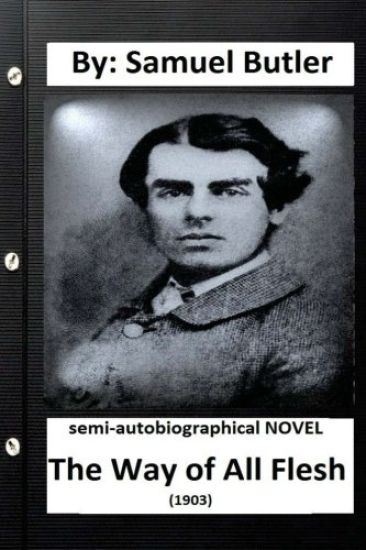
The Way of All Flesh (1903) semi-autobiographical NOVEL By: Samuel Butler ( secound edition )
Samuel Butler
Createspace Independent Publishing Platform
2016
nidottu
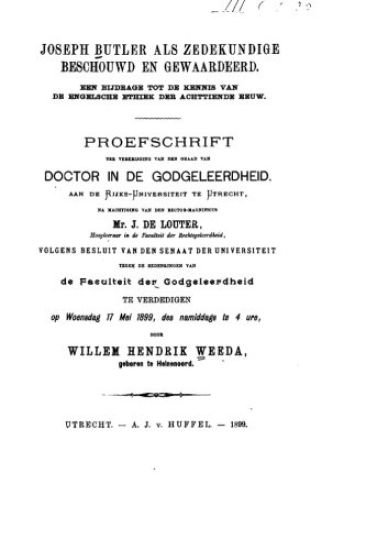
Joseph Butler als zedekundige beschouwd en gewaardeerd
Willem Hendrik Weeda
Createspace Independent Publishing Platform
2016
nidottu
William Butler Yeats and the Irish Literary Revival
Horatio Sheafe Krans
Createspace Independent Publishing Platform
2016
nidottu
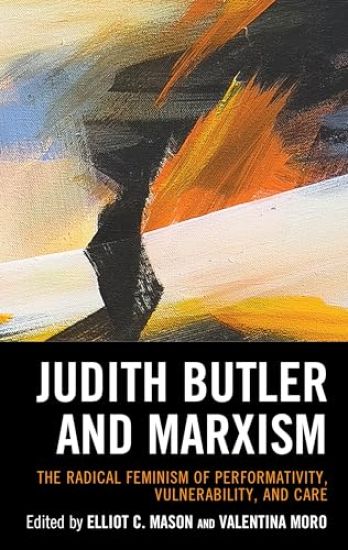
Judith Butler and Marxism
Elliot Mason; Valentina Moro; Elliot C. Mason
ROWMAN LITTLEFIELD
2025
sidottu
What would a Butlerian Marxism look like? Marxist criticisms of Butler range from careful comparisons of forms to the total dismissal of an unpolitical, merely cultural anarchy. None of these criticisms, however, focuses on what seems to most closely unite these two projects: the universal abolition of the universal. While Marxist communism is focused on the abolition of value and property, Butler is consistently concerned throughout their corpus with the abolition of the subject as the universal form of social relations, an abolition staged by way of a relational ontology and ethics. Their methodologies for achieving abolition, however, vary hugely. Butler’s sees the performativity of subjects and power as an opportunity for differential assembly, Marxists are primarily concerned with the working class as a revolutionary vanguard that withdraws its labor from production.Judith Butler and Marxism explores the possibility of a Butlerian Marxism, understood as abolitionist performativity, differential vulnerability, and generalized practices of care. The essays in this volume attempt to actualize the antagonistic persistence of social particulars, pursuing the abolition of the domination and violence that pervade society with increasing brutality. The three sections of this volumeare structured according to three pivotal political concepts in Butler’s corpus: performativity, vulnerability, and care. Each essay contributes to a possible mutual development of Butler’s and Marxism’s concern with assembly, interdependence, and refusal, forming a revolutionary politics of care.This is the first book to fully study the contentious link between the vastly influential projects of Judith Butler and Marxism.

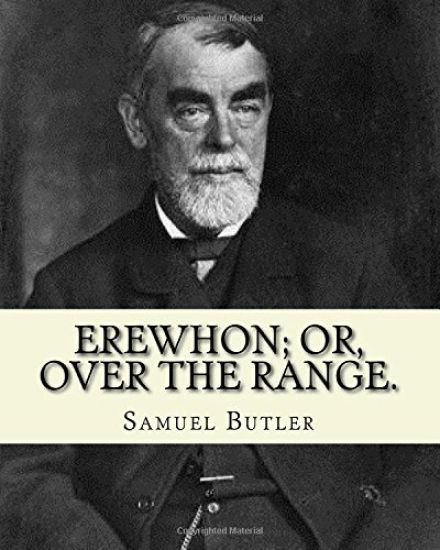
Erewhon; or, Over the range. By: Samuel Butler (4 December 1835 - 18 June 1902): Novel (World's classic's)
Samuel Butler
Createspace Independent Publishing Platform
2016
nidottu
Erewhon: or, Over the Range ( is a novel by Samuel Butler which was first published anonymously in 1872.The title is also the name of a country, supposedly discovered by the protagonist. In the novel, it is not revealed where Erewhon is, but it is clear that it is a fictional country. Butler meant the title to be read as "nowhere" backwards even though the letters "h" and "w" are transposed, as it would have been pronounced in his day (and still is in some dialects of English). The book is a satire on Victorian society. The first few chapters of the novel dealing with the discovery of Erewhon are in fact based on Butler's own experiences in New Zealand where, as a young man, he worked as a sheep farmer on Mesopotamia Station for about four years (1860-64), and explored parts of the interior of the South Island and which he wrote about in his A First Year in Canterbury Settlement (1863).The greater part of the book consists of a description of Erewhon. The nature of this nation is intended to be ambiguous. At first glance, Erewhon appears to be a Utopia, yet it soon becomes clear that this is far from the case. Yet for all the failings of Erewhon, it is also clearly not a dystopia, such as that depicted in George Orwell's Nineteen Eighty-Four. As a satirical utopia, Erewhon has sometimes been compared to Gulliver's Travels (1726), a classic novel by Jonathan Swift; the image of Utopia in this latter case also bears strong parallels with the self-view of the British Empire at the time. It can also be compared to the William Morris novel, News from Nowhere. Erewhon satirises various aspects of Victorian society, including criminal punishment, religion and anthropocentrism. For example, according to Erewhonian law, offenders are treated as if they were ill, whereas ill people are looked upon as criminals. Another feature of Erewhon is the absence of machines; this is due to the widely shared perception by the Erewhonians that they are potentially dangerous. This last aspect of Erewhon reveals the influence of Charles Darwin's evolution theory; Butler had read On the Origin of Species soon after it was published in 1859..... Samuel Butler (4 December 1835 - 18 June 1902) was an iconoclastic Victorian-era English author who published a variety of works. Two of his most famous pieces are the Utopian satire Erewhon and a semi-autobiographical novel published posthumously, The Way of All Flesh. He is also known for examining Christian orthodoxy, substantive studies of evolutionary thought, studies of Italian art, and works of literary history and criticism. Butler made prose translations of the Iliad and Odyssey, which remain in use to this day.Butler was born on 4 December 1835 at the rectory in the village of Langar, near Bingham, Nottinghamshire, England, to the Rev. Thomas Butler, son of Dr. Samuel Butler, then headmaster of Shrewsbury School and later Bishop of Lichfield. Dr Butler was the son of a tradesman and descended from a line of yeomen, but his scholarly aptitude being recognised at young age, was sent to Rugby and Cambridge, where he distinguished himself and launched his successful career. His only son Thomas wished to go into the Navy, but succumbed to paternal pressure and entered the Church, in which he led a wholly undistinguished career, all the more so in contrast with his father's. It has been suggested that this family dynamic had some impact on Samuel, insofar as it created the oppressive home environment (chronicled in The Way of All Flesh) which formed his approach to the world. Thomas Butler, states one critic, "to make up for having been a servile son, became a bullying father."..............
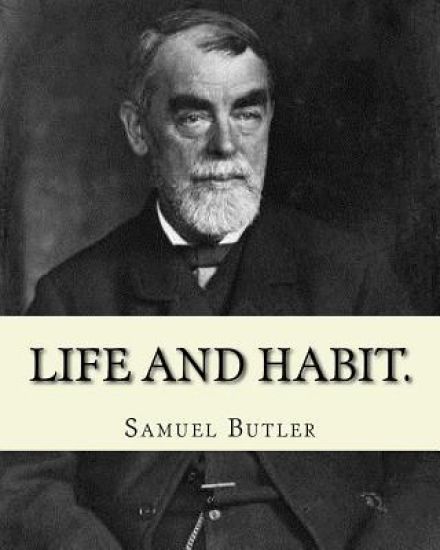
Life and habit. By: Samuel Butler (4 December 1835 - 18 June 1902): Novel (World's classic's)
Samuel Butler
Createspace Independent Publishing Platform
2016
nidottu

Selections from previous works, with remarks on G. J. Romanes' "Mentl evolution in animals", and A psalm of Montreal (1890). By: Samuel Butler
Samuel Butler
Createspace Independent Publishing Platform
2016
nidottu

Erewhon revisited twenty years later both by the original discoverer of the country and by his son. By: Samuel Butler(4 December 1835 - 18 June 1902)
Samuel Butler
Createspace Independent Publishing Platform
2016
nidottu
Erewhon Revisited Twenty Years Later, Both by the Original Discoverer of the Country and by His Son (1901) is a satirical novel by Samuel Butler, forming a belated sequel to his Erewhon (1872).The Cambridge History of English and American Literature judges that it "has less of the free imaginative play of its predecessor...but, in sharp brilliance of wit and criticism, in intellectual unity and coherence, it surpasses Erewhon". Erewhon, set in a thinly disguised New Zealand, ended with the escape of its unnamed protagonist from the native Erewhonians by balloon. In the sequel, narrated by his son John, we are told that our hero's name is Higgs. Higgs returns to Erewhon and meets his former lover Yram, who is now the mother of his son George. He discovers that he is now worshipped as "the Sunchild", his escape having been interpreted as an ascension into heaven, and that a church of Sunchildism has sprung up. He finds himself in danger from the villainous Professors Hanky and Panky, who are determined to protect Sunchildism from him. With George's help Higgs escapes from their clutches and returns to England. The Swiftian device of setting his satire in a fictional culture enabled Butler, as the critic Elinor Shaffer has written, "to analyse the phenomena of religion from their point of genesis, while disclaiming all responsibility for their uncanny parallels to certain known religions." It did not however make the road to publication any easier. When Butler submitted the manuscript to the respectable and long-established house of Longman, who had in recent years become his regular publishers, they rejected it for fear of offending their High Church clientele, even when Butler offered to pay the costs himself. On March 24, 1901 he wrote to George Bernard Shaw, conceding that the book was "far more wicked than Erewhon", and asking for his advice.Shaw replied recommending his own publisher, Grant Richards, and lost no time introducing Butler to him. The book duly came out under the Grant Richards imprint................ Samuel Butler (4 December 1835 - 18 June 1902) was an iconoclastic Victorian-era English author who published a variety of works. Two of his most famous pieces are the Utopian satire Erewhon and a semi-autobiographical novel published posthumously, The Way of All Flesh. He is also known for examining Christian orthodoxy, substantive studies of evolutionary thought, studies of Italian art, and works of literary history and criticism. Butler made prose translations of the Iliad and Odyssey, which remain in use to this day.Butler was born on 4 December 1835 at the rectory in the village of Langar, near Bingham, Nottinghamshire, England, to the Rev. Thomas Butler, son of Dr. Samuel Butler, then headmaster of Shrewsbury School and later Bishop of Lichfield. Dr Butler was the son of a tradesman and descended from a line of yeomen, but his scholarly aptitude being recognised at young age, was sent to Rugby and Cambridge, where he distinguished himself and launched his successful career. His only son Thomas wished to go into the Navy, but succumbed to paternal pressure and entered the Church, in which he led a wholly undistinguished career, all the more so in contrast with his father's. It has been suggested that this family dynamic had some impact on Samuel, insofar as it created the oppressive home environment (chronicled in The Way of All Flesh) which formed his approach to the world. Thomas Butler, states one critic, "to make up for having been a servile son, became a bullying father." In any event, Samuel Butler's relationship with his parents, and especially with his father, was largely antagonistic. His education began at home and included frequent beatings, as was not uncommon at the time. Samuel, however, found his parents particularly "brutal and stupid by nature,"and their relationship to him never progressed beyond the adversarial...............

Profiles On Success with Carl Butler: Proven Strategies from Today's Leading Experts
Carl Butler
Createspace Independent Publishing Platform
2016
nidottu

Ideas of Good and Evil (1903) by: William Butler Yeats
William Butler Yeats
Createspace Independent Publishing Platform
2017
nidottu