

Kirjahaku
Etsi kirjoja tekijän nimen, kirjan nimen tai ISBN:n perusteella.
1000 tulosta hakusanalla Charles Capper



Charles Tyrrell, in Three Volumes, Vol. III, Pp. 481-716
George Payne Rainsford James
Trieste Publishing
2018
nidottu

Memoirs of Charles Lee Lewes, Containing Anecdotes, Historical and Biographical, of the English and Scottish Stages, During a Period of Forty Years; In Four Volumes, Vol. I
Charles Lee Lewes
Trieste Publishing
2018
nidottu

Some Recollections by Captain Charles P. Low, Commending the Clipper Ships Houqua, Jacob Bell, Samuel Russell, and N.B. Palmer, in the China Trade, 1847-1873
Charles P Low
Trieste Publishing
2018
nidottu

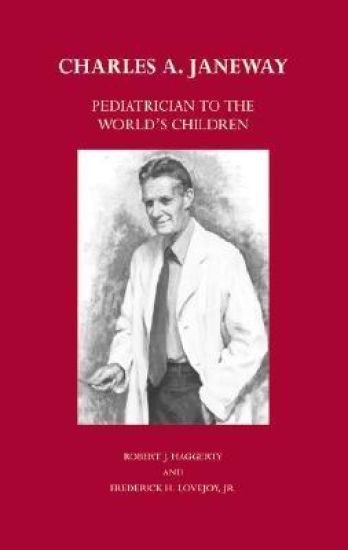
This biography of one of the most prominent pediatricians of the twentieth century describes his illustrious medical family and his remarkable tenure of nearly three decades as Thomas Morgan Rotch Professor of Pediatrics at Harvard Medical School and head of the department of medicine at Children's Hospital, Boston. During this period Janeway built the first department of pediatrics in the nation with subspecialties based upon the new developments in basic sciences. Janeway and his colleagues defined the gamma globulin disorders that resulted in children's increased susceptibility to infections and associated arthritic disorders. Janeway was the most visible U.S. pediatrician on the world scene in the last half of the 20th century. He traveled widely, taught modern pediatrics to thousands of physicians throughout the developing world, and brought many of them to the U.S. for further training. He was instrumental in starting teaching hospitals in Shiraz, Iran, and Cameroon. Janeway believed that through teaching by example he might further the cause of peace in the world. His life is an inspiration to everyone in medicine, and serves as a model that all can seek to improve the health of the world's millions and promote a more peaceful future.
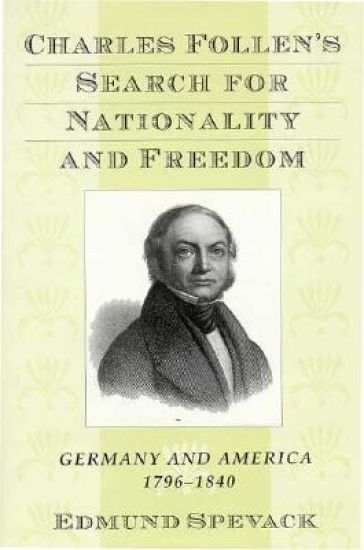
Charles Follen's Search for Nationality and Freedom
Edmund Spevack
Harvard University Press
1997
sidottu
This unique account of the life of German nationalist and revolutionary Charles Follen opens a window on several worlds during the first half of the nineteenth century. Seldom does one biography embrace so many important historical issues and events.Trained as a lawyer in his native Germany, Follen was involved in student nationalism, eventually turning to revolutionary Jacobinism. He fled to Switzerland in 1819 after conspiring in the first political murder of modern German history--the assassination of the playwright August von Kotzebue. In Switzerland, Follen secretly continued activities for revolutionizing Germany. When his plans were discovered in 1824, he fled to America. For ten years, Follen taught at Harvard; he was the first professor of German literature at an American institution of higher learning. He played a central role in the early importation of German ideas to New England, contributing to the fields of literature, philosophy, and theology. His marriage to Eliza Lee Cabot allowed him to move in elite Boston social circles. After his ordination as a Unitarian minister in 1836, Follen combined his interest in social reform (including an ardent devotion to the antislavery movement) with clerical service. Unitarian leader William Ellery Channingand abolitionist William Lloyd Garrison became Follen's close friends.During the last two years of his life, Follen began to doubt his own power to bring about political change and suffered a crisis in self-confidence before his accidental death at the age of forty-three.
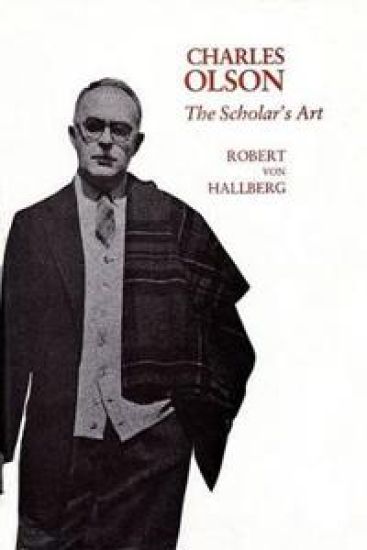
Charles Olson is often described as one of the most influential American poets of the last quarter century; some would rather describe him as a cult figure, prophet of the Black Mountain poets and their descendants. Both judgments refer to an influence exerted as much through theories as through poems. Here is an examination of Olson's understanding of poetry that is cogent and a pleasure to read. It provides the framework needed for understanding Olson's work.Mr. von Hallberg shows us the Olson of the 1950s, who tried to bring change through teaching, who wanted poetry to communicate knowledge, as well as the more private poet of the 1960s, turning from history to myth. Olson's ambitions for poetry were based on his sense of cultural politics, and the author studies the relation between Olson's politics and his poetics. He traces too Olson's relation to older poets, especially Ezra Pound and William Carlos Williams. His book will interest anyone reading contemporary American poetry.

Collected Papers of Charles Sanders Peirce
Charles Sanders Peirce
Harvard University Press
1932
sidottu
Charles Sanders Peirce has been characterized as the greatest American philosophic genius. He is the creator of pragmatism and one of the founders of modern logic. James, Royce, Schroder, and Dewey have acknowledged their great indebtedness to him. A laboratory scientist, he made notable contributions to geodesy, astronomy, psychology, induction, probability, and scientific method. He introduced into modern philosophy the doctrine of scholastic realism, developed the concepts of chance, continuity, and objective law, and showed the philosophical significance of the theory of signs and mathematical logic. The present series is the first published edition of his systematic works.

Collected Papers of Charles Sanders Peirce
Charles Sanders Peirce
Harvard University Press
1933
sidottu
This volume contains the published contributions of one of the founders of modern logic and America’s greatest logical genius. It is not only of historical but of contemporary interest because of its many acute discussions of fundamental logical problems. To assist the general reader, the editors have prefixed to the text a selected list of important topics and have provided many footnotes and an exhaustive index.The present, the longest volume of the series of Peirce’s Collected Papers, reveals most clearly his stature as a logician and a student of the foundations of mathematics. It includes not only some striking anticipations of recent work in logic and the foundations of mathematics but also a number of vital contributions to these subjects as now understood. In addition there is an entirely original treatment of logical diagrams which makes possible a detailed analysis of the process of reasoning and provides the link between modern logic and Peirce’s conception of pragmatism. It is the most advanced and important of the volumes on exact logic.

Collected Papers of Charles Sanders Peirce
Charles Sanders Peirce
Harvard University Press
1935
sidottu
With the present volume, the presentation of Peirce’s philosophical thought reaches its metaphysical culmination. It embodies the effort of the founder of Pragmatism to develop a metaphysics which will conform to the canons of scientific method, and at the same time provide for real novelty, objective universal laws of nature, cosmical and biological evolution, feeling, and mind. To his previously published papers on chance, continuity, God, and other metaphysical themes, the editors have added a considerable number of unpublished manuscripts which clarify and develop the implications of Peirce’s fundamental world-view. The volume contains those speculative views of Peirce which so deeply influenced his contemporaries, including his discussions of tychism and synechism and of the religious aspects of metaphysics.

Collected Papers of Charles Sanders Peirce
Charles Sanders Peirce
Harvard University Press
1958
sidottu
The first six volumes of the Collected Papers of Charles Sanders Peirce included Peirce’s main writings in general philosophy, logic (deductive, inductive, and symbolic), pragmatism, and metaphysics. Volumes VII and VIII are a continuation of this series. Originally published as two separate volumes, they now appear in one book as part of the Belknap Press edition. Volume VII contains papers on experimental science, scientific method, and philosophy of mind. Volume VIII contains selections from Peirce’s reviews and correspondence and a bibliography of his published works, speeches and correspondence, and works by other authors which quote or describe manuscripts by Peirce which are not included in Volumes I–VIII of Collected Papers.As is true of the series as a whole, the material in these volumes is not readily accessible elsewhere. Many of the manuscripts have never been published before, and the previously published material which is included is widely scattered in a number of journals.Peirce’s work in experimental science played an important role in his life and in the formation of his philosophy, and Volume VII is designed to show how the principal focus of his attention shifted from this sphere to the methods of science and finally to speculative metaphysics. Thus it includes his only published article in experimental psychology and two short pieces on gravity as well as the most important part of “The Logic of 1873” (in which pragmatism was first formulated in writing); “The Logic of Drawing History from Ancient Documents,” discussion of the historical method; “Economy of Research” (1879), containing many pertinent reflections on scientific methodology of interest to research directors today; and much more.America’s first original philosopher and logician, and the founder of the philosophy of pragmatism, Peirce was also influential in shaping the thinking of such figures as William James and John Dewey. The reviews and correspondence contained in Volume VIII show his attitude toward these philosophies and illustrate the nature of his relationships with the great thinkers of his day.The bibliography in Volume VIII lists chronologically all of Peirce’s known published works, giving a clear picture of the development of his thought from 1860 through 1911. It is more complete than any published so far in that many new items are included and items previously listed in different sources are here brought together.These volumes will be of great value to all persons interested in philosophy, scientific method, psychology, the methodology of history, and American studies in general.

In these volumes the second decade of the sixty-year diary of Charles Francis Adams, the third of the family’s statesmen, is begun. As was true of the two earlier volumes of the Diary, the section appearing here has not before reached print.Covering the period from Adams’s marriage in September 1829 to the end of 1832, these volumes record the early years of his maturity during which he was seeking to find his vocation. Engaged in the day-to-day management of John Adams’s business interests in Boston, he nevertheless had no inclination toward commerce or the active practice of law. Son and grandson of presidents, proud heir to a name already great and controversial in American politics, he also at this time considered himself “not fitted for the noise of public life.” Dependent for support on his father and father-in-law but determined to maintain his independence, he devoted his available time to a program of studies and writing that would prepare him for a career he hesitated to name but in which he wished distinction. His own public career still years away, he was drawn at this period to the study of American history and his famous grandparents’ papers, an effort that would continue and that would make him the family’s archivist and editor.These volumes offer manifold opportunities for an enlarged understanding of a complex and able man who was later to assume positions of high responsibility. In addition to furnishing innumerable personal and familial insights, this portion of the diary is of capital importance for the historian of society and culture. Probably no more detailed and faithful record exists of Boston life in the period.

A man’s twenty-seventh year is “critical,” according to Charles Francis Adams. And so his proved to be. Twenty-five at the start of these volumes, Adams had yet to embark on the public career that would mark him a statesman, but by their conclusion he had been drawn into the maelstrom of politics. It was an unwilling plunge, dictated by what both he and his father, John Quincy Adams, regarded as betrayal of the elder Adams by Daniel Webster and his Whigs. Once in, however, he showed himself politically adept.This diary, kept from January 1833 to June 1836 and hitherto unpublished, has elements of hidden personal drama. Through private meetings and caucuses and newspaper articles signed with pseudonyms, the younger Adams found effective means to carry on political activities in the face of dilemmas posed by his father’s public prominence, his father-in-law’s contrary persuasions, and his own preferences. He emerged with growing self-respect and solid accomplishment as political journalist—his initial vocation.The diary has fresh disclosures also about the personality of John Quincy Adams, shrewdly assessed by an observer uniquely placed to interpret domestic scenes as well as the greatly waged struggles in Washington against the Southern “slaveocracy” and “gag rules.”Colorful figures in Boston’s political and social life are finely etched in outspoken appraisals characteristic of the Adamses. The diarist shows acuteness too in comments on books, sermons, paintings, the theater, and opera.

The period of June 1836 to February 1840, from Charles Francis Adams’s twenty-eighth to thirty-second year, was characterized by his turn from the political activities that had occupied him for the preceding several years. The course of the Van Buren administration he had helped to elect dissatisfied him, the Massachusetts Whig leadership had earned his distrust, positions on political issues that would either echo or oppose those being vigorously espoused by his father, John Quincy Adams, he felt inhibited from avowing publicly. So confronted, Charles found occupation in preparing and expressing himself on economic matters of moment—banking and currency—and moral questions generated by the slavery issue. With increasing effectiveness he employed the lecture platform and the press for the expression of views to which he felt free to attach his name. On all these matters he found his opinions at odds with the prevailing ones held among those prominent in the Boston scene, as John Adams and John Quincy Adams had found before him. Yet, despite a sense of loneliness, so induced, his participation in the varied social life of the city has its place in the Diary.However, activities in Boston and its environs that provided a focus for the record of the preceding years give way in these volumes to wider scenes made available by train and ship. An extensive journey with his wife by way of the Hudson River and the Erie Canal to Niagara and Canada, a visit of some length and interest in Washington, and stays of lesser length in New York City are recounted.Wide and persistent reading, the theater, numismatics, and the building of a summer home in Quincy also occupied him and are fully reflected in his journal. Family tragedies are not absent from its pages. As the period comes to its close his long and distinguished labors as editor of the family’s papers had begun. A new self-assurance has become evident.
Charles Dickens's Letters to Charles Lever
Dickens; Hyder E Rollins
Harvard University Press
1933
sidottu
