Kirjojen hintavertailu. Mukana 12 390 323 kirjaa ja 12 kauppaa.

Kirjahaku

Etsi kirjoja tekijän nimen, kirjan nimen tai ISBN:n perusteella.

1000 tulosta hakusanalla Charles Locks

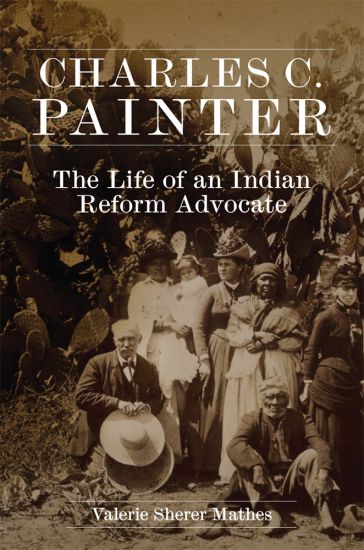
Charles C. Painter

Charles C. Painter

Valerie Sherer Mathes

University of Oklahoma Press
2020
sidottu
Charles Cornelius Coffin Painter (1833-89), clergyman turned reformer, was one of the foremost advocates and activists in the late-nineteenth-century movement to reform U.S. Indian policy. Very few individuals possessed the influence Painter wielded in the movement, and Painter himself published numerous pamphlets for the Indian Rights Association (IRA) on the Southern Utes, Eastern Cherokees, California Indians, and other Native peoples. Yet this is the first book to fully consider his unique role and substantial contribution. Born in Virginia, Painter spent most of his life in Great Barrington, Massachusetts, commuting to New York City and Washington, D.C., initially as an agent of the American Missionary Association (AMA), later as an appointed member of the Board of Indian Commissions (BIC), and most significant, as the Indian Rights Association's D.C. agent. In these capacities he lobbied presidents and Congress for reform, conducted extensive investigations on reservations, and shaped deliberations in such reform bodies as the BIC and the influential Lake Mohonk conferences. Mining an extraordinary wealth of archival material, Valerie Sherer Mathes crafts a compelling account of Painter as a skilled negotiator with Indians and policymakers and as a tireless investigator who traveled to far-flung reservations, corresponded with countless Indian agents, and drafted scrupulously researched reports on his findings. Recounted in detail, his many adventures and behind-the-scenes activities - promoting education, striving to prevent the removal of the Southern Utes from Colorado, investigating reservation fraud, working to save the Piegans of Montana from starvation - afford a clear picture of Painter's importance to the overall reform effort to incorporate Native Americans into the fabric of American life. No other book so effectively captures the day-to-day and exhausting work of a single individual on the front lines of reform. Like most of his fellow advocates, Painter was an unapologetic assimilationist, a man of his times whose story is a key chapter in the history of the Indian reform movement.
Charles C. Painter

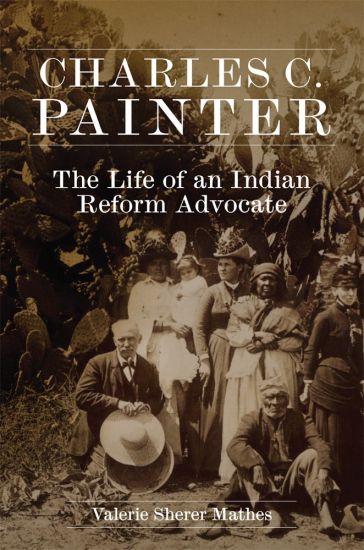
Charles C. Painter

Valerie Sherer Mathes

UNIVERSITY OF OKLAHOMA PRESS
2022
nidottu
Charles Cornelius Coffin Painter (1833–89), clergyman turned reformer, was one of the foremost advocates and activists in the late-nineteenth-century movement to reform U.S. Indian policy. Very few individuals possessed the influence Painter wielded in the movement, and Painter himself published numerous pamphlets for the Indian Rights Association (IRA) on the Southern Utes, Eastern Cherokees, California Indians, and other Native peoples. Yet this is the first book to fully consider his unique role and substantial contribution. Born in Virginia, Painter spent most of his life in Great Barrington, Massachusetts, commuting to New York City and Washington, D.C., initially as an agent of the American Missionary Association (AMA), later as an appointed member of the Board of Indian Commissions (BIC), and, most significant, as the Indian Rights Association’s D.C. agent. In these capacities he lobbied presidents and Congress for reform, conducted extensive investigations on reservations, and shaped deliberations in such reform bodies as the BIC and the influential Lake Mohonk conferences. Mining an extraordinary wealth of archival material, Valerie Sherer Mathes crafts a compelling account of Painter as a skilled negotiator with Indians and policymakers and as a tireless investigator who traveled to far-flung reservations, corresponded with countless Indian agents, and drafted scrupulously researched reports on his findings. Recounted in detail, his many adventures and behind-the-scenes activities—promoting education, striving to prevent the removal of the Southern Utes from Colorado, investigating reservation fraud, working to save the Piegans of Montana from starvation—afford a clear picture of Painter’s importance to the overall reform effort to incorporate Native Americans into the fabric of American life. No other book so effectively captures the day-to-day and exhausting work of a single individual on the front lines of reform. Like most of his fellow advocates, Painter was an unapologetic assimilationist, a man of his times whose story is a key chapter in the history of the Indian reform movement.
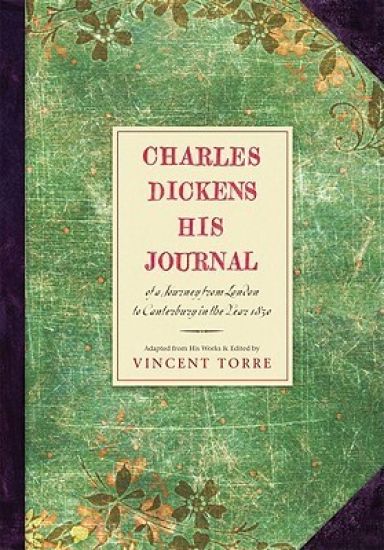
Charles Dickens: His Journal

Charles Dickens: His Journal

George Braziller Inc
2010
sidottu
Before finding a place as a celebrated author and household name, Charles Dickens was the beleaguered son of a perpetually impoverished family, proving a failure at everything from court reporting to pot polishing. This story, adapted from his cherished works of fiction, imagines his life at this young age. In the entries of "Charles Dickens: His Journal", we meet a floundering Dickens just as he throws up his hands, withdraws his paltry savings, and sets out for Canterbury like the pilgrims of old. He places himself in the hands of the world, depending in part on the strength of his last shillings, in part on his own quick wits, but most of all upon the patchy hospitality of unforgettable characters he meets along the way. Can we believe what we read? According to Dickens, all of his tales are true reflections of life - fragmentary and highly improbable. For readers unfamiliar with the author's work, this is a remarkable introduction to Dickens' brilliant humour and to his indelible characters, who come to life as soon as we read their names.For Dickens enthusiasts, this is a smart, exhilarating romp through the pages of a timeless writer, celebrating caricatures and scenes too often overlooked.
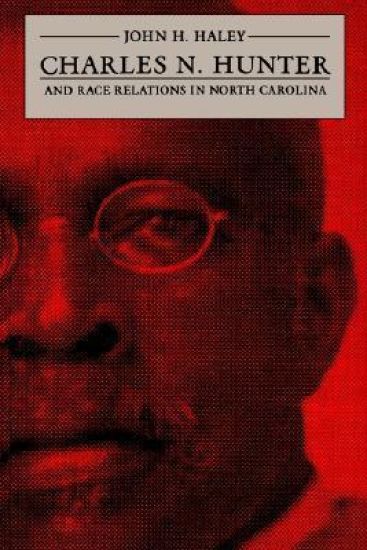
Charles N. Hunter and Race Relations in North Carolina

Charles N. Hunter and Race Relations in North Carolina

Haley John H.

The University of North Carolina Press
1987
nidottu
Charles N. Hunter, one of North Carolina's outstanding black reformers, was born a slave in Raleigh around 1851, and he lived there until his death in 1931. As public school teacher, journalist, and historian, Hunter devoted his long life to improving opportunities for blacks. A political activist, but never a radical, he skillfully used his journalistic abilities and his personal contacts with whites to publicize the problems and progress of his race. He urged blacks to ally themselves with the best of the white leaders, and he constantly reminded whites that their treatment of his race ran counter to their professed religious beliefs and the basic tenets of the American liberal tradition. By carefully balancing his efforts, Hunter helped to establish a spirit of passive protest against racial injustice. John Haley's compelling book, largely based on Hunter's voluminous papers, affords a unique opportunity to view race relations in North Carolina through the eyes of a black man. It also provides the first continuous survey of the black experience in the state from the end of the Civil War to the Great Depression, an account that critiques the belief that race relations were better in North Carolina than in other southern states.
Charles Brantley Aycock

Charles Brantley Aycock

The University of North Carolina Press
2011
nidottu
Orr traces Aycock's growth from farm boy to practicing lawyer and on to that final eminence in which his fame spread beyond the state in connection with his brilliant oratory, his interest in public education, and his devotion to the Democratic party. His life became a legend long before he died, at the age of fifty-two, delivering an address titled Universal Education.Originally published in 1961.A UNC Press Enduring Edition -- UNC Press Enduring Editions use the latest in digital technology to make available again books from our distinguished backlist that were previously out of print. These editions are published unaltered from the original, and are presented in affordable paperback formats, bringing readers both historical and cultural value.
Charles Nodier

Charles Nodier

Sarah Fore Bell

The University of North Carolina Press
1971
nidottu
This is a critical bibliography of the Nodier studies and editions of his works that appeared between 1923 and 1967. Part I presents a chronological bibliography of studies on Nodier and annotates each entry. Part II comprises a tentative list of the republications of works by Nodier, indicating those of special interest.
Charles Waddell Chesnutt

Charles Waddell Chesnutt

Chesnutt Helen M.

The University of North Carolina Press
2011
nidottu
The driving force in Chesnutt's life was the wish to help his race. Long before the days of the NAACP, which he later joined, and to the end of his life, he lectured, wrote,and corresponded on the everlasting problem."" His letters reveal courage and good sense with which he faced racial discrimination.""A UNC Press Enduring Edition -- UNC Press Enduring Editions use the latest in digital technology to make available again books from our distinguished backlist that were previously out of print. These editions are published unaltered from the original, and are presented in affordable paperback formats, bringing readers both historical and cultural value.
Charles I and the Popish Plot

Charles I and the Popish Plot

The University of North Carolina Press
2011
nidottu
Hibbard begins by setting court Catholicism in the context of English court alignments on domestic and foreign policy. She then describes public reaction to royal policy and court Catholicism and the use parliamentary leaders made of anti-Catholicism from 1640 to 1642. In this first study to focus on both the perceptions and the reality of popish plotting,"" Hibbard concludes that behind the exaggerated claims lay genuine anxieties that historians should begin to take seriously.""A UNC Press Enduring Edition -- UNC Press Enduring Editions use the latest in digital technology to make available again books from our distinguished backlist that were previously out of print. These editions are published unaltered from the original, and are presented in affordable paperback formats, bringing readers both historical and cultural value.
Charles Cotesworth Pinckney

Charles Cotesworth Pinckney

The University of North Carolina Press
2011
nidottu
Pinckney's lifetime as a leading member of the southern oligarchy is important to an understanding of that group's assumptions about itself, its aspirations, and its exacting standards of public and private conduct for its leaders. It also provides insight into the development of the Federalist and Republican parties in the South and vividly demonstrates the effects of the national party system on the old regime of state politics in South Carolina.A UNC Press Enduring Edition -- UNC Press Enduring Editions use the latest in digital technology to make available again books from our distinguished backlist that were previously out of print. These editions are published unaltered from the original, and are presented in affordable paperback formats, bringing readers both historical and cultural value.
Charles Deering and Ramón Casas

Charles Deering and Ramón Casas

Isabel Coll Mirabent

Northwestern University Press
2012
sidottu
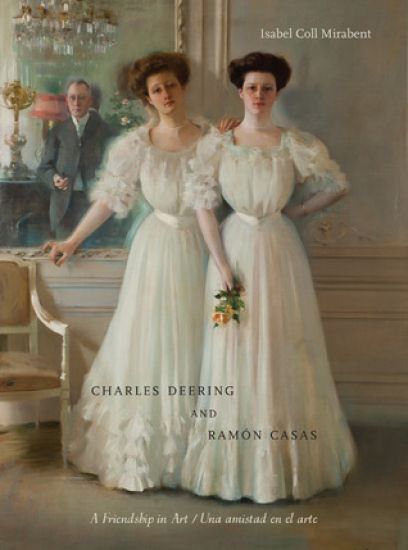
This lavishly illustrated, bilingual art book presents drawings by Ramón Casas in the Charles Deering McCormick Library of Special Collections at the Northwestern University Library and oil paintings by Casas from private collections and the Art Institute of Chicago. Charles Deering and Ramón Casas follows the development and dramatic dissolution of a three-way friendship that connected the Spanish painter Ramón Casas (1866–1932); the Chicago industrialist Charles Deering (1852–1927), who was a collector and admirer of Casas’s work as well as a patron of Northwestern University; and the Spanish artist Miguel Utrillo (1862–1934), Casas’s lifelong friend and the father of the French painter Maurice Utrillo. Casas introduced Deering to Sitges, a beach town near Barcelona, Spain, where the latter created a palatial estate with a museum to house his art collection. Miguel Utrillo served as director of the museum. The text explores the treasures housed at Maricel and what happened among the three men that led Casas to abandon Utrillo and Deering to depart Spain, taking his art collection with him.
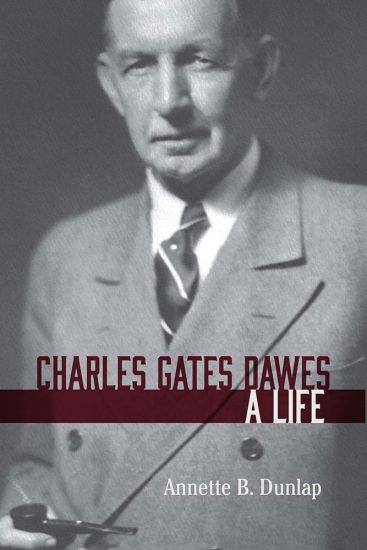
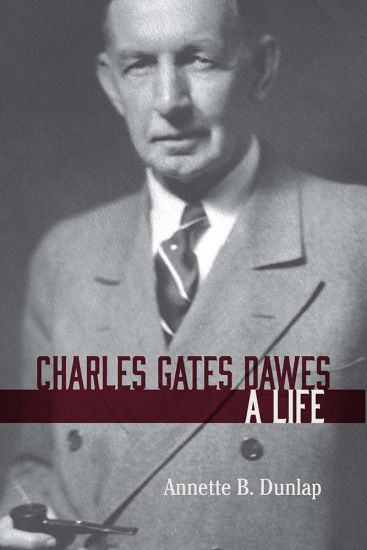
Charles Gates Dawes

Charles Gates Dawes

Annette B. Dunlap

Northwestern University Press
2016
nidottu
Charles Gates Dawes: A Life is the first comprehensive biography of an American in whose fascinating story contemporary readers can follow the struggles and triumphs of early twentieth-century America and Europe.Dawes is most known today as vice president of the United States under Calvin Coolidge, but he also distinguished himself and his hometown of Evanston, Illinois, on the world stage with the 1925 Nobel Peace Prize. This engrossing biography traces how, when the punitive armistice that ended the First World War resulted in a disabled, restive Germany, Dawes’s diplomatic legerdemain averted war through a renegotiation of Germany’s debt repayments.Dawes’s diplomatic and political achievements, however, were only the illustrious capstones to a multifaceted career that included military service, law, finance, and business on the local, state, national, and global stages. In every arena of his life, he combined the social graces of the Gilded Age with the spirit of service of the Progressive Era.Despite his life of disciplined service, Dawes was an ebullient and irrepressible figure. Dawes’s salty language was often colorful fodder for tabloid and magazine writers of his era. In this captivating biography, Annette B. Dunlap recounts the story of an original American who enlightened and enlivened his world.
Charles Gates Dawes

Charles Gates Dawes

Annette B. Dunlap

Northwestern University Press
2016
sidottu
Charles Gates Dawes: A Life is the first comprehensive biography of an American in whose fascinating story contemporary readers can follow the struggles and triumphs of early twentieth-century America and Europe.Dawes is most known today as vice president of the United States under Calvin Coolidge, but he also distinguished himself and his hometown of Evanston, Illinois, on the world stage with the 1925 Nobel Peace Prize. This engrossing biography traces how, when the punitive armistice that ended the First World War resulted in a disabled, restive Germany, Dawes’s diplomatic legerdemain averted war through a renegotiation of Germany’s debt repayments.Dawes’s diplomatic and political achievements, however, were only the illustrious capstones to a multifaceted career that included military service, law, finance, and business on the local, state, national, and global stages. In every arena of his life, he combined the social graces of the Gilded Age with the spirit of service of the Progressive Era.Despite his life of disciplined service, Dawes was an ebullient and irrepressible figure. Dawes’s salty language was often colorful fodder for tabloid and magazine writers of his era. In this captivating biography, Annette B. Dunlap recounts the story of an original American who enlightened and enlivened his world.
Charles Dickens on the Screen

Charles Dickens on the Screen

Michael Pointer

Scarecrow Press
1996
sidottu
This comprehensive survey of the screen adaptations of the works of the great author covers film worldwide, television, and video dramatizations from 1897 to 1993. While it provides a critical commentary on all noteworthy productions, Charles Dickens on the Screen also contains a catalog of more than 130 movies and 220 TV presentations with cast lists and production credits, and includes many hitherto unrecorded borrowings, spoofs, and satires from the famous stories. Pointer examines the problems inherent in dramatizing Dickens' novels for the screen, and traces the development of the adaptations from tiny extracts in the earliest silent movies to the full-scale television serials of the present day, covering virtually a century of international productions.
Charles Burchfield

Charles Burchfield

Colleen L. Makowski

Scarecrow Press
1996
sidottu
Charles Burchfield (1893-1967) is an American artist who portrayed the sounds and colors of nature in his paintings and drawings, producing such works as Rainy Night, Church Bells Ringing, Rainy Winter Night and Night of the Equinox. For scholars exploring the career of the artist and the period in which he worked, this book provides access to listings of his exhibitions and museum collections where his art can be found along with books, articles, films, and exhibition catalogs. It is fully indexed and contains a biographical note on this unique American artist.
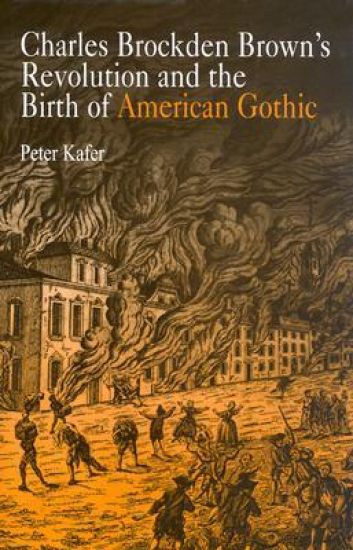
Charles Brockden Brown's Revolution and the Birth of American Gothic
In 1798, a decade after the Founding Fathers created a nation based on the principles of liberty and equality, Charles Brockden Brown, then an unknown Philadelphia writer, invented the American Gothic novel. His first book, Wieland, is the story of a religious fanatic haunted by demonic voices instructing him to murder his wife and children; in subsequent works, a young country bumpkin confronts the depravities of city existence, an impecunious daughter becomes the erotic obsession of an insane egomaniacal rationalist, and a sleepwalker awakes to-and participates in-the extremes of frontier savagery. How could a glorious age of American history also give rise to the darkest of literary traditions, one that would inspire Edgar Allan Poe, Stephen King, and many other best-selling American writers? In Charles Brockden Brown's Revolution and the Birth of American Gothic, Peter Kafer carefully unravels the mystery of what compelled this pious Philadelphia Quaker to become fascinated with a peculiar form of dark European imagery and transform it into something wholly American. In the new nation, Kafer notes, there were no ancient monasteries, no haunted castles, no hierarchies of nobility to draw upon. Taking inspiration instead from his pacifist family's persecution at the hands of the American Revolutionaries, including the likes of Alexander Hamilton and John Adams, as well as from perverse expressions of European-American Protestantism and the suppressed histories of his native Pennsylvania, Brockden Brown wrote of the horrors that lurked below the triumphant veneer of the young American republic. In doing so, he became the literary conscience of his generation. Written with a witty and acutely critical eye, Charles Brockden Brown's Revolution and the Birth of American Gothic illuminates the social and political influences on the nation's first professional novelist and reveals the surprising origins of one of American literature's most popular and enduring genres.
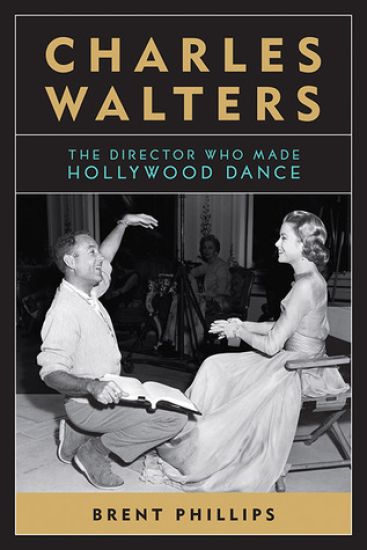
Charles Walters

Charles Walters

Brent Phillips

The University Press of Kentucky
2014
sidottu
From the trolley scene in Meet Me in St. Louis (1944) to Fred Astaire and Ginger Rogers's last dance on the silver screen ( The Barkleys of Broadway, 1949) to Judy Garland's timeless, tuxedo-clad performance of "Get Happy" ( Summer Stock, 1950), Charles Walters staged the iconic musical sequences of Hollywood's golden age. During his career, this Academy Award--nominated director and choreographer showcased the talents of stars such as Gene Kelly, Doris Day, Debbie Reynolds, and Frank Sinatra. However, despite his many critical and commercial triumphs, Walters's name often goes unrecognized today.In the first full-length biography of Walters, Brent Phillips chronicles the artist's career, from his days as a featured Broadway performer and protégé of theater legend Robert Alton to his successes at Metro-Goldwyn-Mayer. He takes readers behind the scenes of many of the studio's most beloved musicals, including Easter Parade (1948), Lili (1953), High Society (1956), and T he Unsinkable Molly Brown (1964). In addition, Phillips recounts Walters's associations with Lucille Ball, Joan Crawford, and Gloria Swanson, examines the director's uncredited work on several films, including the blockbuster Gigi (1958), and discusses his contributions to musical theater and American popular culture.This revealing book also considers Walters's personal life and explores how he navigated the industry as an openly gay man. Drawing on unpublished oral histories, correspondence, and new interviews, this biography offers an entertaining and important new look at an exciting era in Hollywood history.