Kirjojen hintavertailu. Mukana 11 342 296 kirjaa ja 12 kauppaa.

Kirjahaku

Etsi kirjoja tekijän nimen, kirjan nimen tai ISBN:n perusteella.

1000 tulosta hakusanalla Colin Channer

The Global Pigeon

The Global Pigeon

Colin Jerolmack

University of Chicago Press
2013
nidottu
The pigeon is the quintessential city bird. Domesticated thousands of years ago as a messenger and a source of food, its presence on our sidewalks is so common that people consider the bird a nuisance - if they notice it at all. Yet pigeons are also kept by people all over the world for pleasure, sport, and profit, from the "pigeon wars" waged by breeding enthusiasts in the skies over Brooklyn to the Million Dollar Pigeon Race held every year in South Africa. Drawing on more than three years of fieldwork across three continents, Colin Jerolmack traces our complex and often contradictory relationship with these versatile animals in public spaces such as Venice's Piazza San Marco and London's Trafalgar Square and in working-class and immigrant communities of pigeon breeders in New York and Berlin. By exploring what he calls "the social experience of animals," Jerolmack shows how our interactions with pigeons offer surprising insights into city life, community, culture, and politics. Theoretically understated and accessible to interested readers of all stripes, "The Global Pigeon" is one of the best and most original ethnographies to be published in decades.
How We Became Our Data

How We Became Our Data

Colin Koopman

University of Chicago Press
2019
pokkari
We are now acutely aware, as if all of the sudden, that data matters enormously to how we live. How did information come to be so integral to what we can do? How did we become people who effortlessly present our lives in social media profiles and who are meticulously recorded in state surveillance dossiers and online marketing databases? What is the story behind data coming to matter so much to who we are? In How We Became Our Data, Colin Koopman excavates early moments of our rapidly accelerating data-tracking technologies and their consequences for how we think of and express our selfhood today. Koopman explores the emergence of mass-scale record keeping systems like birth certificates and social security numbers, as well as new data techniques for categorizing personality traits, measuring intelligence, and even racializing subjects. This all culminates in what Koopman calls the "informational person" and the "informational power" we are now subject to. The recent explosion of digital technologies that are turning us into a series of algorithmic data points is shown to have a deeper and more turbulent past than we commonly think. Blending philosophy, history, political theory, and media theory in conversation with thinkers like Michel Foucault, J rgen Habermas, and Friedrich Kittler, Koopman presents an illuminating perspective on how we have come to think of our personhood--and how we can resist its erosion.
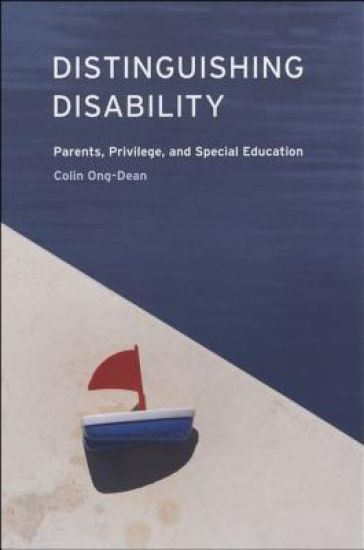
Distinguishing Disability

Distinguishing Disability

Colin Ong-Dean

University of Chicago Press
2009
sidottu
Students in special education programs can have widely divergent experiences. For some, special education amounts to a dumping ground where schools unload problem students, while for others, it provides access to services and accommodations that drastically improve chances of succeeding in school and beyond. "Distinguishing Disability" argues that this inequity in treatment is directly linked to the disparity in resources possessed by the students' parents. Since the mid-1970s, federal law has empowered parents of public school children to intervene in virtually every aspect of the decision making involved in special education. However, Colin Ong-Dean reveals that this power is generally available only to those parents with the money, educational background, and confidence needed to make effective claims about their children's disabilities and related needs. Ong-Dean documents this class divide by examining a wealth of evidence, including historic rates of learning disability diagnosis, court decisions, and advice literature for parents of disabled children. In an era of expanding special education enrollment, "Distinguishing Disability" is a timely analysis of the way this expansion has created new kinds of inequality.
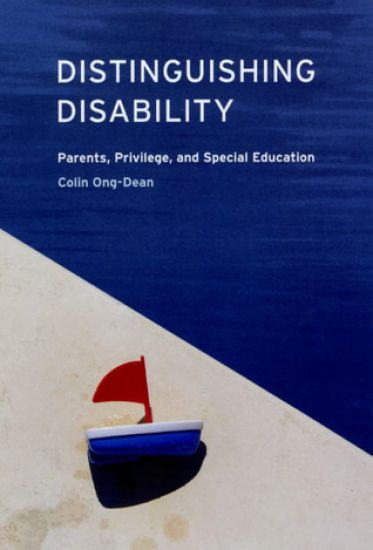
Distinguishing Disability

Distinguishing Disability

Colin Ong-Dean

University of Chicago Press
2009
nidottu
Students in special education programs can have widely divergent experiences. For some, special education amounts to a dumping ground where schools unload problem students, while for others, it provides access to services and accommodations that drastically improve chances of succeeding in school and beyond. "Distinguishing Disability" argues that this inequity in treatment is directly linked to the disparity in resources possessed by the students' parents. Since the mid-1970s, federal law has empowered parents of public school children to intervene in virtually every aspect of the decision making involved in special education. However, Colin Ong-Dean reveals that this power is generally available only to those parents with the money, educational background, and confidence needed to make effective claims about their children's disabilities and related needs. Ong-Dean documents this class divide by examining a wealth of evidence, including historic rates of learning disability diagnosis, court decisions, and advice literature for parents of disabled children. In an era of expanding special education enrollment, "Distinguishing Disability" is a timely analysis of the way this expansion has created new kinds of inequality.
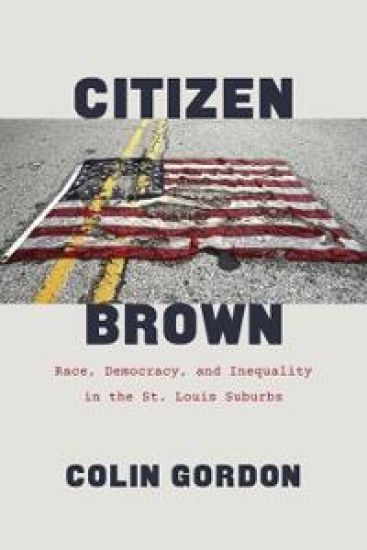
Citizen Brown

Citizen Brown

Colin Gordon

University of Chicago Press
2019
sidottu
The 2014 death of Michael Brown in Ferguson, Missouri, ignited nationwide protests and brought widespread attention to tragically relevant issues like police brutality and institutional racism. But Ferguson is not alone. As Colin Gordon shows in this urgent and timely book, the events in Ferguson exposed not only the deep racism of the local police department, but the ways in which decades of public policy effectively segregated and curtailed citizenship across the St. Louis suburbs... Citizen Brown uncovers half a century of private practices and public policies that resulted in bitter inequality and sustained segregation in Ferguson and beyond. Gordon shows how municipal and school district boundaries were pointedly drawn to contain or exclude African Americans, how local policies and services--especially policing, education, and urban renewal--were weaponized to maintain civic separation. He also makes clear that the outcry that arose in Ferguson was no impulsive outburst, but an explosion of pent-up rage against longstanding local systems of segregation and inequality--of which a police force which viewed citizens not as subjects to serve and protect, but as sources of revenue, was just the most immediate example. Worse, Citizen Brown illustrates the fact that, though the greater St. Louis area provides some extraordinarily clear examples of fraught racial dynamics, it is hardly alone among American cities and regions.
Conversion Factors

Conversion Factors

Colin J. Pennycuick

University of Chicago Press
1988
nidottu
This invaluable reference manual provides well-organized tables of over 2100 conversion factors for measures ranging from time and length to metabolic rate and viscosity. An index defines each term: acres, dynes, joules, liters, knots, and so on. Also included are guides to abbreviations, to physical and technical dimensions, and to the système internationale (SI).
Citizen Brown

Citizen Brown

Colin Gordon

University of Chicago Press
2020
nidottu
The 2014 killing of Michael Brown in Ferguson, Missouri, ignited nationwide protests and brought widespread attention police brutality and institutional racism. But Ferguson was no aberration. As Colin Gordon shows in this urgent and timely book, the events in Ferguson exposed not only the deep racism of the local police department but also the ways in which decades of public policy effectively segregated people and curtailed citizenship not just in Ferguson but across the St. Louis suburbs.Citizen Brown uncovers half a century of private practices and public policies that resulted in bitter inequality and sustained segregation in Ferguson and beyond. Gordon shows how municipal and school district boundaries were pointedly drawn to contain or exclude African Americans and how local policies and services—especially policing, education, and urban renewal—were weaponized to maintain civic separation. He also makes it clear that the outcry that arose in Ferguson was no impulsive outburst but rather an explosion of pent-up rage against long-standing systems of segregation and inequality—of which a police force that viewed citizens not as subjects to serve and protect but as sources of revenue was only the most immediate example. Worse, Citizen Brown illustrates the fact that though the greater St. Louis area provides some extraordinarily clear examples of fraught racial dynamics, in this it is hardly alone among American cities and regions. Interactive maps and other companion resources to Citizen Brown are available at the book website.
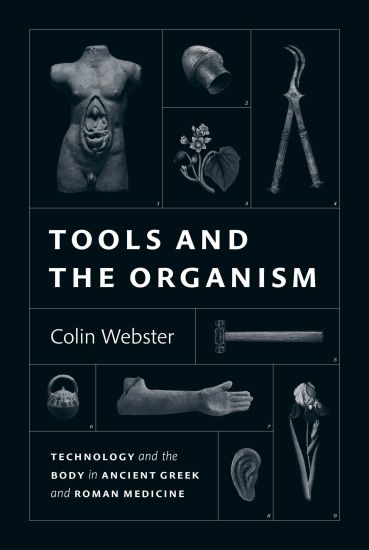
Tools and the Organism

Tools and the Organism

Colin Webster

THE UNIVERSITY OF CHICAGO PRESS
2023
sidottu
The first book to show how the concept of bodily organs emerged and how ancient tools influenced conceptualizations of human anatomy and its operations. Medicine is itself a type of technology, involving therapeutic tools and substances, and so one can write the history of medicine as the application of different technologies to the human body. In Tools and the Organism, Colin Webster argues that, throughout antiquity, these tools were crucial to broader theoretical shifts. Notions changed about what type of object a body is, what substances constitute its essential nature, and how its parts interact. By following these changes and taking the question of technology into the heart of Greek and Roman medicine, Webster reveals how the body was first conceptualized as an “organism”—a functional object whose inner parts were tools, or organa, that each completed certain vital tasks. He also shows how different medical tools created different bodies. Webster’s approach provides both an overarching survey of the ways that technologies impacted notions of corporeality and corporeal behaviors and, at the same time, stays attentive to the specific material details of ancient tools and how they informed assumptions about somatic structures, substances, and inner processes. For example, by turning to developments in water-delivery technologies and pneumatic tools, we see how these changing material realities altered theories of the vascular system and respiration across Classical antiquity. Tools and the Organism makes the compelling case for why telling the history of ancient Greco-Roman medical theories, from the Hippocratics to Galen, should pay close attention to the question of technology.
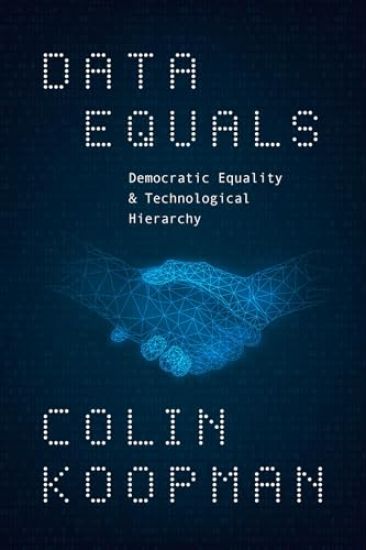
Data Equals

Data Equals

Colin Koopman

THE UNIVERSITY OF CHICAGO PRESS
2025
sidottu
An expansive vision for data equality that goes beyond algorithmic fairness. When we gave algorithms power over our world, we hoped that the apparent neutrality of machine thinking would create a more egalitarian age. Yet we are more divided than ever, staring down threats to democracy itself. In Data Equals, Colin Koopman argues that data technologies fail us so often because we built them around a deficient notion of equality. It is not enough, Koopman explains, that algorithms engage everyone’s data with the same measuring stick. The data themselves are all too often structured in ways that obscure and exacerbate stratifying distinctions. Koopman contends that we must also work to ensure that those people subject to computational assessment enter data systems on equal terms. Part philosophical argument, part practical guide (replete with case studies from education technology), Data Equals offers novel methods for realizing democratic equality in a digital age.
Data Equals

Data Equals

Colin Koopman

THE UNIVERSITY OF CHICAGO PRESS
2025
nidottu
An expansive vision for data equality that goes beyond algorithmic fairness. When we gave algorithms power over our world, we hoped that the apparent neutrality of machine thinking would create a more egalitarian age. Yet we are more divided than ever, staring down threats to democracy itself. In Data Equals, Colin Koopman argues that data technologies fail us so often because we built them around a deficient notion of equality. It is not enough, Koopman explains, that algorithms engage everyone’s data with the same measuring stick. The data themselves are all too often structured in ways that obscure and exacerbate stratifying distinctions. Koopman contends that we must also work to ensure that those people subject to computational assessment enter data systems on equal terms. Part philosophical argument, part practical guide (replete with case studies from education technology), Data Equals offers novel methods for realizing democratic equality in a digital age.
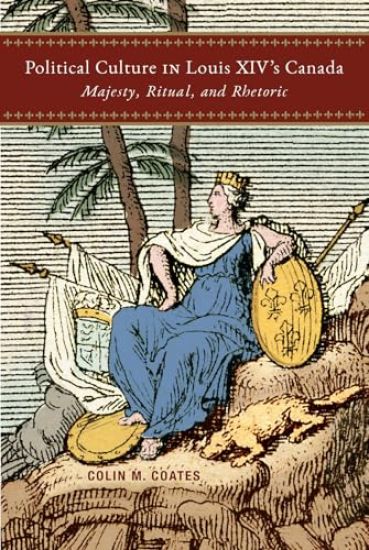
Political Culture in Louis XIV’s Canada

Political Culture in Louis XIV’s Canada

Colin M. Coates

MCGILL-QUEEN'S UNIVERSITY PRESS
2024
sidottu
In Louis XIV’s New France, colonial authorities attempted to reproduce French regal authority in novel ways, often by performing typical metropolitan political rituals. When these practices were transposed into the St Lawrence Valley settlements, where a small French population lived alongside a substantial Indigenous presence, they took on new meanings.The colony of Canada replicated many features of the developing French absolutist state. Yet while the king likely knew more about his colony than he did about most parts of metropolitan France, this transatlantic setting imposed new constraints on absolutist authority, from the challenges of distance to an Indigenous population that largely lived outside European norms. Political Culture in Louis XIV’s Canada examines royal power as it was represented in ritual (ceremonial entrances, Te Deums, processions), in rhetoric (political disputes over cabals and factions), and in objects (portraits, royal busts, currency, buildings, maps, and censuses). Colin Coates describes the successes and failures the French authorities experienced in exporting their political practices. He reveals how those authorities’ understandings of Indigenous political culture shaped ideas of the proper relation between rulers and the ruled.This book traces the establishment of a colonial political culture that continued to shape the lives of the French in Canada long after the Sun King’s death in 1715.
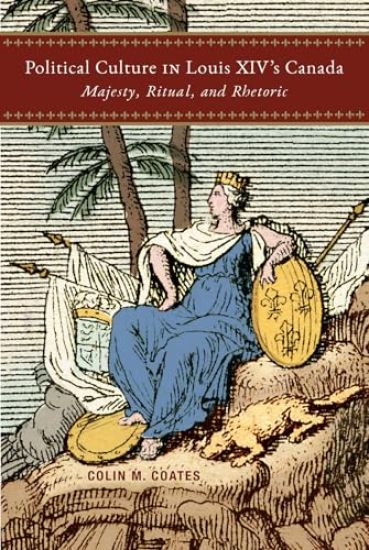
Political Culture in Louis XIV’s Canada

Political Culture in Louis XIV’s Canada

Colin M. Coates

MCGILL-QUEEN'S UNIVERSITY PRESS
2024
nidottu
In Louis XIV’s New France, colonial authorities attempted to reproduce French regal authority in novel ways, often by performing typical metropolitan political rituals. When these practices were transposed into the St Lawrence Valley settlements, where a small French population lived alongside a substantial Indigenous presence, they took on new meanings.The colony of Canada replicated many features of the developing French absolutist state. Yet while the king likely knew more about his colony than he did about most parts of metropolitan France, this transatlantic setting imposed new constraints on absolutist authority, from the challenges of distance to an Indigenous population that largely lived outside European norms. Political Culture in Louis XIV’s Canada examines royal power as it was represented in ritual (ceremonial entrances, Te Deums, processions), in rhetoric (political disputes over cabals and factions), and in objects (portraits, royal busts, currency, buildings, maps, and censuses). Colin Coates describes the successes and failures the French authorities experienced in exporting their political practices. He reveals how those authorities’ understandings of Indigenous political culture shaped ideas of the proper relation between rulers and the ruled.This book traces the establishment of a colonial political culture that continued to shape the lives of the French in Canada long after the Sun King’s death in 1715.
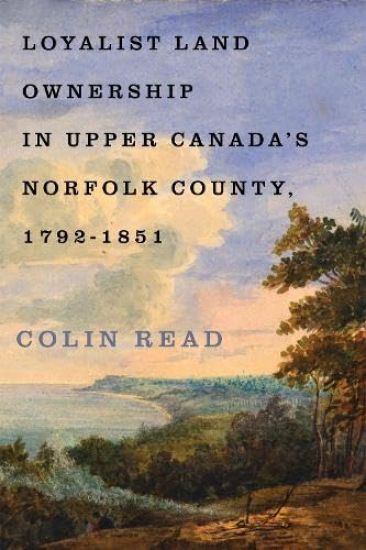
Loyalist Land Ownership in Upper Canada's Norfolk County, 1792–1851
After the American Revolution, many Loyalists moved north, where the British colonial government awarded them generous land grants on favourable terms. The intention behind these grants was to create a landed gentry in Upper Canada that would safeguard the colony's political security and build social cohesion among its leadership. Loyalist Land Ownership in Upper Canada's Norfolk County, 1792–1851 examines the long-term landholding of Loyalists and other settlers who arrived in the county before 1812 to judge whether this social experiment succeeded. Colin Read explores the various ways that settlers acquired and transmitted land, the nature of familial land sales, and the place of women in owning land. Consulting land records and genealogical research, he finds that no landed elite endured in Upper Canada: Loyalists owned only marginally more land than non-Loyalists by 1851, and it was commonplace for latecoming settlers to eventually own land. Yet early arrival was a significant determinant of later landholding and property size – it mattered who settled first. Land was the main source of wealth in early Canada. This fine-grained study sheds light on how it was acquired, disposed of, and passed down through generations in the nineteenth century. Although a landed aristocracy was never realized, the colonial state's allocation of land to settlers laid the foundation for their social standing.
Hot Spot 3 Activity Book Polish

Hot Spot 3 Activity Book Polish

Colin Granger; Katherine Stannett

Macmillan Education
2011
nidottu
- PET exam features make Hot Spot 5 the ideal course for students planning to take this exam or for those taking other state exams including Exam practice sections and a Writing bank. - Topics specifically aimed at the 15-year-old as well as cross-curricular topics. - Strong focus on skills and vocabulary development. - Extra Grammar lessons in the Teacher's Book extend the grammar syllabus introducing structures such as third conditional and present perfect continuous. - Exam practice MPO also available.
New Directions in Political Science

New Directions in Political Science

Colin Hay

Red Globe Press
2010
sidottu
Written by a team of leading scholars, this new text focuses on a range of key challenges posed by developments in 21st century politics to provide a state-of-the-art assessment of current thinking and future directions in Political Science and International Relations.
New Directions in Political Science

New Directions in Political Science

Colin Hay

Red Globe Press
2010
nidottu
Written by a team of leading scholars, this new text focuses on a range of key challenges posed by developments in 21st century politics to provide a state-of-the-art assessment of current thinking and future directions in Political Science and International Relations.
The Efficient Market Hypothesists

The Efficient Market Hypothesists

Colin Read

Palgrave Macmillan
2012
sidottu
Describes the lives, theories, and legacies of six great minds in finance who changed the way we look at financial markets and equilibrium. Bachelier, Samuelson, Fama, Ross, Tobin, and Shiller; proponents and critics of the market efficiency theories who redefined modern finance, creating the foundation on which all financial analysis rests.
Volunteering and Society in the 21st Century

Volunteering and Society in the 21st Century

Colin Rochester; Angela Ellis Paine; S. Howlett

Palgrave Macmillan
2009
nidottu
Expectations about the contribution that volunteering can make are at a new high. This book aims to meet this interest by bringing together in one volume what is known about the phenomenon of volunteering; the principles and practice of involving volunteers, and the enduring challenges for volunteering in today's world.
Health and Well-being for Young People

Health and Well-being for Young People

Colin Goble; Natasha Bye-Brooks

Red Globe Press
2016
nidottu
Ethical beliefs, direct personal experiences, and the knowledge we accumulate from sources such as TV dramas, magazines and social media all shape our ideas about health and wellbeing. In this highly engaging new book, Colin Goble and Natasha Bye-Brooks bring the focus to young people, particularly adolescents, and explore the main challenges in creating and maintaining a society where young people can thrive, both physically and mentally.Tackling issues such as nutrition, sexual health, disability and substance misuse, the book provides an in-depth examination of the key concepts and theoretical perspectives surrounding health and wellbeing. Topics covered include:- Adolescence as a life stage, with particular focus on psychological, behavioural, social and cultural development and the concept of the 'teenager'- The impact of environmental issues such as poverty, poor housing and lack of access to green spaces on young people's health and wellbeing- Acute mental health problems in young people, such as anorexia nervosa, schizophrenia and Obsessive Compulsive Disorder- The sexualisation of young people, and identifying sexually vulnerable young people- The impact of poor nutrition and low levels of physical activity, combined with the socially-influenced body imageClear, concise and highly accessible, Health and Wellbeing for Young People provides an invaluable introduction to the key issues and debates that relate to the health and wellbeing of young people, both in the UK and beyond.
Hot Spot Level 5 Student's Book International

Hot Spot Level 5 Student's Book International

Colin Granger; Katherine Stannett

Macmillan Education
2011
nidottu
• Traditional and transparent grammar syllabus with gradual progression• A good balance of all four skills• Integrated skills lesson with cross-cultural focus• Songs and games to help stimulate learning• Accompanying CD-ROM• ‘Check your English’ and ‘Remember!’ sections