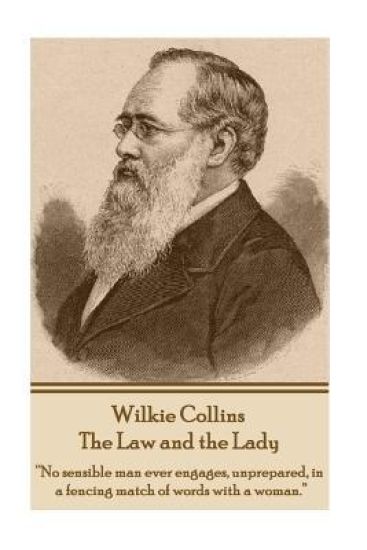
Collins' most financially successful novel, The Evil Genius, opens with a jury determining the fate of a sea captain whose ship allegedly facilitated a diamond theft. The story develops into a powerful novel of Victorian private life, including deception, adultery and divorce. William Wilkie Collins (8 January 1824 - 23 September 1889) was an English novelist, playwright, and short story writer. His best-known works are The Woman in White (1859), No Name (1862), Armadale (1866), and The Moonstone (1868). The last is considered the first modern English detective novel. Born into the family of painter William Collins in London, he lived with his family in Italy and France as a child and learned French and Italian. He worked as a clerk for a tea merchant. After his first novel, Antonina, was published in 1850, he met Charles Dickens, who became a close friend, mentor and collaborator. Some of Collins's works were first published in Dickens' journals All the Year Round and Household Words and the two collaborated on drama and fiction. Collins published his best known works in the 1860s, achieved financial stability and an international reputation. During that time he began suffering from gout. After taking opium for the pain, he developed an addiction. During the 1870s and 1880s the quality of his writing declined along with his health.Collins was critical of the institution of marriage and never married; he split his time between Caroline Graves, except for a two-year separation, and his common-law wife Martha Rudd, with whom he had three children.Collins was born at 11 New Cavendish Street, Marylebone, London, the son of a well-known Royal Academician landscape painter, William Collins and his wife, Harriet Geddes. Named after his father, he swiftly became known by his second name, which honoured his godfather, David Wilkie. The family moved to Pond Street, Hampstead, in 1826. In 1828 Collins's brother Charles Allston Collins was born. Between 1829 and 1830, the Collins family moved twice, first to Hampstead Square and then to Porchester Terrace, Bayswater.Wilkie and Charles received their early education from their mother at home. The Collins family was deeply religious, and Collins's mother enforced strict church attendance on her sons, which Wilkie disliked.In 1835, Collins began attending school at the Maida Vale academy. From 1836 to 1838, he lived with his parents in Italy and France, which made a great impression on him. He learned Italian while the family was in Italy and began learning French, in which he would eventually become fluent.From 1838 to 1840, he attended the Reverend Cole's private boarding school in Highbury, where he was bullied by a boy who would force Collins to tell him a story before allowing him to go to sleep. "It was this brute who first awakened in me, his poor little victim, a power of which but for him I might never have been aware...When I left school I continued story telling for my own pleasure", Collins later said.In 1840 the family moved to 85 Oxford Terrace, Bayswater. In late 1840, he left school and was apprenticed as a clerk to the firm of tea merchants Antrobus & Co, owned by a friend of Wilkie's father. He disliked his clerical work but remained employed by the company for more than five years. Collins's first story The Last Stage Coachman, was published in the Illuminated Magazine in August 1843.In 1844 he travelled to Paris with Charles Ward. That same year he wrote his first novel, Iolani, or Tahiti as It Was; a Romance, which was submitted to Chapman and Hall but rejected in 1845. The novel remained unpublished during his lifetime.Collins said of it: "My youthful imagination ran riot among the noble savages, in scenes which caused the respectable British publisher to declare that it was impossible to put his name on the title page of such a novel.....
When a condemned woman asks the local Minister to take her daughter home, the childless man is touched and finds himself unable to refuse. Yet the prisoner is unrepentant of the murder of her husband. Will her vices be passed on to this seemingly sweet child?William Wilkie Collins (8 January 1824 - 23 September 1889) was an English novelist, playwright, and short story writer. His best-known works are The Woman in White (1859), No Name (1862), Armadale (1866), and The Moonstone (1868). The last is considered the first modern English detective novel. Born into the family of painter William Collins in London, he lived with his family in Italy and France as a child and learned French and Italian. He worked as a clerk for a tea merchant. After his first novel, Antonina, was published in 1850, he met Charles Dickens, who became a close friend, mentor and collaborator. Some of Collins's works were first published in Dickens' journals All the Year Round and Household Words and the two collaborated on drama and fiction. Collins published his best known works in the 1860s, achieved financial stability and an international reputation. During that time he began suffering from gout. After taking opium for the pain, he developed an addiction. During the 1870s and 1880s the quality of his writing declined along with his health.Collins was critical of the institution of marriage and never married; he split his time between Caroline Graves, except for a two-year separation, and his common-law wife Martha Rudd, with whom he had three children.Collins was born at 11 New Cavendish Street, Marylebone, London, the son of a well-known Royal Academician landscape painter, William Collins and his wife, Harriet Geddes. Named after his father, he swiftly became known by his second name, which honoured his godfather, David Wilkie. The family moved to Pond Street, Hampstead, in 1826. In 1828 Collins's brother Charles Allston Collins was born. Between 1829 and 1830, the Collins family moved twice, first to Hampstead Square and then to Porchester Terrace, Bayswater.Wilkie and Charles received their early education from their mother at home. The Collins family was deeply religious, and Collins's mother enforced strict church attendance on her sons, which Wilkie disliked.In 1835, Collins began attending school at the Maida Vale academy. From 1836 to 1838, he lived with his parents in Italy and France, which made a great impression on him. He learned Italian while the family was in Italy and began learning French, in which he would eventually become fluent.From 1838 to 1840, he attended the Reverend Cole's private boarding school in Highbury, where he was bullied by a boy who would force Collins to tell him a story before allowing him to go to sleep. "It was this brute who first awakened in me, his poor little victim, a power of which but for him I might never have been aware...When I left school I continued story telling for my own pleasure", Collins later said.In 1840 the family moved to 85 Oxford Terrace, Bayswater. In late 1840, he left school and was apprenticed as a clerk to the firm of tea merchants Antrobus & Co, owned by a friend of Wilkie's father. He disliked his clerical work but remained employed by the company for more than five years. Collins's first story The Last Stage Coachman, was published in the Illuminated Magazine in August 1843.In 1844 he travelled to Paris with Charles Ward. That same year he wrote his first novel, Iolani, or Tahiti as It Was; a Romance, which was submitted to Chapman and Hall but rejected in 1845. The novel remained unpublished during his lifetime.Collins said of it: "My youthful imagination ran riot among the noble savages, in scenes which caused the respectable British publisher to declare that it was impossible to put his name on the title page of such a novel." ....
Although alcohol arrived with the first settlers in Fort Collins, Prohibition lingered until 1969. But the city was one of the first to latch onto the burgeoning craft beer movement. In 1989, Old Colorado Brewing Company paved the way as the city's first microbrewery. And with the inception of breweries like Odell and New Belgium, local beer soon saw a strong resurgence followed by popularity nationwide. By 2010, a new generation of breweries, like Funkwerks and Equinox Brewing, emerged. Brea D. Hoffman divulges the history of Fort Collins's evolving beer scene.
The Woman in White is Wilkie Collins' fifth published novel, written in 1859. It is considered to be among the first mystery novels and is widely regarded as one of the first (and finest) in the genre of "sensation novels". The story is sometimes considered an early example of detective fiction with protagonist Walter Hartright employing many of the sleuthing techniques of later private detectives. The use of multiple narrators (including nearly all the principal characters) draws on Collins's legal training, 1] 2] and as he points out in his Preamble: "the story here presented will be told by more than one pen, as the story of an offence against the laws is told in Court by more than one witness". In 2003, Robert McCrum writing for The Observer listed The Woman in White number 23 in "the top 100 greatest novels of all time", 3] and the novel was listed at number 77 on the BBC's survey The Big Read
After Dark is a collection of six short stories by Wilkie Collins, first published in 1856. It was the author's first collection of short stories. Five of the stories were previously published in Household Words, a magazine edited by Charles Dickens.... William Wilkie Collins (8 January 1824 - 23 September 1889) was an English novelist, playwright, and short story writer. His best-known works are The Woman in White (1859), No Name (1862), Armadale (1866) and The Moonstone (1868). The last is considered the first modern English detective novel. Born into the family of painter William Collins in London, he lived with his family in Italy and France as a child and learned French and Italian. He worked as a clerk for a tea merchant. After his first novel, Antonina, was published in 1850, he met Charles Dickens, who became a close friend, mentor and collaborator. Some of Collins's works were first published in Dickens' journals All the Year Round and Household Words and the two collaborated on drama and fiction. Collins published his best known works in the 1860s, achieved financial stability and an international reputation. During that time he began suffering from gout. After taking opium for the pain, he developed an addiction. During the 1870s and 1880s the quality of his writing declined along with his health. Collins was critical of the institution of marriage and never married; he split his time between Caroline Graves, except for a two-year separation, and his common-law wife Martha Rudd, with whom he had three children. Collins was born at 11 New Cavendish Street, Marylebone, London, the son of a well-known Royal Academician landscape painter, William Collins and his wife, Harriet Geddes. Named after his father, he swiftly became known by his middle name, which honoured his godfather, David Wilkie. The family moved to Pond Street, Hampstead, in 1826. In 1828 Collins's brother Charles Allston Collins was born. Between 1829 and 1830, the Collins family moved twice, first to Hampstead Square and then to Porchester Terrace, Bayswater.Wilkie and Charles received their early education from their mother at home. The Collins family were deeply religious, and Collins's mother enforced strict church attendance on her sons, which Wilkie disliked. In 1835, Collins began attending school at the Maida Vale academy. From 1836 to 1838, he lived with his parents in Italy and France, which made a great impression on him. He learned Italian while the family was in Italy and began learning French, in which he would eventually become fluent.From 1838 to 1840, he attended the Reverend Cole's private boarding school in Highbury, where he was bullied by a boy who would force Collins to tell him a story before allowing him to go to sleep. "It was this brute who first awakened in me, his poor little victim, a power of which but for him I might never have been aware...When I left school I continued story telling for my own pleasure", Collins later said. In 1840 the family moved to 85 Oxford Terrace, Bayswater. In late 1840, he left school and was apprenticed as a clerk to the firm of tea merchants Antrobus & Co, owned by a friend of Wilkie's father. He disliked his clerical work but remained employed by the company for more than five years. Collins's first story The Last Stage Coachman, was published in the Illuminated Magazine in August 1843. In 1844 he travelled to Paris with Charles Ward. That same year he wrote his first novel, Iolani, or Tahiti as It Was; a Romance, which was submitted to Chapman and Hall but rejected in 1845. The novel remained unpublished during his lifetime.Collins said of it: "My youthful imagination ran riot among the noble savages, in scenes which caused the respectable British publisher to declare that it was impossible to put his name on the title page of such a novel."
The tone in which those words were spoken was an insult in itself. Mercy suddenly lifted her head; the angry answer was on her lips. She checked it, and submitted in silence. "I will be worthy of Julian Gray's confidence in me," she thought, as she stood patiently by the chair. "I will bear anything from the woman whom I have wronged." William Wilkie Collins (8 January 1824 - 23 September 1889) was an English novelist, playwright, and short story writer. His best-known works are The Woman in White (1859), No Name (1862), Armadale (1866) and The Moonstone (1868). The last is considered the first modern English detective novel. Born into the family of painter William Collins in London, he lived with his family in Italy and France as a child and learned French and Italian. He worked as a clerk for a tea merchant. After his first novel, Antonina, was published in 1850, he met Charles Dickens, who became a close friend, mentor and collaborator. Some of Collins's works were first published in Dickens' journals All the Year Round and Household Words and the two collaborated on drama and fiction. Collins published his best known works in the 1860s, achieved financial stability and an international reputation. During that time he began suffering from gout. After taking opium for the pain, he developed an addiction. During the 1870s and 1880s the quality of his writing declined along with his health. Collins was critical of the institution of marriage and never married; he split his time between Caroline Graves, except for a two-year separation, and his common-law wife Martha Rudd, with whom he had three children. Collins was born at 11 New Cavendish Street, Marylebone, London, the son of a well-known Royal Academician landscape painter, William Collins and his wife, Harriet Geddes. Named after his father, he swiftly became known by his middle name, which honoured his godfather, David Wilkie. The family moved to Pond Street, Hampstead, in 1826. In 1828 Collins's brother Charles Allston Collins was born. Between 1829 and 1830, the Collins family moved twice, first to Hampstead Square and then to Porchester Terrace, Bayswater.Wilkie and Charles received their early education from their mother at home. The Collins family were deeply religious, and Collins's mother enforced strict church attendance on her sons, which Wilkie disliked. In 1835, Collins began attending school at the Maida Vale academy. From 1836 to 1838, he lived with his parents in Italy and France, which made a great impression on him. He learned Italian while the family was in Italy and began learning French, in which he would eventually become fluent.From 1838 to 1840, he attended the Reverend Cole's private boarding school in Highbury, where he was bullied by a boy who would force Collins to tell him a story before allowing him to go to sleep. "It was this brute who first awakened in me, his poor little victim, a power of which but for him I might never have been aware...When I left school I continued story telling for my own pleasure", Collins later said. In 1840 the family moved to 85 Oxford Terrace, Bayswater. In late 1840, he left school and was apprenticed as a clerk to the firm of tea merchants Antrobus & Co, owned by a friend of Wilkie's father. He disliked his clerical work but remained employed by the company for more than five years. Collins's first story The Last Stage Coachman, was published in the Illuminated Magazine in August 1843. In 1844 he travelled to Paris with Charles Ward. That same year he wrote his first novel, Iolani, or Tahiti as It Was; a Romance, which was submitted to Chapman and Hall but rejected in 1845.... To the memory By: Charles Allston Collins (London 25 January 1828 - 9 April 1873) was a British painter, writer and illustrator associated with the Pre-Raphaelite Brotherhood.....
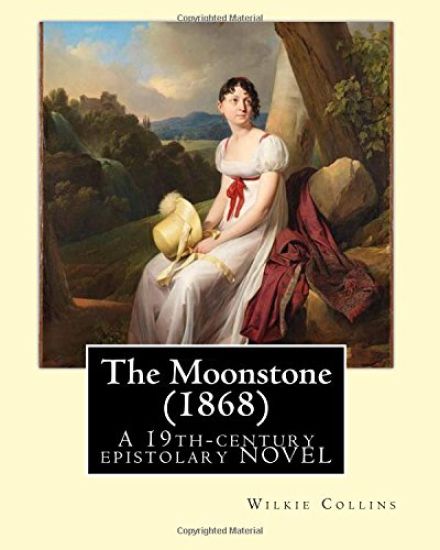
Widely regarded as the precursor of the modern mystery and suspense novels, The Moonstone tells of the events surrounding the disappearance of a mysterious (and cursed) yellow diamond. T. S. Eliot called it 'the first, the longest, and the best of modern English detective novels'. It contains a number of ideas which became common tropes of the genre, including a crime being investigated by talented amateurs who happen to be present when it is committed, and two police officers who exemplify respectively the 'Scotland Yard bungler' and the skilled, professional detective.
The Woman in White is Wilkie Collins' fifth published novel, written in 1859. It is considered to be among the first mystery novels and is widely regarded as one of the first (and finest) in the genre of "sensation novels". The story is sometimes considered an early example of detective fiction with protagonist Walter Hartright employing many of the sleuthing techniques of later private detectives. The use of multiple narrators (including nearly all the principal characters) draws on Collins's legal training, 1] 2] and as he points out in his Preamble: "the story here presented will be told by more than one pen, as the story of an offence against the laws is told in Court by more than one witness". In 2003, Robert McCrum writing for The Observer listed The Woman in White number 23 in "the top 100 greatest novels of all time", and the novel was listed at number 77 on the BBC's survey The Big Read. PLOT: Walter Hartright, a young art teacher, encounters and gives directions to a mysterious and distressed woman dressed entirely in white, lost in London; he is later informed by policemen that she has escaped from an asylum. Soon afterward, he travels to Limmeridge House in Cumberland, having been hired as a drawing master on the recommendation of his friend, Pesca, an Italian language master. The Limmeridge household comprises the invalid Frederick Fairlie, and Walter's students: Laura Fairlie, Mr. Fairlie's niece, and Marian Halcombe, her devoted half-sister. Walter realizes that Laura bears an astonishing resemblance to the woman in white, who is known to the household by the name of Anne Catherick: a mentally disabled child who formerly lived near Limmeridge, and was devoted to Laura's mother, who first dressed her in white. Over the next few months, Walter and Laura fall in love, despite Laura's betrothal to Sir Percival Glyde, Baronet. Upon realising this, Marian advises Walter to leave Limmeridge. Laura receives an anonymous letter warning her against marrying Glyde. Walter deduces that Anne has sent the letter and encounters her again in Cumberland; he becomes convinced that Glyde originally placed Anne in the asylum. Despite the misgivings of the family lawyer over the financial terms of the marriage settlement, which will give the entirety of Laura's fortune to Glyde if she dies without leaving an heir, and Laura's confession that she loves another man, Laura and Glyde marry in December 1849 and travel to Italy for six months. Concurrently, Walter joins an expedition to Honduras. After six months, Sir Percival and Lady Glyde return to his house, Blackwater Park in Hampshire; accompanied by Glyde's friend, Count Fosco (married to Laura's aunt). Marian, at Laura's request, resides at Blackwater, and learns that Glyde is in financial difficulties. Glyde attempts to bully Laura into signing a document that would allow him to use her marriage settlement of 20,000, which Laura refuses. Anne, who is now terminally ill, travels to Blackwater Park and contacts Laura, saying that she holds a secret that will ruin Glyde's life. Before she can disclose the secret, Glyde discovers their communication and becomes extremely paranoid, believing Laura knows his secret and attempts to keep her held at Blackwater. With the problem of Laura's refusal to give away her fortune, and Anne's knowledge of his secret, Fosco conspires to use the resemblance between Laura and Anne to exchange their two identities. The two will trick both individuals into travelling with them to London; Laura will be placed in an asylum under the identity of Anne, and Anne will be buried under the identity of Laura upon her imminent death. Marian overhears part of this plan; but becomes soaked by rain, and contracts typhus. William Wilkie Collins (8 January 1824 - 23 September 1889) was an English novelist, playwright, and short story writer.