
Kirjahaku
Etsi kirjoja tekijän nimen, kirjan nimen tai ISBN:n perusteella.
1000 tulosta hakusanalla Daniel Bendix

We see in the book of Daniel increasing intensification of detail, chapter after chapter and verse by verse. The reader will see that God has outlined various historical Empires; the Roman Empire, the Holy Roman Empire, the Napoleonic Empire, the events of WWI and WWII, and then finally down to the antichrist who will rule the whole earth. We shall see starting in Daniel chapter 11: 14-19 that the identifiable final two kings of the north and the south are Hitler and Mussolini and prior to the final two kings, one of these being the Antichrist. Then by moving backwards and forwards through Chapters 11 and 12, and using their lineage, we can establish who the rest of these mentioned kings of the north and the south were, and where the two "future kings" will come from. We will prove that the last king of the north is the antichrist, and also an Assyrian (German). By use of common historical knowledge we can identify whom these past kings were, since the reign of Alexander the Great.

What if you could grow closer to God and improve your health in just 21 days? This companion workbook to the popular book "The Daniel Fast" will help you do just that as it guides you through the actual fasting experience. Susan Gregory, "The Daniel Fast Blogger," is widely recognized as the expert on this 21-day fast inspired by the book of Daniel, and she has helped thousands of people discover a safe and healthy way to fast. Designed for churches, small groups, or individuals, her 5-week study contains an introduction, three sessions, and a conclusion (as well as bonus leader's resources). The principles you learn from "The Daniel Fast" will change the way you view food, your body, and your relationship with the one who created you.


Memoirs of the Life and Gospel Labors of the Late Daniel Wheeler
Daniel Wheeler
Kessinger Pub
2005
pokkari


The Christian Pastorate: Its Character, Responsibilities, and Duties / By Daniel P. Kidder.
Daniel Parish Kidder
University of Michigan Library
1899
sidottu

Speech of Hon. Daniel Webster, to the young men of Albany. Wednesday, May 28, 1851.
Daniel Webster
University of Michigan Library
2011
pokkari
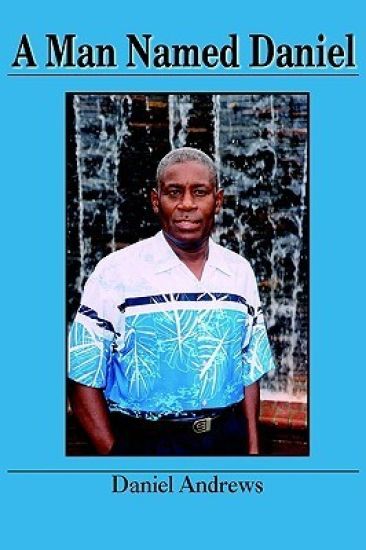
This book is about the life of a man named Daniel. He was a hard rock kid who grew up the hard way, yet he had hope. He hoped for a better day and a better life. His dream in life was to become a boxer. Every Wednesday and Friday he would watch fights with his uncle who later encouraged him to pursue his dreams. In April of 1959, Daniel left South Carolina headed for Washington DC. In 1960, he entered the Golden Gloves Amateur Boxing. In 1962, His life as an amateur fighter was over when he fought his first professional fight. Although Daniel didn't gain much popularity, he had the honor to train with a few popular fighters. A few of the fighters that he trained with were Ray Robinson, Muhammad Ali, and Joe Frazier. In this book Daniel talks about his encounter with Lena Horn and Joe Louis. He also talks about some experiences in professional fighting.





First published in 1876, "Daniel Deronda" was George Eliot's final novel. Controversial in its time for its morally ambiguous characterizations and its sympathy for the proto-Zionist movement, the novel is regarded today as one of the great social satires of the Victorian era. The story begins with the meeting of Daniel Deronda and the beautiful but stubborn and selfish, Gwendolen Harleth, whom he witnesses loses all her money at a game of roulette. The following day, Gwendolen learns that her family is bankrupt and consequently pawns her necklace, which is fortunately returned to her in a sympathetic gesture by Daniel. Faced with the loss of the family fortune in an economic downturn, Gwendolen ponders her options for obtaining financial security. She is reluctant to take a position as a governess desiring to become an actress and singer instead. Ultimately she chooses to marry the wealthy but manipulative Henleigh Mallinger Grandcourt, a decision she quickly regrets. Meanwhile Daniel becomes acquainted with Mirah Lapidoth, a young Jewish woman, whom he rescues from drowning. Daniel seeking a purpose in his life begins to identify with the cause of establishing a Jewish nation. Through the portrayals of Gwendolen and Daniel, Eliot provides a robust tale of the search for meaning amidst the decadence and materialism of Victorian British society. This edition is printed on premium acid-free paper and includes an introduction by Esther Wood.

Originally published in 1973. Professor Nathans illuminates the changes wrought by Jacksonian democracy on the career of Daniel Webster, a major political figure, and on the destiny of a major political party, the Whigs. Daniel Webster was a creative anachronism in the Jacksonian era. His career illustrates the fate of a generation of American politicians, reared to rule in a traditional world of defined social classes where gentlemen led and the masses followed. With extensive research into primary sources, Nathans interprets Webster as a leader in the older political tradition, hostile to permanent organized political parties and fearful of social strife that party conflict seemed to promote. He focuses on Webster's response to the rise of entrenchment of voter-oriented partisan politics. He analyzes Webster's struggle to survive, comprehend, and finally manipulate the new politics during his early opposition to Jackson; his roles in the Bank War and the nullification crisis; and the contest for leadership within the Whig Party from 1828 to 1844. Webster and the Whigs resisted and then belatedly attempted to answer the demands of the new egalitarian mass politics. When Webster failed as an apologist for government by the elite, he became a rhapsodist of American commercial enterprise. Seeking a new power base, he adapted his public style to the standards of simplicity and humility that the voters seemed to reward. Nathans shows, however, that Webster developed a realistic vision of the common bonds of Jacksonian society—of the basis for community—that would warrant anew the trust needed for the kind of leadership he offered. The meaning of Webster's career lies in these attempts to bridge the old and new politics, but his attempt was doomed to ironic and revealing failure. Nathans studies Webster's impact on the Whig party, showing that his influence was strong enough to thwart the ambitions of his rivals Henry Clay and John C. Calhoun but not strong enough to achieve his own aspirations. Nathans argues that Webster, through his efforts to increase his authority within the party, merely revealed his true weakness as a sectional leader. His successful blocking of Clay and Calhoun brought about a deadlock that significantly hastened the transfer of power to men more committed to strong party organization and more talented at voter manipulation. Webster's dilemma was the crisis of an entire political generation reared for a traditional world and forced to function in a modern one.