Kirjojen hintavertailu. Mukana 11 717 486 kirjaa ja 12 kauppaa.

Kirjahaku

Etsi kirjoja tekijän nimen, kirjan nimen tai ISBN:n perusteella.

1000 tulosta hakusanalla David a. Edwards

"We Will Never Yield"

"We Will Never Yield"

David A. Meola

INDIANA UNIVERSITY PRESS
2023
sidottu
How did German Jews present their claims for equality to everyday Germans in the first half of the nineteenth century? We Will Never Yield offers the first English-language study of the role of the German press in the fight for Jewish agency and participation during the 1840s. David Meola explores how the German press became a key venue for public debates over Jewish emancipation; religious, educational, and occupational reforms; and the role of Jews in German civil society, even against a background of escalating violence against the Jews in Germany. We Will Never Yield sheds light on the struggle for equality by German Jews in the 1840s and demonstrates the value of this type of archival source of Jewish voices that has been previously underappreciated by historians of Jewish history.
"We Will Never Yield"

"We Will Never Yield"

David A. Meola

INDIANA UNIVERSITY PRESS
2023
pokkari
How did German Jews present their claims for equality to everyday Germans in the first half of the nineteenth century? We Will Never Yield offers the first English-language study of the role of the German press in the fight for Jewish agency and participation during the 1840s. David Meola explores how the German press became a key venue for public debates over Jewish emancipation; religious, educational, and occupational reforms; and the role of Jews in German civil society, even against a background of escalating violence against the Jews in Germany. We Will Never Yield sheds light on the struggle for equality by German Jews in the 1840s and demonstrates the value of this type of archival source of Jewish voices that has been previously underappreciated by historians of Jewish history.
Oboe Reed Styles

Oboe Reed Styles

David A. Ledet

Indiana University Press
2000
pokkari
For nearly 300 years, oboe players have painstakingly evolved the individualized skill of reedmaking. David A. Ledet's unique study of techniques for styling oboe reeds analyzes, in detail, 166 examples of reeds by 80 artists from 14 countries. Each reed is strikingly photographed both in reflected light and in silhouette, clearly illustrating the relative thickness and shaping of the various sections of the reed. Oboists' reflections on their reedmaking techniques and brief biographical sketches introduce the photographs. As background to his survey, Ledet discusses various aspects of tone production, gives a brief history of the instrument, and offers valuable advice about pedagogical techniques. The book also documents musicians such as Robert Bloom, Henri de Busscher, Janet Craxton, Peter Graeme, Harold Gomberg, John Mack, Ronald Roseman, Ray Still, and the celebrated Marcel Tabuteau. Oboe Reed Styles is a historical and technical record, essential for teachers, performers, and students of all ages and abilities.
Magic, Mystery, and Science

Magic, Mystery, and Science

David A. Grandy

Indiana University Press
2003
pokkari
"[P.D. Ouspensky's] yearning for a transcendent, timeless reality—one that cancels out physical disintegration and death—figures into science at some fundamental level. Einstein found solace in his theory of relativity, which suggested to him that events are ever-present in the space-time continuum. When his friend Michele Besso passed on shortly before his own death, he wrote: 'For us believing physicists the distinction between past, present, and future is only an illusion, even if a stubborn one.'" —from Magic, Mystery, and Science The triumph of science would appear to have routed all other explanations of reality. No longer does astrology or alchemy or magic have the power to explain the world to us. Yet at one time each of these systems of belief, like religion, helped shed light on what was dark to our understanding. Nor have the occult arts disappeared. We humans have a need for mystery and a sense of the infinite. Magic, Mystery, and Science presents the occult as a "third stream" of belief, as important to the shaping of Western civilization as Greek rationalism or Judeo-Christianity. The occult seeks explanations in a world that is living and intelligent—quite unlike the one supposed by science. By taking these beliefs seriously, while keeping an eye on science, this book aims to capture some of the power of the occult. Readers will discover that the occult has a long history that reaches back to Babylonia and ancient Egypt. It proceeds alongside, and frequently mingles with, religion and science. From the Egyptian Book of the Dead to New Age beliefs, from Plato to Adolf Hitler, occult ways of knowing have been used—and hideously abused—to explain a world that still tempts us with the knowledge of its dark secrets.
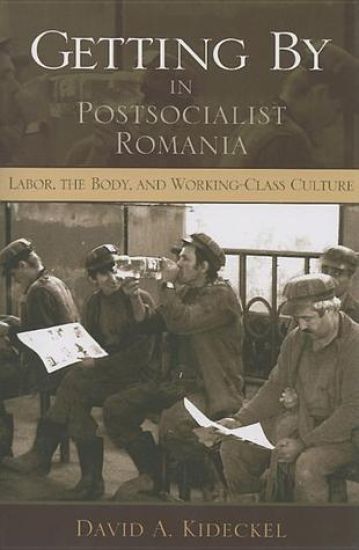
Getting by in Postsocialist Romania

Getting by in Postsocialist Romania

David A. Kideckel

Indiana University Press
2008
pokkari
This compelling ethnographic study describes how two groups of Romanian industrial workers have fared since the end of socialism. Once labor's elite, the celebrated coal miners of the Jiu Valley and the chemical workers of the Fagaras region had many social privileges and often derived genuine satisfaction from their work. Today, they are a rarely noted casualty of postsocialist transformations. Fear, distance, and alienation are the physical manifestations of stress experienced due to their precarious job status, declining health, and loss of a social safety net. Kideckel traces these issues in the context of labor, political relationships, domestic and community life, gender identities, and health. Drawing on more than three decades of fieldwork, he presents many narratives from select individuals, in their own words, providing a poignant and illuminating perspective on the everyday lives of ordinary people.
Mass Culture and Italian Society from Fascism to the Cold War

Mass Culture and Italian Society from Fascism to the Cold War

David A. Forgacs; Stephen Gundle

Indiana University Press
2008
pokkari
The 1930s to the 1950s in Italy witnessed large increases in film-going, radio-listening, and the sale of music and weekly magazines. The industries that made and sold commercial, cultural products were transformed by the new technologies of reproduction and new approaches to marketing and distribution. Yet historians tend to place the "real" genesis of mass culture in the 1960s, or to generalize about the harnessing of mass culture to the Fascist political project, without considering what kind of mass culture existed at the time and whether this harnessing was successful. This book draws on extensive new evidence, including oral histories and archival material, to explore possible continuities between the uses of mass culture before and after World War II.
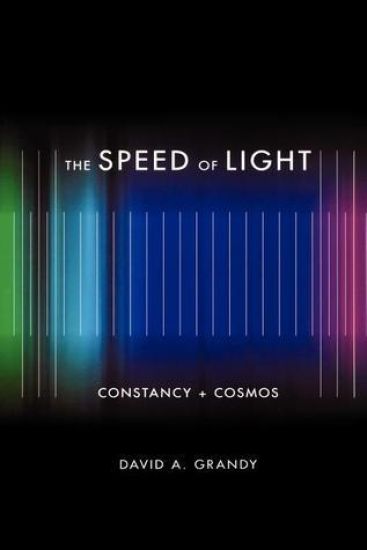
The Speed of Light

The Speed of Light

David A. Grandy

Indiana University Press
2009
pokkari
Light—our experience of light, our measurement of light, and the notion that light speed is constant—can be understood to mark our interface with the cosmos. David A. Grandy's book moves from the scientific to the existential, from Einstein to Merleau-Ponty, from light as a phenomenon to light as that which is constitutive of reality. To measure the speed of light is to measure something about the way we are measured or blended into the cosmos, and that universal blending predetermines our measurement of light speed in favor of a universal or constant value. It's quite a trip, one aimed at scientists who have pondered light speed constancy, philosophers inclined to question the idea that mind and world are distinct, and scientifically or philosophically inclined persons who enjoy stretching themselves in new ways.
Everyday Quantum Reality

Everyday Quantum Reality

David A. Grandy

Indiana University Press
2010
pokkari
Most people have heard about quantum physics and its remarkable, well-nigh bizarre claims. And most people would assume that quantum reality describes a world quite different from ours. In this book, David A. Grandy shows that one can find quantum puzzles, or variations thereof, in the backyard of everyday experience. What disappears in transferring quantum theory to the everyday is the theory's mathematical formalism, but that need not imply a loss of analytic rigor. If quantum reality is truly as elemental and ubiquitous as many thinkers suggest, then alternative or complementary perspectives ought to be possible, and with the proliferation of such perspectives, a more fully rounded understanding of quantum reality—and everyday reality—might emerge. Everyday Quantum Reality is a step in that direction.
Assassination in Khartoum

Assassination in Khartoum

David A. Korn

Indiana University Press
1993
sidottu
"Korn has written a fast-pased and absorbing account of the murder of two American diplomats held hostage in the Saudi embassy in Khartoum in 1973." —Foreign Affairs ". . . engrossing . . . well-crafted . . . a gripping story of personal courage and tragedy." —Foreign Service Journal
The New Lunar Society

The New Lunar Society

David A. Mindell

MIT PRESS LTD
2025
sidottu
How to create our industrial future with inspiration and lessons from the originators of the industrial revolution. Climate change, global disruption, and labor scarcity are forcing us to rethink the underlying principles of industrial society. In The New Lunar Society, David Mindell envisions this new industrialism from the fundamentals, drawing on the eighteenth century when first principles were formed at the founding of the Industrial Revolution. While outlining the new industrialism, he tells the story of the Lunar Society, a group of engineers, scientists, and industrialists who came together to apply the principles of the Enlightenment to industrial processes. Those principles were collaboration, the marriage of practical and scientific knowledge, and the belief that the world could progress through making things. The Lunar Society included pioneers like James Watt, Benjamin Franklin, and Josiah Wedgwood, and their conversations no less than ignited the Industrial Revolution and shaped the founding of the United States. Telling the stories of these makers in parallel with those of our current moment of crisis on multiple fronts, Mindell argues for a new industrialism. He asks: What does industry look like when it strives to optimize for the lowest carbon footprint as well as the greatest profit? When it values resilience as much as efficiency? When it upholds dignified, inclusive, sustainable work? Optimistic but not utopian about our ability to build the world, The New Lunar Society shines a light on how a new generation can reanimate the best ideas of our thinking doer forebears and begin to build a future that is both realistic and human-centered.
Digital Apollo

Digital Apollo

David A. Mindell

MIT Press
2011
pokkari
How human pilots and automated systems worked together to achieve the ultimate in flight—the lunar landings of NASA's Apollo program.As Apollo 11's Lunar Module descended toward the moon under automatic control, a program alarm in the guidance computer's software nearly caused a mission abort. Neil Armstrong responded by switching off the automatic mode and taking direct control. He stopped monitoring the computer and began flying the spacecraft, relying on skill to land it and earning praise for a triumph of human over machine. In Digital Apollo, engineer-historian David Mindell takes this famous moment as a starting point for an exploration of the relationship between humans and computers in the Apollo program. In each of the six Apollo landings, the astronaut in command seized control from the computer and landed with his hand on the stick. Mindell recounts the story of astronauts' desire to control their spacecraft in parallel with the history of the Apollo Guidance Computer. From the early days of aviation through the birth of spaceflight, test pilots and astronauts sought to be more than "spam in a can" despite the automatic controls, digital computers, and software developed by engineers. Digital Apollo examines the design and execution of each of the six Apollo moon landings, drawing on transcripts and data telemetry from the flights, astronaut interviews, and NASA's extensive archives. Mindell's exploration of how human pilots and automated systems worked together to achieve the ultimate in flight—a lunar landing—traces and reframes the debate over the future of humans and automation in space. The results have implications for any venture in which human roles seem threatened by automated systems, whether it is the work at our desktops or the future of exploration.
Lab Coats in Hollywood

Lab Coats in Hollywood

David A. Kirby

MIT Press
2013
pokkari
How science consultants make movie science plausible, in films ranging from 2001: A Space Odyssey to Finding Nemo.Stanley Kubrick's 2001: A Space Odyssey, released in 1968, is perhaps the most scientifically accurate film ever produced. The film presented such a plausible, realistic vision of space flight that many moon hoax proponents believe that Kubrick staged the 1969 moon landing using the same studios and techniques. Kubrick's scientific verisimilitude in 2001 came courtesy of his science consultants-including two former NASA scientists-and the more than sixty-five companies, research organizations, and government agencies that offered technical advice. Although most filmmakers don't consult experts as extensively as Kubrick did, films ranging from A Beautiful Mind and Contact to Finding Nemo and The Hulk have achieved some degree of scientific credibility because of science consultants. In Lab Coats in Hollywood, David Kirby examines the interaction of science and cinema: how science consultants make movie science plausible, how filmmakers negotiate scientific accuracy within production constraints, and how movies affect popular perceptions of science.Drawing on interviews and archival material, Kirby examines such science consulting tasks as fact checking and shaping visual iconography. Kirby finds that cinema can influence science as well: Depictions of science in popular films can promote research agendas, stimulate technological development, and even stir citizens into political action.
Action, Mind, and Brain

Action, Mind, and Brain

David A. Rosenbaum

MIT PRESS LTD
2022
nidottu
An engaging and accessible introduction to the psychology and neuroscience of physical action. This engaging and accessible book offers the first introductory text on the psychology and neuroscience of physical action. Written by a leading researcher in the field, it covers the interplay of action, mind, and brain, showing that many core concepts in philosophy, psychology, neuroscience, and technology grew out of questions about the control of everyday physical actions. It explains action not as a "one-way street from stimuli to response" but as a continual action-perception cycle. The informal writing style invites students to think through the evidence step by step, helping them develop general thinking stills as well as learn specific facts. Special emphasis is placed on the role of underrepresented groups. The book discusses the intellectual background of the field, from Plato to Kant, Dewey, and others; applications and methods; and the physical substrates of action--bones, tendons, ligaments, muscles, and nerves. It considers the control of actions in space; learning, and the roles of nature and nurture; feedback; feedforward, or anticipated feedback; and degrees of freedom--the multiple ways of getting things done and three methods or narrowing the alternatives. The book is generously illustrated, including many images of thinkers who contributed to the field.
Social Dilemmas

Social Dilemmas

David A. Schroeder

Praeger Publishers Inc
1995
sidottu
Efficient resource management and provision of public goods represent social dilemmas for those involved. They must choose between a course of action that would be in their personal best interest (e.g., overharvesting fishing banks to take a bigger profit; withholding one's contributions to National Public Radio) and some alternative course that would be more advantageous for the community as a whole (e.g., limiting one's present catch to ensure future fishing stocks; contributing to NPR, even though contributors and noncontributors alike would be able to enjoy its programming). The decisions made by those facing social dilemmas are affected by many factors, and the contributors to this book have explored the diverse processes that ultimately lead an individual to choose between self-interest and the well-being of the community. By gaining a better appreciation of the variables that affect decisions made by those caught in social dilemmas, more effective ways to encourage greater cooperation and to promote the common good may be found.
Scenarios of Change

Scenarios of Change

David A. Whitsett; Lyle Yorks

Praeger Publishers Inc
1989
sidottu
During the past two decades, many organizations have sought to utilize a number of participative management techniques in order to both motivate their workforce and to make their operations more effective in terms of costs, quality, productivity, and customer service. This study examines one such technique that has gained widespread popularity: job enrichment or job redesign. Written for students and practitioners of human resource management and organizational development, the authors report on the experience with job enrichment and work restructuring in four firms and compare the experiences of two. Throughout, the authors focus particularly on the primary challenge confronted by job redesign advocates within the individual organization: how to diffuse the relevant concepts in such a way that they have a widespread and lasting impact on the performance of the organization.Using detailed written documentation from the four companies as well as in-depth interviews, the authors describe how each company attempted to diffuse job redesign throughout the organization and identify the lessons for management that can be learned from each case. The reasons for the success or failure of diffusion in each company are examined in detail as are the particular steps taken by personnel within the organization. As the authors demonstrate, the successful spread of new management concepts throughout the organization requires skillful manipulation by internal advocates of the process. The most effective advocates, they argue, have detailed knowledge of the operations of an organization and use this knowledge to develop their innovations.
Being Urban

Being Urban

David A. Karp; Gregory P. Stone; William C. Yoels; Nicholas P. Dempsey

Praeger Publishers Inc
2015
sidottu
This third edition of a classic urban sociology text examines critical but often-neglected aspects of urban life from a social-psychological theoretical perspective.Symbolic interaction is among the most central theoretical paradigms in sociology and the theory that most thoroughly attends to how individuals give meaning to their world—in this case, how city dwellers interpret and respond to their daily experiences as urbanites. This thoroughly updated edition of Being Urban: A Sociology of City Life remains true to this particular theoretical angle of vision—the symbolic interactionist approach—focusing on specific topics that are relatively neglected in other urban sociology texts, and that lend themselves to the kind of social-psychological analyses that define the distinctive conceptual core of the authors' efforts.After the first two chapters supply readers with theoretical foundations of urban sociology, the next four chapters describe the various ways that individuals experience and make sense of key aspects of urban life. The final section—also composed of four chapters—addresses strategically chosen urban institutions and related processes of social change. Specific subject areas covered include sports, everyday public life, tolerance for diversity, women in cities, urban politics, and the arts. Readers will learn about how order is maintained in public urban places, understand why cities naturally breed a tolerance for diversity that may not be so easily achieved in less urban settings, and appreciate the delicate political and economic tensions between cities and their surrounding suburbs.
Being Urban

Being Urban

David A. Karp; Gregory P. Stone; William C. Yoels; Nicholas P. Dempsey

Praeger Publishers Inc
2015
nidottu
This third edition of a classic urban sociology text examines critical but often-neglected aspects of urban life from a social-psychological theoretical perspective.Symbolic interaction is among the most central theoretical paradigms in sociology and the theory that most thoroughly attends to how individuals give meaning to their world—in this case, how city dwellers interpret and respond to their daily experiences as urbanites. This thoroughly updated edition of Being Urban: A Sociology of City Life remains true to this particular theoretical angle of vision—the symbolic interactionist approach—focusing on specific topics that are relatively neglected in other urban sociology texts, and that lend themselves to the kind of social-psychological analyses that define the distinctive conceptual core of the authors' efforts.After the first two chapters supply readers with theoretical foundations of urban sociology, the next four chapters describe the various ways that individuals experience and make sense of key aspects of urban life. The final section—also composed of four chapters—addresses strategically chosen urban institutions and related processes of social change. Specific subject areas covered include sports, everyday public life, tolerance for diversity, women in cities, urban politics, and the arts. Readers will learn about how order is maintained in public urban places, understand why cities naturally breed a tolerance for diversity that may not be so easily achieved in less urban settings, and appreciate the delicate political and economic tensions between cities and their surrounding suburbs.