Kirjojen hintavertailu. Mukana 11 699 587 kirjaa ja 12 kauppaa.

Kirjahaku

Etsi kirjoja tekijän nimen, kirjan nimen tai ISBN:n perusteella.

1000 tulosta hakusanalla Deborah Springer

Therapeutic Assessment with Children

Therapeutic Assessment with Children

Deborah J. Tharinger; Dale I. Rudin; Marita Frackowiak; Stephen E. Finn

TAYLOR FRANCIS LTD
2022
sidottu
Therapeutic Assessment with Children presents a ground-breaking paradigm of psychological assessment in which children and families collaborate with the psychologist assessor to understand persistent problems and find new ways of repairing their relationships and moving forward with their lives. This paradigm is systemic, client-centered, and culturally sensitive and is applicable to families from many different backgrounds who often feel misunderstood and disempowered by traditional assessment methods. In this book, the reader will find a step-by-step description of Therapeutic Assessment with Children (TA-C), with ample teaching examples to make each step come alive. Each chapter includes detailed transcripts of assessment sessions with Henry, a ten-year-old boy, and his parents as they progress through a Therapeutic Assessment and find new ways of appreciating each other and being together. The combination of didactic and clinical material will give even new clinicians a groundwork from which to begin to practice TA-C. The volume demonstrates how the core values of TA-C—collaboration, respect, humility, compassion, openness, and curiosity—can be embedded in psychological assessment with children and families.Therapeutic Assessment with Children will be invaluable for graduate assessment courses in clinical, counseling, and school psychology and for seasoned professionals wanting to learn the TA-C model.
Therapeutic Assessment with Children

Therapeutic Assessment with Children

Deborah J. Tharinger; Dale I. Rudin; Marita Frackowiak; Stephen E. Finn

TAYLOR FRANCIS LTD
2022
nidottu
Therapeutic Assessment with Children presents a ground-breaking paradigm of psychological assessment in which children and families collaborate with the psychologist assessor to understand persistent problems and find new ways of repairing their relationships and moving forward with their lives. This paradigm is systemic, client-centered, and culturally sensitive and is applicable to families from many different backgrounds who often feel misunderstood and disempowered by traditional assessment methods. In this book, the reader will find a step-by-step description of Therapeutic Assessment with Children (TA-C), with ample teaching examples to make each step come alive. Each chapter includes detailed transcripts of assessment sessions with Henry, a ten-year-old boy, and his parents as they progress through a Therapeutic Assessment and find new ways of appreciating each other and being together. The combination of didactic and clinical material will give even new clinicians a groundwork from which to begin to practice TA-C. The volume demonstrates how the core values of TA-C—collaboration, respect, humility, compassion, openness, and curiosity—can be embedded in psychological assessment with children and families.Therapeutic Assessment with Children will be invaluable for graduate assessment courses in clinical, counseling, and school psychology and for seasoned professionals wanting to learn the TA-C model.
Designing Technical and Professional Communication

Designing Technical and Professional Communication

Deborah C. Andrews; Jason C. K. Tham

Routledge
2021
nidottu
This concise and flexible core textbook integrates a design thinking approach, rhetorical strategies, and a global perspective to help students succeed as technical and professional communicators in today’s multimodal, mobile, and global community. Design thinking and good communication practices are rooted in empathy and human values. The integrated approach fosters students' ability to address the complex problems they will face in their careers, where they will collaborate with people who present diverse expertise, cultures, languages, and values. This book introduces the knowledge and skills as well as agile activities that help students communicate on projects within local and global communities. Parts 1 and 2 introduce the strategies for design thinking, audience analysis, communicating ethically, collaborating professionally, and managing projects to define problems and implement solutions. In Parts 3 and 4, students learn to compose content in text and visuals. They learn to structure and deliver content by choosing the right genre and selecting effectively from the communication options available in today's multimodal environment.Designing Technical and Professional Communication serves as a flexible core textbook for technical and professional communication courses. An instructor’s manual containing exercises, sample syllabus, and guidance for teaching in a variety of settings is available online at www.routledge.com/9780367549602.
Designing Technical and Professional Communication

Designing Technical and Professional Communication

Deborah C. Andrews; Jason C. K. Tham

Routledge
2021
sidottu
This concise and flexible core textbook integrates a design thinking approach, rhetorical strategies, and a global perspective to help students succeed as technical and professional communicators in today’s multimodal, mobile, and global community. Design thinking and good communication practices are rooted in empathy and human values. The integrated approach fosters students' ability to address the complex problems they will face in their careers, where they will collaborate with people who present diverse expertise, cultures, languages, and values. This book introduces the knowledge and skills as well as agile activities that help students communicate on projects within local and global communities. Parts 1 and 2 introduce the strategies for design thinking, audience analysis, communicating ethically, collaborating professionally, and managing projects to define problems and implement solutions. In Parts 3 and 4, students learn to compose content in text and visuals. They learn to structure and deliver content by choosing the right genre and selecting effectively from the communication options available in today's multimodal environment.Designing Technical and Professional Communication serves as a flexible core textbook for technical and professional communication courses. An instructor’s manual containing exercises, sample syllabus, and guidance for teaching in a variety of settings is available online at www.routledge.com/9780367549602.
Medicinal Cannabis

Medicinal Cannabis

Deborah Malka

TAYLOR FRANCIS LTD
2021
nidottu
This book provides instruction for health professionals wanting to gain knowledge about the clinical aspects of cannabis medicine. How to use cannabis with real patients, not just theoretically, its pitfalls and challenges, as well as rewards, is a vastly under-covered topic. Now that some form of medical cannabis is approved in almost all US states, health care providers and patients Need to Know how to achieve maximum benefits by best use of this versatile herbal medicine.Medicinal Cannabis: Pearls for Clinical Practice introduces the scientific background of how cannabis acts medicinally, its components and how cannabis affects a specific condition. Key Features: Provides instruction for health professionals wanting to understand the clinical practice of cannabis medicine Reviews the chemistry, physiology and mechanisms of action of cannabinoids, endocannabinoids and cannabis with a focus on clinical relevance Presents information on practice management of specific patient populations, including pediatric, youth, adult, elderly and pets Features over 150 case reports with learning "Pearls" from the author’s clinical practice for 35 medical conditions Discusses specifics of dosing and delivery of cannabis in detail, with strategies to promote the benefit/risk ratio About the AuthorDeborah Malka, MD, PhD, is a holistic physician with certification in Integrative Holistic Medicine. Prior to clinical practice, Dr. Malka completed her PhD in Human Genetics from Columbia University, and studied both natural and traditional medicine, with degrees from the University of New Mexico School of Medicine and the Santa Fe College of Natural Medicine. She has specialized in cannabis medicine for the past 15 years, treating over 30,000 patients.
Medicinal Cannabis

Medicinal Cannabis

Deborah Malka

TAYLOR FRANCIS LTD
2021
sidottu
This book provides instruction for health professionals wanting to gain knowledge about the clinical aspects of cannabis medicine. How to use cannabis with real patients, not just theoretically, its pitfalls and challenges, as well as rewards, is a vastly under-covered topic. Now that some form of medical cannabis is approved in almost all US states, health care providers and patients Need to Know how to achieve maximum benefits by best use of this versatile herbal medicine.Medicinal Cannabis: Pearls for Clinical Practice introduces the scientific background of how cannabis acts medicinally, its components and how cannabis affects a specific condition. Key Features: Provides instruction for health professionals wanting to understand the clinical practice of cannabis medicine Reviews the chemistry, physiology and mechanisms of action of cannabinoids, endocannabinoids and cannabis with a focus on clinical relevance Presents information on practice management of specific patient populations, including pediatric, youth, adult, elderly and pets Features over 150 case reports with learning "Pearls" from the author’s clinical practice for 35 medical conditions Discusses specifics of dosing and delivery of cannabis in detail, with strategies to promote the benefit/risk ratio About the AuthorDeborah Malka, MD, PhD, is a holistic physician with certification in Integrative Holistic Medicine. Prior to clinical practice, Dr. Malka completed her PhD in Human Genetics from Columbia University, and studied both natural and traditional medicine, with degrees from the University of New Mexico School of Medicine and the Santa Fe College of Natural Medicine. She has specialized in cannabis medicine for the past 15 years, treating over 30,000 patients.
Music at the Maison royale de Saint-Louis at Saint-Cyr
The history of music at the Maison royale de Saint-Louis at Saint-Cyr — the famous convent school founded by Madame de Maintenon and established by Louis XIV in 1686 as a royal foundation — is both rich and intriguing; its large repertory of music was composed expressly for young female voices by important composers working within significant contemporary musical genres: liturgical chant, sacred motets, theatrical music, and cantiques spirituels. While these genres reflect contemporary styles and trends, at the same time the works themselves were made to conform to the sensibilities and abilities of their intended performers. Even as Jean-Baptiste Moreau's music for Jean Racine’s biblical tragedies Esther and Athalie shows a number of similarities to contemporary tragédies lyriques, it departs from that more public genre in its brevity, generally simpler solo writing, and the integral use of the chorus. The musical style of the choral numbers closely parallels that of other choral music in the repertory at Saint-Cyr. The liturgical chant sung in the church was composed by Guillaume-Gabriel Nivers, and is an example of plain-chant musical, a type of new ecclesiastical composition written during the seventeenth and eighteenth centuries, primarily for female religious communities in France. The large repertory of petits motets (short sacred Latin pieces for solo voice), mostly composed by Nivers and Louis-Nicolas Clérambault, are simpler and more restrained than works by their contemporaries. A close study of the motets reveals much about changes to musical style and performance practices at Saint-Cyr during the eighteenth century. The cantique spirituel, a song with a spiritual text in the vernacular French language, played a significant role in both the education and recreation of the girls at Saint-Cyr. Cantiques composed for the girls vary widely in terms of their style and difficulty, ranging from simple strophic melodies to more sophisticated works in the style of contemporary airs. In all cases, the stylistic features of the music for Saint-Cyr reflect a careful consideration of the needs and capabilities of the young singers of the school, as well as an awareness of the rigorous requirements of Madame de Maintenon, who kept a close watch over the propriety of all things relating to the piety, behavior, and image of her charges.
Collective Trauma and the Psychology of Secrets in Transnational Film
Collective Trauma and the Psychology of Secrets in Transnational Film advances a methodological line of inquiry based on a fresh insight into the ways in which cinematic meaning is generated and can be ascertained. Premised on a critical reading strategy informed by a metapsychology of secrets, the book features analyses of internationally acclaimed films—Guillermo del Torro’s Pan’s Labyrinth, Andrey Zvyagintsev’s The Return, Jee-woon Kim’s A Tale of Two Sisters, and Alejandro Amenábar’s The Others. It demonstrates how a rethinking of the figure of the secret in national film yields a new vantage point for examining heretofore unrecognized connections between collective historical experience, cinematic production and a transnational aesthetic of concealment and hiding.
Ausonius

Ausonius

Deborah Warren

Routledge
2020
nidottu
Ausonius provides translations of the key works of Ausonius, an important later Latin poet whose poems detail the social and cultural life of Gaul and its environment. His often difficult and playful Latin is presented in English by the award winning poet Deborah Warren, enabling a new generation of students to use and understand the poems. With notes and commentary throughout, this volume will be important not only as an example of later Latin poetry but also as a window onto the Later Roman Empire and the beginnings of early Christian writing.
Genes and the Bioimaginary

Genes and the Bioimaginary

Deborah Lynn Steinberg

Routledge
2020
nidottu
Genes and the Bioimaginary examines the dramatic rise and contemporary cultural apotheosis of 'the gene'. The book traces not only the genetification of modern life but is also a journey through the complex relationship between science and culture. At the heart of this book are three interlinked questions. The first concerns the paradigmatic transformations of the 'genetics revolution': how can we understand the impact of genes on social arenas as diverse as law and agriculture, politics and medicine, genealogy and jurisprudence? Second, how has the language of genes come to pervade public discourse - as much a trope of personal narrative as of the popular imaginary? And third, how can we gain critical purchase not only on the conditions and consequences of a particular science, but on its projective seductions, the terms of its persuasion, and the dilemmas and anxieties provoked in its wake? Through a series of illuminating case studies ranging from 'gay genes' to 'Jew genes', to genes for crime; from CSI to the Innocence Project, from genetics (post)racial imaginary to its phantasies of redemption, the book examines the emergence of the gene as a pre-eminent locus of both scientific and social explanation, and as a powerful object of spectacle, projective phantasy and attachment. Genes and the Bioimaginary makes a distinctive contribution to our understanding of how knowledge comes to be not only powerful, but plausible.
Giraffes in the Garden of Italian Literature
Giraffes in the Garden of Italian Literature investigates the central nexus in the work of Italo Svevo, Federigo Tozzi and Carlo Emilio Gadda and considers it as evidence of a programmatic attempt to renegotiate human embodiment in order to validate an alternate space of lived corporeality.
Berthold Lubetkin’s Highpoint II and the Jewish Contribution to Modern English Architecture
In 1935, the Russian-born Jewish architect Berthold Lubetkin and his firm Tecton designed Highpoint, a block of flats in London, which Le Corbusier called ‘revolutionary’. Three years later, Lubetkin completed a companion design. Yet Highpoint II felt very different, and the sense that the ideals of modernism had been abandoned seemed hard to dispute. Had modern architecture failed to take root in England? This book challenges the belief that English architecture was on hiatus during the 1930s. Using Highpoint II as a springboard, Deborah Lewittes takes us on a journey through the defining moments of modern English architecture – the ‘high points’ of the period surrounding Highpoint II. Drawing on Lubetkin’s work and his writings, the book argues that he advanced influential, lasting theories which were rooted in his design for Highpoint II. Lubetkin’s work is explored within the context of wider Jewish emigration to London during the interwar years as well as the anti-Semitism that pervaded Britain during the 1930s. As Lewittes demonstrates, this decade was anything but quiet. Providing a new perspective on twentieth-century English architecture, this book is of interest to students and scholars in architectural history, urban studies, Jewish studies, and related fields.
Eberhard Jüngel and Existence

Eberhard Jüngel and Existence

Deborah Casewell

Routledge
2021
sidottu
This book interrogates the contemporary Lutheran theologian Eberhard Jüngel’s theological anthropology, arguing that Jüngel’s thought can provide a model for theological engagement with philosophical accounts of existence. Focusing on Jüngel’s theology of existence, the author explores the thought of philosophers, including Heidegger and Hegel, their influence on and application to his theology, and argues that Jüngel’s account of humanity should be seen as a response to atheistic existentialist accounts of existence.In showing how Jüngel’s theology is informed by and dependent on philosophical thought, this book provides a new lens on the interplay between philosophy, theology, and religion in twentieth-century German thought. It will be of particular interest to researchers in philosophy, theology, and philosophy of religion.
Eberhard Jüngel and Existence

Eberhard Jüngel and Existence

Deborah Casewell

TAYLOR FRANCIS LTD
2023
nidottu
This book interrogates the contemporary Lutheran theologian Eberhard Jüngel’s theological anthropology, arguing that Jüngel’s thought can provide a model for theological engagement with philosophical accounts of existence. Focusing on Jüngel’s theology of existence, the author explores the thought of philosophers, including Heidegger and Hegel, their influence on and application to his theology, and argues that Jüngel’s account of humanity should be seen as a response to atheistic existentialist accounts of existence.In showing how Jüngel’s theology is informed by and dependent on philosophical thought, this book provides a new lens on the interplay between philosophy, theology, and religion in twentieth-century German thought. It will be of particular interest to researchers in philosophy, theology, and philosophy of religion.
Aid and Technical Cooperation as a Foreign Policy Tool for Emerging Donors
The question of why countries give aid and assistance to other countries has long been a topic of debate- is it altruism, or selfishness? The assumption is sometimes made that donors from developing countries might be more motivated by altruism than ‘traditional’ western donors. This book demonstrates that on the contrary, the provision of development assistance can be used to serve national interests, allowing so-called ‘emerging’ donors to gain soft power in the international sphere by improving their image and global influence.Technical cooperation, or the transfer of knowledge, is an area of particular interest, as it can enable donors to position themselves as a global leader in a given field, with a unique set of skills and expertise in a knowledge area. This book uses the Brazilian case to demonstrate how a country such as Brazil can seek power and influence by providing no-strings-attached technical assistance. The empirical analysis unpicks the motivations behind development assistance, and how it can be used as a foreign policy tool. In doing so, the book sheds light upon the similarities and variations in the provision of technical cooperation as a foreign policy tool by China, India, and Brazil. This book will be of interest to researchers of International Development, South-South Cooperation, International Relations, and those working on Brazil specifically.
Clipped Wings

Clipped Wings

Deborah Ancell

Routledge
2020
nidottu
Within the developed world, airlines have responded to the advice of advocates for corporate social and environmental responsibility (CSER) to use the intertwined dimensions of economics, society and environment to guide their business activities. However, disingenuously, the advocates and regulators frequently pay insufficient attention to the economics which are critical to airlines’ sustainability and profits. This omission pushes airlines into the unprofitable domain of CSERplus.The author identifies alleged market inefficiencies and failures, examines CSERplus impacts on international competition and assesses the unintended consequences of the regulations. She also provides innovative ideas for future-proofing airlines. Clipped Wings is a treatise for business professionals featuring academic research as well as industry anecdotes. It is written for airlines (including their owners, employees, passengers and suppliers), airports, trade associations, policy makers, educators, students, consultants, CSERplus specialists and anyone who is concerned about the future of competitive airlines.
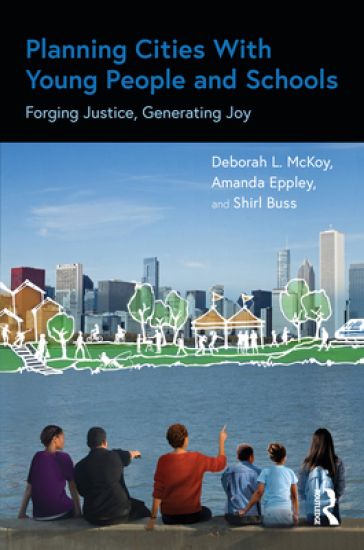
Planning Cities With Young People and Schools

Planning Cities With Young People and Schools

Deborah L. McKoy; Amanda Eppley; Shirl Buss

Routledge
2021
nidottu
Offering the overlooked but essential viewpoint of young people from low-income communities of color and their public schools, Planning Cities With Young People and Schools offers an urgently needed set of best-practice recommendations for urban planners to change the status quo and reimagine the future of our cities for and with young people. Working with more than 10,000 students over two decades from the San Francisco Bay Area, to New York, to Tohoku, Japan, this work produces a wealth of insights on issues ranging from environmental planning, housing, transportation, regional planning, and urban education.Part I presents a theory of change for planning more equitable, youth-friendly cities by cultivating intergenerational communities of practice where young people work alongside city planners and adult professionals. Part II explores youth engagement in resilience, housing, and transportation planning through an analysis of literature and international examples of engaging children and youth in city planning. Part III speaks directly to practitioners, scholars, and students alike, presenting "Six Essentials for Planning Just and Joyful Cities" as necessary precursors to effective city planning with and for our most marginalized, children, youth, and public schools. For academics, policy makers, and practitioners, this book raises the importance of education systems and young people as critical to urban planning and the future of our cities.
Planning Cities With Young People and Schools

Planning Cities With Young People and Schools

Deborah L. McKoy; Amanda Eppley; Shirl Buss

Routledge
2021
sidottu
Offering the overlooked but essential viewpoint of young people from low-income communities of color and their public schools, Planning Cities With Young People and Schools offers an urgently needed set of best-practice recommendations for urban planners to change the status quo and reimagine the future of our cities for and with young people. Working with more than 10,000 students over two decades from the San Francisco Bay Area, to New York, to Tohoku, Japan, this work produces a wealth of insights on issues ranging from environmental planning, housing, transportation, regional planning, and urban education.Part I presents a theory of change for planning more equitable, youth-friendly cities by cultivating intergenerational communities of practice where young people work alongside city planners and adult professionals. Part II explores youth engagement in resilience, housing, and transportation planning through an analysis of literature and international examples of engaging children and youth in city planning. Part III speaks directly to practitioners, scholars, and students alike, presenting "Six Essentials for Planning Just and Joyful Cities" as necessary precursors to effective city planning with and for our most marginalized, children, youth, and public schools. For academics, policy makers, and practitioners, this book raises the importance of education systems and young people as critical to urban planning and the future of our cities.
Politics, Hierarchy, and Public Health

Politics, Hierarchy, and Public Health

Deborah Wallace; Rodrick Wallace

Routledge
2021
nidottu
Steep socioeconomic hierarchy in post-industrial Western society threatens public health because of the physiological consequences of material and psychosocial insecurities and deprivations. Following on from their previous books, the authors continue their exploration of the geography of early mortality from age-related chronic conditions, of risk behaviors and their health outcomes, and of infant and child mortality, all due to rigid hierarchy. They divide the 50 states into those that gave their electoral college votes to Trump and those that gave theirs to Clinton in the 2016 presidential election and compare the two sets for socioeconomic and public health profiles. They deliberately apply only simple standard statistical methods in the public health analyses: t-test, Mann-Whitney test, bivariate regression, and backward stepwise multivariate regression. The book assumes familiarity with basic statistics.The authors argue that the unequal power relations that result in eroding public health in the nation and, in particular, in the Trump-voting states, largely cascade from the collapse of American industry, and they analyze the Cold War roots of that collapse. In two largely independent chapters on economics, they explore both the suppression of countervailing forces, such as organized labor, and the diversion of technical resources to the military as essential foundations to the population-level suffering that expressed itself in the 2016 presidential election.This interdisciplinary book has several primary audiences: creators of public policies, such as legislators and governmental staff, public health professionals and social epidemiologists, economists, labor union professionals, civil rights advocates, political scientists, historians, and students of these disciplines from public health through the social sciences.