The 18th century was a wealth of knowledge, exploration and rapidly growing technology and expanding record-keeping made possible by advances in the printing press. In its determination to preserve the century of revolution, Gale initiated a revolution of its own: digitization of epic proportions to preserve these invaluable works in the largest archive of its kind. Now for the first time these high-quality digital copies of original 18th century manuscripts are available in print, making them highly accessible to libraries, undergraduate students, and independent scholars.Western literary study flows out of eighteenth-century works by Alexander Pope, Daniel Defoe, Henry Fielding, Frances Burney, Denis Diderot, Johann Gottfried Herder, Johann Wolfgang von Goethe, and others. Experience the birth of the modern novel, or compare the development of language using dictionaries and grammar discourses. ++++The below data was compiled from various identification fields in the bibliographic record of this title. This data is provided as an additional tool in helping to insure edition identification: ++++Cambridge University LibraryT219088An imitation of Laurence Sterne's 'Tristram Shandy'. "Mr. Heydegger, of Strasburg" is a pseudonym, possibly intended to recall John James Heydegger, i.e. Johann Jakob Heidegger (1659?-1748).London: printed for W. Flexney, 1762. 6],38p.; 12
The 18th century was a wealth of knowledge, exploration and rapidly growing technology and expanding record-keeping made possible by advances in the printing press. In its determination to preserve the century of revolution, Gale initiated a revolution of its own: digitization of epic proportions to preserve these invaluable works in the largest archive of its kind. Now for the first time these high-quality digital copies of original 18th century manuscripts are available in print, making them highly accessible to libraries, undergraduate students, and independent scholars.Western literary study flows out of eighteenth-century works by Alexander Pope, Daniel Defoe, Henry Fielding, Frances Burney, Denis Diderot, Johann Gottfried Herder, Johann Wolfgang von Goethe, and others. Experience the birth of the modern novel, or compare the development of language using dictionaries and grammar discourses. ++++The below data was compiled from various identification fields in the bibliographic record of this title. This data is provided as an additional tool in helping to insure edition identification: ++++Bodleian Library (Oxford)N033100The titlepage is a cancel?.London: printed for Alex. Hogg, 1795?]. 2],583, 1]p., plates; 8
The 18th century was a wealth of knowledge, exploration and rapidly growing technology and expanding record-keeping made possible by advances in the printing press. In its determination to preserve the century of revolution, Gale initiated a revolution of its own: digitization of epic proportions to preserve these invaluable works in the largest archive of its kind. Now for the first time these high-quality digital copies of original 18th century manuscripts are available in print, making them highly accessible to libraries, undergraduate students, and independent scholars.Medical theory and practice of the 1700s developed rapidly, as is evidenced by the extensive collection, which includes descriptions of diseases, their conditions, and treatments. Books on science and technology, agriculture, military technology, natural philosophy, even cookbooks, are all contained here.++++The below data was compiled from various identification fields in the bibliographic record of this title. This data is provided as an additional tool in helping to insure edition identification: ++++British LibraryW010102At head of title: Published for the general benefit of Great-Britain and the North American colonies. Running title: Abstract of a treatise on hemp.Boston: Printed and sold by Edes & Gill, in Queen-Street, MDCCLXVI. 1766]. 4],30p., 1]leaf of plates: ill.; 4
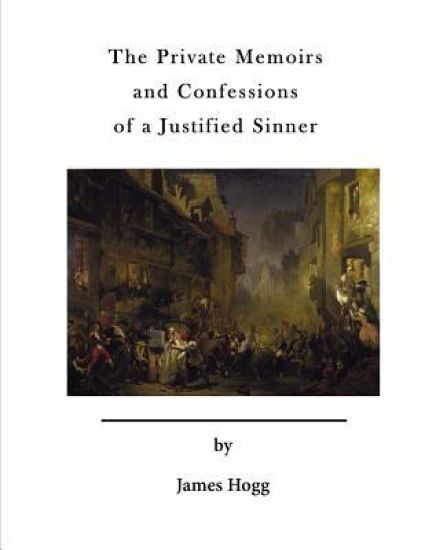
The Private Memoirs and Confessions of a Justified Sinnerwritten by himselfwith a detail of curious traditionary facts, and other evidence, by the editorJames HoggThe Private Memoirs and Confessions of a Justified Sinner, (Full title, The Private Memoirs and Confessions of a Justified Sinner: Written by Himself: With a detail of curious traditionary facts and other evidence by the editor) is a novel by the Scottish author James Hogg, published anonymously in 1824.Considered by turns part-gothic novel, part-psychological mystery, part-metafiction, part-satire, part-case study of totalitarian thought, it can also be thought of as an early example of modern crime fiction in which the story is told, for the most part, from the point of view of its criminal anti-hero. The action of the novel is located in a historically definable Scotland with accurately observed settings, and simultaneously implies a pseudo-Christian world of angels, devils, and demonic possession.The first edition sold very poorly and the novel suffered from a period of critical neglect, especially in the nineteenth century. However, since the latter part of the twentieth century it has won greater critical interest and attention. It was praised by Andr Gide in an introduction to the 1947 reissue and described by the critic Walter Allen as 'the most convincing representation of the power of evil in our literature'. It has also been seen as a study of religious fanaticism through its deeply critical portrait of the Calvinist concept of predestination. It is written in English, with some sections of Scots that appear in dialogue.
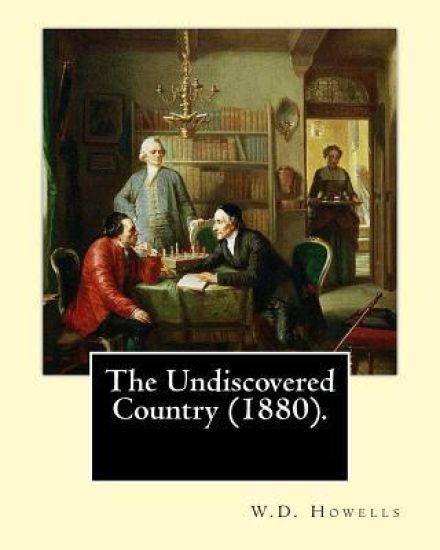
A father uses his daughter to try to prove his belief in spiritualism. When his efforts fail, they retreat to a Shaker community to recover from the debacle.......... William Dean Howells ( March 1, 1837 - May 11, 1920) was an American realist novelist, literary critic, and playwright, nicknamed "The Dean of American Letters". He was particularly known for his tenure as editor of The Atlantic Monthly, as well as for his own prolific writings, including the Christmas story "Christmas Every Day" and the novels The Rise of Silas Lapham and A Traveler from Altruria. Early life and family: William Dean Howells was born on March 1, 1837 in Martinsville, Ohio (now known as Martins Ferry, Ohio) to William Cooper Howells and Mary Dean Howells, the second of eight children. His father was a newspaper editor and printer who moved frequently around Ohio. In 1840, the family settled in Hamilton, Ohio, where his father oversaw a Whig newspaper and followed Swedenborgianism.Their nine years there were the longest period that they stayed in one place. The family had to live frugally, although the young Howells was encouraged by his parents in his literary interests. He began at an early age to help his father with typesetting and printing work, a job known at the time as a printer's devil. In 1852, his father arranged to have one of his poems published in the Ohio State Journal without telling him. Early career: In 1856, Howells was elected as a clerk in the State House of Representatives. In 1858, he began to work at the Ohio State Journal where he wrote poetry and short stories, and also translated pieces from French, Spanish, and German. He avidly studied German and other languages and was greatly interested in Heinrich Heine. In 1860, he visited Boston and met with writers James Thomas Fields, James Russell Lowell, Oliver Wendell Holmes, Sr., Nathaniel Hawthorne, Henry David Thoreau, and Ralph Waldo Emerson. He became a personal friend to many of them, including Henry Adams, William James, Henry James, and Oliver Wendell Holmes, Jr. In 1860 Howells wrote Abraham Lincoln's campaign biography Life Of Abraham Lincoln and subsequently gained a consulship in Venice. He married Elinor Mead on Christmas Eve 1862 at the American embassy in Paris. She was a sister of sculptor Larkin Goldsmith Mead and architect William Rutherford Mead of the firm McKim, Mead, and White. Among their children was architect John Mead Howells. Editorship and other literary pursuits: The Howells returned to America in 1865 and settled in Cambridge, Massachusetts. He wrote for various magazines, including the Atlantic Monthly and Harper's Magazine. In January 1866, James Fields offered him a position as assistant editor at the Atlantic Monthly; he accepted after successfully negotiating for a higher salary, though he was frustrated by Fields' close supervision. Howells was made editor in 1871, after five years as assistant editor, and he remained in this position until 1881. In 1869, he met Mark Twain with whom he formed a longtime friendship. But his relationship with journalist Jonathan Baxter Harrison was more important for the development of his literary style and his advocacy of Realism. Harrison wrote a series of articles for the Atlantic Monthly during the 1870s on the lives of ordinary Americans.Howells gave a series of twelve lectures on "Italian Poets of Our Century" for the Lowell Institute during its 1870-71 season. He published his first novel Their Wedding Journey in 1872, but his literary reputation soared with the realist novel A Modern Instance (1882), which described the decay of a marriage. His 1885 novel The Rise of Silas Lapham became his best known work, describing the rise and fall of an American entrepreneur of the paint business. His social views were also strongly represented in the novels Annie Kilburn (1888), A Hazard of New Fortunes (1890), and An Imperative Duty (1891).....
This all-in-one reference is a quick and easy way for book, magazine, online, academic, and business writers to look up sticky punctuation questions for all styles including AP (Associated Press), MLA (Modern Language Association), APA (American Psychological Association), and Chicago Manual of Style. Punctuate with Confidence--No Matter the Style Confused about punctuation? There's a reason. Everywhere you turn, publications seem to follow different rules on everything from possessive apostrophes to hyphens to serial commas. Then there are all the gray areas of punctuation--situations the rule books gloss over or never mention at all. At last, help has arrived. This complete reference guide from grammar columnist June Casagrande covers the basic rules of punctuation plus the finer points not addressed anywhere else, offering clear answers to perplexing questions about semicolons, quotation marks, periods, apostrophes, and more. Better yet, this is the only guide that uses handy icons to show how punctuation rules differ for book, news, academic, and science styles--so you can boldly switch between essays, online newsletters, reports, fiction, and magazine and news articles. This handbook also features rulings from an expert "Punctuation Panel" so you can see how working pros approach sticky situations. And the second half of the book features an alphabetical master list of commonly punctuated terms worth its weight in gold, combining rulings from the major style guides and showing exactly where they differ. With The Best Punctuation Book, Period, you'll be able to handle any punctuation predicament in a flash--and with aplomb.
How does sacred geometry or vibration play into Reality? Is it possible for real life connections to be as exciting as longed-for or imagined ones? Of pyramids and pirates, possession and power plays, author/ex-New York editor/filmmaker Cristina Salat delves into her early life in New York City, first loves, and what it means to be an aware spiritual being in today's complex world.
How does sacred geometry or vibration play into Reality? Is it possible for real life connections to be as exciting as longed-for or imagined ones? Of pyramids and pirates, possession and power plays, author/ex-New York editor/filmmaker Cristina Salat delves into her early life in New York City, first loves, and what it means to be an aware spiritual being in today's complex world. Available in e-book as well as black/white or color print editions.
Edwin Lef vre (1871-1943) was an American journalist, writer, and diplomat most noted for his writings on Wall Street business. Biography: Lef vre was born George Edwin Henry Lef vre on January 23, 1871 in Col n, Colombia (now Republic of Panama), the son of Henry Lef vre (1841-1899), who was for many years the general agent of the Pacific Steamship Company American for Panama; he was born in Jersey, in the Channel Islands and emigrated to the United States in his youth. Mr. Lef vre sent his son Edwin to the United States when he was a boy and he was educated at Lehigh University where he received training as a mining engineer. However, at the age of nineteen, he began his career as a journalist and eventually became a stockbroker, as well. Following his father's death, he inherited some wealth and became an independent investor; and while living in Hartsdale, New York a collection of Edwin Lef vre's short stories were published (1901) under the title "Wall Street Stories." This was followed by several novels about money and finance until 1908 when Lef vre and his wife Martha and their children moved to a country estate in East Dorset, Vermont. In 1909 he was appointed ambassador to Spain and Italy by his native country, Panama. 1] Lef vre did work as a broker on Wall Street and was the financial writer for the New York Sun newspaper. He later returned to his home in Vermont where he resumed his literary work, providing short stories for magazines such as The Saturday Evening Post and writing novels. Of the eight books written by Edwin Lef vre his Reminiscences of a Stock Operator is considered a classic of American business writing. The book began as a series of twelve articles published between 1922 and 1923 in The Saturday Evening Post. It is written as first-person fiction, telling the story of a professional stock trader on Wall Street. While published as fiction, it is generally accepted to be the biography of stock market whiz Jesse Livermore. The book has been reprinted in almost every decade since its original publication in 1925, the latest put out by John Wiley & Sons in hardcover and paperback in 1994 which remains in print. It has been translated into the Chinese, German, French, Polish, and Italian languages, amongst others..... Robert (Bob) Hobart Davis (1869-1942) was an American editor and photographer. He was born in Brownsville, Nebraska on March 23, 1869 to Reverend George Ransome Davis and Silvia Nichols Davis. His parents had moved from New England to Nebraska to do missionary work with the American Indians of the region. As a result, Davis was exposed to American Indian culture early-on in his childhood and even could speak a few words of Comanche, Sioux, and Cheyenne by the age of six. Davis began his career working for this brother, Sam, to publish the Carson City Daily Appeal. Although he started by delivering the newspaper to weekly subscribers, Davis was a proficient compositor by the age of nineteen. After Carson City, Davis moved to San Francisco before moving to New York to begin work at the New York Journal. During the Spanish American War, Davis wrote about the conditions of war, his most notable work being an expos on the rotten meat served to soldiers. Davis's first editing job was at the New York Sunday News, where he served as managing editor in early 1900s. He would go on to become editor of Munsey's Magazine, owned by Frank Munsey. While in this position Davis was known for his willingness to help young writers break into the field of literary fiction. In addition to his editorial career, Davis was an amateur photographer. During his lifetime he took more than 3,000 portraits of a variety of prominent individuals. Bob Davis married Madge Lee Hutchinson of San Francisco in 1899. He died in Montreal, Canada in 1942 at the age of 73....


![Journal of a tour to the White Mountains in July, 1784 ... Printed from the original manuscript, with a prefatory note by the editor [Charles Deane]](/covers/9781418193393.jpg)