Kirjojen hintavertailu. Mukana 12 083 983 kirjaa ja 12 kauppaa.

Kirjahaku

Etsi kirjoja tekijän nimen, kirjan nimen tai ISBN:n perusteella.

1000 tulosta hakusanalla Emily Manuel Reeves

Sweater Girls Club Collection: Sweater Designs by Emily A. Garrison

Sweater Girls Club Collection: Sweater Designs by Emily A. Garrison

Emily a. Garrison

Createspace Independent Publishing Platform
2017
nidottu
A hand knit sweater is an art form all its own. Sweaters can reflect your taste and style. There is nothing so fulfilling, as the completion of your own fashion creation, mistakes and all. It is unique because it was knitted by you.Design is everywhere in life, whether it be in the architecture of a building, or the pattern and color of a leaf. Keeping a sketchbook and a bulletin board filled with creative ideas, can integrate design into knitting. Using these different ideas can result in the development of new and unique sweater designs.
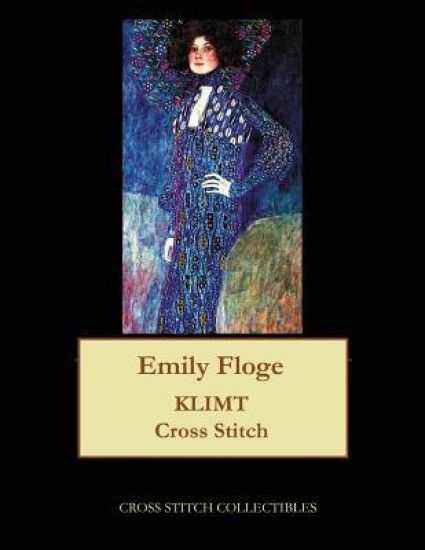
Emily Floge

Emily Floge

Kathleen George; Cross Stitch Collectibles

Createspace Independent Publishing Platform
2017
pokkari
Emily Floge - Gustav Klimt cross stitch pattern by Cross Stitch Collectibles Finished Sizes (approximate)14 count: 17.75" x 26.75 "18 count: 14" x 20.75"24 count: 10.5" x 15.75"Stitches: 250w x 375h Pattern Features: * Large-print pattern for easy reading * Full color glossy front cover * Full cross stitches only (no backstitching or specialty stitches) * Black and white chart with easy-to-read alphabetic symbols * Comprehensive instruction sheet to guide you through the pattern pages. * Full thread list indicating DMC color numbers, names and quantity required * Cross stitch pattern chart only. No fabric, threads or other materials included. Benefits of Large-Print Cross Stitch Patterns: : This book is an "Extra-Large-Print" cross stitch pattern. Stitching our beautiful cross stitch patterns is a labor of love and very time-consuming. Reading such large patterns for hours at a time can pose a challenge for stitchers of all ages. The large grids and alphabetic symbols used in this cross stitch pattern book makes tackling such a large project much easier and more enjoyable. Founded in 1998, Cross Stitch Collectibles specializes in high quality cross stitch reproductions of fine art paintings by the Great Masters, including Italian Renaissance, Impressionist, Pre-Raphaelite, Asian, Fractal art, and many more styles. You will find something to love and cherish in our vast collection. Cross stitch your own masterpiece today ABOUT THE AUTHOR: Kathleen George is the founder of Cross Stitch Collectibles, and designer of more than 6,000 fine art counted cross stitch patterns since 1998. She recreates the world's most recognized and acclaimed masterpiece paintings in cross stitch, and was instrumental to the introduction and popularity of the international phenomenon of designing boldly-colored fractal cross stitch patterns, which have become a rapidly growing niche among cross stitch enthusiasts world-wide. Born in Pennsylvania, Kathleen now resides and works in Henderson, NV.
Emily Dickinson: Selected Poems and Letters

Emily Dickinson: Selected Poems and Letters

Emily Dickinson

BROADVIEW PRESS LTD
2023
pokkari
This compact edition, designed for use in undergraduate courses, combines a substantial selection of Dickinson’s poems (including one complete fascicle) with a selection of letters and a range of contextual materials. In a number of cases several different versions of a poem are presented side by side. The texts are based on the handwritten manuscripts themselves, in the facsimile form in which the Emily Dickinson Archive now makes the vast majority of Dickinson’s manuscript versions available to the general public. The three major editions that are based directly on the manuscripts—those of Thomas H. Johnson (1955), R.W. Franklin (1998) and Cristanne Miller (2016)—have also been consulted; in many cases where the transcriptions of these editors differ from one another, this edition provides information in the notes as to those differences. Extensive explanatory footnotes are also provided, as is a concise but wide-ranging introduction to Dickinson and her work.The appendices include excerpts from numerous nineteenth-century reviews of Dickinson’s first published volume (including by William Dean Howells and Andrew Lang). Thomas Wentworth Higginson’s influential Atlantic Monthly article, “Emily Dickinson’s Letters,” is also included in its entirety.This volume is one of a number of editions that have been drawn from the pages of the acclaimed Broadview Anthology of American Literature; like the others, it is designed to make a range of material from the anthology available in a format convenient for use in a wide variety of contexts. This edition departs from other editions in the series in one important respect—its format. The large page size of the edition facilitates the reproduction of manuscript pages in readable facsimile form, and the two-column format of the text facilitates comparison between different versions.
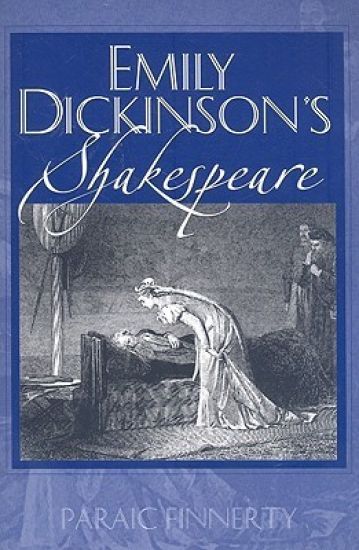
Emily Dickinson's Shakespeare

Emily Dickinson's Shakespeare

Paraic Finnerty

University of Massachusetts Press
2008
nidottu
This book tells how Dickinson's fascination with Shakespeare informed her life and her poetry. One of the messages that Emily Dickinson wanted to communicate to the world was her great love of William Shakespeare - her letters abound with references to him and his works. This book explores the many implications of her admiration for the Bard.Paraic Finnerty clarifies the essential role that Shakespeare had in Dickinson's life by locating her allusions to his writings within a nineteenth-century American context and by treating reading as a practice that is shaped, to a large extent, by culture. In the process, he throws new light on Shakespeare's multifaceted presence in Dickinson's world: in education, theater, newspapers, public lectures, reading clubs, and literary periodicals.Through analysis of letters, journals, diaries, records, periodicals, newspapers, and marginalia, Finnerty juxtaposes Dickinson's engagement with Shakespeare with the responses of her contemporaries. Her Shakespeare emerges as an immoral dramatist and highly moral poet; a highbrow symbol of class and cultivation and a lowbrow popular entertainer; an impetus behind the emerging American theater criticism and an English author threatening American creativity; a writer culturally approved for women and yet one whose authority women often appropriated to critique their culture. Such a context allows the explication of Dickinson's specific references to Shakespeare and further conjecture about how she most likely read him.Finnerty also examines those of Dickinson's responses to Shakespeare that deviated from what might have been expected and approved of by her culture. Imaginatively departing from the commonplace, Dickinson chose to admire three of Shakespeare's most powerful and transgressive female characters - Cleopatra, Queen Margaret, and Lady Macbeth - instead of his more worthy and virtuous heroines. More startling, although the poet found resonance for her own life in Hamlet, Romeo and Juliet, and Macbeth, she chose, in the racially charged atmosphere of nineteenth-century America, to identify with Shakespeare's most controversial character, Othello, thereby defying expectations once again.
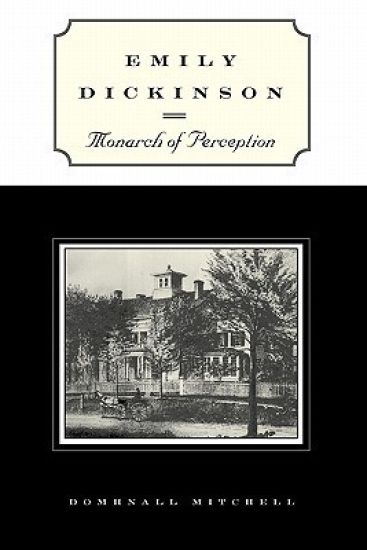
Emily Dickinson

Emily Dickinson

Domhnall Mitchell

University of Massachusetts Press
2011
nidottu
Emily Dickinson has often been pictured as a sensitive but isolated poet--someone who published very little in her lifetime and limited herself to lyrics, considered to be the kind of poems most removed from social and political life. In recent years, scholars have challenged that view, and this book extends the discussion in valuable new directions. Domhnall Mitchell begins by focusing on three historical phenomena--the railroad, the Dickinson homestead, and horticulture--and argues that poems about trains, home, and flowers engage with thei meanings in ways that extend beyond the confines of the aesthetic. He shows how Dickinson's poems and letters reveal the full complexity of her position as a woman situated within a larger social and economic class. In the second half of the book, Mitchell considers the ideological, textual, and editorial implications of Dickinson's strategic privatization of her art. He relates the particular forms of her manuscripts' appearance, distribution, and collation to aspects of her social as well as her literary consciousness. In a chapter that is certain to provoke debate, he explores what it means to read individual poems and letters in manuscript versions rather than in printed editions. By paying close attention to textual evidence, he makes the case that various features of the manuscripts are actually matters of accident or immediate convenience rather than the visual markers of a new aestheic principle. Mitchell closes by using the theories of Mikhail Bakhtin to explore the contradictions of a "private" poetry that engages verbally in multiple areas of nineteenth-century life and discourse. By attending to the contemporaneous particularities of recurrent words and images, he demonstrates that Dickinson could stay at home and still be at home in history, too.
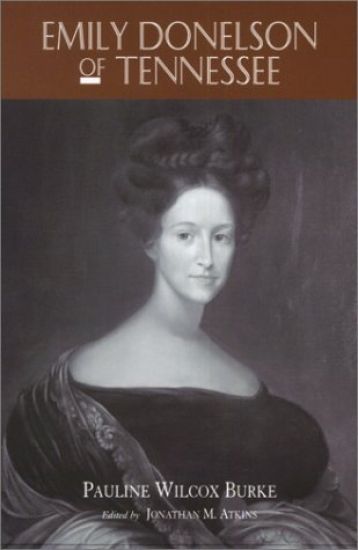
Emily Donelson Of Tennessee

Emily Donelson Of Tennessee

Pauline Wilcox Burke

University of Tennessee Press
2001
sidottu
The youngest daughter of one of the founding patriarchs of middle Tennessee and the niece of Andrew Jackson, Emily Tennessee Donelson seemed destined for the life of a southern plantation mistress. At seventeen, she married her first cousin Andrew J. Donelson, the namesake and ward of General Jackson. Four years later, however, her life changed dramatically as she and her husband traveled to Washington to serve her uncle in the White House. Andrew Donelson became the president’s private secretary, and Emily assumed the role of White House hostess, filling a void left by the death of Jackson’s beloved wife, Rachel, shortly after the election.Emily soon found herself immersed in the central controversy of the first Jackson administration, the Eaton Affair. It began as a petticoat scandal involving the social acceptance of Margaret Eaton, the new wife of Secretary of State John Eaton, who was reportedly a woman of loose character. Jackson assumed the rumors to be the work of his political rivals and was shocked when Emily and her husband spurned Mrs. Eaton. The controversy consumed the first two years of the Jackson presidency, and the Donelsons left Washington rather than betray their moral stance. Eaton eventually resigned, and the Donelsons returned to the capital. Restored to Washington, Emily reveled in the local society and took charge of her four children, the largest number to be born in the White House.Emily Donelson of Tennessee provides a fascinating chronicle of the social and political culture of Jacksonian America. Politicians and events in both Washington and Tennessee come alive in this book—in large part because Pauline Burke's unique position as a descendant of the Donelson family enabled her to draw on a rich trove of oral history, letters, and journals.Originally published in two volumes in 1941, this new, abridged edition of Emily Donelson of Tennessee is an engaging account of a woman who embraced traditional nineteenth-century gender roles. Additionally, the book highlights the author’s own responses to the changing position of women in society.The Author: Pauline Wilcox Burke (1884–1952) was the great-granddaughter of Emily Donelson.The Editor: Jonathan M. Atkins, an associate professor of history at Berry College in Mt. Berry, Georgia, is the author of numerous articles and the book Parties, Politics, and the Sectional Conflict in Tennessee, 1832–1861.
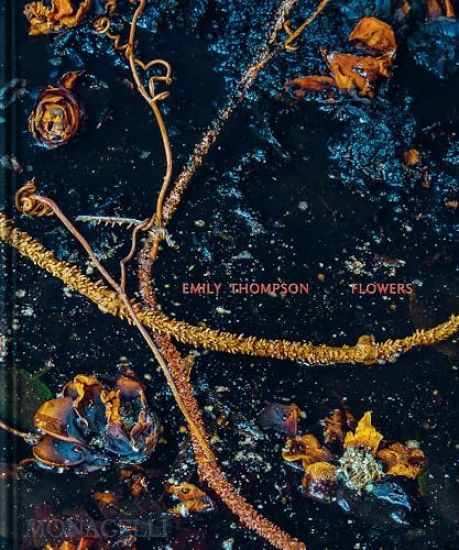
Emily Thompson Flowers

Emily Thompson Flowers

Emily Thompson; Shane Connolly

Monacelli Press
2025
sidottu
‘[Emily Thompson] changed floristry in New York.’ – Martha Stewart An extraordinary first book celebrating contemporary floral designer Emily Thompson, known for her unique and dramatic artistry For the first time, innovative floral designer Emily Thompson showcases her 15-year body of work, which reveres the raw and wondrous beauty of flowers, plants, and trees. With an inspirational and transportive journey, this new book demonstrates Thompson’s signature style of infusing a sense of the exotic and mysterious into her stunning compositions by using wild, unruly materials from the forest, field, and beyond. Featuring nearly 200 vivid images of her spectacular floral design work, the book includes projects ranging from indoor studio and outdoor in situ photography, to high-profile public and private commissions for restaurants including The Grill and The Modern in New York, fashion designers Jason Wu and Ulla Johnson, cultural institutions like the MAD Museum, New York, and Sotheby’s, and editorial work for T Magazine and AD China. Organized by theme, the book features chapters evocatively named and inspired by the life forces and organisms that influence and make up her work. In her own words, she walks the reader through her creative process, explaining the visceral and intellectual approach for generating and germinating the seeds of her ideas for her lush and kaleidoscopic floral arrangements. In addition to her own text, the book includes a foreword by esteemed floral designer and florist to the British Royal Family, Shane Connolly, and an introduction by lauded design writer Nancy Hass.
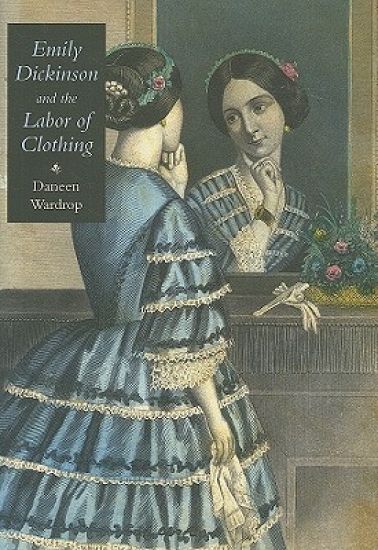
Emily Dickinson and the Labor of Clothing

Emily Dickinson and the Labor of Clothing

Daneen Wardrop

University of New Hampshire Press
2009
sidottu
Daneen Wardrop's Emily Dickinson and the Labor of Clothing begins by identifying and using the dating tools of fashion to place the references to clothing in Dickinson's letters and poems, and to locate her social standing through examining her fashion choices in the iconic daguerreotype. In addition to detailing the poetics of fashion in Dickinson's work, the author argues that close examination of Dickinson and fashion cannot be separated from the changing ways that garments were produced during the nineteenth century, embracing issues of domestic labor, the Lowell textile mills, and the Amherst industry of the Hills Hat Factory located almost next door to Dickinson's Homestead. The recent retrieval of clothing from approximately thirty trunks found in the attic of the Evergreens house, which formerly belonged to Dickinson's brother and sister-in-law, further enhances this remarkable and original interdisciplinary work.
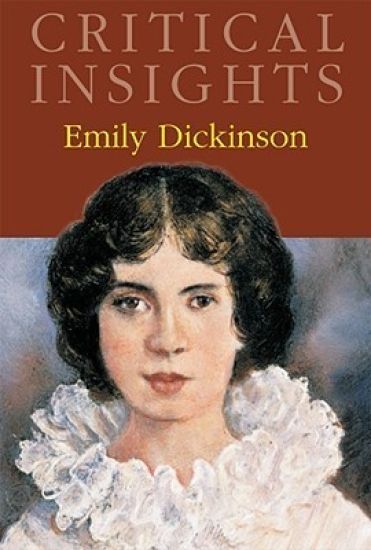
Emily Dickinson

Emily Dickinson

Salem Press Inc
2010
sidottu
Emily Dickinson's poetry, letters, and life have astounded readers and scholars alike for more than one hundred years. Though she rarely left her hometown of Amherst, Massachusetts, and in her later years never ventured beyond the fence encircling her family's home, Dickinson nevertheless wrote some of the world's most original, enigmatic, and expansive poems. And though she was certainly aware of her talent, she largely shunned publication, famously deriding it as "the Auction/ Of the Mind of Man -," and thus upon her death left it to her family to decide what to do with the nearly 1,800 poems she had hoarded in a locked dresser drawer. By turns strangely intimate, witty, sardonic, ebullient, and frighteningly sublime, the poems have since fascinated generations of readers and generated endless speculation about the poet's mind and life.This volume in the Critical Insights series, edited and with an introduction by J. Brooks Bouson, Professor of English at Loyola University in Chicago, brings together a variety of new and classic essays on Dickinson's life and work. Bouson's introduction reviews the unique challenges Dickinson presents to readers as well as the current state of Dickinson criticism, while a new essay by Paris Review contributor Jascha Hoffman celebrates Dickinson's compressive powers. A brief biography by Gerhard Brand then acquaints readers with the known details of the lives of Dickinson and her family and friends.For readers studying Dickinson for the first time, a quartet of essays offers an introduction to her life, work, and critical reception. Elizabeth Petrino situates Dickinson within her historical and cultural context by exploring the influences of New England Puritanism, Romanticism, Transcendentalism, and the Civil War upon her work. Beginning with nineteenth-century newspaper and magazine reviews and ending with more recent studies of the Dickinson manuscripts and current postmodernist, feminist, psychoanalytic, and cultural studies, Fred D. White surveys the major trends in Dickinson criticism and points readers to especially helpful introductory texts. Margaret H. Freeman offers a close reading of a group of Dickinson's poems to show how experiencing their sound patterns and syntax can inform our understanding of them, as well as how their structuring metaphors demonstrate Dickinson's mental schemata. Finally, Matthew J. Bolton examines the trope of "the conscious corpse" in poems by Robert Browning, A. E. Housman, and Dickinson.Eleven previously published essays are also collected in this volume, offering readers a variety of perspectives on Dickinson through the eyes of some of today's best Dickinson scholars. Jane Donahue Eberwein, editor of An Emily Dickinson Encyclopedia, catalogs the efforts of Dickinson scholars to dismantle the pervasive image of Dickinson as an ahistorical, otherworldly mystic. Helen Vendler, A. Kingsley Porter University Professor at Harvard University, explores Dickinson's relations to time and eternity through close readings of some of her best-known poems. Jed Deppman demonstrates that Dickinson's poems represent her attempts to think through difficult and contradictory thoughts and invite their reader to join in her thought experiments. Joanne Feit Diehl examines the power of Dickinson's poetry and her ambivalent relation with linguistic authority and immanence. Suzanne Juhasz analyzes the thematic repetitions in Dickinson's poetics, arguing that they serve a creative and transformative purpose.Shira Wolosky considers reclusion in both Dickinson's life and her work, finding it rooted in the poet's conflicting desire both to protect herself from the world and to protest it. Nancy Mayer engages Dickinson's "flood subject," immortality, to show how she continues to intrigue contemporary readers. Patrick J. Keane studies Dickinson's complex relations with the natural world and the Christian heaven, concluding that, for her, the transient beauty of the earth is more precious and more human than the eternal, static beauty of heaven. Christine Gerhardt offers an ecocritical reading of a group of poems to contend that Dickinson's poetry is linked to wider nineteenth-century debates about the environment and place. Faith Barrett makes a comparative analysis of Dickinson and Walt Whitman as they respond to the Civil War through their poetry, and Sarah E. Blackwood examines how Dickinson represents the disjunctions between one's internal and external lives.Finally, the volume's appendixes offer a section of useful reference resources:A chronology of the author's lifeA complete list of the author's works and their original dates of publicationA general bibliographyA detailed paragraph on the volume's editorNotes on the individual chapter authorsA subject index
The Collected Poems of Emily Dickinson (Barnes & Noble Classics Series)
The Barnes & Noble Classics edition of "The Collected Poems of Emily Dickinson offers more than a passing glimpse at why the simple words of this Amherst poet live on and excite new readers each and every year. In the back of this volume the reader will find contemporaneous criticism which attempts to understand the surge of Dickinson's popularity upon the posthumous publication of her poetry, as well as a discussion of her legacy--the reappropriation of her work into the genres of theater, dance, visual art, and of course, modern poetry. Rachel Wetzsteon received her doctorate from Columbia University in twentieth-century literature. She is currently an Assistant Professor of English at William Paterson University, and in 2001, she received the prestigious Witter Bynner Prize for poetry. Wetzsteon has published dozens of poems, as well as the volumes "The Other Stars (1994) and "Home and Away (1998). Detta är en redigerad version.
Emily Goldberg Learns to Salsa

Emily Goldberg Learns to Salsa

Micol Ostow

Razorbill
2007
pokkari
Emily is a Jewish girl from the suburbs of New York. Her mother has family in Puerto Rico, but Emily has never had contact with them--ever. Then Emily's grandmother dies and Emily is forced to go to the Caribbean for her funeral. Buttoned-up Emily wants nothing to do with her big, noisy Puerto Rican family, until a special person shows her that one dance can change the beat of your heart.
Emily The Strange Volume 3: The 13th Hour

Emily The Strange Volume 3: The 13th Hour

Dark Horse; Rob Reger

Dark Horse Comics,U.S.
2011
nidottu
We all know Emily the Strange is the world's weirdest thirteen-year-old, but do you have any idea how that came to be? Would you believe that Emily wasn't always the curious and confident stranger we know today? After three years and a slew of great short-story explorations of Emily's eclectic life in comic-book form, creator/writer Rob Reger and artist Buzz Parker are back with the first full-length Emily graphic novel! For any girl, a thirteenth birthday is a big deal, and that's doubly even triply true for Emily. She doesn't know it yet, but a surprise gift from a long-lost aunt is more than just a family heirloom it also holds the key to unlocking the mystery of her lineage and the secrets of her fate.
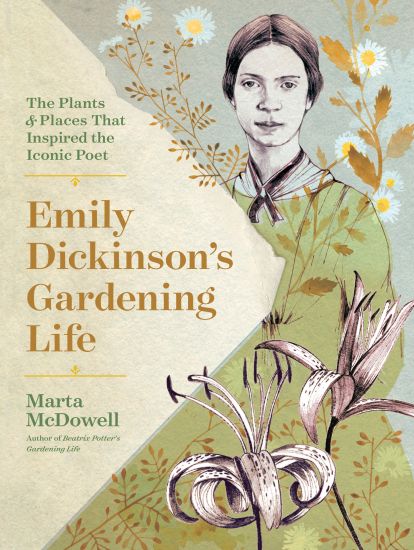
Emily Dickinson's Gardening Life

Emily Dickinson's Gardening Life

Marta McDowell

Timber Press
2019
sidottu
“A visual treat as well as a literary one…for gardeners and garden lovers, connoisseurs of botanical illustration, and those who seek a deeper understanding of the life and work of Emily Dickinson.” —The Wall Street Journal Emily Dickinson was a keen observer of the natural world, but less well known is the fact that she was also an avid gardener—sending fresh bouquets to friends, including pressed flowers in her letters, and studying botany at Amherst Academy and Mount Holyoke. At her family home, she tended both a small glass conservatory and a flower garden. In Emily Dickinson’s Gardening Life, award-winning author Marta McDowell explores Dickinson’s deep passion for plants and how it inspired and informed her writing. Tracing a year in the garden, the book reveals details few know about Dickinson and adds to our collective understanding of who she was as a person. By weaving together Dickinson’s poems, excerpts from letters, contemporary and historical photography, and botanical art, McDowell offers an enchanting new perspective on one of America’s most celebrated but enigmatic literary figures.
Emily Mason

Emily Mason

David Ebony; Christina Weyl

Dartmouth College Press
2015
sidottu
With exquisite full-page color reproductions, Emily Mason: The Light in Spring reveals sixty-eight recent canvases along with thirty-two prints, covering Mason’s work with five master printers. David Ebony continues where he left off in his 2006 volume, Emily Mason: The Fifth Element, elaborating on Mason’s prolific career and her influence as a woman artist working in New York for the past sixty years. Christina Weyl contributes an essay on the history and technique of Mason’s experimental approach to printmaking. Together with editor Ani Boyajian, the authors enrich our understanding of Mason as a bold colorist, fearless experimenter, and dynamic historical presence. This book will be a delight for fans of Emily Mason and of art and color in general.