Kirjojen hintavertailu. Mukana 11 518 949 kirjaa ja 12 kauppaa.

Kirjahaku

Etsi kirjoja tekijän nimen, kirjan nimen tai ISBN:n perusteella.

1000 tulosta hakusanalla F. Freeman

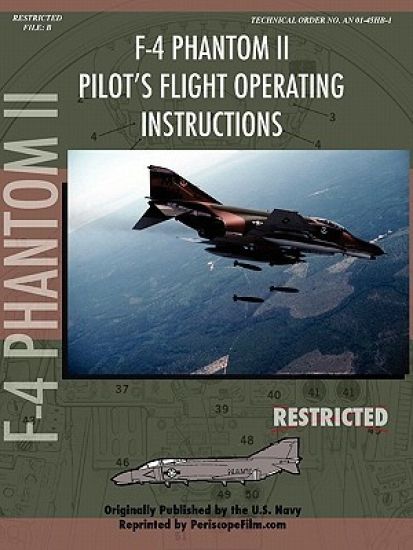
F-4 Phantom Pilot's Flight Operating Manual
One of the great aircraft of the Cold War era, the McDonnell Douglas F-4 Phantom II was the most heavily produced supersonic, all-weather fighter bomber. Capable of a top speed of Mach 2.23, it set sixteen world records including an absolute speed record of 1,606 mph and an altitude record of 98,557 feet. The F-4 flew Vietnam, in the Arab-Israeli conflict, and the Gulf War and amassed a record of 393 aerial victories. F-4s also flew as part of the USAF Thunderbirds and the U.S. Navy Blue Angels flight demonstration teams. Originally printed by McDonnell and the U.S. Navy in the 1960s, this flight operating handbook taught pilots everything they needed to know before entering the cockpit. Classified "restricted", the manual was recently declassified and is here reprinted in book form. This affordable facsimile has been reformatted. Care has been taken however to preserve the integrity of the text.
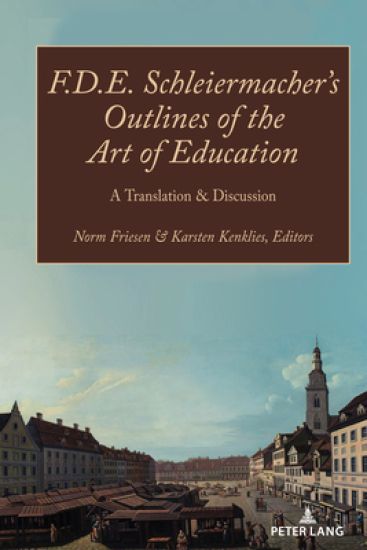
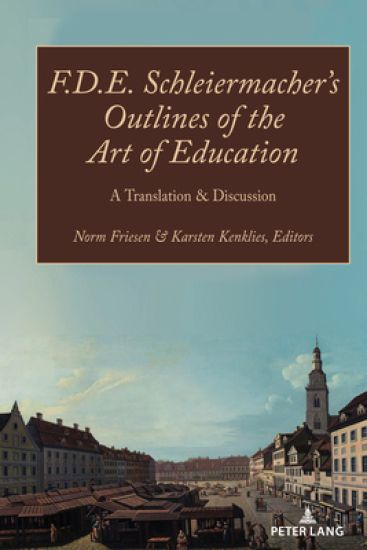
F.D.E. Schleiermacher’s Outlines of the Art of Education
"One must assume we are all familiar with what is commonly called ‘education.’" This is how Schleiermacher begins his famous 1826 lecture on the Art of Education. But in proceeding further—and unlike Rousseau or Locke before him—Schleiermacher carefully avoids assuming that education is primarily about a return to nature or about "soundness" of mind and body. Education is instead an ethical and political undertaking and a pragmatic art whose ultimate object and morality has differed greatly over time. It is exercised as a form of practical influence of the older generation on the younger: "A significant part of the activity of the older generation extends toward the younger," Schleiermacher reasons, and it "is more complete and perfect the more it is governed by an idea of what should happen—the more it has an exemplar to guide its action—the more it is an art." This book offers these and other insights on education—long canonical in Central and Northern Europe—for the first time to an English audience. It also provides five chapters by scholars in education and its history that discuss various aspects of Schleiermacher’s lecture.
F.D.E. Schleiermacher’s Outlines of the Art of Education
"One must assume we are all familiar with what is commonly called ‘education.’" This is how Schleiermacher begins his famous 1826 lecture on the Art of Education. But in proceeding further—and unlike Rousseau or Locke before him—Schleiermacher carefully avoids assuming that education is primarily about a return to nature or about "soundness" of mind and body. Education is instead an ethical and political undertaking and a pragmatic art whose ultimate object and morality has differed greatly over time. It is exercised as a form of practical influence of the older generation on the younger: "A significant part of the activity of the older generation extends toward the younger," Schleiermacher reasons, and it "is more complete and perfect the more it is governed by an idea of what should happen—the more it has an exemplar to guide its action—the more it is an art." This book offers these and other insights on education—long canonical in Central and Northern Europe—for the first time to an English audience. It also provides five chapters by scholars in education and its history that discuss various aspects of Schleiermacher’s lecture.
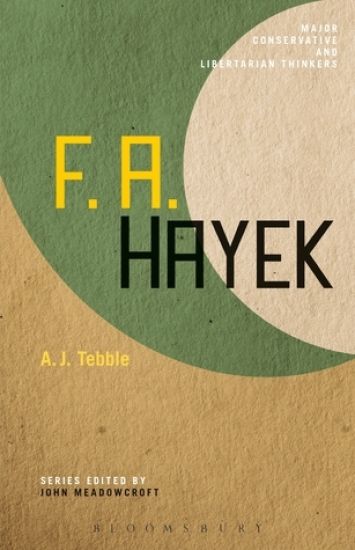
F. A. Hayek

F. A. Hayek

A. J. Tebble

Bloomsbury Academic USA
2013
nidottu
Friedrich August von Hayek (1899-1992), winner of the Nobel Prize in economics, was an influential economist and political philosopher. The increased attention he received in the late 20th century with the rise of conservatism in the US and UK, led him to publish "Why I Am Not a Conservative," an essay in which he berated conservatism. He preferred to be identified as what Edmund Burke called an "Old Whig." Amongst his most important contributions are his writings on general equilibrium, central planning and social justice as well as his political theory work, The Constitution of Liberty, in which he explained the proper role of the government.