Kirjojen hintavertailu. Mukana 11 627 067 kirjaa ja 12 kauppaa.

Kirjahaku

Etsi kirjoja tekijän nimen, kirjan nimen tai ISBN:n perusteella.

1000 tulosta hakusanalla FREEDOM DIVIDEND

Freedom Without Permission

Freedom Without Permission

Duke University Press
2016
sidottu
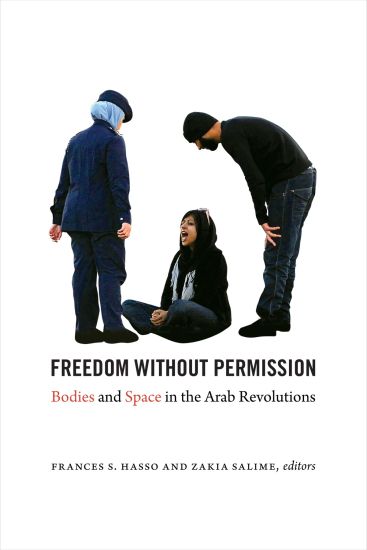
As the 2011 uprisings in North Africa reverberated across the Middle East, a diverse cross section of women and girls publicly disputed gender and sexual norms in novel, unauthorized, and often shocking ways. In a series of case studies ranging from Tunisia's 14 January Revolution to the Taksim Gezi Park protests in Istanbul, the contributors to Freedom without Permission reveal the centrality of the intersections between body, gender, sexuality, and space to these groundbreaking events. Essays include discussions of the blogs written by young women in Egypt, the Women2Drive campaign in Saudi Arabia, the reintegration of women into the public sphere in Yemen, the sexualization of female protesters encamped at Bahrain's Pearl Roundabout, and the embodied, performative, and artistic spaces of Morocco's 20 February Movement. Conceiving of revolution as affective, embodied, spatialized, and aesthetic forms of upheaval and transgression, the contributors show how women activists imagined, inhabited, and deployed new spatial arrangements that undermined the public-private divisions of spaces, bodies, and social relations, continuously transforming them through symbolic and embodied transgressions. Contributors. Lamia Benyoussef, Susanne Dahlgren, Karina Eileraas, Susana Galan, Banu Gökariksel, Frances S. Hasso, Sonali Pahwa, Zakia Salime
Freedom Without Permission

Freedom Without Permission

Duke University Press
2016
pokkari
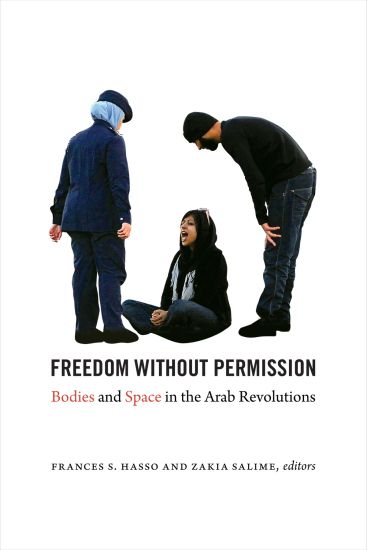
As the 2011 uprisings in North Africa reverberated across the Middle East, a diverse cross section of women and girls publicly disputed gender and sexual norms in novel, unauthorized, and often shocking ways. In a series of case studies ranging from Tunisia's 14 January Revolution to the Taksim Gezi Park protests in Istanbul, the contributors to Freedom without Permission reveal the centrality of the intersections between body, gender, sexuality, and space to these groundbreaking events. Essays include discussions of the blogs written by young women in Egypt, the Women2Drive campaign in Saudi Arabia, the reintegration of women into the public sphere in Yemen, the sexualization of female protesters encamped at Bahrain's Pearl Roundabout, and the embodied, performative, and artistic spaces of Morocco's 20 February Movement. Conceiving of revolution as affective, embodied, spatialized, and aesthetic forms of upheaval and transgression, the contributors show how women activists imagined, inhabited, and deployed new spatial arrangements that undermined the public-private divisions of spaces, bodies, and social relations, continuously transforming them through symbolic and embodied transgressions. Contributors. Lamia Benyoussef, Susanne Dahlgren, Karina Eileraas, Susana Galan, Banu Gökariksel, Frances S. Hasso, Sonali Pahwa, Zakia Salime
Freedom and Confinement

Freedom and Confinement

Elizabeth Gordon McKim; Reginald Dwayne Betts

UNIVERSITY OF PITTSBURGH PRESS
2026
pokkari
Freedom and Confinement is a powerful, book-length conversation between poets Elizabeth Gordon McKim and Etheridge Knight, recorded in 1990 as Knight was dying of cancer. The interview traces Knight’s life from his childhood in Paducah, Kentucky, to his time in the Army and his injury in Korea, to his drug addiction and incarceration, and finally, to his poetic rebirth. The dialogue includes a 1984 exchange with McKim’s daughter, Jenifer McKim, offering a rare intergenerational glimpse into Knight’s world. McKim captures the man behind the legend—complex, contradictory, soulful. From prison yards to the Library of Congress, Knight lived and performed poetry across the country. This conversation revives his stories and energies, blending trickster wit with hard-won wisdom, making the mythic poet vividly human once more.
Freedom of Choice

Freedom of Choice

Yves R. Simon

Fordham University Press
1999
pokkari
From the Foreward by Mortimer J. Adler "Of all the question or issues concerning human freedom, none is more fundamental in itself and in its consequences than the problem of free choice; and none has been the subject of more persistent and, at the same time, apparently irresolvable controversy…This book…is the perfect antidote for the errors, the misunderstandings – or worse, the ignorances – that beset the modern discussion of free choice. Even the reader who comes to this book with little or no knowledge of the philosophical literature on the subjects that it treats cannot fail to appreciate its remarkable clarity, its felicitous combination of detailed concreteness with abstract precision, its exploration of common experience and its elucidation of common sense, and, above all, the intelligibility, reasonableness, and fairness of its exposition of free choice…"
Freedom and Community

Freedom and Community

Yves R. Simon

Fordham University Press
2001
sidottu
The theory of liberty here propounded by Simon, along with his analysis of authority, democracy, and practical wisdom, contains the elements of a political philosophy that can provide direction to other contemporary political theorists of our times. While the latter have gathered great masses of political facts, they have lacked a normative set of ideas that can make these facts meaningful and useful to political society. Simon's position as a philosopher rather than as a political scientist, is that while there is a science of social and political facts, a normative moral philosophy that knows the ends of human action is necessary because people make good or bad use of their freedom. As always, Simon here writes with a lucidity and moderation that will be satisfying to reasonable people looking for a way out of skepticism and uncertainty. He was no dogmatist, but he knew what he knew and what he did not know. This is the beginning of wisdom and a model for philosophers.
Freedom and Community

Freedom and Community

Yves R. Simon

Fordham University Press
2001
pokkari
The theory of liberty here propounded by Simon, along with his analysis of authority, democracy, and practical wisdom, contains the elements of a political philosophy that can provide direction to other contemporary political theorists of our times. While the latter have gathered great masses of political facts, they have lacked a normative set of ideas that can make these facts meaningful and useful to political society. Simon's position as a philosopher rather than as a political scientist, is that while there is a science of social and political facts, a normative moral philosophy that knows the ends of human action is necessary because people make good or bad use of their freedom. As always, Simon here writes with a lucidity and moderation that will be satisfying to reasonable people looking for a way out of skepticism and uncertainty. He was no dogmatist, but he knew what he knew and what he did not know. This is the beginning of wisdom and a model for philosophers.
Freedom, Union, and Power

Freedom, Union, and Power

Michael Green

Fordham University Press
2004
sidottu
Freedom, Union, and Power analyzes the beliefs of the Republican Party during the Civil War, how those beliefs changed, and what those changes foreshadowed for the future. The party's pre-war ideology of "free soil, free labor, free men" changed with the Republican ascent to power in the White House. With Lincoln's election, Republicans faced something new-responsibility for the government. With responsibility came the need to wage a war for the survival of that government, the country, and the party. And with victory in the war came responsibility responsibility for saving the Union-by ending slavery-and for pursuing policies that fit into their belief in a strong, free Union. Michael Green shows how Republicans had to wield federal power to stop a rebellion against freedom and union. Crucial to their use of federal power was their hope of keeping that power-the intersection of policy and politics.
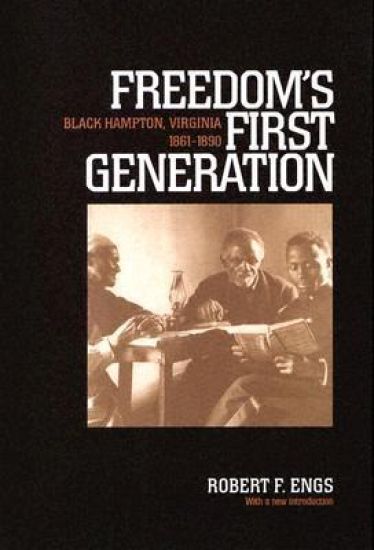
Freedom's First Generation

Freedom's First Generation

Robert F. Engs

Fordham University Press
2004
pokkari
In this age of affirmative action and increasing complexity in black-white relations, this pioneering study of Hampton, Virginia, tells the story of what race relations in postbellum America "might have been." Here, if only for a time, the promises of Emancipation and Reconstruction were fulfilled. Why was the American Dream realized by blacks in Hampton and not elsewhere? Engs follows a community of freedmen over a thirty-year period to answer this compelling question. "Engs deserves credit for the sophistication and scope of his study and for his attention to the subtle and paradoxical. The questions addressed, the logical scope of the book, the depth of research, and the author's crisp writing style contribute to making this book a major addition to the literature."-Journal of American History
Freedom and Law

Freedom and Law

Randi Rashkover

Fordham University Press
2011
sidottu
Freedom and Law offers a provocative new view of the relationship between human desire, the production of knowledge, and conceptions of power by developing a nonpolemical account of divine law. Where recent trends in political theology have insisted upon the antagonistic nature of the law, this book presents the paradigm-altering power of a discourse in the nexus between law and freedom. It demonstrates how this nexus catapults religious thought into a free and powerful engagement with nonreligious political, ethical, and social positions. Freedom and Law challenges a contemporary wave of scholarship, including the work of Jacob Taubes, Giorgio Agamben, and Slavoj Žižek, that identifies Jewish law as the originary soucre of polemic between nations and therefore as historically responsible for the exceptionalism that undergirds contemporary conflict. By contrast, Freedom and Law argues that only in an account of revelatory law can divine freedom and human freedom be thought of without contradiction. The first part analyzes the logic of exceptionalism. In the second part, the author argues that one cannot invoke a doctrine of election without rigorous scrutiny of texts that portray an electing God and an elected people. Once we scrutinize these texts, the character of freedom and law within the divine–human relationship shows itself to be different from that found in exceptionalist logics. The third and final part examines the impact of the logic of the law on Jewish-Christian apologetics. Rather than require that one defend one's position to a nonbeliever, this logic situates all epistemological justification within the order or freedom of God. If the condition of the possibility of my claim is the reality of divine freedom, such freedom also justifies the possibility of another's claim. In a significant contribution to the post-ecclesiastical reengagement between religion, critical theory, and the political, Freedom and Law introduces new categories of knowledge and action into Jewish and Christian thinking, unbound by the dialectics of desire that has dominated the discourse of both traditions for centuries. It shows how thinking of law and freedom together may now enable Judaism and Christianity to engage in a historically self-conscious and nonrelativistic relation to each other and to nonbelievers.
Freedom and Law

Freedom and Law

Randi Rashkover

Fordham University Press
2011
pokkari
Freedom and Law offers a provocative new view of the relationship between human desire, the production of knowledge, and conceptions of power by developing a nonpolemical account of divine law. Where recent trends in political theology have insisted upon the antagonistic nature of the law, this book presents the paradigm-altering power of a discourse in the nexus between law and freedom. It demonstrates how this nexus catapults religious thought into a free and powerful engagement with nonreligious political, ethical, and social positions. Freedom and Law challenges a contemporary wave of scholarship, including the work of Jacob Taubes, Giorgio Agamben, and Slavoj Žižek, that identifies Jewish law as the originary soucre of polemic between nations and therefore as historically responsible for the exceptionalism that undergirds contemporary conflict. By contrast, Freedom and Law argues that only in an account of revelatory law can divine freedom and human freedom be thought of without contradiction. The first part analyzes the logic of exceptionalism. In the second part, the author argues that one cannot invoke a doctrine of election without rigorous scrutiny of texts that portray an electing God and an elected people. Once we scrutinize these texts, the character of freedom and law within the divine–human relationship shows itself to be different from that found in exceptionalist logics. The third and final part examines the impact of the logic of the law on Jewish-Christian apologetics. Rather than require that one defend one's position to a nonbeliever, this logic situates all epistemological justification within the order or freedom of God. If the condition of the possibility of my claim is the reality of divine freedom, such freedom also justifies the possibility of another's claim. In a significant contribution to the post-ecclesiastical reengagement between religion, critical theory, and the political, Freedom and Law introduces new categories of knowledge and action into Jewish and Christian thinking, unbound by the dialectics of desire that has dominated the discourse of both traditions for centuries. It shows how thinking of law and freedom together may now enable Judaism and Christianity to engage in a historically self-conscious and nonrelativistic relation to each other and to nonbelievers.
Freedom and Limits

Freedom and Limits

John Lachs

Fordham University Press
2014
sidottu
Freedom and Limits is a defense of the value of freedom in the context of human finitude. A contribution to the American tradition of philosophy, it focuses attention on moral problems as we encounter them in daily life, where the search for perfection and the incessant drive to meet obligations make it difficult to attain satisfaction. The book argues that uniformity is unproductive: Human natures are varied and changeable, making the effort to impose a unitary good on everyone futile. Moreover, we don't need to strive for more than what is good enough: Finite achievements should be adequate to satisfy finite people. The ultimate aim of the book is to reclaim the role of philosophy as a guide to life. In doing so, it presents discussions of such important philosophers as Fichte, Hegel, Peirce, Dewey, James, and, above all, Santayana.
Freedom and Limits

Freedom and Limits

John Lachs

Fordham University Press
2014
pokkari
Freedom and Limits is a defense of the value of freedom in the context of human finitude. A contribution to the American tradition of philosophy, it focuses attention on moral problems as we encounter them in daily life, where the search for perfection and the incessant drive to meet obligations make it difficult to attain satisfaction. The book argues that uniformity is unproductive: Human natures are varied and changeable, making the effort to impose a unitary good on everyone futile. Moreover, we don't need to strive for more than what is good enough: Finite achievements should be adequate to satisfy finite people. The ultimate aim of the book is to reclaim the role of philosophy as a guide to life. In doing so, it presents discussions of such important philosophers as Fichte, Hegel, Peirce, Dewey, James, and, above all, Santayana.
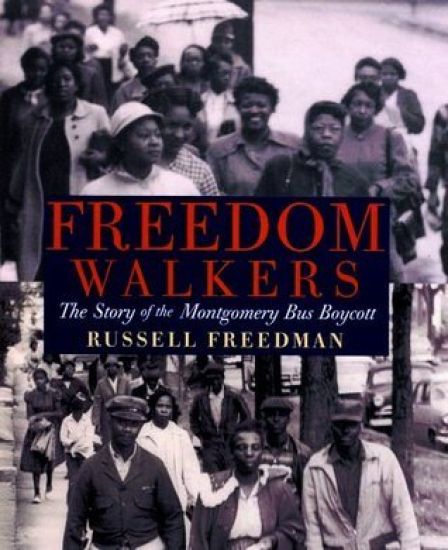
Freedom Walkers

Freedom Walkers

Freedman Russell

Holiday House Inc
2009
pokkari
A riveting account of the civil rights boycott that changed history by the foremost author of history for young people. Now a classic, Freedman's book tells the dramatic stories of the heroes who stood up against segregation and Jim Crow laws in 1950s Alabama. Full of eyewitness reports, iconic photographs from the era, and crucial primary sources, this work brings history to life for modern readers. This engaging look at one of the best-known events of the American Civil Rights Movement feels immediate and relevant, reminding readers that the Boycott is not distant history, but one step in a fight for equality that continues today. Freedman focuses not only on well-known figures like Claudette Colvin, Rosa Parks, and Martin Luther King Jr., but on the numerous people who contributed by organizing carpools, joining protests, supporting legal defense efforts, and more. He showcases an often-overlooked side of activism and protest-- the importance of cooperation and engagement, and the ways in which ordinary people can stand up for their beliefs and bring about meaningful change in the world around them. Freedom Walkers has long been a library and classroom staple, but as interest in the history of protest and the Civil Rights Movement grows, it's a perfect introduction for anyone looking to learn more about the past-- and an inspiration to take action and shape the future. Recipient of an Orbis Pictus Honor, the Flora Stieglitz Straus Award, and the Jane Addams Peace Association Honor Book Award, Freedom Walkers received five starred reviews. A map, source notes, full bibliography, and other backmatter is included.
Freedom without Justice

Freedom without Justice

Chol Soo Lee

University of Hawai'i Press
2017
sidottu
Freedom without Justice is a compelling story of one man’s wrongful incarceration and the actions he took to survive ten years in prison, while his supporters fought to win retrial and freedom. As a memoir, it is at once a captivating chronicle of his life with a trenchant description of how prisons end up producing the non-normativity they purport to prevent. This unusual story is part of an important chapter in the post-1964 history of Asian American activism.Chol Soo Lee’s saga begins against a backdrop of great historical change in Asian American communities following the passage of the 1965 Immigration Act. At the age of twelve, Chol Soo immigrated to the United States from South Korea to reunite with his mother, who had arrived earlier as a military bride. In less than a decade, Chol Soo finds himself labeled as a violent criminal, convicted, and incarcerated.Quickly Chol Soo Lee became a rallying point for an extraordinary pan–Asian American movement in the late 1970s and early 1980s, and Freedom without Justice provides a rare and valuable glimpse into a pivotal moment in history when the Asian American movement united around one of its first major political campaigns. The Lee case brought together immigrants and American-born Asians in a common cause of justice and freedom. This alliance of supporters, organized under a national network of the Chol Soo Lee Defense Committee, included student activists, elderly immigrants, religious organizations, small business owners, white-collar professionals, social workers, lawyers, legal assistance organizations, and left-wing communist groups nationwide. In the end the united front that mobilized to attain social and legal justice for Chol Soo Lee was a remarkable coalition of people from a broad spectrum of social backgrounds that transcended ethnicity, class, political ideology, religion, generation, and language. This diverse grassroots social movement initiated and organized a six-year “Free Chol Soo Lee!” campaign that led to Lee’s historic release from San Quentin’s death row in 1983. Incarcerated during a time when Asian American inmates were scarce, and Korean Americans even scarcer, Lee embodies social realities of race and class inequalities drawing readers into his social worlds—war-torn Korea, the streets of San Francisco, the criminal justice system, prison gang politics, and death row.
Freedom without Justice

Freedom without Justice

Chol Soo Lee

University of Hawai'i Press
2017
nidottu
Freedom without Justice is a compelling story of one man’s wrongful incarceration and the actions he took to survive ten years in prison, while his supporters fought to win retrial and freedom. As a memoir, it is at once a captivating chronicle of his life with a trenchant description of how prisons end up producing the non-normativity they purport to prevent. This unusual story is part of an important chapter in the post-1964 history of Asian American activism.Chol Soo Lee’s saga begins against a backdrop of great historical change in Asian American communities following the passage of the 1965 Immigration Act. At the age of twelve, Chol Soo immigrated to the United States from South Korea to reunite with his mother, who had arrived earlier as a military bride. In less than a decade, Chol Soo finds himself labeled as a violent criminal, convicted, and incarcerated.Quickly Chol Soo Lee became a rallying point for an extraordinary pan–Asian American movement in the late 1970s and early 1980s, and Freedom without Justice provides a rare and valuable glimpse into a pivotal moment in history when the Asian American movement united around one of its first major political campaigns. The Lee case brought together immigrants and American-born Asians in a common cause of justice and freedom. This alliance of supporters, organized under a national network of the Chol Soo Lee Defense Committee, included student activists, elderly immigrants, religious organizations, small business owners, white-collar professionals, social workers, lawyers, legal assistance organizations, and left-wing communist groups nationwide. In the end the united front that mobilized to attain social and legal justice for Chol Soo Lee was a remarkable coalition of people from a broad spectrum of social backgrounds that transcended ethnicity, class, political ideology, religion, generation, and language. This diverse grassroots social movement initiated and organized a six-year “Free Chol Soo Lee!” campaign that led to Lee’s historic release from San Quentin’s death row in 1983. Incarcerated during a time when Asian American inmates were scarce, and Korean Americans even scarcer, Lee embodies social realities of race and class inequalities drawing readers into his social worlds—war-torn Korea, the streets of San Francisco, the criminal justice system, prison gang politics, and death row.
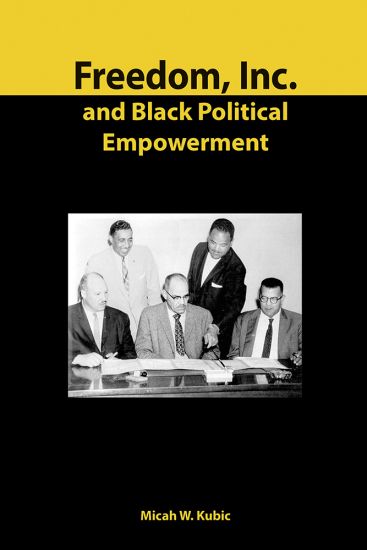
Freedom, Inc. and Black Political Empowerment

Freedom, Inc. and Black Political Empowerment

Micah W. Kubic

University of Missouri Press
2016
sidottu
Much has been written about black urban empowerment and about the candidates who are the public face of such shifts in power. Authors invariably mention the important role played by black political organizations in electing black officials or organizing communities, but this study makes one such organization the focus of a booklength study. Using interviews and observation of participants as well as archival research, Kubic offers historical and political analysis of Freedom, Inc. of Kansas City from its founding in 1962 through its role in municipal elections of 2007. Kubic asserts that strong local organizations are living, dynamic organisms and that they, rather than charismatic candidates or interracial alliances, are the crucial players in both determining political outcomes and advancing black interests in urban areas.
Freedom and Information

Freedom and Information

Eric Landree; Christopher Paul; Beth Grill; Aruna Balakrishnan; Bradley Wilson

RAND
2007
pokkari
Describes a framework to guide assessments of the availability of data regarding U.S. anti- and counterterrorism systems, countermeasures, and defenses for planning attacks on the U.S. air, rail, and sea transportation infrastructure. Overall, the framework is useful for assessing what kind of information would be easy or hard for potential attackers to find.
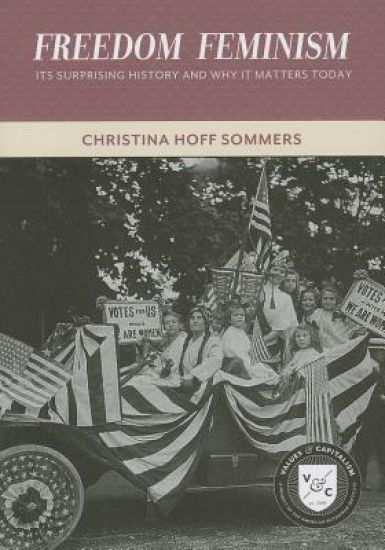
Freedom Feminism

Freedom Feminism

Christina Hoff Sommers

AEI Press
2013
pokkari
Women's equality is one of the great achievements of Western civilization. Yet most American women today do not consider themselves "feminists." Why is the term that describes one of the great chapters in the history of freedom in such disrepute? In Freedom Feminism: Its Surprising History and Why It Matters Today, Christina Hoff Sommers seeks to recover the lost history of American feminism by introducing readers to conservative feminism's forgotten heroines. More importantly, she demonstrates that a modern version of conservative feminism - in which women are free to employ their equal status to pursue happiness in their own distinctive ways - holds the key to a feminist renaissance. "Freedom Feminism" is a primer in the
Freedom of Expression in the Supreme Court
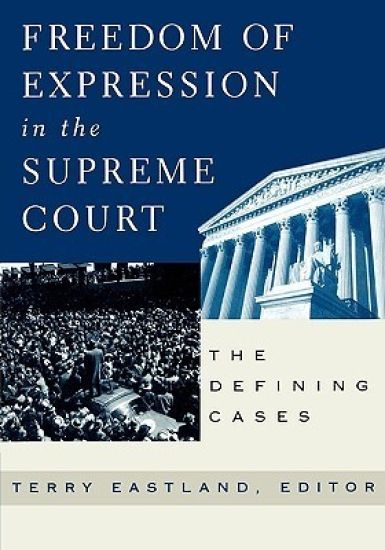
In Freedom of Expression in the Supreme Court, Terry Eastland brings together the Court's leading First Amendment cases, some 60 in all, starting with Schenck v. United States (1919) and ending with Reno v. American Civil Liberties Union (1998). Complete with a comprehensive introduction, pertinent indices and a useful bibliography, Freedom of Expression in the Supreme Court offers the general and specialized reader alike a thorough treatment of the Court's understanding on the First Amendment's speech, press, assembly, and petition clauses.