This book includes the family history and genealogy of Johann Ferdinand Th ne and Maria Anna Juliana Antonette Drewes. It shows their descendants through nine generations. Included are the families Klahold, Meiwes and Th ne. Next, their three major ancestral lines are documented, leading back to Karl the Great and beyond. The book also contains the ancestors of the Bartneck and Masuoka family.
William Hickling Prescott (1796-1859) was an American historian and Hispanist, who is widely recognized by historiographers to have been the first American scientific historian. Despite suffering from serious visual impairment, which at times prevented him from reading or writing for himself, Prescott became one of the most eminent historians of 19th century America. He is also noted for his eidetic memory. After an extensive period of study, during which he sporadically contributed to academic journals, Prescott specialized in late Renaissance Spain and the early Spanish Empire. His works on the subject include, The History of the Reign of Ferdinand and Isabella the Catholic (1837), The History of the Conquest of Mexico (1843).
Explorer, sailor, and navigator, Ferdinand Magellan led the first expedition to sail all the way around the world. He encountered lands and creatures that he could never have imagined, and the journey was fraught with danger and difficulty... Join Magellan's amazing adventure in this colorful guide, encountering mutineers and monsters along the way From artists to aviators and scientists to revolutionaries, Little Guides to Great Lives is a brand new series of small-format guides introducing children to the most inspirational figures from history in a fun, accessible way.
*Includes descriptions of the voyage from crew member Antonio Pigafetta's journal. *Includes maps and pictures of important people and places in Magellan's life. "Most versed in nautical charts, he knew better than any other the true art of navigation, of which it is certain proof that he by his genius, and his intrepidity, without anyone having given him the example, how to attempt the circuit of the globe which he had almost completed... The glory of Magellan will survive him." - Antonio Pigafetta A lot of ink has been spilled covering the lives of history's most influential figures, but how much of the forest is lost for the trees? The Age of Exploration and the explorers who set out on their history-making expeditions left many legacies and profoundly influenced history around the world. The voyages of men like Columbus and the conquests of men like Cortes escalated tensions between the European nations, initiated imperialistic empires on a global scale, helped birth the United States, and ensured that the wars in the 20th century were truly world wars. In Charles River Editors' Legendary Explorers series, readers can get caught up to speed on the lives of the most important explorers of history in the time it takes to finish a commute, while learning interesting facts long forgotten or never known. Ferdinand Magellan was unquestionably one of the more remarkable figures of the Age of Exploration, and given his fateful expedition, he has the era's most unique legacy. Today he is remembered as the first man to circumnavigate the globe, despite the fact he died thousands of miles away from Spain in the Philippines. It is also commonly overlooked that among the famous and historic expeditions in the early 16th century, Magellan's was by far the most dangerous, unique, and adventurous. Nearly 240 men would set sail from Spain in August 1519 aboard 5 ships, and 18 would return to Spain in September 1522 aboard 1 ship. Given his legacy and the fact that he died half a world away from Spain, the nature of his achievements has sometimes been misunderstood. Though he personally didn't circumnavigate the globe, Magellan was one of the most accomplished navigators of his time, and during his expedition he crucially charted territories previously unexplored by Europeans, including the Strait of Magellan at the southern tip of South America. Perhaps the most important fact about Magellan, though, is that he succeeded precisely where Christopher Columbus before him had failed. While Columbus has gone down in history as the discoverer of America (for Europeans), finding a new continent was never his true goal. For the Europeans of the time, the establishment of trade routes to Asia remained the most important commercial ambition of all, and though he is not as notorious as Columbus or Cortes, it was Magellan who established a westward route to the Spice Islands of the Indian Ocean. In the early 16th century, that was a more important accomplishment to Europeans than the discovery of a New World. In economic terms, the opening up of new trade routes with Asia was a more significant development than the conquest of the Americas, and the development of the new American colonial economies is unimaginable without the expansion of commerce with the East. Legendary Explorers: The Life and Legacy of Ferdinand Magellan chronicles Magellan's life and his historic expedition, analyzing the aftermath of his expeditions and his legacy. Along with pictures of important people, places, and events in his life, you will learn about Magellan like you never have before, in no time at all.
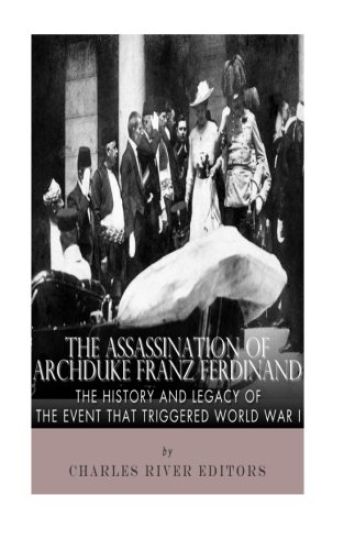
*Includes pictures *Profiles Franz Ferdinand and the people behind the overarching conspiracy to assassinate him *Includes a bibliography for further reading *Includes a table of contents "It is nothing." - Archduke Franz Ferdinand after being shot on June 28, 1914 Although a couple of wars were fought on the European continent during the 19th century, an uneasy peace was mostly maintained across the continent for most of the 19th century after Napoleon. Despite this ostensible peace, the Europeans were steadily conducting arms races against each other, particularly Germany and Britain. Britain had been the world's foremost naval power for centuries, but Germany hoped to build its way to naval supremacy. The rest of Europe joined in on the arms race in the decade before the war started. With Europe anticipating a potential war, all that was missing was a conflagration. That would start in 1908, when Austria-Hungary annexed Bosnia-Herzegovina in the Balkan Peninsula, drawing it into dispute with Russia. Moreover, this upset neighboring Serbia, which was an independent nation. From 1912-1913, a conflict was fought in the Balkans between the Balkan League and the Ottoman Empire, resulting in the weakening of the Ottoman Turks. After the First Balkan War, a second was fought months later between members of the Balkan League itself. The final straw came June 28, 1914, when a Serbian assassinated Archduke Franz Ferdinand, the heir to the throne of Austria-Hungary, in Sarajevo, Bosnia. Austria-Hungary immediately issued ultimatums to Serbia, but when they declared war on Serbia July 28, 1914, Russia mobilized for war as well. The Germans mobilized in response to Russia on July 30, and the French, still smarting from the Franco-Prussian War, mobilized for war against Germany. The British also declared war on Germany on August 4. Thus, in the span of one week, six nations had declared war, half of which had no interest in the Balkans. Though nobody can know for sure, it's altogether possible that World War I would have still broken out even if Franz Ferdinand had not been murdered. Regardless of events in the Balkans, Germany was already bellicose, France and Austria were concerned and involved, Russia was outwardly aggressive but also dealing with internal dissatisfaction, Italy was poised on the brink, and Britain was desperate to remain aloof but committed to its continental allies and a host of smaller countries clamoring for independence. Europe was too explosive to be rescued by any but the best of diplomats, if at all. At the same time, it's important not to underestimate the importance of Franz Ferdinand's assassination. In many respects, it was a momentous occasion, both because of the nationality of the conspirators and the context and manner in which it occurred, as well as the disturbing facts that came to light during the subsequent trial. The Assassination of Archduke Franz Ferdinand: The History and Legacy of the Event That Triggered World War I chronicles the history and legacy of one of the 20th century's most important events. Along with pictures of important people, places, and events, you will learn about the assassination of Franz Ferdinand like never before, in no time at all.
Discours a la memoire de... Charles-Ferdinand d'Artois, duc de Berri, ... par M. l'abbe Feutrier, ...Date de l'edition originale: 1820Ce livre est la reproduction fidele d une uvre publiee avant 1920 et fait partie d une collection de livres reimprimes a la demande editee par Hachette Livre, dans le cadre d un partenariat avec la Bibliotheque nationale de France, offrant l opportunite d acceder a des ouvrages anciens et souvent rares issus des fonds patrimoniaux de la BnF.Les uvres faisant partie de cette collection ont ete numerisees par la BnF et sont presentes sur Gallica, sa bibliotheque numerique.En entreprenant de redonner vie a ces ouvrages au travers d une collection de livres reimprimes a la demande, nous leur donnons la possibilite de rencontrer un public elargi et participons a la transmission de connaissances et de savoirs parfois difficilement accessibles.Nous avons cherche a concilier la reproduction fidele d un livre ancien a partir de sa version numerisee avec le souci d un confort de lecture optimal. Nous esperons que les ouvrages de cette nouvelle collection vous apporteront entiere satisfaction.Pour plus d informations, rendez-vous sur www.hachettebnf.fr
Notice biographique sur le pere Ferdinand Verbiest, ... par l'abbe C. Carton, ...Date de l'edition originale: 1839Ce livre est la reproduction fidele d'une oeuvre publiee avant 1920 et fait partie d'une collection de livres reimprimes a la demande editee par Hachette Livre, dans le cadre d'un partenariat avec la Bibliotheque nationale de France, offrant l'opportunite d'acceder a des ouvrages anciens et souvent rares issus des fonds patrimoniaux de la BnF.Les oeuvres faisant partie de cette collection ont ete numerisees par la BnF et sont presentes sur Gallica, sa bibliotheque numerique.En entreprenant de redonner vie a ces ouvrages au travers d'une collection de livres reimprimes a la demande, nous leur donnons la possibilite de rencontrer un public elargi et participons a la transmission de connaissances et de savoirs parfois difficilement accessibles.Nous avons cherche a concilier la reproduction fidele d'un livre ancien a partir de sa version numerisee avec le souci d'un confort de lecture optimal. Nous esperons que les ouvrages de cette nouvelle collection vous apporteront entiere satisfaction.Pour plus d'informations, rendez-vous sur www.hachettebnf.fr
Oraison funebre de... tres-excellent prince Ferdinand VI et de tres haute... princesse Marie de Portugal, roi et reine d'Espagne, prononcee dans l'eglise de Paris... par Messire Gabriel-Francois Moreau, eveque de Vence http: //gallica.bnf.fr/ark: /12148/bpt6k620711
Oraison funebre de... tres-excellent prince Ferdinand VI et de tres haute... princesse Marie de Portugal, roi et reine d'Espagne, prononcee dans l'eglise de Paris... par Messire Gabriel-Francois Moreau, eveque de Vence http: //gallica.bnf.fr/ark: /12148/bpt6k621692
Deux mots sur le bon droit de Ferdinand VII, roi d'Espagne, a la promulgation de la loi de 1789, decretes par son pere Charles IV, relativement a la succession du trone d'EspagneDate de l'edition originale: 1833Ce livre est la reproduction fidele d'une oeuvre publiee avant 1920 et fait partie d'une collection de livres reimprimes a la demande editee par Hachette Livre, dans le cadre d'un partenariat avec la Bibliotheque nationale de France, offrant l'opportunite d'acceder a des ouvrages anciens et souvent rares issus des fonds patrimoniaux de la BnF.Les oeuvres faisant partie de cette collection ont ete numerisees par la BnF et sont presentes sur Gallica, sa bibliotheque numerique.En entreprenant de redonner vie a ces ouvrages au travers d'une collection de livres reimprimes a la demande, nous leur donnons la possibilite de rencontrer un public elargi et participons a la transmission de connaissances et de savoirs parfois difficilement accessibles.Nous avons cherche a concilier la reproduction fidele d'un livre ancien a partir de sa version numerisee avec le souci d'un confort de lecture optimal. Nous esperons que les ouvrages de cette nouvelle collection vous apporteront entiere satisfaction.Pour plus d'informations, rendez-vous sur www.hachettebnf.fr
L'intervention a Naples: le regne de Ferdinand II / par Alfred FranklinDate de l'edition originale: 1856Sujet de l'ouvrage: Italie -- 19e siecleCe livre est la reproduction fidele d'une oeuvre publiee avant 1920 et fait partie d'une collection de livres reimprimes a la demande editee par Hachette Livre, dans le cadre d'un partenariat avec la Bibliotheque nationale de France, offrant l'opportunite d'acceder a des ouvrages anciens et souvent rares issus des fonds patrimoniaux de la BnF.Les oeuvres faisant partie de cette collection ont ete numerisees par la BnF et sont presentes sur Gallica, sa bibliotheque numerique.En entreprenant de redonner vie a ces ouvrages au travers d'une collection de livres reimprimes a la demande, nous leur donnons la possibilite de rencontrer un public elargi et participons a la transmission de connaissances et de savoirs parfois difficilement accessibles.Nous avons cherche a concilier la reproduction fidele d'un livre ancien a partir de sa version numerisee avec le souci d'un confort de lecture optimal. Nous esperons que les ouvrages de cette nouvelle collection vous apporteront entiere satisfaction.Pour plus d'informations, rendez-vous sur www.hachettebnf.fr"