Kirjojen hintavertailu. Mukana 11 627 220 kirjaa ja 12 kauppaa.

Kirjahaku

Etsi kirjoja tekijän nimen, kirjan nimen tai ISBN:n perusteella.

1000 tulosta hakusanalla Frederick Rickmann

Frederick the Great and the United States of America
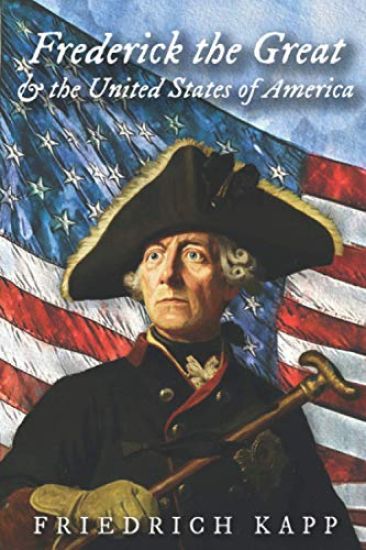
As the War of Independence begins, the transatlantic colonies begin courting continental powers as allies to further their ambitions against the crown. An unlikely candidate for such an undertaking became Prussia under its shrewd monarch, Frederick the Great. Citing correspondences from the likes of Benjamin Franklin, Hugh Elliot, and Friedrich von der Schulenburg, among others, Mr. Kapp brings to life the relationship between the two nations and the influence Frederick had on the early days of the budding Republic. Originally written in 1871, this new translation also sheds light on the maritime law issues and their role in the relationships between the great powers of the time. With the great naval powers vying for supremacy on the high seas, maritime law was constantly changing to benefit them, and the smaller states and neutral powers were left behind. The evolution and humanization of maritime law is examined, as well as the roles of the United States and Prussia therein. Having travelled through America for decades, Mr. Kapp also gives us a firsthand account of the United States' socio-political circumstances of his time as the nation was approaching a new chapter of its history after the conclusion of the American Civil War.
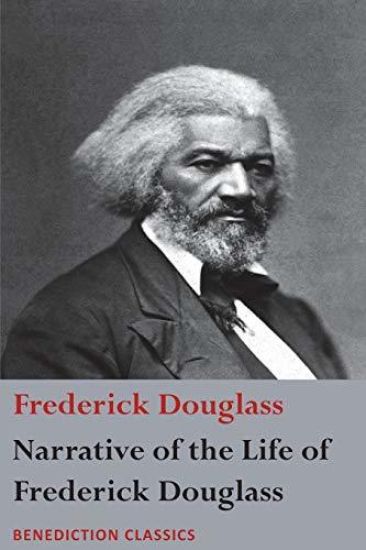
Narrative of the Life of Frederick Douglass

Narrative of the Life of Frederick Douglass

Frederick Douglass

Independently Published
2022
pokkari
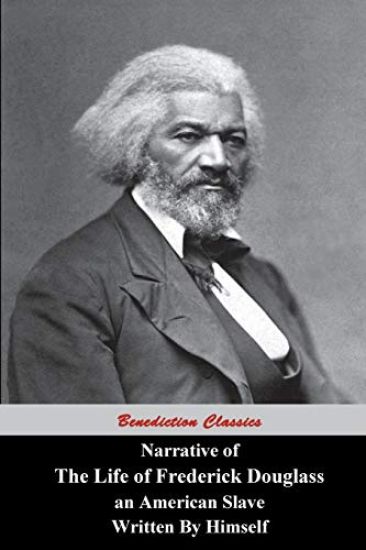
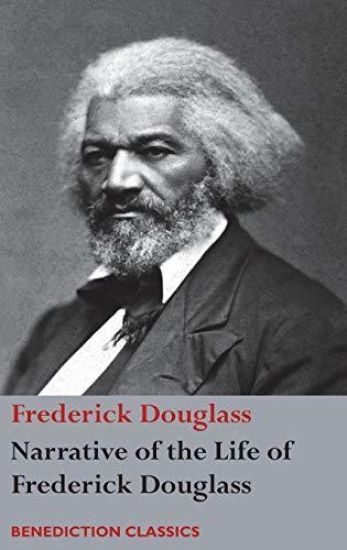
Frederick Douglass was born in slavery as Frederick Augustus Washington Bailey near Easton in Talbot County, Maryland. He was not sure of the exact year of his birth, but he knew that it was 1817 or 1818. As a young boy he was sent to Baltimore, to be a house servant, where he learned to read and write, with the assistance of his master's wife. In 1838 he escaped from slavery and went to New York City, where he married Anna Murray, a free colored woman whom he had met in Baltimore. Soon thereafter he changed his name to Frederick Douglass. In 1841 he addressed a convention of the Massachusetts Anti-Slavery Society in Nantucket and so greatly impressed the group that they immediately employed him as an agent. He was such an impressive orator that numerous persons doubted if he had ever been a slave, so he wrote Narrative Of The Life Of Frederick Douglass. During the Civil War he assisted in the recruiting of colored men for the 54th and 55th Massachusetts Regiments and consistently argued for the emancipation of slaves. After the war he was active in securing and protecting the rights of the freemen. In his later years, at different times, he was secretary of the Santo Domingo Commission, marshal and recorder of deeds of the District of Columbia, and United States Minister to Haiti. His other autobiographical works are My Bondage And My Freedom and Life And Times Of Frederick Douglass, published in 1855 and 1881 respectively. He died in 1895.
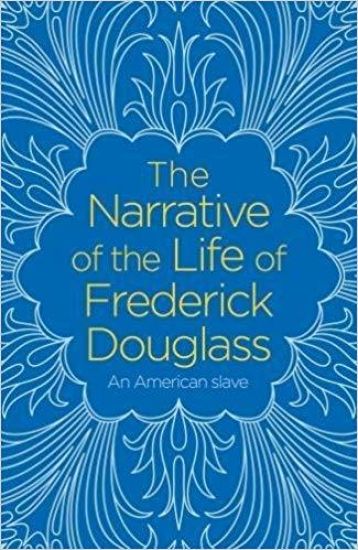
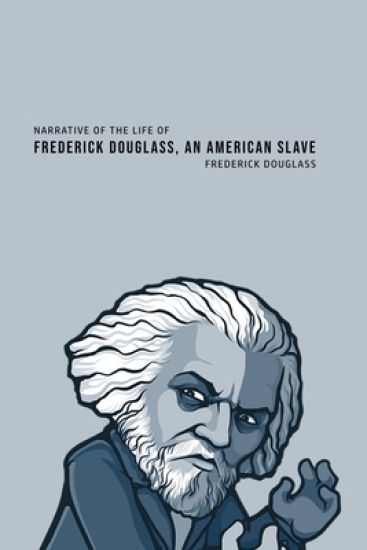
Narrative of the Life of Frederick Douglass, An American Slave
Published in 1845, this little book was widely read by the public in the North who knew little about the inner workings of slavery. It was favorably reviewed in the New York Tribune: "Considered merely as narrative, we have never read one more simple, true, coherent and warm with genuine feeling," and it had a great influence on public opinion across the Atlantic: "Taking all together, not less than one million of persons in Great Britain and Ireland have been excited by the book and its commentators." Here then is Douglass' powerful account of his journey, by way of determined self education, from slavery to being one of America's great statesmen and orators. Here then is Douglass' powerful account of his journey, by way of determined self education, from slavery to being one of America's great statesmen and orators.
Narrative of the Life of Frederick Douglass, An American Slave
Published in 1845, this little book was widely read by the public in the North who knew little about the inner workings of slavery. It was favorably reviewed in the New York Tribune: "Considered merely as narrative, we have never read one more simple, true, coherent and warm with genuine feeling," and it had a great influence on public opinion across the Atlantic: "Taking all together, not less than one million of persons in Great Britain and Ireland have been excited by the book and its commentators." Here then is Douglass' powerful account of his journey, by way of determined self education, from slavery to being one of America's great statesmen and orators. Here then is Douglass' powerful account of his journey, by way of determined self education, from slavery to being one of America's great statesmen and orators.
Narrative of the Life of Frederick Douglass, an American Slave
Do you want to read Narrative of the Life of Frederick Douglass, an American Slave? If so then keep reading...Former slave, impassioned abolitionist, brilliant writer, newspaper editor and eloquent orator whose speeches fired the abolitionist cause, Frederick Douglass (1818-1895) led an astounding life. Physical abuse, deprivation and tragedy plagued his early years, yet through sheer force of character he was able to overcome these obstacles to become a leading spokesman for his people. In this, the first and most frequently read of his three autobiographies, Douglass provides graphic descriptions of his childhood and horrifying experiences as a slave as well as a harrowing record of his dramatic escape to the North and eventual freedom. Published in 1845 to quell doubts about his origins - since few slaves of that period could write - the Narrative is admired today for its extraordinary passion, sensitive and vivid descriptions and storytelling power. It belongs in the library of anyone interested in African-American history and the life of one of the country's most courageous and influential champions of civil rights. A selection of the Common Core State Standards Initiative.What are you waiting for Narrative of the Life of Frederick Douglass, an American Slave is one click away, select the "Buy Now" button in the top right corner NOW
Narrative of the Life of Frederick Douglass

Narrative of the Life of Frederick Douglass

Frederick Douglass

Public Domain
2021
sidottu
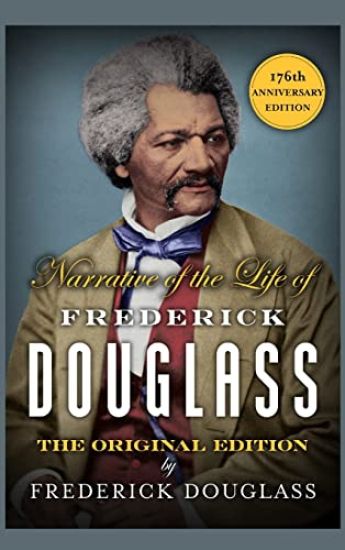
Narrative of the Life of Frederick Douglass: 176th Anniversary Edition (Illustrated)#1 OF THE TOP 10 BOOK OF ALL TIME - the story that moved millions and millions of readers with stark, naked stories of slavery as experienced by Frederick Douglass. Now you too can better understand the importance of equal rights from one of the most important books in human history.___________________________________________________________________________________- 176th Anniversary Edition -- this is the original version by Frederick douglass with the addition of illustrated images to better explain the meaning of this book.ABOUT THE AUTHORFrederick Douglass was the most important African American of the nineteenth century and one of the most significant writers and orators in American history.Douglass was born a slave and escaped at the age of twenty.He was Fortunate to have learned to read as a boy, and he would develop this skill forbidden to slaves to become one of the great writers of his era, in addition to becoming the most celebrated orator of the abolition movement.Over his lifetime he wrote three versions of his autobiography, all pf which are classics of the slave narrative and of American memoir.This former slave met with Lincoln in the White House and rejoiced in the victory of emancipation.He saw the promise of Reconstruction sashed by the resistance of former slaveholders and their allies, and he fought this betrayal as ferociously as he had fought slavery itself. As a lecturer he likely reached more listeners than any American of his century, and he lived with a modern dilemma of fame like few others of his era.Would you like to know more?Narrative of the Life of Frederick Douglass includes eleven chapters chronicling Douglass' life as a slave and his ambition to become a free man.Scroll up and click the "Add to Cart" button to receive your copy now.
Frederick Barbarossa

Frederick Barbarossa

G. A. Loud

REAKTION BOOKS
2025
sidottu
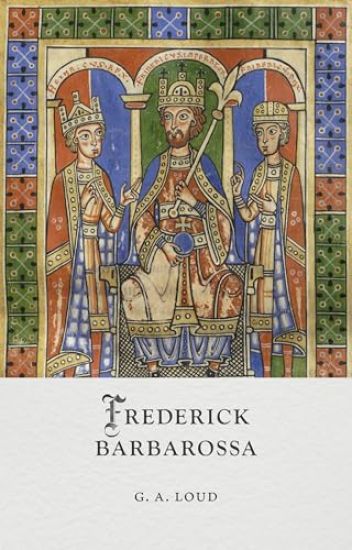
Frederick Barbarossa, also known as Frederick I, Holy Roman Emperor from 1155, was a dominant figure in late 12th-century European history. He is remembered as one of the greatest medieval German emperors; some even regard him as a German hero. He brought peace to Germany, fought to maintain control over Italian cities and engaged in a lengthy dispute with the papacy. Barbarossa died on a Crusade to reclaim the Holy Land for Christianity. But despite his efforts, his reign marked a decline in imperial authority, with defeats in Italy and growing local power among German princes. Frederick Barbarossa examines this paradox, revealing the realities and limitations of monarchical power in medieval Europe. This is a cogent, original and up-to-date analysis of Barbarossa, suitable for both students and the general reader.
Frederick Ashton

Frederick Ashton

OBERON BOOKS
2005
nidottu
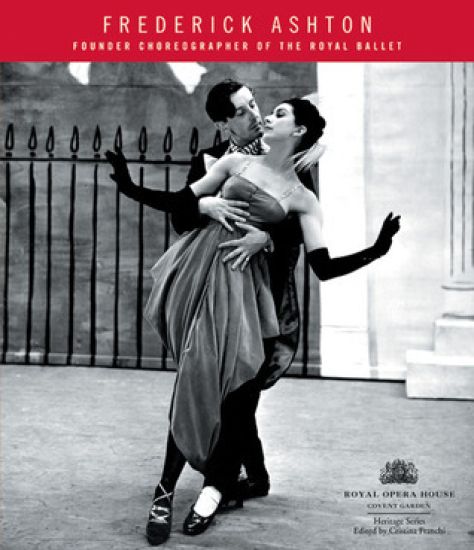
2004 marks the centenary of the birth of Frederick Ashton, Founder Choreographer of The Royal Ballet, whose work defined the English style of ballet. Inspired to dance by Anna Pavlova, encouraged by Ninette de Valois (Founder of the Royal Ballet), Ashton's career as dancer, choreographer and director, spans the Company's history from its earliest days. His influence is still seen today in the repertory and style that informs the Company, with ballets such as La Fille mal gard e, Ondine and Fa ade. This is the first of a series of books in the Royal Opera House Heritage Series, featuring a unique collection of images from the Royal Opera House Archives. The Series celebrates some of the legendary figures from the world of ballet and opera who have been associated with the Royal Opera House and its resident Companies, The Royal Ballet and The Royal Opera.
Frederick Douglass and the Atlantic World

Frederick Douglass and the Atlantic World

Fionnghuala Sweeney

LIVERPOOL UNIVERSITY PRESS
2008
sidottu
This book takes as its subject the effect of extraterritorial sites - Ireland, Haiti, Egypt - on Frederick Douglass' writing, self-construction, national, class and racial identity, and status as representative US American man. The most prolific African American writer of the nineteenth century embarked, after his escape from slavery in 1838, on a public career that would span the century and three continents. The narrative of his life in slavery remains a seminal work in the literary and historical canons of the United States, and has recently been included in the corpus of the American Renaissance. Much critical attention has been placed on Douglass' activities within the United States, his effect on socio-political reform, and relationship to an oppressed and marginalized community of African Americans. Yet much of his literary and political development occurred outside the United States. This innovative book focuses specifically on Douglass' Atlantic encounters, literal and literary, against the backdrop of slavery, emancipation, and western colonial process. Sweeney's study will be of interest to those working in the fields of history, literature and cultural studies; to scholars of Douglass; those interested in American and Irish Studies, Black Atlantic studies and postcolonialism; and those engaged in critical work on the literary and historical implications of the United States as empire.
Frederick Gibberd

Frederick Gibberd

Christine Hui Lan Manley

Historic England
2017
nidottu
This book gives, for the first time, a comprehensive account of the works of architect, town planner and landscape architect, Sir Frederick Gibberd. At the beginning of his diverse and far-reaching career, Gibberd was a pioneer of modern architecture in Britain – he designed Pullman Court in 1933, one of the first International Style buildings in the country. His association with the Modern Architectural Research (MARS) Group and his influential publications put him at the forefront of the establishment of modern architecture in Britain. During the 1940s, however, Gibberd’s interest shifted to the aesthetics of English market towns and Georgian streets; his diaries reveal a belief that the Modern Movement had ‘done its job’, allowing architects to consider the visual, rather than functional qualities of materials, colour and texture. After the Second World War, his master plan for Harlow New Town and his influential book Town Design conveyed his growing interest in ‘visual planning’; he had become an international authority on the subject. His later projects, Liverpool Metropolitan Cathedral (1967) and Regent’s Park Mosque (1977) for example, also reflected his aesthetic approach, prompting many to question his role as a key figure in the history of modern British architecture. This reassessment of Gibberd’s work demonstrates, that with his visual approach to the design of buildings, spaces, townscapes and landscapes, Gibberd was at the forefront of the development of a softer, distinctly English form of modern architecture and town planning, thus, reaffirming his role as a significant architect of the 20th century.