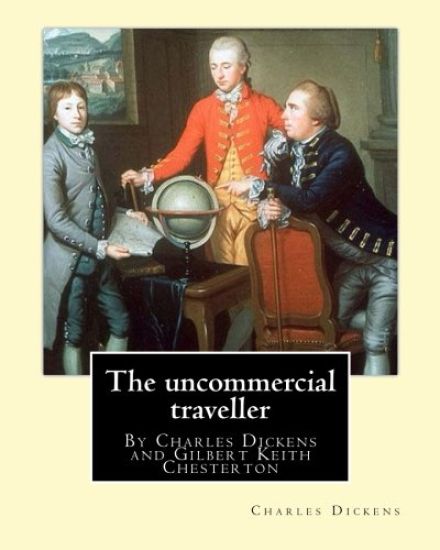
The Man Who Was Thursday: A Nightmare is a novel by G. K. Chesterton, first published in 1908. The book is sometimes referred to as a metaphysical thriller.In Edwardian era London, Gabriel Syme is recruited at Scotland Yard to a secret anti-anarchist police corps. Lucian Gregory, an anarchistic poet, lives in the suburb of Saffron Park. Syme meets him at a party and they debate the meaning of poetry. Gregory argues that revolt is the basis of poetry. Syme demurs, insisting the essence of poetry is not revolution but law. He antagonizes Gregory by asserting that the most poetical of human creations is the timetable for the London Underground. He suggests Gregory isn't really serious about anarchism, which so irritates Gregory that he takes Syme to an underground anarchist meeting place, revealing his public endorsement of anarchy is a ruse to make him seem harmless, when in fact he is an influential member of the local chapter of the European anarchist council.The work is prefixed with a poem written to Edmund Clerihew Bentley, revisiting the pair's early history and the challenges presented to their early faith by the times. Like most of Chesterton's fiction, the story includes some Christian allegory. Chesterton, a Protestant at this time (he joined the Roman Catholic Church about 15 years later), suffered from a brief bout of depression during his college days, and claimed afterwards he wrote this book as an unusual affirmation that goodness and right were at the heart of every aspect of the world. However, he insisted: "The book ... was not intended to describe the real world as it was, or as I thought it was, even when my thoughts were considerably less settled than they are now. It was intended to describe the world of wild doubt and despair which the pessimists were generally describing at that date; with just a gleam of hope in some double meaning of the doubt, which even the pessimists felt in some fitful fashion". The costumes the detectives don towards the end of the book represent what was created on their respective day. Sunday, "the sabbath" and "the peace of God," sits upon a throne in front of them. The name of the girl Syme likes, Rosamond, is derived from "Rosa Mundi," meaning "Rose of the World" in Latin, and a title given to Christ.(Usually a title given to the Virgin Mary) The central council consists of seven men, each using the name of a day of the week as a cover name; the position of Thursday is about to be elected by Gregory's local chapter. Gregory expects to win the election but just before, Syme reveals to Gregory after an oath of secrecy, that he is a secret policeman. Fearful Syme may use his speech in evidence of a prosecution, Gregory's weakened words fail to convince the local chapter that he is sufficiently dangerous for the job. Syme makes a rousing anarchist speech and wins the vote. He is sent immediately as the chapter's delegate to the central council.In his efforts to thwart the council, Syme eventually discovers that the other five members are also undercover detectives; each was employed just as mysteriously and assigned to defeat the Council. They soon find out they were fighting each other and not real anarchists; such was the mastermind plan of their president, Sunday. In a surreal conclusion, Sunday is unmasked as only seeming to be terrible; in fact, he is a force of good like the detectives. Sunday is unable to give an answer to the question of why he caused so much trouble and pain for the detectives. Gregory, the only real anarchist, seems to challenge the good council. His accusation is that they, as rulers, have never suffered like Gregory and their other subjects and so their power is illegitimate. Syme refutes the accusation immediately, because of the terrors inflicted by Sunday on the rest of the council....
Manalive (1912) is a book by G. K. Chesterton detailing a popular theme both in his own philosophy, and in Christianity, of the "holy fool", such as in Dostoevsky's The Idiot and Cervantes' Don Quixote.This is a book in two parts. The first, "The Enigma of Innocent Smith", concerns the arrival of a new tenant at Beacon House, a London boarding establishment. Like Mary Poppins, this man (who is tentatively identified by lodger Arthur Inglewood as an ex-schoolmate named Innocent Smith) is accompanied by a great wind, and he breathes new life into the household with his games and antics. During his first day in residence the eccentric Smith creates the High Court of Beacon; arranges to elope with Mary Gray, paid companion to heiress Rosamund Hunt; inspires Inglewood to declare his love for Diana Duke, the landlady's niece; and prompts a reconciliation between jaded journalist Michael Moon and Rosamund. However, when the household is at its happiest two doctors appear with awful news: Smith is wanted on charges of burglary, desertion of a spouse, polygamy, and attempted murder. The fact that Smith almost immediately fires several shots from a revolver at Inglewood's friend Dr. Herbert Warner seems to confirm the worst. Before Smith can be taken to a jail or an asylum, Michael Moon declares that the case falls under the purview of the High Court of Beacon and suggests that the household investigate the matter before involving the authorities or the press. The second part, "The Explanations of Innocent Smith", follows the trial. The prosecution consists of Moses Gould, a merrily cynical Jew who lives at Beacon House and considers Smith at best a fool and at worst a scoundrel, and Dr. Cyrus Pym, an American criminal specialist called in by Dr. Warner; Michael Moon and Arthur Inglewood act for the defense. The evidence consists of correspondence from people who witnessed or participated in the exploits that led to the charges against Smith. In every case, the defendant is revealed to be, as his first name states, innocent. He fires bullets near people to make them value life; the house he breaks into is his own; he travels around the world only to return with renewed appreciation for his house and family; and the women he absconded with are actually his wife Mary, posing as a spinster under different aliases so they may repeatedly re-enact their courtship. Smith is, needless to say, acquitted on all charges.... Gilbert Keith Chesterton, KC*SG (29 May 1874 - 14 June 1936), better known as G. K. Chesterton, was an English writer, poet, philosopher, dramatist, journalist, orator, lay theologian, biographer, and literary and art critic. Chesterton is often referred to as the "prince of paradox."Time magazine has observed of his writing style: "Whenever possible Chesterton made his points with popular sayings, proverbs, allegories-first carefully turning them inside out." 4] Chesterton is well known for his fictional priest-detective Father Brown, and for his reasoned apologetics. Even some of those who disagree with him have recognized the wide appeal of such works as Orthodoxy and The Everlasting Man.Chesterton, as a political thinker, cast aspersions on both Progressivism and Conservatism, saying, "The whole modern world has divided itself into Conservatives and Progressives. The business of Progressives is to go on making mistakes. The business of the Conservatives is to prevent the mistakes from being corrected."Chesterton routinely referred to himself as an "orthodox" Christian, and came to identify this position more and more with Catholicism, eventually converting to Catholicism from High Church Anglicanism. George Bernard Shaw, Chesterton's "friendly enemy" according to Time, said of him, "He was a man of colossal genius."Biographers have identified him as a successor to such Victorian authors as Matthew Arnold, Thomas Carlyle, Cardinal John Henry Newman, and John Ruskin...
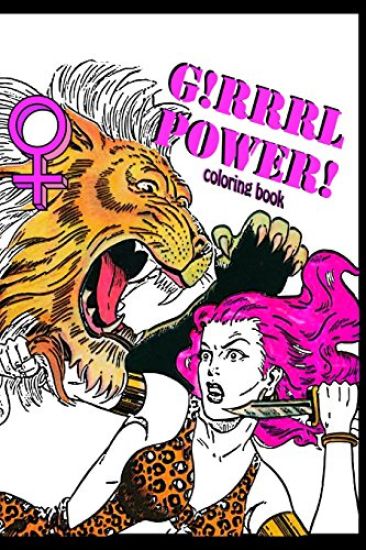
G RRRL POWER - If coloring is therapeutic, why should it not also be empowering? Release the Huntress within and enjoy coloring these Warrior Women. Against the odds be it jaguars or crocodiles or a ravenous cackle of hyenas, these ladies don't just survive, they thrive I made this for our seven year old, Desiree, who seemed more interested in being the Queen of the Jungle and not so much another pretty princess. Featuring characters from the Silver Age of Comics including Sheena, Tiger Girl, and Pantera Rubia from Jungle Comics, Jumbo Comics, and Fight Comics. 26 images. 6" x 9", single sided prints to help prevent marker bleed through.
An Heiress Searches for a Hidden Will. Agnes Ashleigh inherits the estate of Gerald Harmer, but his two sisters conceal the secret of his lost will and determine to give the estate to the Catholic Church. Ultimately, after much intrigue and action, the will is found and the efforts of the sisters thwarted. George Alfred Henty (8 December 1832 - 16 November 1902) was a prolific English novelist and war correspondent.He is best known for his historical adventure stories that were popular in the late 19th century. His works include The Dragon & The Raven (1886), For The Temple (1888), Under Drake's Flag (1883) and In Freedom's Cause (1885). G. A. Henty was born in Trumpington, near Cambridge. He was a sickly child who had to spend long periods in bed. During his frequent illnesses he became an avid reader and developed a wide range of interests which he carried into adulthood. He attended Westminster School, London, and later Gonville and Caius College, Cambridge, where he was a keen sportsman. He left the university early without completing his degree to volunteer for the Army Hospital Commissariat when the Crimean War began. He was sent to the Crimea and while there he witnessed the appalling conditions under which the British soldier had to fight. His letters home were filled with vivid descriptions of what he saw. His father was impressed by his letters and sent them to The Morning Advertiser newspaper which printed them. This initial writing success was a factor in Henty's later decision to accept the offer to become a special correspondent, the early name for journalists now better known as war correspondents.Shortly before resigning from the army as a captain in 1859 he married Elizabeth Finucane. The couple had four children. Elizabeth died in 1865 after a long illness and shortly after her death Henty began writing articles for the Standard newspaper. In 1866 the newspaper sent him as their special correspondent to report on the Austro-Italian War where he met Giuseppe Garibaldi. He went on to cover the 1868 British punitive expedition to Abyssinia, the Franco-Prussian War, the Ashanti War, the Carlist Rebellion in Spain and the Turco-Serbian War. 4] He also witnessed the opening of the Suez Canal and travelled to Palestine, Russia and India. Henty was a strong supporter of the British Empire all his life; according to literary critic Kathryn Castle: "Henty...exemplified the ethos of the new imperialism, and glorified in its successes". Henty's ideas about politics were influenced by writers such as Sir Charles Dilke and Thomas Carlyle.Henty once related in an interview how his storytelling skills grew out of tales told after dinner to his children. He wrote his first children's book, Out on the Pampas in 1868, naming the book's main characters after his children. The book was published by Griffith and Farran in November 1870 with a title page date of 1871. While most of the 122 books he wrote were for children, he also wrote adult novels, non-fiction such as The March to Magdala and Those Other Animals, short stories for the likes of The Boy's Own Paper and edited the Union Jack, a weekly boy's magazine
An Heiress Searches for a Hidden Will. Agnes Ashleigh inherits the estate of Gerald Harmer, but his two sisters conceal the secret of his lost will and determine to give the estate to the Catholic Church. Ultimately, after much intrigue and action, the will is found and the efforts of the sisters thwarted. George Alfred Henty (8 December 1832 - 16 November 1902) was a prolific English novelist and war correspondent.He is best known for his historical adventure stories that were popular in the late 19th century. His works include The Dragon & The Raven (1886), For The Temple (1888), Under Drake's Flag (1883) and In Freedom's Cause (1885). G. A. Henty was born in Trumpington, near Cambridge. He was a sickly child who had to spend long periods in bed. During his frequent illnesses he became an avid reader and developed a wide range of interests which he carried into adulthood. He attended Westminster School, London, and later Gonville and Caius College, Cambridge, where he was a keen sportsman. He left the university early without completing his degree to volunteer for the Army Hospital Commissariat when the Crimean War began. He was sent to the Crimea and while there he witnessed the appalling conditions under which the British soldier had to fight. His letters home were filled with vivid descriptions of what he saw. His father was impressed by his letters and sent them to The Morning Advertiser newspaper which printed them. This initial writing success was a factor in Henty's later decision to accept the offer to become a special correspondent, the early name for journalists now better known as war correspondents.Shortly before resigning from the army as a captain in 1859 he married Elizabeth Finucane. The couple had four children. Elizabeth died in 1865 after a long illness and shortly after her death Henty began writing articles for the Standard newspaper. In 1866 the newspaper sent him as their special correspondent to report on the Austro-Italian War where he met Giuseppe Garibaldi. He went on to cover the 1868 British punitive expedition to Abyssinia, the Franco-Prussian War, the Ashanti War, the Carlist Rebellion in Spain and the Turco-Serbian War. 4] He also witnessed the opening of the Suez Canal and travelled to Palestine, Russia and India. Henty was a strong supporter of the British Empire all his life; according to literary critic Kathryn Castle: "Henty...exemplified the ethos of the new imperialism, and glorified in its successes". Henty's ideas about politics were influenced by writers such as Sir Charles Dilke and Thomas Carlyle.Henty once related in an interview how his storytelling skills grew out of tales told after dinner to his children. He wrote his first children's book, Out on the Pampas in 1868, naming the book's main characters after his children. The book was published by Griffith and Farran in November 1870 with a title page date of 1871. While most of the 122 books he wrote were for children, he also wrote adult novels, non-fiction such as The March to Magdala and Those Other Animals, short stories for the likes of The Boy's Own Paper and edited the Union Jack, a weekly boy's magazine..............
An Heiress Searches for a Hidden Will. Agnes Ashleigh inherits the estate of Gerald Harmer, but his two sisters conceal the secret of his lost will and determine to give the estate to the Catholic Church. Ultimately, after much intrigue and action, the will is found and the efforts of the sisters thwarted. George Alfred Henty (8 December 1832 - 16 November 1902) was a prolific English novelist and war correspondent.He is best known for his historical adventure stories that were popular in the late 19th century. His works include The Dragon & The Raven (1886), For The Temple (1888), Under Drake's Flag (1883) and In Freedom's Cause (1885). G. A. Henty was born in Trumpington, near Cambridge. He was a sickly child who had to spend long periods in bed. During his frequent illnesses he became an avid reader and developed a wide range of interests which he carried into adulthood. He attended Westminster School, London, and later Gonville and Caius College, Cambridge, where he was a keen sportsman. He left the university early without completing his degree to volunteer for the Army Hospital Commissariat when the Crimean War began. He was sent to the Crimea and while there he witnessed the appalling conditions under which the British soldier had to fight. His letters home were filled with vivid descriptions of what he saw. His father was impressed by his letters and sent them to The Morning Advertiser newspaper which printed them. This initial writing success was a factor in Henty's later decision to accept the offer to become a special correspondent, the early name for journalists now better known as war correspondents.Shortly before resigning from the army as a captain in 1859 he married Elizabeth Finucane. The couple had four children. Elizabeth died in 1865 after a long illness and shortly after her death Henty began writing articles for the Standard newspaper. In 1866 the newspaper sent him as their special correspondent to report on the Austro-Italian War where he met Giuseppe Garibaldi. He went on to cover the 1868 British punitive expedition to Abyssinia, the Franco-Prussian War, the Ashanti War, the Carlist Rebellion in Spain and the Turco-Serbian War. 4] He also witnessed the opening of the Suez Canal and travelled to Palestine, Russia and India. Henty was a strong supporter of the British Empire all his life; according to literary critic Kathryn Castle: "Henty...exemplified the ethos of the new imperialism, and glorified in its successes". Henty's ideas about politics were influenced by writers such as Sir Charles Dilke and Thomas Carlyle.Henty once related in an interview how his storytelling skills grew out of tales told after dinner to his children. He wrote his first children's book, Out on the Pampas in 1868, naming the book's main characters after his children. The book was published by Griffith and Farran in November 1870 with a title page date of 1871. While most of the 122 books he wrote were for children, he also wrote adult novels, non-fiction such as The March to Magdala and Those Other Animals, short stories for the likes of The Boy's Own Paper and edited the Union Jack, a weekly boy's magazine.............
An Heiress Searches for a Hidden Will. Agnes Ashleigh inherits the estate of Gerald Harmer, but his two sisters conceal the secret of his lost will and determine to give the estate to the Catholic Church. Ultimately, after much intrigue and action, the will is found and the efforts of the sisters thwarted. George Alfred Henty (8 December 1832 - 16 November 1902) was a prolific English novelist and war correspondent.He is best known for his historical adventure stories that were popular in the late 19th century. His works include The Dragon & The Raven (1886), For The Temple (1888), Under Drake's Flag (1883) and In Freedom's Cause (1885). G. A. Henty was born in Trumpington, near Cambridge. He was a sickly child who had to spend long periods in bed. During his frequent illnesses he became an avid reader and developed a wide range of interests which he carried into adulthood. He attended Westminster School, London, and later Gonville and Caius College, Cambridge, where he was a keen sportsman. He left the university early without completing his degree to volunteer for the Army Hospital Commissariat when the Crimean War began. He was sent to the Crimea and while there he witnessed the appalling conditions under which the British soldier had to fight. His letters home were filled with vivid descriptions of what he saw. His father was impressed by his letters and sent them to The Morning Advertiser newspaper which printed them. This initial writing success was a factor in Henty's later decision to accept the offer to become a special correspondent, the early name for journalists now better known as war correspondents.Shortly before resigning from the army as a captain in 1859 he married Elizabeth Finucane. The couple had four children. Elizabeth died in 1865 after a long illness and shortly after her death Henty began writing articles for the Standard newspaper. In 1866 the newspaper sent him as their special correspondent to report on the Austro-Italian War where he met Giuseppe Garibaldi. He went on to cover the 1868 British punitive expedition to Abyssinia, the Franco-Prussian War, the Ashanti War, the Carlist Rebellion in Spain and the Turco-Serbian War. 4] He also witnessed the opening of the Suez Canal and travelled to Palestine, Russia and India. Henty was a strong supporter of the British Empire all his life; according to literary critic Kathryn Castle: "Henty...exemplified the ethos of the new imperialism, and glorified in its successes". Henty's ideas about politics were influenced by writers such as Sir Charles Dilke and Thomas Carlyle.Henty once related in an interview how his storytelling skills grew out of tales told after dinner to his children. He wrote his first children's book, Out on the Pampas in 1868, naming the book's main characters after his children. The book was published by Griffith and Farran in November 1870 with a title page date of 1871. While most of the 122 books he wrote were for children, he also wrote adult novels, non-fiction such as The March to Magdala and Those Other Animals, short stories for the likes of The Boy's Own Paper and edited the Union Jack, a weekly boy's magazine...............
George Alfred Henty (8 December 1832 - 16 November 1902) was a prolific English novelist and war correspondent.He is best known for his historical adventure stories that were popular in the late 19th century. His works include The Dragon & The Raven (1886), For The Temple (1888), Under Drake's Flag (1883) and In Freedom's Cause (1885).G. A. Henty was born in Trumpington, near Cambridge. He was a sickly child who had to spend long periods in bed. During his frequent illnesses he became an avid reader and developed a wide range of interests which he carried into adulthood. He attended Westminster School, London, and later Gonville and Caius College, Cambridge, where he was a keen sportsman. He left the university early without completing his degree to volunteer for the Army Hospital Commissariat when the Crimean War began. He was sent to the Crimea and while there he witnessed the appalling conditions under which the British soldier had to fight. His letters home were filled with vivid descriptions of what he saw. His father was impressed by his letters and sent them to The Morning Advertiser newspaper which printed them. This initial writing success was a factor in Henty's later decision to accept the offer to become a special correspondent, the early name for journalists now better known as war correspondents.Shortly before resigning from the army as a captain in 1859 he married Elizabeth Finucane. The couple had four children. Elizabeth died in 1865 after a long illness and shortly after her death Henty began writing articles for the Standard newspaper. In 1866 the newspaper sent him as their special correspondent to report on the Austro-Italian War where he met Giuseppe Garibaldi. He went on to cover the 1868 British punitive expedition to Abyssinia, the Franco-Prussian War, the Ashanti War, the Carlist Rebellion in Spain and the Turco-Serbian War.He also witnessed the opening of the Suez Canal and travelled to Palestine, Russia and India. Henty was a strong supporter of the British Empire all his life; according to literary critic Kathryn Castle: "Henty...exemplified the ethos of the new imperialism, and glorified in its successes".Henty's ideas about politics were influenced by writers such as Sir Charles Dilke and Thomas Carlyle.
George Alfred Henty (8 December 1832 - 16 November 1902) was a prolific English novelist and war correspondent.He is best known for his historical adventure stories that were popular in the late 19th century. His works include The Dragon & The Raven (1886), For The Temple (1888), Under Drake's Flag (1883) and In Freedom's Cause (1885).G. A. Henty was born in Trumpington, near Cambridge. He was a sickly child who had to spend long periods in bed. During his frequent illnesses he became an avid reader and developed a wide range of interests which he carried into adulthood. He attended Westminster School, London, and later Gonville and Caius College, Cambridge, where he was a keen sportsman. He left the university early without completing his degree to volunteer for the Army Hospital Commissariat when the Crimean War began. He was sent to the Crimea and while there he witnessed the appalling conditions under which the British soldier had to fight. His letters home were filled with vivid descriptions of what he saw. His father was impressed by his letters and sent them to The Morning Advertiser newspaper which printed them. This initial writing success was a factor in Henty's later decision to accept the offer to become a special correspondent, the early name for journalists now better known as war correspondents.Shortly before resigning from the army as a captain in 1859 he married Elizabeth Finucane. The couple had four children. Elizabeth died in 1865 after a long illness and shortly after her death Henty began writing articles for the Standard newspaper. In 1866 the newspaper sent him as their special correspondent to report on the Austro-Italian War where he met Giuseppe Garibaldi. He went on to cover the 1868 British punitive expedition to Abyssinia, the Franco-Prussian War, the Ashanti War, the Carlist Rebellion in Spain and the Turco-Serbian War. ...........
Jack Archer is an historical novel set in the Crimean War. The story begins with Jack at school when he is urgently sent for at home. His father tells Jack that he has gotten him a position as a midshipman on a paddle-steamer and will be leaving Portsmouth the following day. George Alfred Henty (8 December 1832 - 16 November 1902) was a prolific English novelist and war correspondent. He is best known for his historical adventure stories that were popular in the late 19th century. His works include The Dragon & The Raven (1886), For The Temple (1888), Under Drake's Flag (1883) and In Freedom's Cause (1885).G. A. Henty was born in Trumpington, near Cambridge. He was a sickly child who had to spend long periods in bed. During his frequent illnesses he became an avid reader and developed a wide range of interests which he carried into adulthood. He attended Westminster School, London, and later Gonville and Caius College, Cambridge, where he was a keen sportsman. He left the university early without completing his degree to volunteer for the Army Hospital Commissariat when the Crimean War began. He was sent to the Crimea and while there he witnessed the appalling conditions under which the British soldier had to fight. His letters home were filled with vivid descriptions of what he saw. His father was impressed by his letters and sent them to The Morning Advertiser newspaper which printed them. This initial writing success was a factor in Henty's later decision to accept the offer to become a special correspondent, the early name for journalists now better known as war correspondents....