Kirjojen hintavertailu. Mukana 11 391 886 kirjaa ja 12 kauppaa.

Kirjahaku

Etsi kirjoja tekijän nimen, kirjan nimen tai ISBN:n perusteella.

1000 tulosta hakusanalla Geoffrey H. Block

From Cronkite to Colbert

From Cronkite to Colbert

Geoffrey Baym

Oxford University Press Inc
2009
nidottu
With increasing numbers of people tuning out the nightly news and media consumption falling, late-night comedians have become some of the most important newscasters in the country. From Cronkite to Colbert explains why. It examines a historical path that begins at the height of the network age with Walter Cronkite and Edward R. Murrow--when the evening news was considered the authoritative record of the day's events and forged our assumptions about what "the news" is, or should be. The book then winds its way through the breakdown of the paradigm of "real" news and into its reinvention in the unlikely form of such shows as The Daily Show and The Colbert Report. From Cronkite to Colbert makes the case that rather than "fake news," these shows should be understood as a new kind of journalism, one that has the potential to save the news and reinvigorate the conversation on democracy in today's society. Winner of the 2010 NCA Award for Outstanding Book in Political Communication! FEATURES BL Uses a tripartite analytical framework for tracking the history of broadcast news from Cronkite to Colbert: high modern, postmodern, and neomodern BL Puts recent media developments in context with intellectual and philosophical history including the writings of Wittgenstein, Bahktin, and Foucault BL Explains the concept and action of "media convergence" clearly and critically BL Looks at the "post network" age in news history and illustrates the problems and possibilities of the era of "digital instability" in which many media platforms--cable, satellite, internet, smart phones, and more--converge to create a new "life after TV" BL Plays with now familiar media images--Ted Koppel's "big head;" Jon Stewart's repetitive clip technique; Stephen Colbert's "The Word" feature--in order to illustrate media postmodernity
Rule and Ruin

Rule and Ruin

Geoffrey Kabaservice

Oxford University Press Inc
2013
nidottu
As the 2012 elections approach, the Republican Party is rocketing rightward away from the center of public opinion. Republicans in Congress threaten to shut down the government and force a U.S. debt default. Tea Party activists mount primary challenges against Republican officeholders who appear to exhibit too much pragmatism or independence. Moderation and compromise are dirty words in the Republican presidential debates. The GOP, it seems, has suddenly become a party of ideological purity. Except this development is not new at all. In Rule and Ruin, Geoffrey Kabaservice reveals that the moderate Republicans' downfall began not with the rise of the Tea Party but about the time of President Dwight Eisenhower's farewell address. Even in the 1960s, when left-wing radicalism and right-wing backlash commanded headlines, Republican moderates and progressives formed a powerful movement, supporting pro-civil rights politicians like Nelson Rockefeller and William Scranton, battling big-government liberals and conservative extremists alike. But the Republican civil war ended with the overthrow of the moderate ideas, heroes, and causes that had comprised the core of the GOP since its formation. In hindsight, it is today's conservatives who are "Republicans in Name Only." Writing with passionate sympathy for a bygone tradition of moderation, Kabaservice recaptures a time when fiscal restraint was matched with social engagement; when a cohort of leading Republicans opposed the Vietnam war; when George Romney--father of Mitt Romney--conducted a nationwide tour of American poverty, from Appalachia to Watts, calling on society to "listen to the voices from the ghetto." Rule and Ruin is an epic, deeply researched history that reorients our understanding of our political past and present. Today, moderates are marginalized in the GOP and progressives are all but nonexistent. In this insightful and elegantly argued book, Kabaservice contends that their decline has left Republicans less capable of governing responsibly, with dire consequences for all Americans.
Whipscars and Tattoos

Whipscars and Tattoos

Geoffrey Sanborn

Oxford University Press Inc
2013
nidottu
In this original study, Geoffrey Sanborn presents a fresh interpretation of the villanous Magua in James Fenimore Cooper's The Last of the Mohicans (1826) and of the dignified harpooner Queequeg in Herman Melville's Moby-Dick (1851). Through careful historical research, Sanborn has determined that both authors relied heavily on contemporary accounts of the indigenous natives of New Zealand, the Maori, to develop their iconic characters. Cooper drew heavily on the account of Te Aara in John Liddiard Nicholas's Narrative of a Voyage to New Zealand (1817) while Melville studied the personal history of Te Pehi Kupe in George Lillie Craik's The New Zealanders (1830) to flesh out his characterization of Queequeg. A close reading of the historical evidence and the source material supports this compelling line of argumentation. At the same time, this isn't a simple source study nor an act of explanatory historical recovery. The conception of the Maori is sophisticated and paradoxical, a portrait of violent but nonetheless idealized masculinity in which dignity depends on the existence of fiercely defiant pride. This lens allows Sanborn to present a radically different view of these fictional characters as well as underscoring the imaginative projection that went into reporting on the Maori themselves. Magua is no longer a stereotypical "bad Indian" or "ignoble savage," but rather a non-white "gentleman," an argument that supports Sanborn's contention that throughout his career Cooper prioritizes status equivalence over racial difference. Queequeg is similarly re-imagined, a move that allows Sanborn to explicate scenes in Moby-Dick that are often dodged by other critics because they do not fit with the standard interpretations of the character. The study as a whole provides a vivid example of the fascinating interplay between fiction and non-fiction in the nineteenth century.
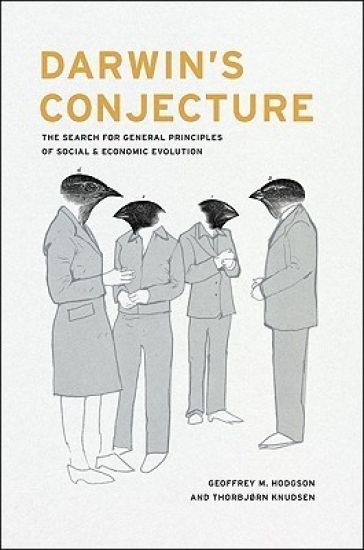
Darwin's Conjecture

Darwin's Conjecture

Geoffrey M. Hodgson; Thorbj¿rn Knudsen

University of Chicago Press
2013
nidottu
Of paramount importance to the natural sciences, the principles of Darwinism, which involve variation, inheritance, and selection, are increasingly of interest to social scientists as well. But no one has provided a truly rigorous account of how the principles apply to the evolution of human society - until now. In "Darwin's Conjecture", Geoffrey Hodgson and Thorbjorn Knudsen reveal how the British naturalist's core concepts apply to a wide range of phenomena, including business practices, legal systems, technology, and even science itself. They also critique some prominent objections to applying Darwin to social science, arguing that ultimately Darwinism functions as a general theoretical framework for stimulating further inquiry. Social scientists who adopt a Darwinian approach, they contend, can then use it to frame and help develop new explanatory theories and predictive models. This truly groundbreaking work at long last makes the powerful conceptual tools of Darwin available to the social sciences and will be welcomed by scholars and students from a range of disciplines.
Jacques Derrida

Jacques Derrida

Geoffrey Bennington; Jacques Derrida

University of Chicago Press
1999
nidottu
Geoffrey Bennington sets out here to write a systematic account of the thought of Jacques Derrida. Responding to Bennington's text at every turn is Derrida's own, excerpts from his life and thought that resist circumscription. Together these texts, as a dialogue and a contest, constitute a critical introduction to one of the leading philosophers of the 20th century. Bennington's account of Derrida leads the reader through the philosopher's work on language and writing, and through more mysterious themes of signature, sexual difference, law, and affirmation. Seeking to escape this systematic rendering - in fact, to prove it impossible - Derrida interweaves Bennington's text with surprising and disruptive "periphrases": reflections on his mother's death agony, commentaries on St. Augustine's "Confessions", memories of childhood, remarks on Judaism, and references to his collaborator's efforts.
Conceptualizing Capitalism – Institutions, Evolution, Future

Conceptualizing Capitalism – Institutions, Evolution, Future

Geoffrey Hodgson

University of Chicago Press
2015
sidottu
A few centuries ago, capitalism set in motion an explosion of economic productivity. Markets and private property had existed for millennia, but what other key institutions fostered capitalism's relatively recent emergence? Until now, the conceptual toolkit available to answer this question has been inadequate, and economists and other social scientists have been diverted from identifying these key institutions. With Conceptualizing Capitalism, Geoffrey M Hodgson offers readers a more precise conceptual framework. Drawing on a new theoretical approach called legal institutionalism, Hodgson establishes that the most important factor in the emergence of capitalism - but also among the most often overlooked - is the constitutive role of law and the state. While private property and markets are central to capitalism, they depend upon the development of an effective legal framework. Applying this legally grounded approach to the emergence of capitalism in eighteenth - century Europe, Hodgson identifies the key institutional developments that coincided with its rise. That analysis enables him to counter the widespread view that capitalism is a natural and inevitable outcome of human societies, showing instead that it is a relatively recent phenomenon, contingent upon a special form of state that protects private property and enforces contracts. After establishing the nature of capitalism, the book considers what this more precise conceptual framework can tell us about the possible future of capitalism in the twenty-first century, where some of the most important concerns are the effects of globalization, the continuing growth of inequality, and the challenges to America's hegemony by China and others.
The Ascetic Imperative in Culture and Criticism

The Ascetic Imperative in Culture and Criticism

Geoffrey Galt Harpham

University of Chicago Press
1992
nidottu
In this bold interdisciplinary work, Geoffrey Galt Harpham argues that asceticism has played a major role in shaping Western ideas of the body, writing, ethics, and aesthetics. He suggests that we consider the ascetic as "the 'cultural' element in culture," and presents a close analysis of works by Athanasius, Augustine, Matthias, Grünewald, Nietzsche, Foucault, and other thinkers as proof of the extent of asceticism's resources. Harpham demonstrates the usefulness of his findings by deriving from asceticism a "discourse of resistance," a code of interpretation ultimately more generous and humane than those currently available to us.
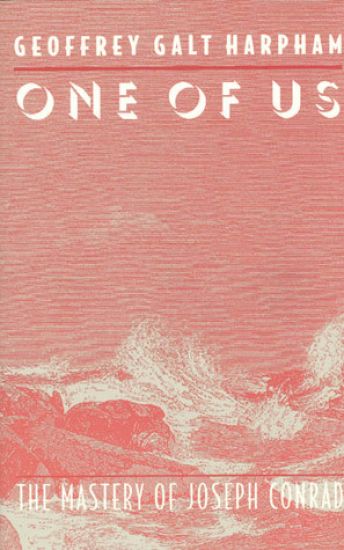
One of Us

One of Us

Geoffrey Galt Harpham

University of Chicago Press
1997
nidottu
The concept of mastery straddles a largely unexamined seam in contemporary thought dividing admirable self-control from a reprehensible will to power. Although Joseph Conrad has traditionally been viewed as an admirable master; master mariner, storyteller, and writer; his reputation has been linked in recent years to the negative masteries of racism, imperialism, and patriarchy. In this book, Geoffrey Galt Harpham delves not only into Conrad's literary work and reputation but also into the concept of mastery. The text outlines a psychology of composition that embraces Conrad's personal as well as historical circumstances. This volume represents both a methodological innovation in the practice of literary criticism and a contribution to the understanding of how masters, and canons based on them, are made.
The Humanities and the Dream of America

The Humanities and the Dream of America

Geoffrey Galt Harpham

University of Chicago Press
2011
sidottu
In this bracing and original book, Geoffrey Galt Harpham argues that the humanities - the academic disciplines that study the potential of the human - represent a 'dream of America.' They were, Harpham contends, invented after World War II as an expression of American culture and character, and were advanced by their supporters as an instrument of American national interests. Although the humanities are struggling to retain their status in America today, the concept has spread to many other parts of the world and remains one of America's most distinctive and attractive contributions to higher education. "The Humanities and the Dream of America" explores a number of linked problems: the role, at once inspiring and disturbing, played by modern philology in the discipline's formation; the reasons behind the humanities' perpetual state of crisis; and the new possibilities for literary study afforded by the subject of pleasure. Framed by essays that draw on Harpham's pedagogical experiences abroad and as a lecturer at the US Air Force Academy, as well as his vantage as director of the National Humanities Center, this book provides an essential perspective on the history, ideology, and future of the humanities.
The Humanities and the Dream of America

The Humanities and the Dream of America

Geoffrey Galt Harpham

University of Chicago Press
2011
nidottu
In this bracing and original book, Geoffrey Galt Harpham argues that the humanities - the academic disciplines that study the potential of the human - represent a 'dream of America.' They were, Harpham contends, invented after World War II as an expression of American culture and character, and were advanced by their supporters as an instrument of American national interests. Although the humanities are struggling to retain their status in America today, the concept has spread to many other parts of the world and remains one of America's most distinctive and attractive contributions to higher education. "The Humanities and the Dream of America" explores a number of linked problems: the role, at once inspiring and disturbing, played by modern philology in the discipline's formation; the reasons behind the humanities' perpetual state of crisis; and, the new possibilities for literary study afforded by the subject of pleasure. Framed by essays that draw on Harpham's pedagogical experiences abroad and as a lecturer at the US Air Force Academy, as well as his vantage as director of the National Humanities Center, this book provides an essential perspective on the history, ideology, and future of the humanities.
Darwin's Conjecture

Darwin's Conjecture

Geoffrey M. Hodgson; Thorbj¿rn Knudsen

University of Chicago Press
2010
sidottu
Of paramount importance to the natural sciences, the principles of Darwinism, which involve variation, inheritance, and selection, are increasingly of interest to social scientists as well. But no one has provided a truly rigorous account of how the principles apply to the evolution of human society - until now. In "Darwin's Conjecture", Geoffrey M. Hodgson and Thorbjorn Knudsen reveal how the British naturalist's core concepts apply to a wide range of phenomena, including business practices, legal systems, technology, and even science itself. They also critique some prominent objections to the application of Darwinism to social science, arguing that ultimately Darwinism functions as a general theoretical framework for stimulating further inquiry. Social scientists who adopt a Darwinian approach, they contend, can then use it to frame and help develop new explanatory theories and predictive models. This truly pathbreaking work at long last makes the powerful conceptual tools of Darwin available to the social sciences and will be welcomed by scholars and students from a range of disciplines.
Conceptualizing Capitalism – Institutions, Evolution, Future

Conceptualizing Capitalism – Institutions, Evolution, Future

Geoffrey Hodgson

University of Chicago Press
2016
nidottu
A few centuries ago, capitalism set in motion an explosion of economic productivity. Markets and private property had existed for millennia, but what other key institutions fostered capitalism's relatively recent emergence? Until now, the conceptual toolkit available to answer this question has been inadequate, and economists and other social scientists have been diverted from identifying these key institutions. With Conceptualizing Capitalism, Geoffrey M. Hodgson offers readers a more precise conceptual framework. Drawing on a new theoretical approach called legal institutionalism, Hodgson establishes that the most important factor in the emergence of capitalism but also among the most often overlooked is the constitutive role of law and the state. While private property and markets are central to capitalism, they depend upon the development of an effective legal framework. Applying this legally grounded approach to the emergence of capitalism in eighteenth-century Europe, Hodgson identifies the key institutional developments that coincided with its rise. That analysis enables him to counter the widespread view that capitalism is a natural and inevitable outcome of human societies, showing instead that it is a relatively recent phenomenon, contingent upon a special form of state that protects private property and enforces contracts. After establishing the nature of capitalism, the book considers what this more precise conceptual framework can tell us about the possible future of capitalism in the twenty-first century, where some of the most important concerns are the effects of globalization, the continuing growth of inequality, and the challenges to America's hegemony by China and others.
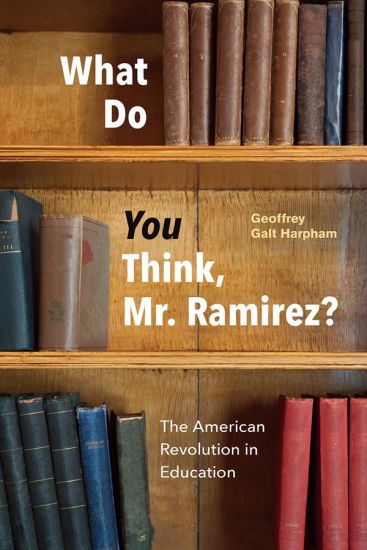
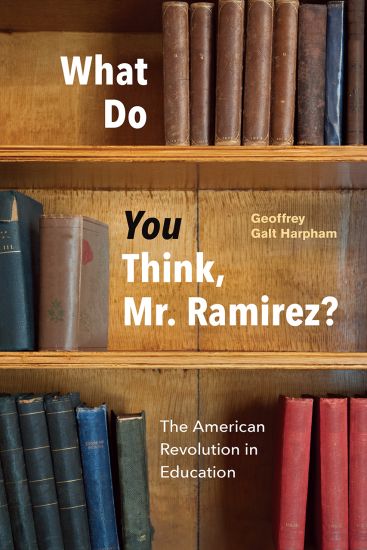
What Do You Think, Mr. Ramirez?

What Do You Think, Mr. Ramirez?

Geoffrey Galt Harpham

University of Chicago Press
2017
sidottu
Geoffrey Galt Harpham's book takes its title from a telling anecdote. A few years ago Harpham met a Cuban immigrant on a college campus, who told of arriving, penniless and undocumented, in the 1960s and eventually earning a GED and making his way to a community college. In a literature course one day, the professor asked him, "Mr. Ramirez, what do you think?" The question, said Ramirez, changed his life because "it was the first time anyone had asked me that." Realizing that his opinion had value set him on a course that led to his becoming a distinguished professor. That, says Harpham, was the midcentury promise of American education, the deep current of commitment and aspiration that undergirded the educational system that was built in the postwar years, and is under extended assault today. The United States was founded, he argues, on the idea that interpreting its foundational documents was the highest calling of opinion, and for a brief moment at midcentury, the country turned to English teachers as the people best positioned to train students to thrive as interpreters--which is to say as citizens of a democracy. Tracing the roots of that belief in the humanities through American history, Harpham builds a strong case that, even in very different contemporary circumstances, the emphasis on social and cultural knowledge that animated the midcentury university is a resource that we can, and should, draw on today.
What Do You Think, Mr. Ramirez?

What Do You Think, Mr. Ramirez?

Geoffrey Galt Harpham

University of Chicago Press
2017
nidottu
Geoffrey Galt Harpham's book takes its title from a telling anecdote. A few years ago Harpham met a Cuban immigrant on a college campus, who told of arriving, penniless and undocumented, in the 1960s and eventually earning a GED and making his way to a community college. In a literature course one day, the professor asked him, "Mr. Ramirez, what do you think?" The question, said Ramirez, changed his life because "it was the first time anyone had asked me that." Realizing that his opinion had value set him on a course that led to his becoming a distinguished professor. That, says Harpham, was the midcentury promise of American education, the deep current of commitment and aspiration that undergirded the educational system that was built in the postwar years, and is under extended assault today. The United States was founded, he argues, on the idea that interpreting its foundational documents was the highest calling of opinion, and for a brief moment at midcentury, the country turned to English teachers as the people best positioned to train students to thrive as interpreters--which is to say as citizens of a democracy. Tracing the roots of that belief in the humanities through American history, Harpham builds a strong case that, even in very different contemporary circumstances, the emphasis on social and cultural knowledge that animated the midcentury university is a resource that we can, and should, draw on today.
Wrong Turnings

Wrong Turnings

Geoffrey M. Hodgson

University of Chicago Press
2018
sidottu
The Left is in crisis. Despite global economic turbulence, left-wing political parties in many countries have failed to make progress in part because they have grown too ideologically fragmented. Today, the term Left is associated with state intervention and public ownership, but this has little in common with the original meaning of the term. What caused what we mean by the Left to change, and how has that hindered progress? With Wrong-Turnings, Geoffrey M. Hodgson tracks changes in the meaning of the Left and offers suggestions for how the Left might reclaim some of its core values. The term Left originated during the French Revolution, when revolutionaries sought to abolish the monarchy and privilege and to introduce a new society based on liberty, equality, fraternity, and universal rights. Over time, however, the meaning radically changed, especially through the influence of socialism and collectivism. Hodgson argues that the Left must rediscover its roots in the Enlightenment and readopt Enlightenment values it has abandoned, such as those concerning democracy and universal human rights. Only then will it be prepared to address contemporary problems of inequality and the survival of democracy. Possible measures could include enhanced educational provisions, a guaranteed basic income, and a viable mechanism for fair distribution of wealth.Wrong-Turnings is a truly pathbreaking work from one of our most prolific and respected institutional theorists. It will change our understanding of how the left got lost.
Wrong Turnings

Wrong Turnings

Geoffrey M. Hodgson

University of Chicago Press
2018
nidottu
The Left is in crisis. Despite global economic turbulence, left-wing political parties in many countries have failed to make progress in part because they have grown too ideologically fragmented. Today, the term Left is associated with state intervention and public ownership, but this has little in common with the original meaning of the term. What caused what we mean by the Left to change, and how has that hindered progress? With Wrong-Turnings, Geoffrey M. Hodgson tracks changes in the meaning of the Left and offers suggestions for how the Left might reclaim some of its core values. The term Left originated during the French Revolution, when revolutionaries sought to abolish the monarchy and privilege and to introduce a new society based on liberty, equality, fraternity, and universal rights. Over time, however, the meaning radically changed, especially through the influence of socialism and collectivism. Hodgson argues that the Left must rediscover its roots in the Enlightenment and readopt Enlightenment values it has abandoned, such as those concerning democracy and universal human rights. Only then will it be prepared to address contemporary problems of inequality and the survival of democracy. Possible measures could include enhanced educational provisions, a guaranteed basic income, and a viable mechanism for fair distribution of wealth.Wrong-Turnings is a truly pathbreaking work from one of our most prolific and respected institutional theorists. It will change our understanding of how the left got lost.
The Holy Spirit in Puritan Faith and Experience

The Holy Spirit in Puritan Faith and Experience

Geoffrey F. Nuttall

University of Chicago Press
1992
nidottu
Geoffrey F. Nuttall establishes the primacy of the doctrines of the Holy Spirit in seventeenth-century English Puritanism and demonstrates the continuity of the Reformation tradition from the more conservative views of Luther to the more radical interpretations of the Quakers. Nuttall illuminates prominent spokesmen, including Richard Sibbes, Richard Baxter, John Owen, Walter Cradock, Morgan Llwyd, and George Fox. In a new Introduction, Peter Lake discusses the relevance of Nuttall's book to, and its influence on, major works in seventeenth-century English history written since 1946.
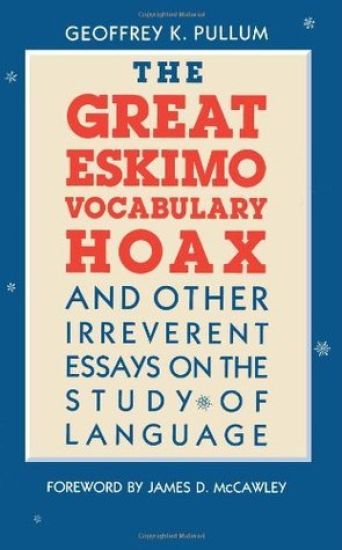
The Great Eskimo Vocabulary Hoax and Other Irreverent Essays on the Study of Language
How reliable are all those stories about the number of Eskimo words for snow? How can lamps, flags, and parrots be libelous? How might Star Trek's Commander Spock react to Noam Chomsky's theories of language? These and many other odd questions are typical topics in this collection of essays that present an occasionally zany, often wry, but always fascinating look at language and the people who study it. Geoffrey K. Pullum's writings began as columns in Natural Language and Linguistic Theory in 1983. For six years, in almost every issue, under the banner "TOPIC. . .COMMENT," he published a captivating mélange of commentary, criticism, satire, whimsy, and fiction. Those columns are reproduced here—almost exactly as his friends and colleagues originally warned him not to publish them—along with new material including a foreword by James D. McCawley, a prologue, and a new introduction to each of these clever pieces. Whether making a sneak attack on some sacred cow, delivering a tongue-in-cheek protest against current standards, or supplying a caustic review of some recent development, Pullum remains in touch with serious concerns about language and society. At the same time, he reminds the reader not to take linguistics too seriously all of the time. Pullum will take you on an excursion into the wild and untamed fringes of linguistics. Among the unusual encounters in store are a conversation between Star Trek's Commander Spock and three real earth linguists, the strange tale of the author's imprisonment for embezzling funds from the Campaign for Typographical Freedom, a harrowing account of a day in the research life of four unhappy grammarians, and the true story of how a monograph on syntax was suppressed because the examples were judged to be libelous. You will also find a volley of humorous broadsides aimed at dishonest attributional practices, meddlesome copy editors, mathematical incompetence, and "cracker-barrel philosophy of science." These learned and witty pieces will delight anyone who is fascinated by the quirks of language and linguists.
Phonetic Symbol Guide

Phonetic Symbol Guide

Geoffrey K. Pullum; William A. Ladusaw

University of Chicago Press
1996
sidottu
This is an encyclopedia of phonetic alphabet symbols, providing a complete survey of the many characters used by linguists and speech scientists to record the sounds of the world's languages. This edition incorporates the major revisions to the International Phonetic Alphabet made in 1989 and 1993. Also covered are the American tradition of transcription stemming from the anthropological school of Franz Boas; the Bloch/Smith/Trager style of transcription; the symbols used by dialectologists of the English language; usages of specialists such as Slavicists, Indologists, Sinologists, and Africanists; and the transcription proposals found in all major textbooks of phonetics. With 61 new entries, an expanded glossary of phonetic terms, added symbol charts and a full index, this book should be a useful guide for students and professionals in linguistics, phonetics, anthropology, philology, modern language study and speech science.