Kirjojen hintavertailu. Mukana 11 342 296 kirjaa ja 12 kauppaa.

Kirjahaku

Etsi kirjoja tekijän nimen, kirjan nimen tai ISBN:n perusteella.

1000 tulosta hakusanalla Geoffrey Howse

Kinship, Islam, and the Politics of Marriage in Jordan

Kinship, Islam, and the Politics of Marriage in Jordan

Geoffrey F. Hughes

Indiana University Press
2021
pokkari
In Kinship, Islam, and the Politics of Marriage in Jordan, Geoffrey Hughes sets out to trace the "marriage crisis" in Jordan and the Middle East. Rapid institutional, technological, and intellectual shifts in Jordan have challenged the traditional notions of marriage and the role of powerful patrilineal kin groups in society by promoting an alternative ideal of romantic love between husband and wife. Drawing on many years of fieldwork in rural Jordan, Kinship, Islam, and the Politics of Marriage in Jordan provides a firsthand look at how expectations around marriage are changing for young people in the Middle East even as they are still expected to raise money for housing, bridewealth, and a wedding. Kinship, Islam, and the Politics of Marriage in Jordan offers an intriguing look at the contrasts between the traditional values and social practices of rural Jordanians around marriage and the challenges and expectations of young people as their families negotiate the concept of kinship as part of the future of politics, family dynamics, and religious devotion

Amtrak, America's Railroad

Amtrak, America's Railroad

Geoffrey H. Doughty; Jeffrey T. Darbee; Eugene E. Harmon

Indiana University Press
2021
sidottu
Discover the story of Amtrak, America's Railroad, 50 years in the making. In 1971, in an effort to rescue essential freight railroads, the US government founded Amtrak. In the post–World War II era, aviation and highway development had become the focus of government policy in America. As rail passenger services declined in number and in quality, they were simultaneously driving many railroads toward bankruptcy. Amtrak was intended to be the solution. In Amtrak, America's Railroad: Transportation's Orphan and Its Struggle for Survival, Geoffrey H. Doughty, Jeffrey T. Darbee, and Eugene E. Harmon explore the fascinating history of this popular institution and tell a tale of a company hindered by its flawed origin and uneven quality of leadership, subjected to political gamesmanship and favoritism, and mired in a perpetual philosophical debate about whether it is a business or a public service. Featuring interviews with former Amtrak presidents, the authors examine the current problems and issues facing Amtrak and their proposed solutions. Created in the absence of a comprehensive national transportation policy, Amtrak manages to survive despite inherent flaws due to the public's persistent loyalty. Amtrak, America's Railroad is essential reading for those who hope to see another fifty years of America's railroad passenger service, whether they be patrons, commuters, legislators, regulators, and anyone interested in railroads and transportation history.
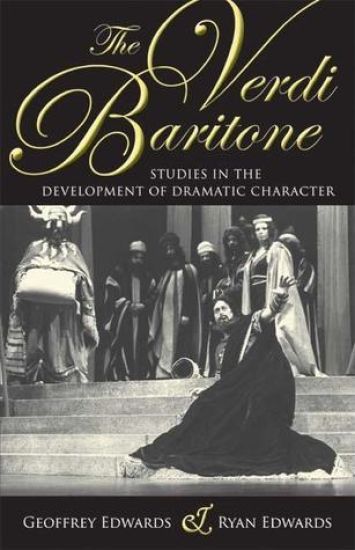
The Verdi Baritone

The Verdi Baritone

Geoffrey Edwards; Ryan Edwards

Indiana University Press
2008
pokkari
One of the most significant developments in 19th-century Italian opera was the genesis of the Verdi baritone. The authors argue that the composer's baritone characters embody "a quintessential humanity, expressing needs and temptations, confusions and understandings, griefs and joys that transcend the particulars of time and place." The Verdi Baritone explores seven of the most fascinating roles in the repertory, revealing how they were conceived and executed. This eloquent book opens with a discussion of Verdi's early triumph, Nabucco; proceeds with Ernani, Macbeth, Rigoletto, La Traviata, and Simon Boccanegra; and concludes with his final great tragedy, Otello. Voice students, professional performers, their teachers and coaches, and opera lovers, will gain insight into Verdi's masterful use of text, music, and staging to portray each character's inner self.
Fifty Economic Fallacies Exposed

Fifty Economic Fallacies Exposed

Geoffrey E. Wood

Institute of Economic Affairs
2014
nidottu
Whilst it is impossible to argue that the earth is flat without fearing ridicule, fallacies in economics are widespread. Such fallacies pervade the intellectual sphere and even influence policy. Professor Geoffrey Wood of the University of Buckingham exposes such popular economic fallacies in this revised edition of Fifty Economic Fallacies Exposed. Professor Wood looks at, for example, the supposed dangers of free trade, the abilities of governments to control the economy, the effects of government regulation and whether millions of jobs depend on our continued membership of the European Union. These lucid and stimulating articles are invaluable to students struggling to master some of the complexities of economic theory and its applications, who often find that the most effective way to learn economic analysis is to see such fallacies exposed. It is a text particularly suitable for first-year economics students, complementing existing textbooks as it does, and clarifying basic concepts in economics while demonstrating the practical uses of economic theory
Achievement Relocked

Achievement Relocked

Geoffrey Engelstein

MIT Press
2020
sidottu
How game designers can use the psychological phenomenon of loss aversion to shape player experience.Getting something makes you feel good, and losing something makes you feel bad. But losing something makes you feel worse than getting the same thing makes you feel good. So finding $10 is a thrill; losing $10 is a tragedy. On an "intensity of feeling" scale, loss is more intense than gain. This is the core psychological concept of loss aversion, and in this book game creator Geoffrey Engelstein explains, with examples from both tabletop and video games, how it can be a tool in game design. Loss aversion is a profound aspect of human psychology, and directly relevant to game design; it is a tool the game designer can use to elicit particular emotions in players. Engelstein connects the psychology of loss aversion to a range of phenomena related to games, exploring, for example, the endowment effect-why, when an object is ours, it gains value over an equivalent object that is not ours-as seen in the Weighted Companion Cube in the game Portal; the framing of gains and losses to manipulate player emotions; Deal or No Deal's use of the utility theory; and regret and competence as motivations, seen in the context of legacy games. Finally, Engelstein examines the approach to Loss Aversion in three games by Uwe Rosenberg, charting the designer's increasing mastery.
Burning with Desire

Burning with Desire

Geoffrey Batchen

MIT Press
1999
pokkari
In an 1828 letter to his partner, Nicephore Niepce, Louis Daguerre wrote, "I am burning with desire to see your experiments from nature." In this book, Geoffrey Batchen analyzes the desire to photograph as it emerged within the philosophical and scientific milieus that preceded the actual invention of photography. Recent accounts of photography's identity tend to divide between the postmodern view that all identity is determined by context and a formalist effort to define the fundamental characteristics of photography as a medium. Batchen critiques both approaches by way of a detailed discussion of photography's conception in the late eighteenth and early nineteenth centuries. He examines the output of the various nominees for "first photographer," then incorporates this information into a mode of historical criticism informed by the work of Michel Foucault and Jacques Derrida. The result is a way of thinking about photography that persuasively accords with the medium's undeniable conceptual, political, and historical complexity.
Sorting Things Out

Sorting Things Out

Geoffrey C. Bowker; Susan Leigh Star

MIT Press
2000
pokkari
A revealing and surprising look at how classification systems can shape both worldviews and social interactions.What do a seventeenth-century mortality table (whose causes of death include "fainted in a bath," "frighted," and "itch"); the identification of South Africans during apartheid as European, Asian, colored, or black; and the separation of machine- from hand-washables have in common? All are examples of classification-the scaffolding of information infrastructures.In Sorting Things Out, Geoffrey C. Bowker and Susan Leigh Star explore the role of categories and standards in shaping the modern world. In a clear and lively style, they investigate a variety of classification systems, including the International Classification of Diseases, the Nursing Interventions Classification, race classification under apartheid in South Africa, and the classification of viruses and of tuberculosis.The authors emphasize the role of invisibility in the process by which classification orders human interaction. They examine how categories are made and kept invisible, and how people can change this invisibility when necessary. They also explore systems of classification as part of the built information environment. Much as an urban historian would review highway permits and zoning decisions to tell a city's story, the authors review archives of classification design to understand how decisions have been made. Sorting Things Out has a moral agenda, for each standard and category valorizes some point of view and silences another. Standards and classifications produce advantage or suffering. Jobs are made and lost; some regions benefit at the expense of others. How these choices are made and how we think about that process are at the moral and political core of this work. The book is an important empirical source for understanding the building of information infrastructures.
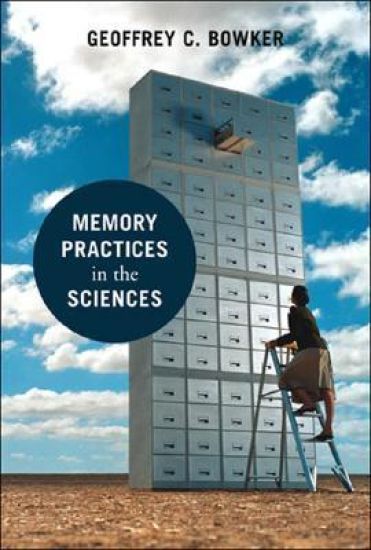
Memory Practices in the Sciences

Memory Practices in the Sciences

Geoffrey C. Bowker

MIT Press
2008
pokkari
How the way we hold knowledge about the past-in books, in file folders, in databases-affects the kind of stories we tell about the past.The way we record knowledge, and the web of technical, formal, and social practices that surrounds it, inevitably affects the knowledge that we record. The ways we hold knowledge about the past-in handwritten manuscripts, in printed books, in file folders, in databases-shape the kind of stories we tell about that past. In this lively and erudite look at the relation of our information infrastructures to our information, Geoffrey Bowker examines how, over the past two hundred years, information technology has converged with the nature and production of scientific knowledge. His story weaves a path between the social and political work of creating an explicit, indexical memory for science-the making of infrastructures-and the variety of ways we continually reconfigure, lose, and regain the past.At a time when memory is so cheap and its recording is so protean, Bowker reminds us of the centrality of what and how we choose to forget. In Memory Practices in the Sciences he looks at three "memory epochs" of the nineteenth, twentieth, and twenty-first centuries and their particular reconstructions and reconfigurations of scientific knowledge. The nineteenth century's central science, geology, mapped both the social and the natural world into a single time package (despite apparent discontinuities), as, in a different way, did mid-twentieth-century cybernetics. Both, Bowker argues, packaged time in ways indexed by their information technologies to permit traffic between the social and natural worlds. Today's sciences of biodiversity, meanwhile, "database the world" in a way that excludes certain spaces, entities, and times. We use the tools of the present to look at the past, says Bowker; we project onto nature our modes of organizing our own affairs.
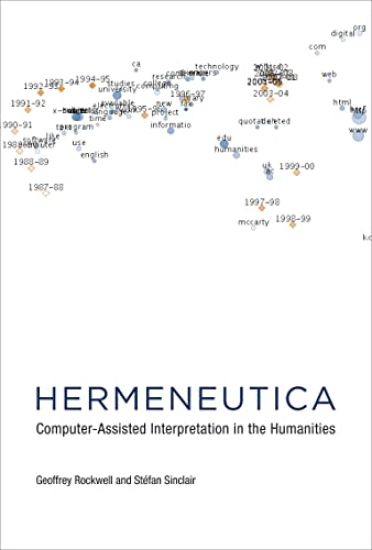
Hermeneutica

Hermeneutica

Geoffrey Rockwell; Stéfan Sinclair

MIT PRESS LTD
2022
pokkari
An introduction to text analysis using computer-assisted interpretive practices, accompanied by example essays that illustrate the use of these computational tools. The image of the scholar as a solitary thinker dates back at least to Descartes' Discourse on Method. But scholarly practices in the humanities are changing as older forms of communal inquiry are combined with modern research methods enabled by the Internet, accessible computing, data availability, and new media. Hermeneutica introduces text analysis using computer-assisted interpretive practices. It offers theoretical chapters about text analysis, presents a set of analytical tools (called Voyant) that instantiate the theory, and provides example essays that illustrate the use of these tools. Voyant allows users to integrate interpretation into texts by creating hermeneutica--small embeddable "toys" that can be woven into essays published online or into such online writing environments as blogs or wikis. The book's companion website, Hermeneuti.ca, offers the example essays with both text and embedded interactive panels. The panels show results and allow readers to experiment with the toys themselves.The use of these analytical tools results in a hybrid essay: an interpretive work embedded with hermeneutical toys that can be explored for technique. The hermeneutica draw on and develop such common interactive analytics as word clouds and complex data journalism interactives. Embedded in scholarly texts, they create a more engaging argument. Moving between tool and text becomes another thread in a dynamic dialogue.
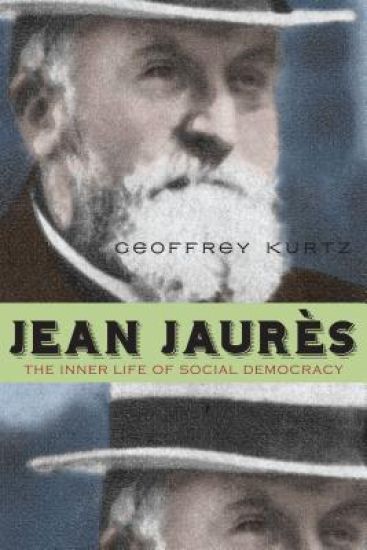
Jean Jaurès

Jean Jaurès

Geoffrey Kurtz

Pennsylvania State University Press
2014
sidottu
Jean Jaurès was a towering intellectual and political leader of the democratic Left at the turn of the twentieth century, but he is little remembered today outside of France, and his contributions to political thought are little studied anywhere. In Jean Jaurès: The Inner Life of Social Democracy, Geoffrey Kurtz introduces Jaurès to an American audience. The parliamentary and philosophical leader of French socialism from the 1890s until his assassination in 1914, Jaurès was the only major socialist leader of his generation who was educated as a political philosopher. As he championed the reformist method that would come to be called social democracy, he sought to understand the inner life of a political tradition that accepts its own imperfection. Jaurès's call to sustain the tension between the ideal and the real resonates today.In addition to recovering the questions asked by the first generation of social democrats, Kurtz’s aim in this book is to reconstruct Jaurès’s political thought in light of current theoretical and political debates. To achieve this, he gives readings of several of Jaurès’s major writings and speeches, spanning work from his early adulthood to the final years of his life, paying attention to not just what Jaurès is saying, but how he says it.
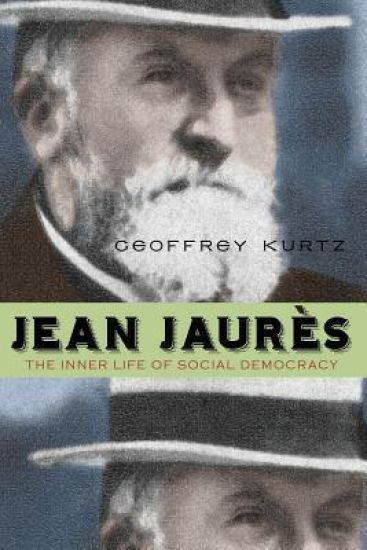
Jean Jaurès

Jean Jaurès

Geoffrey Kurtz

Pennsylvania State University Press
2016
pokkari
Jean Jaurès was a towering intellectual and political leader of the democratic Left at the turn of the twentieth century, but he is little remembered today outside of France, and his contributions to political thought are little studied anywhere. In Jean Jaurès: The Inner Life of Social Democracy, Geoffrey Kurtz introduces Jaurès to an American audience. The parliamentary and philosophical leader of French socialism from the 1890s until his assassination in 1914, Jaurès was the only major socialist leader of his generation who was educated as a political philosopher. As he championed the reformist method that would come to be called social democracy, he sought to understand the inner life of a political tradition that accepts its own imperfection. Jaurès's call to sustain the tension between the ideal and the real resonates today.In addition to recovering the questions asked by the first generation of social democrats, Kurtz’s aim in this book is to reconstruct Jaurès’s political thought in light of current theoretical and political debates. To achieve this, he gives readings of several of Jaurès’s major writings and speeches, spanning work from his early adulthood to the final years of his life, paying attention to not just what Jaurès is saying, but how he says it.
Understanding Victory

Understanding Victory

Geoffrey Till

Praeger Publishers Inc
2014
sidottu
Using four warship-centered examples, this book shows how naval battles are won or lost—and how technological advantage is rarely as decisive in defeat or victory as is often claimed.Providing a unique assessment of naval strategy and historic outcomes across centuries of warfare, Understanding Victory: Naval Operations from Trafalgar to the Falklands presents four case studies that examine each ship-based battle narrative to expose and analyze the factors that contributed to each side's success or defeat. The work opens with an overview of the general causes of success and failure in naval operations. Each case study starts with a detailed narrative of the battle and then reviews the conflict from the key perspectives identified in the introduction. These classic examples of naval warfare underscore how the outcome of naval operations is often predetermined by the clarity and quality of the mission aim, and point out striking constants in naval warfare despite the obvious differences in military technologies over a long span of time.
A Short History of Christianity

A Short History of Christianity

Geoffrey Blainey

SPCK Publishing
2016
nidottu
From the pen of a great historian, here is the most accessible and affordable one-volume history of Christianity you can buy. As well providing a masterly panoramic survey of the religion itself, Professor Blainey keeps you informed about the social and economic forces that influenced it, making fascinating connections with politics, literature, popular culture, other religions and wider historical events along the way. The result is a vivid account of the world’s largest religion, packed with illuminating insights into the ideas and achievements of some of the most powerful people and movements that have shaped our world right up to the present day.
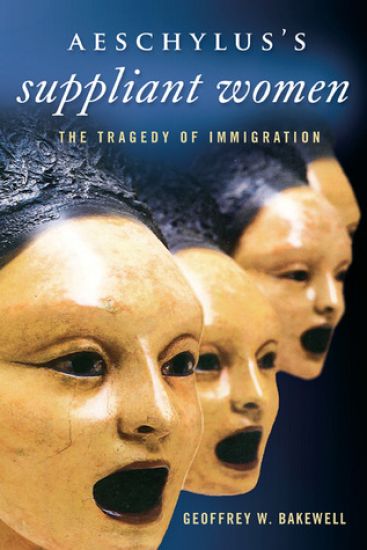
Aeschylus’s Suppliant Women

Aeschylus’s Suppliant Women

Geoffrey W. Bakewell

University of Wisconsin Press
2013
nidottu
This book offers a provocative interpretation of a relatively neglected tragedy, Aeschylus's Suppliant Women. Although the play's subject is a venerable myth, it frames the flight of the daughters of Danaus from Egypt to Greece in starkly contemporary terms, emphasising the encounter between newcomers and natives. Although some scholars read Suppliant Women as modelling successful social integration, Geoffrey W. Bakewell argues that the play demonstrates, above all, the difficulties and dangers noncitizens brought to the polis. Rigourously historical, Bakewell situates Suppliant Women in light of the unprecedented immigration that Athens experienced in the sixth and fifth centuries BCE. The flow of foreigners to Attika increased under the Pisistratids but became a flood following liberation, Cleisthenes, and the Persian Wars. As Athenians of the classical era became increasingly aware of their own collective identity, they sought to define themselves and exclude others. They created a formal legal status to designate the free noncitizens living among them, calling them metics and calling their status metoikia. When Aeschylus dramatised the mythical flight of the Danaids from Egypt in his play Suppliant Women, he did so in light of his own time and place. Throughout the play, directly and indirectly, he casts the newcomers as metics and their stay in Greece as metoikia. Bakewell maps the manifold anxieties that metics created in classical Athens, showing that although citizens benefited from the many immigrants in their midst, they also feared the effects of immigration in political, sexual, and economic realms. Bakewell finds metoikia was a deeply flawed solution to the problem of large-scale immigration. Aeschylus's Argives accepted the Danaids as metics only under duress and as a temporary response to a crisis. Like the historical Athenians, they opted for metoikia because they lacked better alternatives.
All Abroad

All Abroad

Geoffrey Weill

University of Wisconsin Press
2021
sidottu
Yearning for an escape from a claustrophobic childhood, Geoffrey Weill became infatuated with travel. At twenty-three, the budding British connoisseur made his way across the Atlantic on an ocean liner. The year was 1973, and he was bound for New York to pursue a promising role as consultant-in-training at the headquarters of the world's oldest travel agency, Thomas Cook. The idyllic trip was reminiscent of those from the early twentieth century but made distinctly modern by a nightly reminder—at the onboard dance club, one was sure to run into a sequin-clad David Bowie.All Abroad is the memoir of a man hungry for the logistics of travel: getting there, staying there, and feeling at home on any continent. Woven into his entertaining anecdotes is an informative account of a lost era in travel. As a witness to compelling and monumental changes in the industry, Weill offers a unique view into how our vacations have been shaped deeply by human trends, tragedies, and technologies. While some long for the grandeur of tourism from decades ago, Weill insists that travel—the conveyances and hotels that await journey's end—remains as glamorous as ever.
The Grand Strategy of Philip II

The Grand Strategy of Philip II

Geoffrey Parker

Yale University Press
2000
pokkari
From 1556 until his death in 1598, Philip II of Spain ruled the first global empire in history, yet no one so far has analyzed precisely how he accomplished this feat. The author investigates the strengths and weaknesses of Philip’s strategic vision, the priorities that underlay his policies, the practices and prejudices that influenced his decision-making, and the external factors that affected the achievement of his goals.Geoffrey Parker begins by defining the characteristics of Spain’s strategic culture: the king’s distinctive system of government, the “information overload” that threatened to engulf it, and the various strategic priorities and assumptions used to overcome the disparity between aims and means. He then explores the surviving documentation (from the Habsburgs, their allies, and their adversaries) on the formation of strategy in three crucial case studies: Philip’s unsuccessful efforts to maintain his authority in the Netherlands, his defective peacetime management of foreign relations with Scotland and England, and his failed Armada campaign against England. Finally Parker examines the small but fatal flaws in the execution of Philip’s Grand Strategy, assesses the response of the king and his ministers to their failures, and questions whether the outcome might have been different with other policy options, another ruler, or a different strategic culture. Pointing to modern parallels between Philip’s problems of governance and those facing Hitler and Churchill, or Kennedy and Johnson, this powerfully argued book provides a fascinating commentary on the nature of empires and the decision-making process as practiced by great powers.