Kirjojen hintavertailu. Mukana 11 717 486 kirjaa ja 12 kauppaa.

Kirjahaku

Etsi kirjoja tekijän nimen, kirjan nimen tai ISBN:n perusteella.

1000 tulosta hakusanalla Gerry Souter

A Practical Philosopher's Approach To Critical Theory
Postmodernism has convinced people that there is no way to determine what is true. However, this is false and has led to the progressive erosion of civility in society, in part because what we assume determines what questions we ask and what we see as data. Postmodernism is inherently self-contradicting and detrimental to social cohesion and civil behaviour.Habermas' critical theory, coupled with the theory of action Gerry Ewert presents here, establishes a practical way to determine what is and is not true-providing one is actually interested in what is true, independent of what one wishes to be true. A Practical Philosopher's Approach to Critical Theory walks through some of the conceptual fundamentals undergirding assumptions people make about reality as an introduction to the major issue of the question, "What is truth?" Habermas' critical theory is used as a framework through which to determine which method of determining truth is appropriate in different situations. While others have addressed what people need to think about in their personal lives, A Practical Philosopher's Approach to Critical Theory addresses what people need to attend to in their public lives. The challenge of democracy is that the very systems put in place to provide public goods have inherent tendencies to serve their own interests and not the public interest. Ewert's goal is to aid readers in gaining a perspective and a way of engaging with the world that enables them to be freed from ideological distortion and to become fully aware, emancipated persons....
A Practical Philosopher's Approach To Critical Theory
Postmodernism has convinced people that there is no way to determine what is true. However, this is false and has led to the progressive erosion of civility in society, in part because what we assume determines what questions we ask and what we see as data. Postmodernism is inherently self-contradicting and detrimental to social cohesion and civil behaviour.Habermas' critical theory, coupled with the theory of action Gerry Ewert presents here, establishes a practical way to determine what is and is not true-providing one is actually interested in what is true, independent of what one wishes to be true. A Practical Philosopher's Approach to Critical Theory walks through some of the conceptual fundamentals undergirding assumptions people make about reality as an introduction to the major issue of the question, "What is truth?" Habermas' critical theory is used as a framework through which to determine which method of determining truth is appropriate in different situations. While others have addressed what people need to think about in their personal lives, A Practical Philosopher's Approach to Critical Theory addresses what people need to attend to in their public lives. The challenge of democracy is that the very systems put in place to provide public goods have inherent tendencies to serve their own interests and not the public interest. Ewert's goal is to aid readers in gaining a perspective and a way of engaging with the world that enables them to be freed from ideological distortion and to become fully aware, emancipated persons....
Seeing Through the Bumpf

Seeing Through the Bumpf

Gerry Ewert

FriesenPress
2021
pokkari
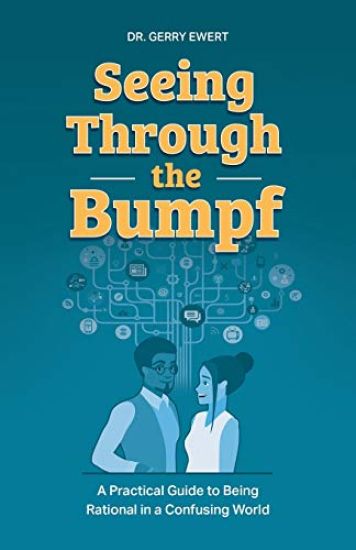
Do you have an uneasy sense that you are being manipulated every day and being misled? You are, and you aren't alone. Every day, we're bombarded by statements, questionable reasoning, emotional pleas, and (very) selective data. These are employed by the media, politicians, public figures, and marketers in an effort to draw you to their side of the argument.At times, you may want to wave the white flag of surrender in the war for truth. Maybe there is no truth? Maybe there are many-sometimes contradictory-truths. It doesn't feel like that could be possible, but how else do you reconcile these very articulate but diametrically opposing viewpoints and data?By developing critical analytical skills and learning what it means to be rational, you'll be able to weigh the merits of the opposing viewpoints and more easily see gaps in others' arguments. Being rational requires honesty and a sincere effort to determine what is true and what is not as a basis for making decisions.What are you going to do about being manipulated and misled? Learn what being rational means, how to think rationally, and develop skills to determine valid data and to have a truly rational discussion. Seeing Through the Bumpf will help you become an informed and thoughtful analyst of the daily bombardment that comes your way....
Seeing Through the Bumpf

Seeing Through the Bumpf

Gerry Ewert

FriesenPress
2021
sidottu
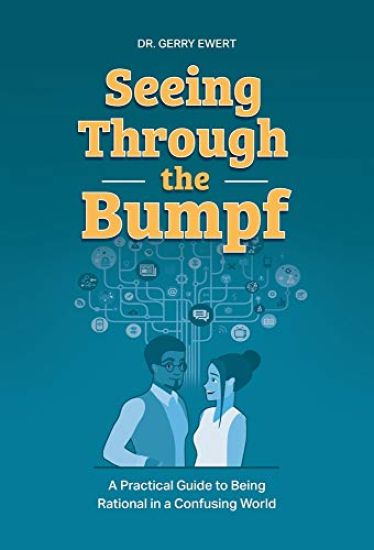
Do you have an uneasy sense that you are being manipulated every day and being misled? You are, and you aren't alone. Every day, we're bombarded by statements, questionable reasoning, emotional pleas, and (very) selective data. These are employed by the media, politicians, public figures, and marketers in an effort to draw you to their side of the argument.At times, you may want to wave the white flag of surrender in the war for truth. Maybe there is no truth? Maybe there are many-sometimes contradictory-truths. It doesn't feel like that could be possible, but how else do you reconcile these very articulate but diametrically opposing viewpoints and data?By developing critical analytical skills and learning what it means to be rational, you'll be able to weigh the merits of the opposing viewpoints and more easily see gaps in others' arguments. Being rational requires honesty and a sincere effort to determine what is true and what is not as a basis for making decisions.What are you going to do about being manipulated and misled? Learn what being rational means, how to think rationally, and develop skills to determine valid data and to have a truly rational discussion. Seeing Through the Bumpf will help you become an informed and thoughtful analyst of the daily bombardment that comes your way....
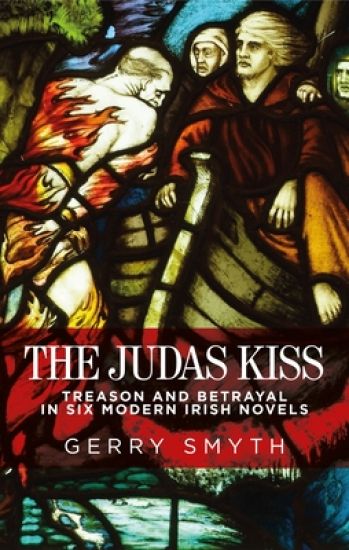
The Judas Kiss

The Judas Kiss

Gerry Smyth

Manchester University Press
2018
nidottu
This book argues that modern Irish history encompasses a deep-seated fear of betrayal, and that this fear has been especially prevalent since the revolutionary period at the outset of the twentieth century. The author goes on to argue that the novel is the literary form most apt for the exploration of betrayal in its social, political and psychological dimensions. The significance of this thesis comes into focus in terms of a number of recent developments – most notably, the economic downturn (and the political and civic betrayals implicated therein) and revelations of the Catholic Church’s failure in its pastoral mission. As many observers note, such developments have brought the language of betrayal to the forefront of contemporary Irish life. This book offers a powerful analysis of modern Irish history as regarded from the perspective of some of its most incisive minds, including James Joyce, Liam O’Flaherty, Elizabeth Bowen, Francis Stuart, Eugene McCabe and Anne Enright.
I'll Never Walk Alone

I'll Never Walk Alone

Gerry Marsden

Bloomsbury Publishing PLC
2021
nidottu
In 1963, Gerry and the Pacemakers made pop-music history. Their first three singles, “How Do You Do It?”, “I Like It” and “You'll Never Walk Alone”, went to the top of the UK charts, creating a still-unbeaten record. For twenty-year-old Gerry Marsden it was the start of a long and colourful show-business career. A pioneer of the Liverpool pop explosion that reverberated around the world, he vowed to broaden his horizons and stay on stage for the rest of his life. Brought up in the tough Dingle district of Liverpool, Marsden was a street fighter and enthusiastic boxer, who left school at the age of fifteen to work as a railways delivery boy.Like thousands of teenagers in the 1950s he got the music bug, taught himself guitar, formed a group and joined the vibrant club circuit alongside the Beatles and hundreds of other young rock 'n' rollers. In 1962, Gerry and the Pacemakers were signed by manager Brian Epstein as his second group after the Beatles, and made their name with ballads like “Ferry Cross the Mersey” and “Don't Let the Sun Catch You Crying” as well as raunchy pop. But it was a Rodgers & Hammerstein song, “You'll Never Walk Alone”, which had enthralled Marsden since he saw the film Carousel in his youth, that was their biggest hit. For three decades it has remained the anthem of the crowds at Liverpool Football Club, played before kick-off every Saturday, inscribed on the club gates and always the most popular concert request. In 2020, during the Covid-19 pandemic crisis, Marsden released a version of “I’ll Never Walk Alone” in tribute to the National Health Service.In this autobiography, reissued following his death in January 2021, Gerry Marsden emerges as a driven man, an artist with enormous confidence and a unique spirit. From his streetwise boyhood and early love of music to his friendship – and keen rivalry – with the Beatles, hunger for fame and hard-won success, his story is one of grit, warmth, humour and determination.
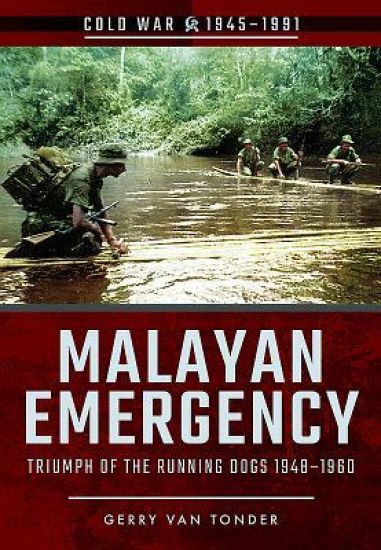
Malayan Emergency: Triumph of the Rubnning Dogs 1948-1960
When the world held its breath It is 25 years since the end of the Cold War, now a generation old. It began over 75 years ago, in 1944 long before the last shots of the Second World War had echoed across the wastelands of Eastern Europe with the brutal Greek Civil War. The battle lines are no longer drawn, but they linger on, unwittingly or not, in conflict zones such as Iraq, Somalia and Ukraine. In an era of mass-produced AK-47s and ICBMs, one such flashpoint was Malaya By the time of the 1942 Japanese occupation of the Malay Peninsula and Singapore, the Malayan Communist Party (MCP) had already been fomenting merdeka independence from Britain. The Japanese conquerors, however, were also the loathsome enemies of the MCP s ideological brothers in China. An alliance of convenience with the British was the outcome. Britain armed and trained the MCP s military wing, the Malayan People s Anti-Japanese Army (MPAJA), to essentially wage jungle guerrilla warfare against Japanese occupying forces.With the cessation of hostilities, anti-Japanese became anti-British, and, using the same weapons and training fortuitously provided by the British army during the war, the MCP launched a guerrilla war of insurgency. Malaya was of significant strategic and economic importance to Britain. In the face of an emerging communist regime in China, a British presence in Southeast Asia was imperative. Equally, rubber and tin, largely produced in Malaya by British expatriates, were important inputs for British industry. Typically, the insurgents, dubbed Communist Terrorists, or simply CTs, went about attacking soft targets in remote areas: the rubber plantations and tin mines. In conjunction with this, was the implementation of Mao s dictate of subverting the rural, largely peasant, population to the cause. Twelve years of counter-insurgency operations ensued, as a wide range of British forces were joined in the conflict by ground, air and sea units from Australia, New Zealand, Southern and Northern Rhodesia, Fiji and Nyasaland.
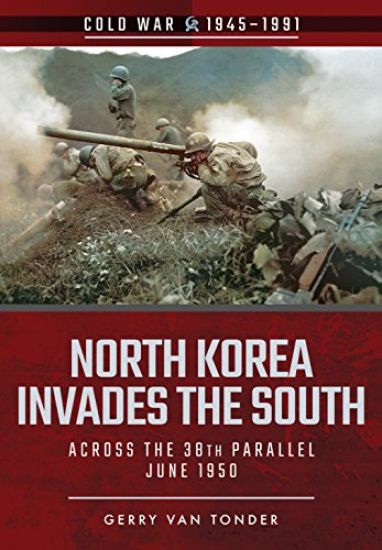
North Korea Invades the South

North Korea Invades the South

Gerry Van Tonder

Pen Sword Military
2018
nidottu
When the world held its breath It is more than 25 years since the end of the Cold War. It began over 75 years ago, in 1944 long before the last shots of the Second World War had echoed across the wastelands of Eastern Europe with the brutal Greek Civil War. The battle lines are no longer drawn, but they linger on, unwittingly or not, in conflict zones such as Syria, Somalia and Ukraine. In an era of mass-produced AK-47s and ICBMs, one such flashpoint was Korea Without warning, at 4.00 a.m. on 25 June 1950, North Korean artillery laid down a heavy bombardment on the Ongjin Peninsula, followed four hours later by a massive armoured, air, amphibious and infantry breach of the ill-conceived post-war border that was the 38 north line of latitude. At 11.00 a.m., North Korea issued a declaration of war against the Republic of Korea. Three days later, the South Korean capital, Seoul, fell. The attack upon Korea makes it plain beyond all doubt that Communism has passed beyond the use of subversion to conquer independent nations and will now use armed invasion and war. A week after his reaction to the North Korean invasion, US President Harry S. Truman, in compliance with a UN Security Council resolution, appointed that iconic Second World War veteran, General Douglas MacArthur, commander-in-chief of forces in Korea. The first in a six-volume series on the Korean War, this publication considers those first few fateful days in June 1950 that would cement north south antagonism to this day, the pariah state that is communist North Korea a seemingly increasing threat to an already tenuous global peace.
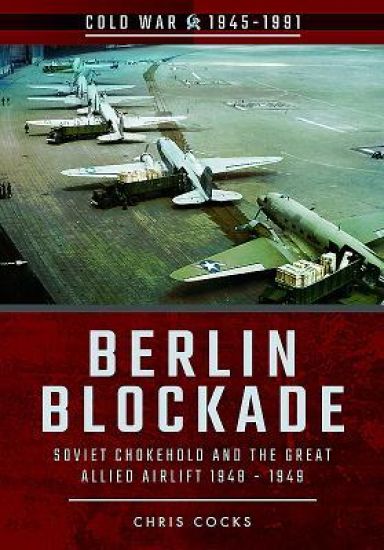
Berlin Blockade: Soviet Chokehold and the Great Allied Airlift 1948-1949
When the world held its breath It is 25 years since the end of the Cold War, now a generation old. It began over 75 years ago, in 1944 long before the last shots of the Second World War had echoed across the wastelands of Eastern Europe with the brutal Greek Civil War. The battle lines are no longer drawn, but they linger on, unwittingly or not, in conflict zones such as Iraq, Somalia and Ukraine. In an era of mass-produced AK-47s and ICBMs, one such flashpoint was Berlin. Allied agreements entered into at Teheran, Yalta and Potsdam for the carving up of post-war Berlin now meant nothing to the Soviet conquerors. Their victory had cost millions of Russian lives troops and civilians so the hammer and sickle hoisted atop the Reichstag was more a claim to ownership than success. Moscow s agenda was clear and simple: the Western Allies had to leave Berlin. The blockade ensued as the Soviets orchestrated a determined programme of harassment, intimidation, flexing of muscle, and Socialist propaganda to force the Allies out. Truman had already used the atomic bomb: Britain and America would not be cowed.History s largest airborne relief programme was introduced to save the beleaguered city. In a war of attrition, diplomatic bluff and backstabbing, and mobilizing of forces, the West braced itself for a third world war.
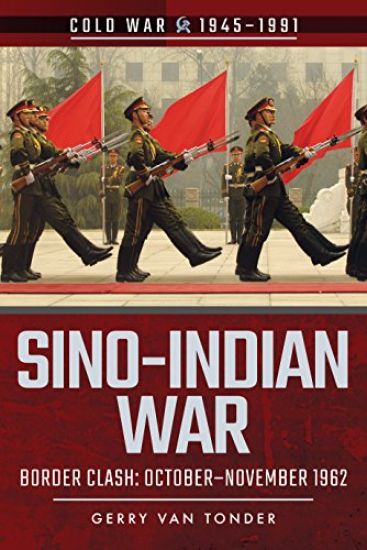
Sino-Indian War

Sino-Indian War

Gerry Van Tonder

Pen Sword Military
2018
nidottu
For a hundred years, British and Chinese territorial claims in the Himalayas conflicted, with Indian historians claiming that the region was the fountainhead of Hindu civilization. In the halcyon days of the Raj, London saw Afghanistan and Tibet as buffers against Russian and Chinese imperialism. In 1913, an ephemeral agreement between Britain, Tibet and China was signed, recognizing the McMahon Line as the border of the disputed territory. China, however, failed to ratify the agreement, while India protested against a loss of historical land. After the Second World War, India became independent of Britain and Chinese Communists proclaimed a people's republic. Despite cordial overtures from Indian Prime Minister Nehru, in late 1950 the Chinese People's Liberation Army (PLA) invaded Tibet. In the ensuing twelve years, Indian diplomacy and Chinese 'cartographic aggression' were punctuated by border incidents, particularly in 1953 when armed clashes precipitated a significant increase in the disposition of troops by both sides. In the spring of 1962, Indian forces flooded into the Ladakh region of the state of Jammu and Kashmir, to check the Chinese. In a spiralling game of brinkmanship, in September, ground forces were strategically deployed and redeployed. On 10 October, thirty-three Chinese died in a firefight near Dhola. Embittered by Moscow's support of India against a sister communist state, and in a bid to clip Nehru's belligerent wings, on 20 October, the PLA launched a two-pronged attack against Indian positions.
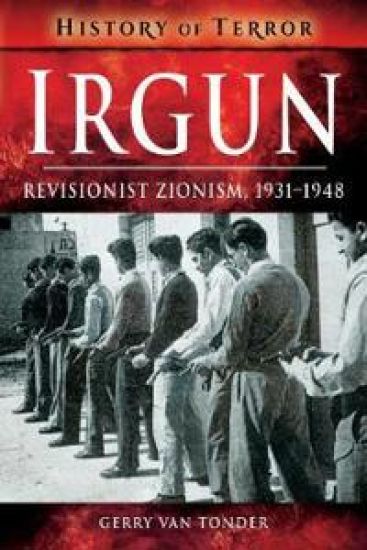
Irgun

Irgun

Gerry Van Tonder

Pen Sword Military
2019
nidottu
In October 1944, the US Office of Strategic Services described the Irgun Tsvai Leumi - National Military Organization - as 'an underground, quasi-military organization with headquarters in Palestine ... fanatical Zionists who wish to convert Palestine and Transjordan into an independent Jewish state ... advocate the use of force both against the Arabs and the British to achieve this maximal political goal'. In 1925, Ze'ev Jabotinsky founded the Revisionist Zionism organization, whose secular, right-wing ideology would lead to the formation of the Irgun and, ultimately, of the Likud Party. Commencing operations in the British Mandate of Palestine in 1931, Irgun adopted a mainly guarding role, while facilitating the ongoing immigration of Jews into Palestine. In 1936, Irgun guerrillas started attacking Arab targets. The British White Paper of 1939 rejected the establishment of a Jewish nation, and as a direct consequence, Irgun guerrillas started targeting the British. The authorities executed captured Irgun operatives found guilty of terrorism, while deporting hundreds to internment camps overseas. As details of Jewish genocide - the Holocaust - emerged, Irgun declared war on the British in Palestine. Acts of infrastructural sabotage gave way to the bombing of buildings and police stations, the worst being the bombing of the King David Hotel in Jerusalem - the hub of British operations and administration - in July 1946, killing ninety-one. Freedom fighters or terrorists - Irgun was only dissolved when the independent Jewish state of Israel was born on 14 May 1948\. This is their story.