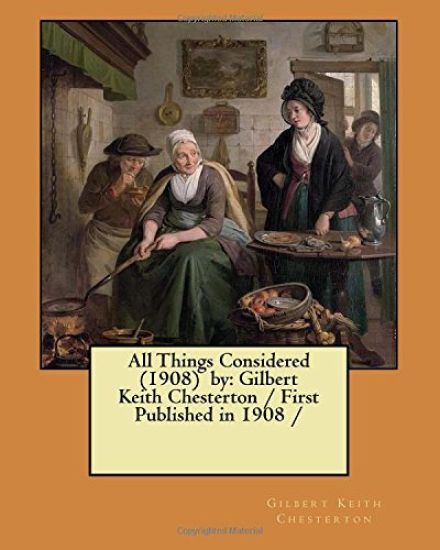
The Flying Inn is a novel first published in 1914 by G. K. Chesterton. It is set in a future England where the Temperance movement has allowed a bizarre form of "Progressive" Islam to dominate the political and social life of the country. Because of this, alcohol sales to the poor are effectively prohibited, while the rich can get alcoholic drinks "under a medical certificate". The plot centres on the adventures of Humphrey Pump and Captain Patrick Dalroy, who roam the country in their cart with a barrel of rum in an attempt to evade Prohibition, exploiting loopholes in the law to temporarily prevent the police taking action against them. Eventually the heroes and their followers foil an attempted coup by an Islamic military force. The novel includes the poem, The Rolling English Road. The poem was first published under the title A Song of Temperance Reform in the New Witness in 1913.
Father Brown is a fictional Roman Catholic priest and amateur sleuth created in the early 20th century by English novelist G. K. Chesterton. Father Brown is featured in a series of short stories where he solves mysteries and crimes using his intuition and keen understanding of human nature. The character was loosely based by Chesterton on Father John O'Connor (1870-1952), a parish priest in Bradford, who was involved in Chesterton's conversion to Catholicism in 1922
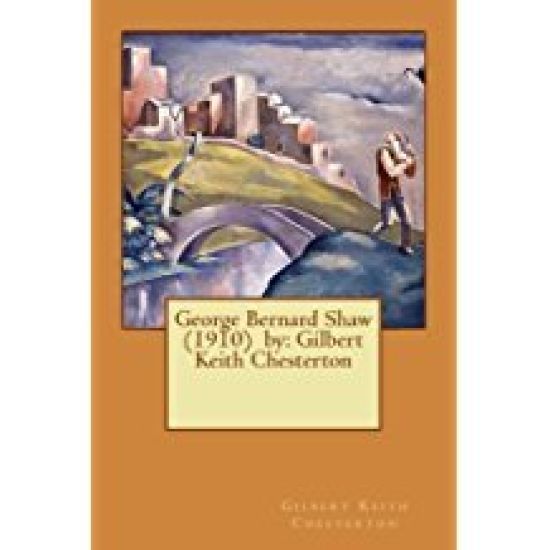
The earlier part of this book appeared in the form of five articles which came out in the "New Witness" at the crisis of the recent controversy in the Press on the subject of divorce. Crude and sketchy as they confessedly were, they had a certain rude plan of their own, which I find it very difficult to recast even in order to expand. I have therefore decided to reprint the original articles as they stood, save for a few introductory words; and then, at the risk of repetition, to add a few further chapters, explaining more fully any conceptions that may seem to have been too crudely assumed or dismissed. I have set forth the original matter as it appeared, under a general heading, without dividing it into chapters. Gilbert Keith Chesterton, KC*SG (29 May 1874 - 14 June 1936), better known as G. K. Chesterton, was an English writer, poet, philosopher, dramatist, journalist, orator, lay theologian, biographer, and literary and art critic. Chesterton is often referred to as the "prince of paradox". Time magazine has observed of his writing style: "Whenever possible Chesterton made his points with popular sayings, proverbs, allegories-first carefully turning them inside out." Chesterton is well known for his fictional priest-detective Father Brown, and for his reasoned apologetics. Even some of those who disagree with him have recognised the wide appeal of such works as Orthodoxy and The Everlasting Man.Chesterton, as a political thinker, cast aspersions on both Progressivism and Conservatism, saying, "The whole modern world has divided itself into Conservatives and Progressives. The business of Progressives is to go on making mistakes. The business of the Conservatives is to prevent the mistakes from being corrected."Chesterton routinely referred to himself as an "orthodox" Christian, and came to identify this position more and more with Catholicism, eventually converting to Catholicism from High Church Anglicanism. George Bernard Shaw, Chesterton's "friendly enemy" according to Time, said of him, "He was a man of colossal genius."Biographers have identified him as a successor to such Victorian authors as Matthew Arnold, Thomas Carlyle, Cardinal John Henry Newman, and John Ruskin.
The Man Who Was Thursday: A Nightmare is a novel by G. K. Chesterton, first published in 1908. The book has been referred to as a metaphysical thriller. Although it deals with anarchists, the novel is not an exploration or rebuttal of anarchist thought; Chesterton's ad hoc construction of "Philosophical Anarchism" is distinguished from ordinary anarchism and is referred to several times not so much as a rebellion against government but as a rebellion against God. The novel has been described as "one of the hidden hinges of twentieth-century writing, the place where, before our eyes, the nonsense-fantastical tradition of Lewis Carroll and Edward Lear pivots and becomes the nightmare-fantastical tradition of Kafka and Borges."
A collection of related short stories by British author G. K. Chesterton. Each story is centered on a person who is making his living by some novel and extraordinary means (a "queer trade"). To gain admittance to the Club, one must have a unique queer trade as principal source of income. "Cherub" Swinburne describes his quest for The Club of Queer Trades with his friend Basil Grant, a retired judge, and Rupert Grant, a private detective who is Basil's younger brother. Each of the stories describes their encounter with one of the trades. In the final story, Rupert Grant rescues a lady from her kidnappers but cannot understand why she refuses to be rescued. The answer leads to the unveiling of the mystery of The Club of Queer Trades. First published by Harper & Brothers, London, 1905.
The Club of Queer Trades is a collection of stories by G. K. Chesterton first published in 1905. Each story in the collection is centered on a person who is making his living by some novel and extraordinary means (a "queer trade", using the word "queer" in the sense of "peculiar"). To gain admittance one must have invented a unique means of earning a living and the subsequent trade being the main source of income.The framing narrative by "Cherub" Swinburne describes his quest for The Club of Queer Trades with his friend Basil Grant, a retired judge, and Rupert Grant, a private detective who is Basil's younger brother. Each of the stories describes their encounter with one of the trades.
The Flying Inn is the final novel by G. K. Chesterton, first published in 1914. It is set in a future England where the Temperance movement has allowed a bizarre form of "Progressive" Islam to dominate the political and social life of the country. Because of this, alcohol sales to the poor are effectively prohibited, while the rich can get alcoholic drinks "under a medical certificate". The plot centres on the adventures of Humphrey Pump and Captain Patrick Dalroy, who roam the country in their cart with a barrel of rum in an attempt to evade Prohibition, exploiting loopholes in the law to temporarily prevent the police taking action against them. Eventually the heroes and their followers foil an attempted coup by an Islamic military force.
Gilbert Keith Chesterton (29 May 1874 - 14 June 1936), better known as G. K. Chesterton, was an English writer, poet, philosopher, dramatist, journalist, orator, lay theologian, biographer, and literary and art critic. Chesterton is often referred to as the "prince of paradox". Time magazine has observed of his writing style: "Whenever possible Chesterton made his points with popular sayings, proverbs, allegories-first carefully turning them inside out."Chesterton was born in Campden Hill in Kensington, London, the son of Marie Louise, n e Grosjean, and Edward Chesterton.He was baptised at the age of one month into the Church of England, though his family themselves were irregularly practising Unitarians.
Gilbert Keith Chesterton (29 May 1874 - 14 June 1936), better known as G. K. Chesterton, was an English writer, poet, philosopher, dramatist, journalist, orator, lay theologian, biographer, and literary and art critic. Chesterton is often referred to as the "prince of paradox." Time magazine has observed of his writing style: "Whenever possible Chesterton made his points with popular sayings, proverbs, allegories-first carefully turning them inside out."Chesterton was born in Campden Hill in Kensington, London, the son of Marie Louise, n e Grosjean, and Edward Chesterton.He was baptised at the age of one month into the Church of England, though his family themselves were irregularly practising Unitarians. According to his autobiography, as a young man Chesterton became fascinated with the occult and, along with his brother Cecil, experimented with Ouija boards.
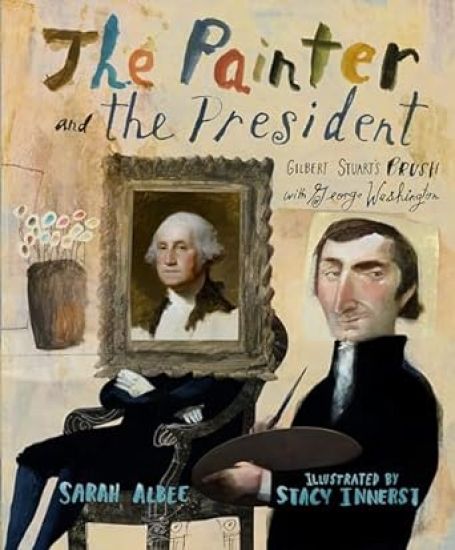
George Washington hated having his portrait painted, but as president of the United States, he knew his image needed to live on. This nonfiction picture book explores how artist Gilbert Stuart created Washington's most lasting and recognized portrait--the one that's used on the one-dollar bill. ★ Kirkus Reviews, starred review ★ Publishers Weekly, starred review★ Booklist, starred review George Washington and artist Gilbert Stuart didn't always see eye-to-eye, but both men knew the importance of legacy and the power of art. Though George disliked having his portrait painted--which took days and days to complete--he knew his place in history would require people to know his face. Fortunately, Gilbert Stuart's unique way of painting didn't compel his subjects to sit for hours on end--in fact, he encouraged them to move around and even bring friends to chat with. Capturing the soul of each subject, his portraits were unlike any other artists'. And Gilbert Stuart's one-of-a-kind portrait of Washington stands the test of time--it's the one that's used on the one-dollar bill.A great read for President's Day
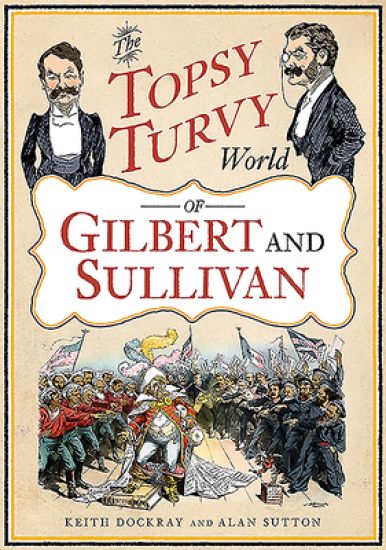
No musical partnership has enjoyed greater success during its time span, or bequeathed a more powerful and enduring legacy, than that of Gilbert and Sullivan in the later nineteenth century. Even before their first successful collaboration in 1875, both William Schwenk Gilbert (1836-1911) and Arthur Seymour Sullivan (1842-1900) had already forged considerable reputations for themselves. Thereafter, between 1877 and 1896, Gilbert wrote the librettos, and Sullivan the music, for no fewer than a dozen Savoy operas, among them the still regularly performed ‘H.M.S. Pinafore’ (1878), ‘The Pirates of Penzance’ (1879), ‘Iolanthe’ (1882), ‘The Mikado’ (1885), ‘The Yeomen of the Guard’ (1888) and ‘The Gondoliers’ (1889). Not only are the plots ingenious, the lyrics witty and the music compelling, the operas also present modern audiences with splendidly rich and satirical evocations of Victorian England and its society: the prime subject matter of this book!
The Trials by Opera of Gilbert and Sullivan and Richard D'Oyly Carte explores the relationship of these three creative geniuses. They created a sensational new genre of musical entertainment but their fractious relationship was held together by the diplomacy and organisational ability of Helen D'Oyly Carte. During the period from 1875 to 1890 William S. Gilbert and Arthur Sullivan had great success with their comic operas, both at home and overseas. Richard D'Oyly Carte played an invaluable part in the promotion of their productions, but this led to conflict with Gilbert who never accepted the importance of D'Oyly Carte's contribution and resented him making money on the back of the Gilbert and Sullivan's creative talents. Although Gilbert and Sullivan produced harmonious and beloved work, their relationship was far from congenial. Gilbert disliked Sullivan's sybaritic tendencies and his hobnobbing with the great and the good including royalty. Sullivan found Gilbert abrasive. Business and copyright problems abounded during this time but despite conflicts, legal actions and ill health, Gilbert, Sullivan and Richard D'Oyly Carte created a legacy of gloriously staged music which endures today.
Third volume of a three-volume edition of the Hay Manuscript, the sole known text of the Scots translations of three French prose treatises, made by Sir Gilbert Hay in the mid-fifteenth century Jonathan A Glenn presents us with these meticulously edited versions 'in the hope that an accurate text will make possible further studies and a clearer appreciation of Hay's important body of work'. Volume three contains an introduction, editorial statement, textual notes, explanatory notes and a list of marginalia.
Second volume of a three-volume edition of the Hay Manuscript, the sole known text of the Scots translations of three French prose treatises, made by Sir Gilbert Hay in the mid-fifteenth century. Jonathan A Glenn presents us with these meticulously edited versions 'in the hope that an accurate text will make possible further studies and a clearer appreciation of Hay's important body of work'. Volume two contains an impressive scholarly apparatus including an introduction, an editorial statement, textual notes, thorough explanatory notes, and appendices on marginalia and interlinea, manuscript organisation and Latin quotations of authority.
Gilbert Keith Chesterton, (29 May 1874 - 14 June 1936), better known as G. K. Chesterton, was an English writer, poet, philosopher, dramatist, journalist, orator, lay theologian, biographer, and literary and art critic. Chesterton is often referred to as the "prince of paradox". Time magazine has observed of his writing style: "Whenever possible Chesterton made his points with popular sayings, proverbs, allegories-first carefully turning them inside out