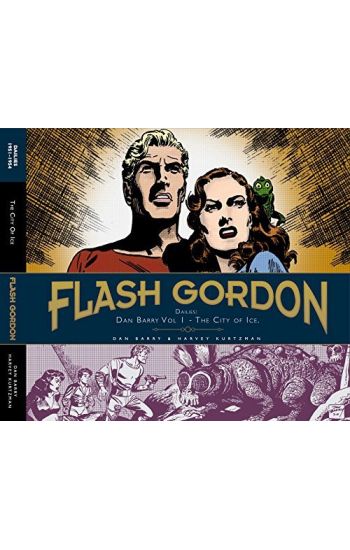
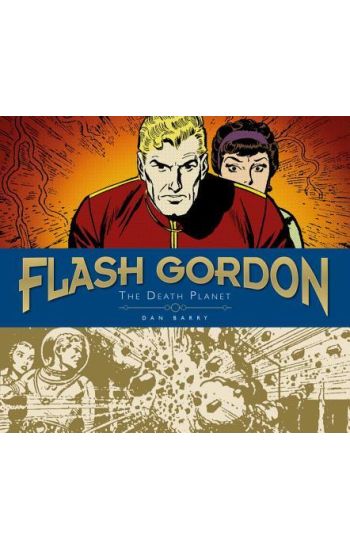
Discover the thrilling world of Flash Gordon, the original protector of the Universe, as he encounters escaped convicts, frightening Frost Men, tyrannous kingdoms - and more! Collecting the first three years of Dan Barry's run on the iconic comic strip series, Flash Gordon Dailies Volume 1: The City of Ice is a must-read for all science fiction lovers!
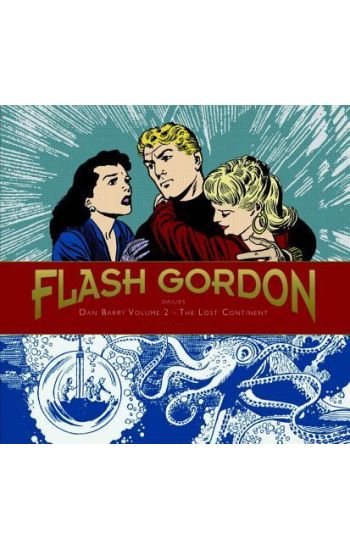
Featuring two full years worth of non-stop exhilarating, science fiction action-adventure from October 1953-October 1955. The Lost Continent sees Flash and Doctor Zarkoff enjoying a rare day deep-sea fishing that sees them sucked into a vortex and deposited on the lost continent of Atlantis! Then, Flash and Dale are abducted by the psychic Circea and Flash is hynotised into falling in love with her! Alll this and even more stories!
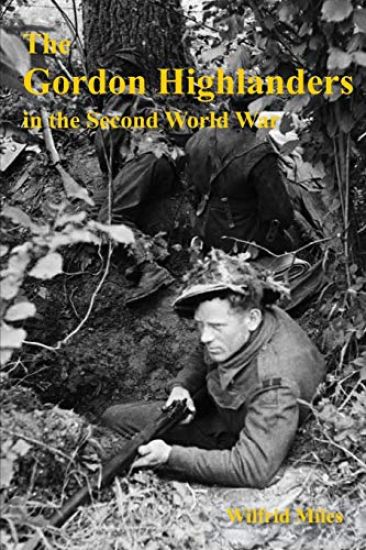
The 1st Battalion, Gordon Highlanders was a Regular Army battalion that served originally with the 2nd Infantry Brigade, part of the 1st Infantry Division, and was sent to France in September 1939, shortly after the declaration of war, as part of the British Expeditionary Force, it remained there until May 1940. On 7 March 1940 the 1st Battalion exchanged with the Territorial Army 6th Battalion and transferred to the 153rd Infantry Brigade, part of the 51st (Highland) Division. The battalion served with the 51st Division during the Battle of France in 1940 when they were trapped and the majority of the division was forced to surrender at Saint-Val ry-en-Caux, with very few men escaping capture. The 1st Battalion was, however, reformed in the United Kingdom in August 1940 and went on to serve with the second formation of the 51st (Highland) Division (formed by redesignation of the 9th (Highland) Infantry Division throughout the rest of the Second World War, serving in North Africa at El Alamein, Tunisia, Sicily and North-western Europe, ending the war in Germany.The 2nd Battalion was based in Malaya as part of the Singapore garrison and fought in the battle for Singapore in February 1942, surrendering along with 130,000 other British Commonwealth soldiers on 15 February. The men of this battalion suffered more casualties as prisoners of war in Japanese captivity than they did during the fighting on Singapore Island and Malaya. The 2nd Battalion was reformed in May 1942 from personnel of the 11th Battalion and fought with the 15th (Lowland) Division, throughout North West Europe. They formed part of 227th (Highland) Brigade, the Junior brigade in the division. They were involved in the heavy fighting around Cheux and Tourville-sur-Odon in Normandy, the fight for the Netherlands and in the Battle of Uelzen in Germany near to the end of the war.The 4th (City of Aberdeen) Battalion served as a Machine Gun Battalion in the Battle of France and was later converted to a Royal Artillery regiment on 1 November 1941, becoming the 92nd Anti-Tank Regiment, Royal Artillery, as part of the 9th Armoured Division, but saw no active service during the war.The 5th Battalion went to France as part of the British Expeditionary Force: they were serving as part of the 153rd Brigade in the 51st Division during the Battle of France in 1940 when they were trapped and the majority of the division was forced to surrender at Saint-Val ry-en-Caux. The 5th Battalion was, however, reformed in the United Kingdom in August 1940 and went on to serve with the second formation of the 51st (Highland) Division (formed by redesignation of the 9th (Highland) Infantry Division throughout the rest of the Second World War, serving in North Africa and taking part in the Normandy landings.The 6th (Banffshire) Battalion, a Territorial Army battalion, was transferred from the 153rd Brigade in the 51st (Highland) Division before it joined the 2nd Infantry Brigade of the 1st Infantry Division. It took part in the Dunkirk evacuation. The 6th Battalion fought through the Tunisian, North African and Italian campaigns, in both the Battle of Anzio and Operation Diadem, and later the Battle for the Gothic Line, before ending the war on garrison duty in Palestine.The 7th (Mar and Mearns) Battalion amalgamated with the 5th Battalion, becoming the 5th/7th Battalion, Gordon Highlanders, and served with the second formation of the 51st (Highland) Division throughout the war.The 8th (City of Aberdeen) Battalion was also converted to artillery, becoming the 100th Anti-Tank Regiment, Royal Artillery. This battalion served with the 2nd Infantry Division in the Burma Campaign.
Following the death of Mac Raboy in 1968, Dan Barry took over production of the Sunday Flash Gordon strip. This collection, the first ever, features the first three years of a run that would last for nearly 50 years from The Return of Chameleon 1/14/68, which he completed after Raboy's death, to Radiation Giants in 12/26/71.
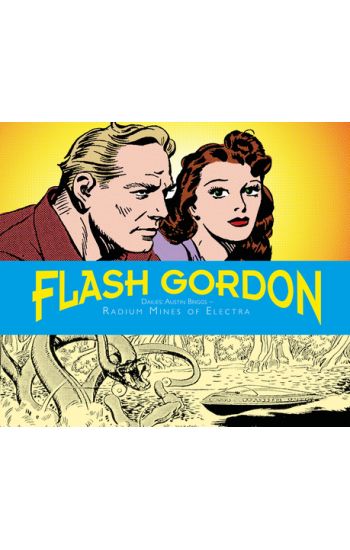
Collecting together, for the first time ever, over two-year's worth of strips from the golden age of newspaper comic strips. Harken back to a bygone era of swashbuckling heroes, science fiction high-adventure, with ray guns, rocket ships, strange monsters, damsels in distress and unbridled heroism! FLASH GORDON, the swashbuckling, all-American hero has been saving Earth and the universe from madmen, megalomaniacs and Ming the Merciless since 1934. He is science fiction's most enduring super-hero icon, and his name has become synonymous with heroic deeds. Flash Gordon is also the original inspiration behind Star Wars, the muse to rock super group, Queen and star of his own cult 1980s movie! This new volume is presents the continuing adventures of Flash Gordon, the original guardian of the galaxy as he strives to save us all from a slew of villains hell-bent of domination, destruction and devilment!
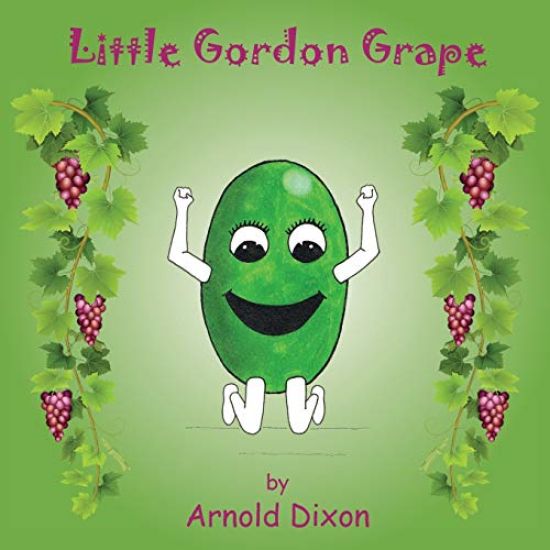
All of the grapes in the vineyard were very excited as it was the time of the harvest.But the most excited grape was Little Gordon Grape...Little Gordon Grape takes your child on an exciting journey in his life of ups and downs but shows that there is always someone special watching over them and showing them that they are very special too.
All of the grapes in the vineyard were very excited as it was the time of the harvest.But the most excited grape was Little Gordon Grape...Little Gordon Grape takes your child on an exciting journey in his life of ups and downs but shows that there is always someone special watching over them and showing them that they are very special too.
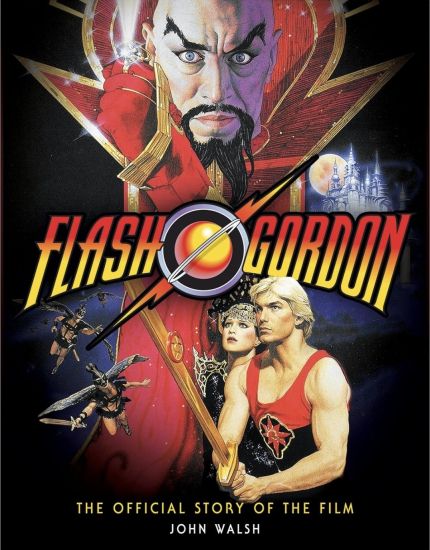
In 1980, the film Flash Gordon was released, becoming an instant cult favourite. One of the most quotable and beloved sci-fi films ever, it is legendary for its unique look, tone and iconic soundtrack. This beautiful, first-of-its-kind coffee table book will delve into the making of the movie and celebrate its legacy. Featuring brand new interviews with cast and creative, including stars Sam Jones and Brian Blessed and director Mike Hodges, this stunning book features never-been-seen-before concept artwork and behind-the-scenes photography that makes it a must-have for any classic sci-fi fan.
In Christmas with Gordon, superstar chef Gordon Ramsay offers inspiration, adviceand 75 failsafe and delicious recipes for all occasions over the Christmas period.The stars of the show are five Christmas Feasts - turkey, goose, beef, ham or seabass - and the recipes include starters, accompaniments and desserts for each.To take the stress out of Christmas Gordon offers masses of advice on ordering,shopping, preparation and timing. Also included is a great chapter on PartyFood, and inspired recipes for Breakfast & Brunch, Lunches & Suppers, andSweet Treats. Gordon's favourite Christmas ingredients, including stilton, smokedsalmon, turkey and ham, are highlighted with suggestions for creative ways to usethem over the Christmas period. Plus there's advice on wines and party drinks,cheese and other festive ingredients to make this the essential guide to the perfectChristmas.
A contemporary classic set during the Glasgow Rent Strike of 1915, with one of the best women's roles ever to emerge from Scottish theatre, an unforgettable tragicomic heroine with an extraordinary power to repel and attract. The Quinn family live in a Glasgow tenement so poor the only floor covering is old newspapers. But Elizabeth Gordon Quinn is indomitable in the face of poverty and rising rents. Furthermore, she is harbouring a son who is wanted by the police for desertion. Chris Hannan's play Elizabeth Gordon Quinn was first staged at the Traverse Theatre, Edinburgh, in 1985. This radically revised version was published alongside the major revival by the National Theatre of Scotland in 2006.
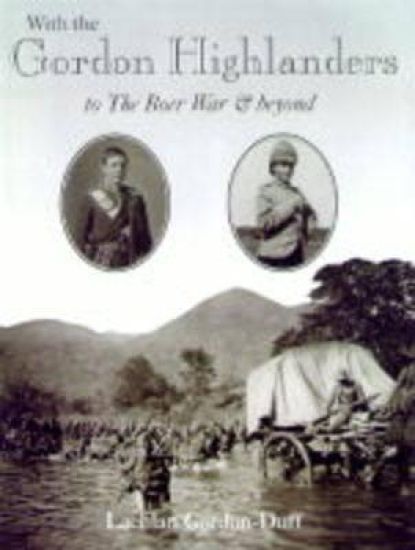
The story of Lachlan Gordon-Duff, a young officer in the Gordon Highlanders during the Boer War. From letters sent to his family, a vivid account is given of the fighting and hardships they faced.
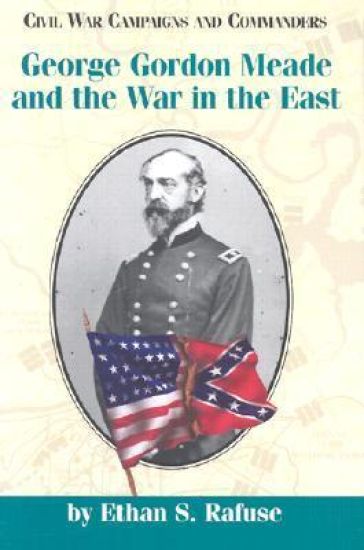
Despite his defeat of Robert E. Lee at Gettysburg and his major role in several other Civil War campaigns, George Gordon Meade is perceived as the last of the unsuccessful generals of the Army of the Potomac. This biography examines the political dynamics that shaped his military strategy.
This book will accompany the first major solo exhibition of Douglas Gordon's work in Scotland since he presented his now celebrated work, 24 Hour Psycho at Tramway in Glasgow in 1993. Gordon is one of a number of Glasgow-trained artists who came to prominence in the 1990s. He has gone on to achieve huge international recognition, marked by major awards, including the Turner Prize in 1996, and by exhibitions in museums in Europe and America. Gordon works with film, video, photographs, objects and texts, examining issues such as memory and identity, good and evil, life and death. He makes great play with the doubling of images often in positive and negative or in mirrored form. This book will show all the important aspects of Gordon's work, both past and present. In addition, it will be specially tailored to bring out the particularly Scottish nature of Gordon s ideas and practice. The exhibition book will contain essays by the exhibition curator, Keith Hartley, senior curator at the Scottish Nati
Seton Gordon was only a boy when he began exploring the Cairngorms, fascinated by its wildlife and seeking to photograph all he saw - he later became a pioneer naturalist, photographer and folklorist. He wrote about the land that is Scotland, her flora and fauna, her people, her spirits, her often violent past. He took the earliest pictures of golden eagles at their eyries and throughout the first half of the 20th century came to know Scotland's remotest corners, amassing a unique photographic record, recording the changing social life of the islands, collecting a mass of folklore and historical stories, lecturing and writing both for regular publications and in 27 books. Like John Muir, he was a wanderer and a guide. We walk with him through pinewoods, to eyries, to the corries of the Cairngorms, we follow him trying to recreate the greenshank's song on his bagpipe chanter; and see him holding a snowball windward of a nesting dotterel to cool its panting.Welcomed in croft or palace, a keen piper, inevitably dressed in kilt and bunnet, Seton Gordon was one of the age's great characters. This selection from his writings gives a fascinating insight of the man and his great versatility. The author, himself a Scottish outdoors enthusiast and well-known author, has been a lifelong admirer of Seton Gordon and his books and has created a book to treasure.
Seton Gordon really created himself as naturalist, photographer and writer, the first such in the country, his first book appearing when he was eighteen. In all he wrote 27 books, two specifically about the Cairngorms where he grew up and first explored and returned to many times throughout his long life. He wrote with a revelational wonder and freshness, writing in poetic prose descriptions only possible by someone intimately at home in the hills with their interacting, connected features: birds, plants, trees, geology, weather, Gaelic culture, place names, history, folklore - an ecologist before the word was coined. Hamish Brown selected passages for "Seton Gordon's Scotland" and has now made a fascinating choice from Seton Gordon's extensive writings about the Cairngorms. There are descriptions of hill days throughout the seasons and intimate descriptions of wildlife. Seton Gordon lived to a great age but the Cairngorms were his first, young man's enthusiasm. Hamish Brown, no mean mountaineer and lover of the outdoors, has garnered biographical material and archive pictures for a book which everyone with an interest in the Scottish hills will welcome.
From 1892 until 1954, three cabaret-restaurants in the Montmartre district of Paris captivated tourists with their grotesque portrayals of death in the afterworlds of Hell, Heaven, and Nothingness. Each had specialized cuisines and morbid visual displays with flashes of nudity and shocking optical illusions. These cabarets were considered the most curious and widely featured amusements in the city. Entrepreneurs even hawked graphic postcards of their ironic spectacles and otherworldly interiors.Cabarets of Death documents the dinner shows, the character interactions with guests, and the theatrical goings-on in these unique establishments. Presenting original images and drawings from contemporary journals, postcards, tourist brochures, and menus, Mel Gordon leads a tour of these idiosyncratically macabre institutions, and grants us unique access to a form of popular spectacle now gone.
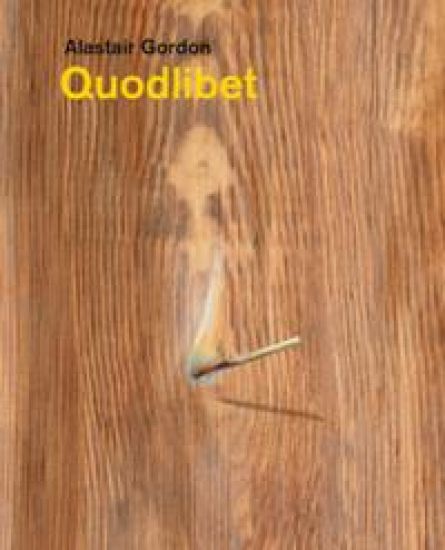
Alastair Gordon (b.1978, Edinburgh), is an artist based in London. This, the first major monograph of the artist’s career, includes over 160 paintings, drawings and documentational photographs, along with notes by Gordon himself. The book introduces this accomplished and engaging new voice in British painting.Gordon’s paintings bring the historic languages of genre painting and the quodlibet into a contemporary discourse that pushes the boundaries of realism, figuration and illusionism to focus on everyday moments. His work often elevates seemingly ordinary objects – feathers, matchsticks, postcards – allowing them to speak to wider concerns of beauty, truth, life and death. The documented works, produced between 2012 and 2023, include paintings made in oil or acrylic on MDF, wood, ‘found’ wood, gesso panel, paper, canvas and occasionally linen. Each is distinctive for its style and for the recurring motifs Gordon selects such as masking tape, paper ephemera and repeated, subtly different studies of the same subject. Gordon’s texts describe how objects found mud larking on the banks of the River Thames, shoes from the London City Mission and rags and papers discarded from art students’ studios have been depicted in paintings, incorporating the histories and stories of each item (and each person) into his work. The book also features recent works influenced by rural landscapes and parkland.An introduction by Julia Lucero, Associate Director of Nahmad Projects, London, emphasises the importance of nature and of meditation within Gordon’s practice. Specifically, Lucero brings out the idea of the ‘axis mundi, that metaphysical and mystical connecting point where heaven meets Earth’. She explores the significance of quodlibet, a seventeenth-century trompe-l’oeil painting technique that Gordon favours, rendering brushstrokes invisible and affording everyday objects new significance, even ‘profound value’. Humble objects such as a matchstick or paper aeroplane might be elevated to the realms of the divine. An essay by Jorella Andrews, Professor of Visual Cultures at Goldsmiths, University of London, describes the influence of Gordon’s time on a research residency in the former studio of Paul Cézanne at Les Lauves on the outskirts of Aix-en-Provence. His experiences there proved pivotal to the direction of his practice, in which both the ‘visual misdirection’ of quodlibet and the qualities of wood have become central. Andrews brings art historical texts and works of art into relation with Gordon’s paintings, making comparisons between subject, form and approach. Andrews’ text further details the recent synthesis of two sides of Gordon’s work: precise illusionism combined with looser observations made in the natural landscape.Edited by Alastair Gordon Studio, designed by Herman Lelie, printed by EBS Verona and published in 2023 by Anomie Publishing, London, the publication has been generously supported by Howard and Roberta Ahmanson through Fieldstead and Company.Alastair Gordon (b. 1978, Edinburgh) is an artist working with painting, drawing and installation, based in London. Gordon received his BA from Glasgow School of Art and his MA from Wimbledon School of Art, London. His work has been shown in recent solo exhibitions at Ahmanson Gallery in Irvine, California (2017), Aleph Contemporary, London (Quodlibet (2021) and Without Borders (2020)) and in the group exhibition Unpacking Gainsborough (2021) at Cynthia Corbett Gallery, London.