Kirjojen hintavertailu. Mukana 11 699 587 kirjaa ja 12 kauppaa.

Kirjahaku

Etsi kirjoja tekijän nimen, kirjan nimen tai ISBN:n perusteella.

1000 tulosta hakusanalla HENRY CONSTABLE

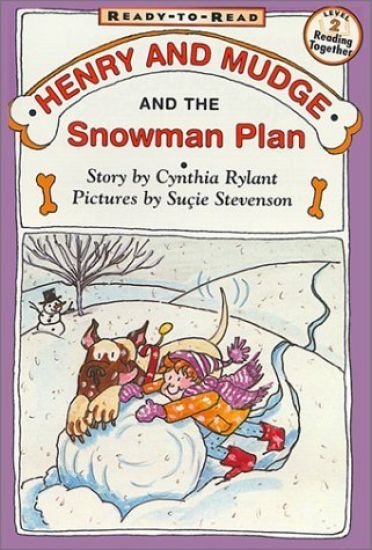
Henry and Mudge and the Snowman Plan

Henry and Mudge and the Snowman Plan

Cynthia Rylant

Simon Spotlight
2000
nidottu
Henry and his dog Mudge enter a snowman contest in this nineteenth Ready-to-Read book of their adventures. Henry sees a sign about a snowman contest in the park Can Henry, his father, and his big dog Mudge come up with the best snowman plan to win the contest?
Henry and Mudge and the Tumbling Trip: Ready-To-Read Level 2
Henry's family is going on vacation -- to the Wild West Henry and Mudge love the Wild West. There are cowboy hats and boots, deserts and canyons, and souvenir shops where Henry can buy pencils and magnets and even a snow globe with a cowboy inside. And there are lots of tumbleweeds for Mudge to chase. But as much fun as the Wild West is, Henry discovers that he and Mudge can have just as much fun back home.
The American Essays of Henry James

The American Essays of Henry James

Henry James

Princeton University Press
1990
pokkari
"No one, among American writers, was more contemporary or had a more powerful grasp of American history and American myth," writes Leon Edel of Henry James. This collection of James's essays on American letters, together with some of his miscellaneous writings on other American subjects, is a pivotal document in the reassessment of James as less cloistered--and more American--than previously supposed. James is relaxed and informal as he writes of Emerson, Hawthorne, Lowell, Godkin, Norton, and Howells: he is fondly recalling--but also criticizing--the cultural orthodoxy in which he was reared. The American Essays remarkably prefigures current efforts to revise and challenge the aesthetic idealism of the Emersonian tradition.
The Writings of Henry David Thoreau, Volume 2

The Writings of Henry David Thoreau, Volume 2

Henry David Thoreau

Princeton University Press
1984
sidottu
Volume two of the Journal includes Thoreau's extensive reminiscences of his 1839 excursion with his brother John along the Concord and Merrimack rivers and all his first impressions and observations entered in journals during the famous Walden sojourn. Collectively, these journals illustrate the middle stage of Thoreau's literary career--a stage noteworthy for his "devotion to the mastery of his craft" as evidenced by the progressive, intermingled drafts of A Week on the Concord and Merrimack Rivers and Walden, "Thomas Carlyle and His Works," "Wendell Phillips Before Concord Lyceum," and "Ktaadn, and the Maine Woods." More than half of the material presented in Journal 2 is previously unpublished.
The Writings of Henry David Thoreau

The Writings of Henry David Thoreau

Henry David Thoreau

Princeton University Press
1971
sidottu
Thoreau's Walden, ostensibly a simple account of a year spent alone in a cabin by a pond in the woods, is one of the most influential and complex books in American literature. After eight years in the writing,the first edition of 1854 was largely ignored, and it was not reprinted until 1862, the year of Thoreau's death. But by 1900 Walden was acclaimed by many as a classic, among the finest prose works of the century. It has been increasingly recognized as an important document of social criticism and dissent. It has been seen as a religious testament, with a kinship to oriental mysticism. It has been described as a mythic book,and it has been used as a Freudian key to the mind of its iconoclastic author. Thoreau's words have become increasingly significant in modern times. Anticipating the evils of modern society and the problems of modern man, Walden's meanings seem more relevant every day.
The Writings of Henry David Thoreau

The Writings of Henry David Thoreau

Henry David Thoreau

Princeton University Press
1972
sidottu
The Maine Woods is a characteristically Thoreauvian book: a personal account of exploration, of exterior and interior discovery in a natural setting, conveyed in taut, workmanlike prose. Thoreau's evocative renderings of the life of the primitive forest--its mountains, waterways, fauna, flora, and inhabitants--are valuable in themselves. But his impassioned protest against despoilment in the name of commerce and sport, which even by the 1850s threatened to deprive Americans of the "tonic of wildness," makes The Maine Woods an especially vital book for our time. This edition presents Thoreau's fullest account of the wilderness as he intended it.
The Writings of Henry David Thoreau

The Writings of Henry David Thoreau

Henry David Thoreau

Princeton University Press
1974
sidottu
The selections from the polemical writings of Thoreau that make up Reform Papers represent every stage in his twenty-two years of active writing. Consequently, they are a microcosm of his literary career, allowing therreader to achieve a full sense of Thoreau's evolution as a writer and thinker. The volume opens with "The Service," one of the best examples of Thoreau's early style and interests, and contains ten other essays as well. Reform Papers * The Service * Paradise (To Be) Regained * Herald of Freedom * Wendell Phillips Before Concord Lyceum * Resistance to Civil Government * Slavery in Massachusetts * A Plea for Captain John Brown * Martyrdom of John Brown * The Last Days of John Brown * Life without Principle * Reform and the Reformers
The Writings of Henry David Thoreau

The Writings of Henry David Thoreau

Henry David Thoreau

Princeton University Press
1976
sidottu
This collection of fifty-three early pieces by Thoreau represents the full range of his youthful imagination. Collected, arranged, and carefully edited for the first time here, the writings date from 1828 to 1852 and cover a broad range of subjects: learning, morals, literature, history, politics, and love. Included is a major essay on Sir Walter Raleigh that was not published during the author's lifetime and a fragmentary college piece here published for the first time. Titles of essays published in the volume are given below. Early Essays * The Seasons * Anxieties and Delights of a Discoverer * Men Whose Pursuit Is Money * Of Keeping a Private Journal *"We Are Apt to Become What Others ...Think Us to Be" * Forms, Ceremonies, and Restraints of Polite Society * A Man of Business, a Man of Pleasure, a Man of the World * Musings * Kinds of Energetic Character * Privileges and Pleasures of a Literary Man * Severe and Mild Punishments * Popular Feeling * Style May ...Offend against Simplicity * The Book of the Seasons * Sir Henry Vane * Literary Digressions * Foreign Influence on American Literature * Life and Works of Sir W. Scott * The Love of Stories * Cultivation of the Imagination * The Greek Classic Poets * The Meaning of "Fate" * Whether the Government Ought to Educate * Travellers & Inhabitants * History ...of the Roman Republic * A Writer's Nationality and Individual Genius * L'Allegro & Il Penseroso * All Men Are Mad * The Speeches of Moloch & the Rest * People of Different Sections * Gaining or Exercising Public Influence * Titles of Books * Sublimity * The General Obligation to Tell the Truth *"Being Content with Common Reasons" * The Duty, Inconvenience and Dangers of Conformity * Moral Excellence * Barbarities of Civilized States * T. Pomponius Atticus * Class Book Autobiography *"The Commercial Spirit of Modern Times" Miscellanies * * DIED ...Miss Anna Jones * Aulus Persius Flaccus * The Laws of Menu * Sayings of Confucius * Dark Ages * Chinese Four Books * Homer. Ossian. Chaucer. * Hermes Trismegistus ...From the Gulistan of Saadi * Sir Walter Raleigh * Thomas Carlyle and His Works * Love * Chastity & Sensuality
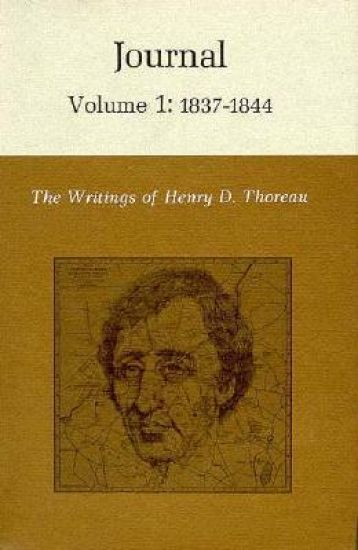
The Writings of Henry David Thoreau, Volume 1

The Writings of Henry David Thoreau, Volume 1

Henry David Thoreau

Princeton University Press
1981
sidottu
This first volume of the Journal covers the early years of Thoreau's rapid intellectual and artistic growth. The Journal reflects his reading, travels, and contacts with Ralph Waldo Emerson, Margaret Fuller, and other Transcendentalists. With characteristic reticence, Thoreau mentions only a few episodes in his emotional history: an ill-fated romance, the death of his elder brother, and an unhappy sojourn on Staten Island, where he tried to write for New York periodicals. Parts of Thoreau's Journal have been published, but always with large omissions of text and with considerable grooming of its erratic manuscript style. This edition presents the entire surviving manuscript in a text preserving Thoreau's words as he originally wrote them.
The Writings of Henry David Thoreau

The Writings of Henry David Thoreau

Henry David Thoreau

Princeton University Press
1980
sidottu
In the late summer of 1839 Thoreau and his elder brother John made a two-week boat-and-hiking trip from Concord, Massachusetts, to the White Mountains of New Hampshire. After John's sudden death in 1842, Henry began to prepare a memorial account of their excursion. At Walden Pond he wrote two drafts of this story, which he continued to revise and expand until 1849, when he arranged for its publication at his own expense. The contemporary audience for A Week was troubled by its heterodoxy and apparent formlessness; but modern readers have come to see it as an appropriate predecessor to Walden, with Thoreau's story of a river journey actually depicting the early years of his spiritual and artistic growth.
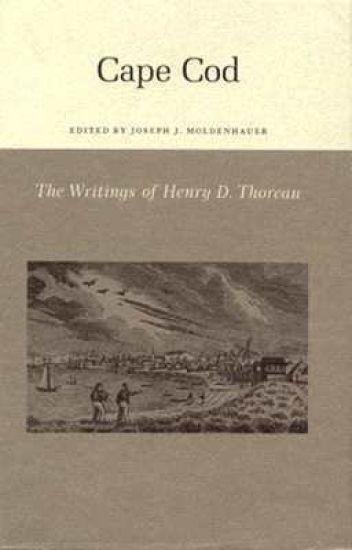
The Writings of Henry David Thoreau

The Writings of Henry David Thoreau

Henry David Thoreau

Princeton University Press
1988
sidottu
Thoreau's compelling account of Cape Cod is here presented in the complete and definitive text. His trips to the Cape, he wrote, were intended to afford "a better view than I had yet had of the ocean." In the plants, animals, topography, weather, people, and human works of Massachusetts' long projection into the Atlantic, he finds "another world." Encounters with the ocean dominate the book, from the fatal shipwreck of the opening episode to the late reflections on the Pilgrims' Cape Cod landing and reconnaissance. Along the way, Thoreau relates the experiences of fishermen and oystermen, farmers and salvagers, lighthouse-keepers and ship-captains, as well as his own intense confrontations with the sea as he travels the land's outermost margins. Chronicles of exploration, settlement, and survival on the Cape lead Thoreau to reconceive the history of New England and to recognize the parochialism of history itself.
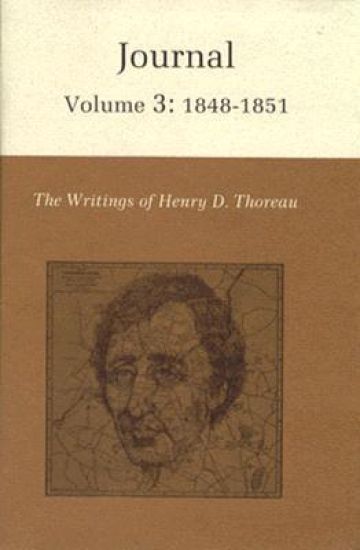
The Writings of Henry David Thoreau, Volume 3

The Writings of Henry David Thoreau, Volume 3

Henry David Thoreau

Princeton University Press
1991
sidottu
From 1837 to 1861 Thoreau kept a Journal that began as a conventional record of ideas, grew into a writer's notebook, and eventually became the principal imaginative work of his career. The source of much of his published writing, the Journal is also a record of both his interior life and his monumental studies of the natural history of his native Concord, Massachusetts. In contrast to earlier editions, the Princeton Edition reproduces the Journal in its original and complete form, in a reading text that is free of editorial interpolations but keyed to a comprehensive scholarly apparatus. This volume spans a period of rapid change in Thoreau's life and literary career, including the publication of his first book and a crisis in his friendship with Emerson, during which the Journal assumes its mature form as the extensive, regular, and dated record of his studies of and reflections on the natural and human life of the Concord region.
The Writings of Henry David Thoreau, Volume 4

The Writings of Henry David Thoreau, Volume 4

Henry David Thoreau

Princeton University Press
1992
sidottu
From 1837 to 1861 Thoreau kept a Journal that began as a conventional record of ideas, grew into a writer's notebook, and eventually became the principal imaginative work of his career. The source of much of his published writing, the Journal is also a record of both his interior life and his monumental studies of the natural history of his native Concord, Massachusetts. In contrast to earlier editions, the Princeton Edition reproduces the Journal in its original and complete form, in a reading text that is free of editorial interpolations but keyed to a comprehensive scholarly apparatus. Despite activities as time-consuming and varied as urveying for the town of Concord and helping a fugitive slave escape to Canada, Thoreau wrote nearly eight hundred manuscript pages in his Journal during the eight months covered by this volume. Confirmed in his vocation as a natural historian, he began to compile the richly detailed records of Concord's woods, fields, and streams that would occupy him for the rest of his life, and he consciously shaped the Journal to reflect his new aims as a writer. He also began major revisions of his Walden that would lead to its publication in 1854.
The Writings of Henry David Thoreau, Volume 5

The Writings of Henry David Thoreau, Volume 5

Henry David Thoreau

Princeton University Press
1997
sidottu
From 1837 to 1861 Thoreau kept a journal that began as a conventional record of ideas, grew into a writer's notebook, and eventually became the principal imaginative work of his career. The source of much of his published writing, the Journal is also a record of both his interior life and his monumental studies of the natural history of his native Concord, Massachusetts. In contrast to earlier editions, the Princeton Edition reproduces the Journal in its original and complete form, in a reading text that is free of editorial interpolations but keyed to a comprehensive scholarly apparatus. Covering an annual cycle from spring 1852 to late winter 1853, Journal 5 finds Thoreau intensely concentrating on detailed observations of natural phenomena and on "the mysterious relation between myself & these things" that he always strove to understand. Increasingly, the Journal attempts to balance a new found scientific professionalism and the accurate recording of phenological data with a firmly rooted belief in the spiritual correspondences that Nature reveals. Fittingly, the year of observation ends with Thoreau pondering an invitation to join the Association for the Advancement of Science, an invitation he ultimately declined in order to pursue his own life studies.
The Writings of Henry David Thoreau, Volume 6

The Writings of Henry David Thoreau, Volume 6

Henry David Thoreau

Princeton University Press
2000
sidottu
From 1837 to 1861, Thoreau kept a Journal that began as a conventional record of ideas, grew into a writer's notebook, and eventually became the principal imaginative work of his career. The source of much of his published writing, the Journal is also a record of both his interior life and his monumental studies of the natural history of his native Concord, Massachusetts. In contrast to earlier editions, the Princeton Edition reproduces the Journal in its original and complete form, in a reading text that is free of editorial interpolations but keyed to a comprehensive scholarly apparatus. Journal 6 comprises a single manuscript notebook of nearly five hundred pages that Thoreau filled between March 9 and August 18, 1853. During this period, Thoreau divided his energies among his increasingly professional studies as a naturalist in Concord, the revision of his Walden manuscript, and surveying, which provided him a living and established him more securely as a contributing member of the Concord community. Thoreau's writing and his understanding of natural history were enriched by surveying, which gave him the opportunity to regularly observe seasonal occurrences and other natural events in and around Concord. Thoreau recorded these observations in his Journal, making both literary and scientific use of them. Substantial passages from Journal 6 were incorporated into the sixth draft of Walden, and its observations formed the basis for later compilations of field ecology. They are made available here, along with Journal entries, completely unrevised. This volume will delight all custodians of literary and natural history and be an essential addition to the libraries of all Thoreau devotees.
The Writings of Henry David Thoreau

The Writings of Henry David Thoreau

Henry David Thoreau

Princeton University Press
2009
sidottu
From 1837 to 1861, Henry D. Thoreau kept a Journal that would become the principal imaginative work of his career. The source of much of his published writing, the Journal is also a record of his interior life and of his monumental studies of the natural history of his native Concord, Massachusetts. Unlike earlier editions, the Princeton edition reproduces Thoreau's Journal in its original and complete form, in a text free of editorial interpolations and keyed to a comprehensive scholarly apparatus. This seventh volume of the Journal is edited from the 454-page manuscript that Thoreau kept from August 19, 1853, through February 12, 1854. During the six months covered here, Thoreau continued to add to his store of observations about local animals, plants, and weather. Most of the Journal is dedicated to describing natural phenomena, such as changes in leaf color and the ripening of berries, in the context of seasonal cycles. His observations create a detailed portrait of Concord and the surrounding areas that will be of interest to ecologists and others who study phenological patterns and variations. In addition, Thoreau integrates these observations with ethical reflections about living in harmony with nature, following the model of the Roman agricultural writers. The volume also includes Thoreau's account of a September 1853 trip to the Maine woods that appeared in 1858 as "Chesuncook"; the draft is published here for the first time.
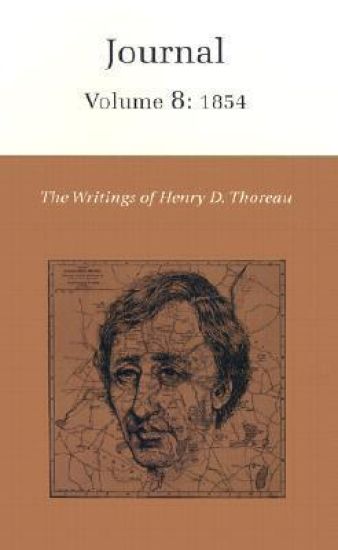
The Writings of Henry David Thoreau, Volume 8

The Writings of Henry David Thoreau, Volume 8

Henry David Thoreau

Princeton University Press
2002
sidottu
From 1837 to 1861, Thoreau kept a Journal that began as a conventional record of ideas, grew into a writer's notebook, and eventually became the principal imaginative work of his career. The source of much of his published writing, the Journal is also a record of his interior life and of his monumental studies of the natural history of his native Concord, Massachusetts. Unlike earlier editions, the Princeton edition reproduces the Journal in its original and complete form, in a reading text free of editorial interpolations but keyed to a comprehensive scholarly apparatus. Journal 8: 1854 is edited from the 467-page notebook that Thoreau kept February 13-September 3, 1854. It reveals him as an increasingly confident taxonomist creating lists that distill his observations about plant leafing and seasonal birds. Two particularly significant public events took place in his life in the summer of 1854. On July 4, at an antislavery rally at Framingham, Massachusetts, Thoreau appeared for the first time in the company of prominent abolitionists, delivering as heated a statement against slavery as he had yet made. And on August 9, Ticknor and Fields published Walden, the book Thoreau had been working on since 1846. In Journal 8 Thoreau indicates that these public accomplishments, though satisfying, took a toll on his creative life and did not fully compensate him for the hours spent away from the woods.
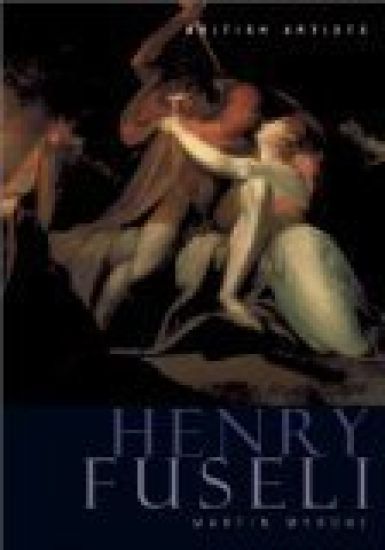
Henry Fuseli

Henry Fuseli

Martin Myrone; Henry Fuseli

Princeton University Press
2001
pokkari
Painter, poet, critic and teacher, Henry Fuseli (1741-1825) is one of the most idiosyncratic and original figures in the history of British art. His work has always been the subject of speculation, gossip and fantasy. This book offers a completely new interpretation of the artist, placing him firmly in the context of a period of traumatic social, cultural and political revolution. Martin Myrone explores his career from his early work in London and Rome to his old age, the period of his greatest professional success when he exerted a profound influence on a whole generation of younger British artists. A vivid image of the artist emerges, revealing Fuseli as a seminal figure in the development of modern art.
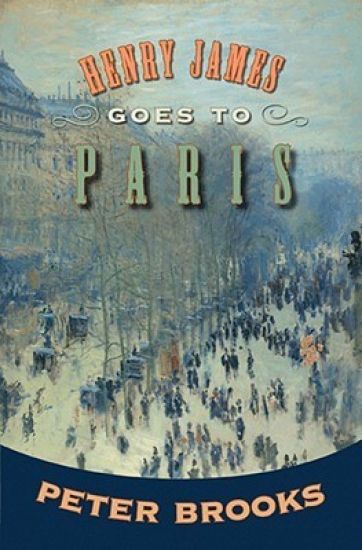
Henry James Goes to Paris

Henry James Goes to Paris

Peter Brooks

Princeton University Press
2008
pokkari
Henry James's reputation as The Master is so familiar that it's hard to imagine he was ever someone on whom some things really were lost. This is the story of the year--1875 to 1876--when the young novelist moved to Paris, drawn by his literary idols living at the center of the early modern movement in art. As Peter Brooks skillfully recounts, James largely failed to appreciate or even understand the new artistic developments teeming around him during his Paris sojourn. But living in England twenty years later, he would recall the aesthetic lessons of Paris, and his memories of the radical perspectives opened up by French novelists and painters would help transform James into the writer of his adventurous later fiction. A narrative that combines biography and criticism and uses James's writings to tell the story from his point of view, Henry James Goes to Paris vividly brings to life the young American artist's Paris year--and its momentous artistic and personal consequences. James's Paris story is one of enchantment and disenchantment. He initially loved Paris, he succeeded in meeting all the writers he admired (Turgenev, Flaubert, Zola, Maupassant, Goncourt, and Daudet), and he witnessed the latest development in French painting, Impressionism. But James largely found the writers disappointing, and he completely misunderstood the paintings he saw. He also seems to have fallen in and out of love in a more ordinary sense--with a young Russian aesthete, Paul Zhukovsky. Disillusioned, James soon retreated to England--for good. But James would eventually be changed forever by his memories of Paris.