Kirjojen hintavertailu. Mukana 11 627 220 kirjaa ja 12 kauppaa.

Kirjahaku

Etsi kirjoja tekijän nimen, kirjan nimen tai ISBN:n perusteella.

1000 tulosta hakusanalla Heidi Nummi

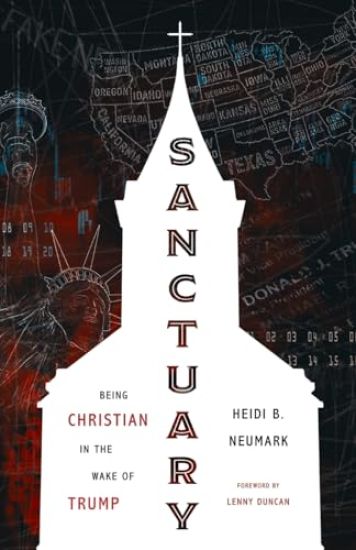
Sanctuary

Sanctuary

Heidi Neumark; Lenny Duncan

William B. Eerdmans Publishing Company
2025
pokkari
"Through the pages of this book, I invite you into various spaces of sanctuary--not as places of retreat, but for the deepened resistance, vision, and transformation that these days, and the gospel, require." Throughout her nearly forty years in ministry, Heidi Neumark has strived to make communities of faith into sanctuaries amid the turmoils of life. Now, with the social and political upheaval of the years since Donald Trump was elected president, Neumark believes the true Christian calling is to live out a counterpoint to today's prevailing spirits of exclusion and hatred. Using her own bilingual, multicultural congregation as a model, she moves through the seasons of the church calendar to reflect on what it looks like to live out essential Christian convictions in community with others. Sanctuary is an amplifier for the many voices crying out against policies and rhetoric that are cruel, dehumanizing, and dangerous. Neumark begins each chapter with a quote from Donald Trump that she defies and dismantles with the power of her own stories--anecdotes about offering shelter for queer youth in her city, supporting immigrants and asylum-seekers being harassed by ICE, and embracing her church's diversity with a Guadalupe celebration, to name a few. Timely, but also timeless, this book speaks to the deep wounds of this era, inflicted before and during the Trump presidency, which will remain long past its end.
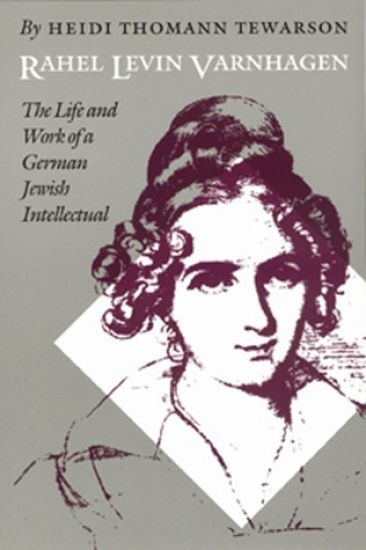
Rahel Levin Varnhagen

Rahel Levin Varnhagen

Heidi Thomann Tewarson

University of Nebraska Press
1998
sidottu
Rahel Levin Varnhagen (1771–1833) occupied a unique place in German intellectual history. She is known for the salon she initiated in Berlin, which became a center for intellectuals and artists of various social classes—especially for writers of the Romantic and the Young Germany schools. Based on research at the rediscovered Varnhagen Collection, Heidi Thomann Tewarson provides a new and comprehensive portrait of this remarkable woman. No longer primarily the sparkling salonnière, Varhagen is recognized as the author of a unique epistolary oeuvre. Tewarson gives a rich account of Varnhagen's intellectual community, made up of such figures as Friedrich and Dorothea Schlegel, Clemens Brentano, Goethe, Hegel, Leopold Ranke, Heine, and the assimilated Jewish community in Berlin. Tewarson also discusses Varnhagen's writings on women, philosophy, literature, Jews, and a host of other topics. In particular, she highlights Varnhagen's insights into—and vehement protests against —discrimination against women and Jews. These writings led to Varnhagen's reputation as a leading intellectual of her era—a champion of literary figures and movements, of human rights, and of Enlightenment values.
City Hall Goes Abroad

City Hall Goes Abroad

Heidi H. Hobbs

SAGE Publications Inc
1994
sidottu
City Hall Goes Abroad provides a systematic examination of local activism, specifically city governments acting on international issues. It delineates the growth of these activities in the past two decades, focusing on four issues: the comprehensive test ban, nuclear-free zone declarations, divestment from South Africa, and sanctuary for Central American refugees. This book is useful in understanding not only these specific issues and the cities that have acted on them, but the general phenomenon of nonstate activism that has emerged and the direction of this activism in the 1990s and beyond. This unique volume examines the subject matter from both a descriptive and quantitative perspective. The comprehensive way in which the topic is addressed will be of interest to academics, activists, and government practitioners as well as students of urban politics, local government, foreign policy, and international relations. "Heidi H. Hobbs is to be commended for producing a book that should be required reading for any student of foreign policy making--by central and noncentral governments--and that advances the analysis of the global activities of American municipal governments. --Canadian Journal of Urban Research
City Hall Goes Abroad

City Hall Goes Abroad

Heidi H. Hobbs

SAGE Publications Inc
1994
nidottu
City Hall Goes Abroad provides a systematic examination of local activism, specifically city governments acting on international issues. It delineates the growth of these activities in the past two decades, focusing on four issues: the comprehensive test ban, nuclear-free zone declarations, divestment from South Africa, and sanctuary for Central American refugees. This book is useful in understanding not only these specific issues and the cities that have acted on them, but the general phenomenon of nonstate activism that has emerged and the direction of this activism in the 1990s and beyond. This unique volume examines the subject matter from both a descriptive and quantitative perspective. The comprehensive way in which the topic is addressed will be of interest to academics, activists, and government practitioners as well as students of urban politics, local government, foreign policy, and international relations. "Heidi H. Hobbs is to be commended for producing a book that should be required reading for any student of foreign policy making--by central and noncentral governments--and that advances the analysis of the global activities of American municipal governments. --Canadian Journal of Urban Research
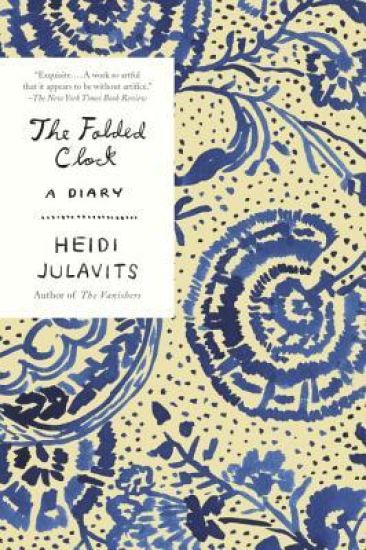
The Folded Clock

The Folded Clock

HEIDI JULAVITS

Ballantine Books Inc.
2016
nidottu
A raucous, stunningly candid, deliriously smart diary of two years in the life of the incomparable Heidi Julavits Like many young people, Heidi Julavits kept a diary. Decades later she found her old diaries in a storage bin, and hoped to discover the early evidence of the person (and writer) she d since become. Instead, "The actual diaries revealed me to possess the mind of a paranoid tax auditor." The entries are daily chronicles of anxieties about grades, looks, boys, and popularity. After reading the confessions of her past self, writes Julavits, "I want to good-naturedly laugh at this person. I want to but I can't. What she wanted then is scarcely different from what I want today." Thus was born a desire to try again, to chronicle her daily life as a forty-something woman, wife, mother, and writer. The dazzling result is "The Folded Clock," in which the diary form becomes a meditation on time and self, youth and aging, betrayal and loyalty, friendship and romance, faith and fate, marriage and family, desire and death, gossip and secrets, art and ambition. Concealed beneath the minute obsession with dailiness are sharply observed moments of cultural criticism and emotionally driven philosophical queries. In keeping with the spirit of a diary, the tone is confessional, sometimes shockingly so, as the focus shifts from the woman she wants to be to the woman she may have become. Julavits's spirited sense of humor about her foibles and misadventures, combined with her ceaseless intelligence and curiosity, explode the typically confessional diary form. "The Folded Clock" is as playful as it is brilliant, a tour de force by one of the most gifted prose stylists in American letters. "From the Hardcover edition.""
Cultures of Infancy

Cultures of Infancy

Heidi Keller

Psychology Press
2007
sidottu
Cultures of Infancy presents the first systematic analysis of culturally informed developmental pathways, synthesizing evolutionary and cultural psychological perspectives for a broader understanding of human development. In this compelling book, author Heidi Keller utilizes ethnographic reports, as well as quantitative and qualitative analyses, to illustrate how humans resolve universal developmental tasks in particular sociodemographic contexts. These contexts are represented in cultural models, and three distinct models are addressed throughout the text: the model of independence with autonomy as developmental organizer; the model of interdependence with relatedness as the developmental organizer; and the model of autonomous relatedness representing particular mixtures of autonomy and relatedness. The book offers an empirical examination of the first integrative developmental task-relationship formation during the early months of life. Keller shows that early parenting experiences shape the basic foundation of the self within particular models of parenting that are influenced by culturally informed socialization goals. With distinct patterns of results the studies have revealed, Cultures of Infancy will help redefine developmental psychology as part of a culturally informed science based on evolutionary ground work. Scholars interested in a broad perspective on human development and culture will benefit from this pioneering volume.
Cultures of Infancy

Cultures of Infancy

Heidi Keller

Psychology Press
2007
nidottu
Cultures of Infancy presents the first systematic analysis of culturally informed developmental pathways, synthesizing evolutionary and cultural psychological perspectives for a broader understanding of human development. In this compelling book, author Heidi Keller utilizes ethnographic reports, as well as quantitative and qualitative analyses, to illustrate how humans resolve universal developmental tasks in particular sociodemographic contexts. These contexts are represented in cultural models, and three distinct models are addressed throughout the text: the model of independence with autonomy as developmental organizer; the model of interdependence with relatedness as the developmental organizer; and the model of autonomous relatedness representing particular mixtures of autonomy and relatedness. The book offers an empirical examination of the first integrative developmental task-relationship formation during the early months of life. Keller shows that early parenting experiences shape the basic foundation of the self within particular models of parenting that are influenced by culturally informed socialization goals. With distinct patterns of results the studies have revealed, Cultures of Infancy will help redefine developmental psychology as part of a culturally informed science based on evolutionary ground work. Scholars interested in a broad perspective on human development and culture will benefit from this pioneering volume.
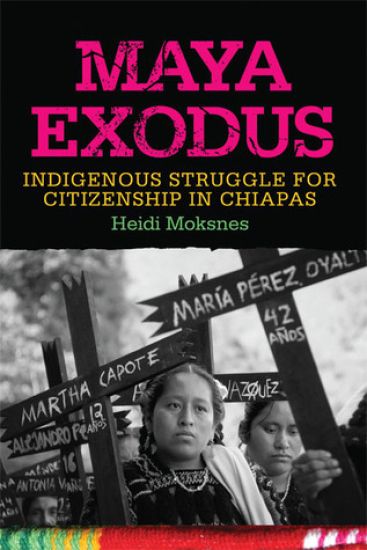
Maya Exodus

Maya Exodus

Heidi Moksnes

University of Oklahoma Press
2012
nidottu
Maya Exodus offers a richly detailed account of how a group of indigenous people has adopted a global language of human rights to press claims for social change and social justice. Anthropologist Heidi Moksnes describes how Catholic Maya in the municipality of Chenalhó in Chiapas, Mexico, have changed their position vis-à-vis the Mexican state - from being loyal clients dependent on a patron, to being citizens who have rights - as a means of exodus from poverty.Moksnes lived in Chenalhó in the mid-1990s and has since followed how Catholic Maya have adopted liberation theology and organized a religious and political movement to both advance their sociopolitical position in Mexico and restructure local Maya life. She came to know members of the Catholic organization Las Abejas shortly before they made headlines when forty-five members, including women and children, were killed by Mexican paramilitary troops because of their sympathy with the Zapatistas. In the years since the massacre at Acteal, Las Abejas has become a global symbol of indigenous pacifist resistance against state oppression.The Catholic Maya in Chenalhó see their poverty as a legacy of colonial rule perpetuated by the present Mexican government, and believe that their suffering is contrary to the will of God. Moksnes shows how this antagonism toward the state is exacerbated by the government's recent neoliberal policies, which have ended pro-peasant programs while employing a discourse on human rights. In this context, Catholic Maya debate the value of pressing the state with their claims. Instead, they seek independent routes to influence and resources, through the Catholic Diocese and nongovernmental organizations - relations, however, that also help to create new dependencies.This book incorporates voices of Maya men and women as they form new identities, rethink central conceptions of being human, and assert citizenship rights. Maya Exodus deepens our understanding of the complexities involved in striving for social change. Ultimately, it highlights the contradictory messages marginalized peoples encounter when engaging with the globally celebrated human rights discourse.
Arizona's Deadliest Gunfight

Arizona's Deadliest Gunfight

Heidi J. Osselaer

University of Oklahoma Press
2018
sidottu
On a cold winter morning, Jeff Power was lighting a fire in his remote Arizona cabin when he heard a noise, grabbed his rifle, and walked out the front door. Someone in the dark shouted, ""Throw up your hands!"" Shots rang out from inside and outside the cabin, and when it was all over, Jeff's sons, Tom and John, emerged to find the sheriff and his two deputies dead, and their father mortally wounded. Arizona's deadliest shoot-out happened not in 1881, but in 1918 as the United States plunged into World War I, and not in Tombstone, but in a remote canyon in the Galiuro Mountains northeast of Tucson. Whereas previous accounts have portrayed the gun battle as a quintessential western feud, historian Heidi J. Osselaer explodes that myth and demonstrates how the national debate over U.S. entry into the First World War divided society at its farthest edges, creating the political and social climate that lead to this tragedy. A vivid, thoroughly researched account, Arizona's Deadliest Gunfight describes an impoverished family that wanted nothing to do with modern civilization. Jeff Power had built his cabin miles from the nearest settlement, yet he could not escape the federal government's expanding reach. The Power men were far from violent criminals, but Jeff had openly criticized the Great War, and his sons had failed to register for the draft. To separate fact from dozens of false leads and conspiracy theories, Osselaer traced the Power family's roots back several generations, interviewed descendants of the shoot-out's participants, and uncovered previously unknown records. What happened to Tom and John Power afterward is as stirring and tragic a story as the gunfight itself. Weaving together a family-based local history with national themes of wartime social discord, rural poverty, and dissent, Arizona's Deadliest Gunfight will be the authoritative account of the 1918 incident and the memorable events that unfolded in its wake.
Arizona's Deadliest Gunfight

Arizona's Deadliest Gunfight

Heidi J. Osselaer

University of Oklahoma Press
2019
nidottu
On a cold winter morning, Jeff Power was lighting a fire in his remote Arizona cabin when he heard a noise, grabbed his rifle, and walked out the front door. Someone in the dark shouted, ""Throw up your hands!"" Shots rang out from inside and outside the cabin, and when it was all over, Jeff's sons, Tom and John, emerged to find the sheriff and his two deputies dead, and their father mortally wounded. Arizona's deadliest shoot-out happened not in 1881, but in 1918 as the United States plunged into World War I, and not in Tombstone, but in a remote canyon in the Galiuro Mountains northeast of Tucson. Whereas previous accounts have portrayed the gun battle as a quintessential western feud, historian Heidi J. Osselaer explodes that myth and demonstrates how the national debate over U.S. entry into the First World War divided society at its farthest edges, creating the political and social climate that lead to this tragedy. A vivid, thoroughly researched account, Arizona's Deadliest Gunfight describes an impoverished family that wanted nothing to do with modern civilization. Jeff Power had built his cabin miles from the nearest settlement, yet he could not escape the federal government's expanding reach. The Power men were far from violent criminals, but Jeff had openly criticized the Great War, and his sons had failed to register for the draft. To separate fact from dozens of false leads and conspiracy theories, Osselaer traced the Power family's roots back several generations, interviewed descendants of the shoot-out's participants, and uncovered previously unknown records. What happened to Tom and John Power afterward is as stirring and tragic a story as the gunfight itself. Weaving together a family-based local history with national themes of wartime social discord, rural poverty, and dissent, Arizona's Deadliest Gunfight will be the authoritative account of the 1918 incident and the memorable events that unfolded in its wake.
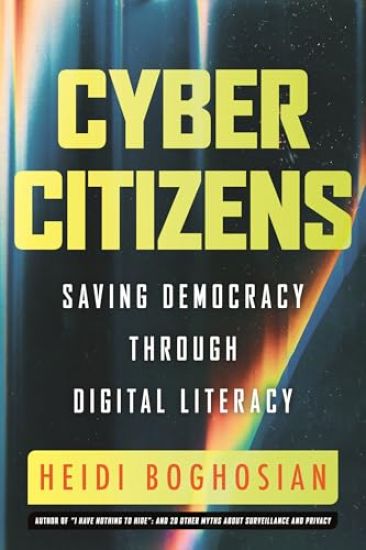
Cyber Citizens: Saving Democracy with Digital Literacy
A grounding exploration of how our online prowess shapes the very essence of democracy. The electronic age compels us to confront the delicate balance between the convenience of constant connectivity and the protection of personal privacy, security, and democracy itself. Presented as a two-fold concern of digital and civic literacy, surveillance and privacy expert Heidi Boghosian argues that our fight to uphold democracy must extend to the online world. As "smart" citizens, our best chance of thriving in the digital era lies in taking care of our "smart" selves as diligently as we maintain our smart devices. In the same way that smart devices can disclose private information when not adequately secured, our online presence can lead to unintentional data exposure or identity theft. That entails a commitment to learning digital literacy and cyber hygiene from the first moment we engage with technology. Mastering the fundamentals of civics--the rights and responsibilities of citizens--rounds out the democratic assignment. With AI and machine learning poised to play a transformative role in our 21st century lives, we, as humans, have our own generative learning journey to master. Drawing parallels between Americans and their "smart" devices, Cyber Citizens sheds light on the delicate balance between connectivity and privacy to uphold a truly democratic society.
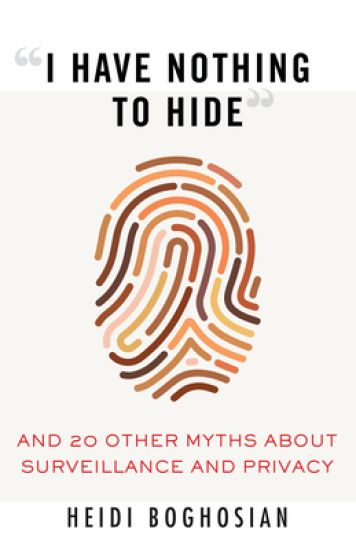
I Have Nothing to Hide

I Have Nothing to Hide

Heidi Boghosian

Beacon Press
2021
nidottu
An accessible guide that breaks down the complex issues around mass surveillance and data privacy and explores the negative consequences it can have on individual citizens and their communities. No one is exempt from data mining: by owning a smartphone, or using social media or a credit card, we hand over private data to corporations and the government. We need to understand how surveillance and data collection operates in order to regain control over our digital freedoms--and our lives. Attorney and data privacy expert Heidi Boghosian unpacks widespread myths around the seemingly innocuous nature of surveillance, sets the record straight about what government agencies and corporations do with our personal data, and offers solutions to take back our information. "I Have Nothing to Hide" is both a necessary mass surveillance overview and a reference book. It addresses the misconceptions around tradeoffs between privacy and security, citizen spying, and the ability to design products with privacy protections. Boghosian breaks down misinformation surrounding 21 core myths about data privacy, including: ● "Surveillance makes the nation safer."● "No one wants to spy on kids."● "Police don't monitor social media."● "Metadata doesn't reveal much about me."● "Congress and the courts protect us from surveillance."● "There's nothing I can do to stop surveillance." By dispelling myths related to surveillance, this book helps readers better understand what data is being collected, who is gathering it, how they're doing it, and why it matters.
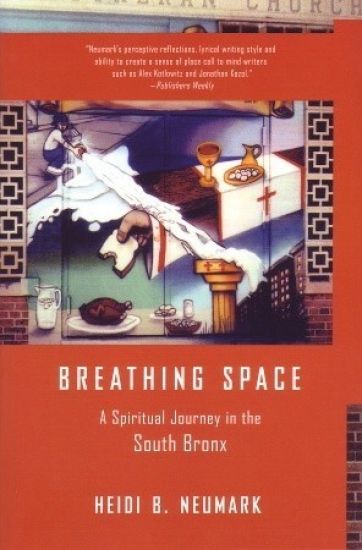
Breathing Space

Breathing Space

Heidi Neumark

Beacon Press
2004
pokkari
"Breathing Space" is the story of Heidi Neumark and the Hispanic and African-American Lutheran church-Transfiguration-that took a chance calling on a pastor from a starkly different background. Despite living and working in a milieu of overwhelming poverty and violence, Neumark and the congregation encounter even more powerful forces of hope and renewal. This story of a community creating space for new life and breath is also the story of a young woman-working, raising her children, and struggling for spiritual breathing space. Through poignant, intimate stories, Neumark charts her journey alongside her parishioners as pastor, church, and community grow in wisdom and together experience transformation.
Fluid States

Fluid States

Heidi Czerwiec

Louisiana State University Press
2019
nidottu
A collection of lyric essays that considers the way subjects, stories, facts, and memories are as interconnected as streams in a watershed, Heidi Czerwiec's Fluid States explores the interlocking issues created by the oilfields of North Dakota; the ephemerality of perfume, canning tomatoes, a fungus that infects and transforms mushrooms; and being the focus of internet hate. Short essays that present delightfully surprising facts with elegant and lyric language, her pieces all share underlying currents that question assumptions about gender, violence, reason, and intuition.
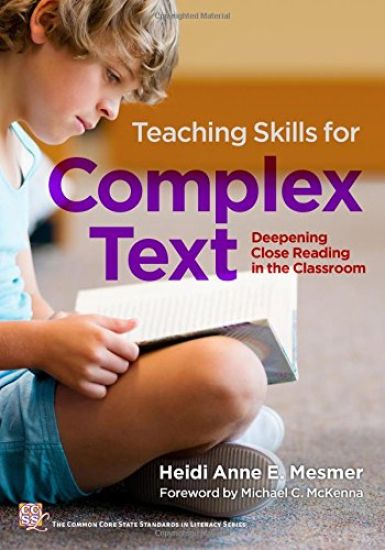
Teaching Skills for Complex Text

Teaching Skills for Complex Text

Heidi Anne E. Mesmer

Teachers' College Press
2016
nidottu
Tired of hearing about “complex text”? Bothered by the pushy messages about “challenge”? This book is for you! Unlike the many other materials on text complexity, this one focuses on specific, comprehension skills that students need in order to really engage with text. This book will help elementary school teachers equip their students with practical tools and understandings of the structures and conventions that allow them to excel, including concrete tools, passages, games, lessons, and examples to teach anaphora, connectives, paragraph structure, gathering evidence (fiction and nonfiction), and text challenge. A final chapter specifies how to stretch students in texts while attending to their stamina, executive skills, and interests.
Hard Times  For These Times - A Play

Hard Times For These Times - A Play

Heidi Stillman; Charles Dickens

Northwestern University Press
2007
nidottu
The citizens of Charles Dickens' Coketown have entertained readers since the 19th century. In this adaptation of ""Hard Times"", Heidi Stillman brings these iconic characters to the stage, revealing the universality of their hopes and suffering in their times and in ours. Originally produced in the spring of 2001, ""Hard Times"" received a Joseph Jefferson Award for best production of a play.
Grand Concourse

Grand Concourse

Heidi Schreck

Northwestern University Press
2015
nidottu
Shelley spends her days running a soup kitchen in the Bronx, her sense of purpose inseparable from her religious faith, though both have begun to waver. Emma, a college dropout looking for direction, arrives at the kitchen hoping to find it there. She brings a needed jolt to the place, helping a long-time client toward a new job, but her energy also proves unsettling. Even as Emma’s behavior grows steadily more erratic, Shelley still wants to believe in her, despite the mounting evidence that she shouldn’t. Shelley must finally ask herself how well she really knows the people she sees every day, how much she can trust them, and what she can and cannot forgive.
The Music of Ben Johnston

The Music of Ben Johnston

Heidi Von Gunden; John Cage

Scarecrow Press
1995
sidottu
Ben Johnston is an American composer internationally known for his work with extended just intonation. This is a critical-analytical study of his early compositions, his studies with Harry Partch and John Cage, and his experiments with just intonation, serialism, indeterminacy, jazz, and finally, extended just intonation. Pieces are analyzed and biographical material is included. The main emphasis of the text, however, is on examining Johnston's research about tuning and scalar theory as it relates to just intonation. For a long time Johnston worked in isolation; few people understood why someone would want to change the standard pitch system. But gradually, as his music began to be heard, especially his string quartets, performers and audiences experienced for themselves the kind of clarity and beauty that is possible with just intonation. This book is written for readers of varying musical backgrounds. Thos interested in studying and performing Johnston's music will find the book helpful in understanding his notational system and learning how to listen for just intervals. Many examples and figures document the musical analyses, which explain his compositional techniques. With a foreword by John Cage, a catalog and discography of Johnston's music, and a bibliography of the composer's writings.
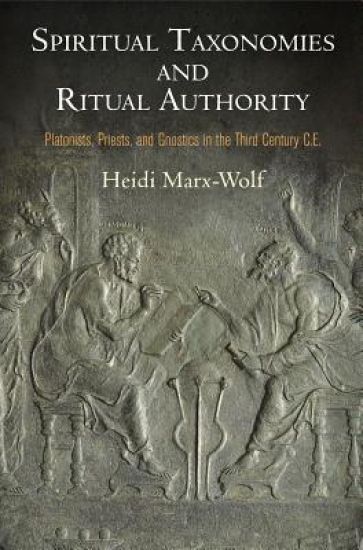
Spiritual Taxonomies and Ritual Authority

Spiritual Taxonomies and Ritual Authority

Heidi Marx-Wolf

University of Pennsylvania Press
2016
sidottu
The people of the late ancient Mediterranean world thought about and encountered gods, angels, demons, heroes, and other spirits on a regular basis. These figures were diverse, ambiguous, and unclassified and were not ascribed any clear or stable moral valence. Whether or not they were helpful or harmful under specific circumstances determined if and what virtues were attributed to them. That all changed in the third century C.E., when a handful of Platonist philosophers-Plotinus, Origen, Porphyry, and Iamblichus-began to produce competing systematic discourses that ordered the realm of spirits in moral and ontological terms. In Spiritual Taxonomies and Ritual Authority, Heidi Marx-Wolf recounts how these Platonist philosophers organized the spirit world into hierarchies, or "spiritual taxonomies," positioning themselves as the high priests of the highest gods in the process. By establishing themselves as experts on sacred, ritual, and doctrinal matters, they were able to fortify their authority, prestige, and reputation. The Platonists were not alone in this enterprise, and it brought them into competition with rivals to their new authority: priests of traditional polytheistic religions and gnostics. Members of these rival groups were also involved in identifying and ordering the realm of spirits and in providing the ritual means for dealing with that realm. Using her lens of spiritual taxonomy to look at these various groups in tandem, Marx-Wolf demonstrates that Platonist philosophers, Christian and non-Christian priests, and gnostics were more interconnected socially, educationally, and intellectually than previously recognized.