Kirjahaku
Etsi kirjoja tekijän nimen, kirjan nimen tai ISBN:n perusteella.
1000 tulosta hakusanalla Herman Bisbee
From A to Z, the Penguin Drop Caps series collects 26 unique hardcovers--featuring cover art by Jessica Hische It all begins with a letter. Fall in love with Penguin Drop Caps, a new series of twenty-six collectible and hardcover editions, each with a type cover showcasing a gorgeously illustrated letter of the alphabet. In a design collaboration between Jessica Hische and Penguin Art Director Paul Buckley, the series features unique cover art by Hische, a superstar in the world of type design and illustration, whose work has appeared everywhere from Tiffany & Co. to Wes Anderson's recent film Moonrise Kingdom to Penguin's own bestsellers Committed and Rules of Civility. With exclusive designs that have never before appeared on Hische's hugely popular Daily Drop Cap blog, the Penguin Drop Caps series launches with six perennial favorites to give as elegant gifts, or to showcase on your own shelves. H is for Hesse. A young Brahmin named Siddhartha searches for ultimate reality after meeting with the Buddha. His quest takes him from a life of decadence to asceticism, from the illusory joys of sensual love with a beautiful courtesan, and of wealth and fame, to the painful struggles with his son and the ultimate wisdom of renunciation. Integrating Eastern and Western spiritual traditions with psychoanalysis and philosophy, written with a deep and moving empathy for humanity, Herman Hesse's strangely simple Siddhartha is perhaps the most important and compelling moral allegory the troubled twentieth century ever produced.
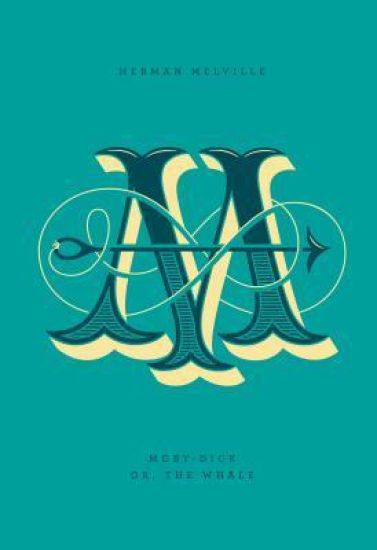
From A to Z, the Penguin Drop Caps series collects 26 unique hardcovers--featuring cover art by Jessica Hische It all begins with a letter. Fall in love with Penguin Drop Caps, a new series of twenty-six collectible and hardcover editions, each with a type cover showcasing a gorgeously illustrated letter of the alphabet. In a design collaboration between Jessica Hische and Penguin Art Director Paul Buckley, the series features unique cover art by Hische, a superstar in the world of type design and illustration, whose work has appeared everywhere from Tiffany & Co. to Wes Anderson's recent film Moonrise Kingdom to Penguin's own bestsellers Committed and Rules of Civility. With exclusive designs that have never before appeared on Hische's hugely popular Daily Drop Cap blog, the Penguin Drop Caps series debuted with an 'A' for Jane Austen's Pride and Prejudice, a 'B' for Charlotte Br nte's Jane Eyre, and a 'C' for Willa Cather's My ntonia. It continues with more perennial classics, perfect to give as elegant gifts or to showcase on your own shelves. M is for Melville, who wrote of his masterpiece, "It is the horrible texture of a fabric that should be woven of ships' cables and hawsers. A Polar wind blows through it, and birds of prey hover over it." In part, Moby-Dick is the story of an eerily compelling madman pursuing an unholy war against a creature as vast and dangerous and unknowable as the sea itself. But more than just a novel of adventure, more than an encyclopedia of whaling lore and legend, Moby-Dick is a haunting, mesmerizing, and important social commentary populated with several of the most unforgettable and enduring characters in literature. Written with wonderfully redemptive humor, Moby-Dick is a profound and timeless inquiry into character, faith, and the nature of perception.
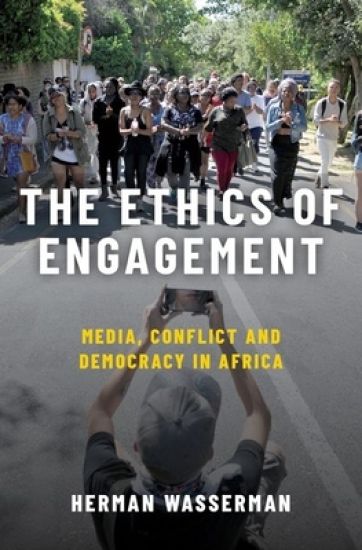
How can an "ethics of listening" guide the media to contribute to the deepening of democracy in Africa? In Africa, the media plays a significant role in conflict management and resolution. Which conflicts the media report, which are ignored, and how conflicts are represented can have a profound impact on the outcomes. While the media can in some cases ensure the stability of African democracy, critics have pointed out that in other cases, the media actually increases tensions in areas of conflict. The media tends to privilege only elite voices, offering superficial coverage of marginalized groups in a way that increases polarization. In The Ethics of Engagement, Herman Wasserman explores the ethics of the media in conflicts that arise during transitions to democracy in Africa. He examines the roles, responsibilities, and obligations of media in contexts of high socioeconomic inequality. In doing so, he looks at ethnic and racial polarization in the histories of colonialism, post-colonial authoritarianism, and hybrid regimes. Taking a critical view of the normative guidelines and professional identities of journalism inherited from contexts outside of Africa, he argues that a more reciprocal and collaborative approach is needed. He develops a new ethics of engagement that would require the media to facilitate the resolution of conflicts across differences of ethnicity, citizenship, and class. A central point of this theory is the development of an "ethics of listening" which would enable the media to conceive of their role as facilitators in democratic deliberation and community-building. Wasserman applies his ethics of listening to case studies across the African continent. He finds that by following this new model of conduct, the media may actually deepen democracy and help de-escalate conflict. This original study provides a useful framework for reimaging the media's role in transitional democracies in Africa--and across the globe.
Can humans and artificial intelligences share concepts and communicate? Making AI Intelligible shows that philosophical work on the metaphysics of meaning can help answer these questions. Herman Cappelen and Josh Dever use the externalist tradition in philosophy to create models of how AIs and humans can understand each other. In doing so, they illustrate ways in which that philosophical tradition can be improved. The questions addressed in the book are not only theoretically interesting, but the answers have pressing practical implications. Many important decisions about human life are now influenced by AI. In giving that power to AI, we presuppose that AIs can track features of the world that we care about (for example, creditworthiness, recidivism, cancer, and combatants). If AIs can share our concepts, that will go some way towards justifying this reliance on AI. This ground-breaking study offers insight into how to take some first steps towards achieving Interpretable AI.
Radioisotopic Methods for Biological and Medical Research
Herman W. Knoche
Oxford University Press Inc
1991
sidottu
This is an up-to-date textbook for biologists and biomedical scientists covering the basics of radioisotope methodology and safety. Radioisotopes are widely used in biological and medical research, particularly in biochemistry. Graduate students and technicians usually learn how to use radioisotopes through short training courses or as part of laboratory courses in biology and biochemistry. This text was written for use in courses on the theoretical aspects of radioisotopic methods or for self-study and reference; it assumes little knowledge of radioactive materials and develops mathematical discussions slowly and clearly.
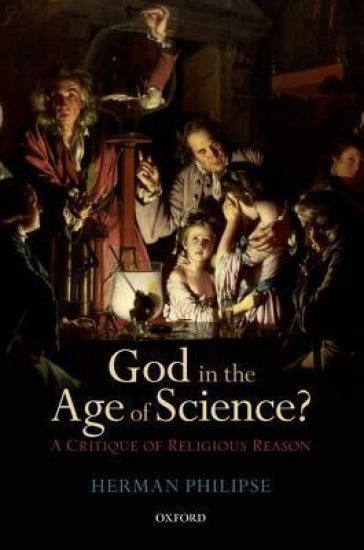
God in the Age of Science? is a critical examination of strategies for the philosophical defence of religious belief. The main options may be presented as the end nodes of a decision tree for religious believers. The faithful can interpret a creedal statement (e.g. 'God exists') either as a truth claim, or otherwise. If it is a truth claim, they can either be warranted to endorse it without evidence, or not. Finally, if evidence is needed, should its evidential support be assessed by the same logical criteria that we use in evaluating evidence in science, or not? Each of these options has been defended by prominent analytic philosophers of religion. In part I Herman Philipse assesses these options and argues that the most promising for believers who want to be justified in accepting their creed in our scientific age is the Bayesian cumulative case strategy developed by Richard Swinburne. Parts II and III are devoted to an in-depth analysis of this case for theism. Using a 'strategy of subsidiary arguments', Philipse concludes (1) that theism cannot be stated meaningfully; (2) that if theism were meaningful, it would have no predictive power concerning existing evidence, so that Bayesian arguments cannot get started; and (3) that if the Bayesian cumulative case strategy did work, one should conclude that atheism is more probable than theism. Philipse provides a careful, rigorous, and original critique of theism in the world today.
The claim that contemporary analytic philosophers rely extensively on intuitions as evidence is almost universally accepted in current meta-philosophical debates and it figures prominently in our self-understanding as analytic philosophers. No matter what area you happen to work in and what views you happen to hold in those areas, you are likely to think that philosophizing requires constructing cases and making intuitive judgments about those cases. This assumption also underlines the entire experimental philosophy movement: only if philosophers rely on intuitions as evidence are data about non-philosophers' intuitions of any interest to us. Our alleged reliance on the intuitive makes many philosophers who don't work on meta-philosophy concerned about their own discipline: they are unsure what intuitions are and whether they can carry the evidential weight we allegedly assign to them. The goal of this book is to argue that this concern is unwarranted since the claim is false: it is not true that philosophers rely extensively (or even a little bit) on intuitions as evidence. At worst, analytic philosophers are guilty of engaging in somewhat irresponsible use of 'intuition'-vocabulary. While this irresponsibility has had little effect on first order philosophy, it has fundamentally misled meta-philosophers: it has encouraged meta-philosophical pseudo-problems and misleading pictures of what philosophy is.
Context and Communication offers an introduction to a central theme in the study of language: the various ways in which what we say (or ask, or think) depends on the context of speech and thought. The period since 1970 has produced a vast literature on this topic, both by philosophers and by linguists. It is one of the areas of philosophy (and linguistics) where most progress has been made over the last few decades. This book explores some of the central data, questions, concepts, and theories of context sensitivity. It is written to be accessible to someone with no prior knowledge of the material or, indeed, any prior knowledge of philosophy, and is ideal for use as part of a philosophy of language course by students of philosophy or linguistics. Context and Communication is the first in the series Contemporary Introductions to Philosophy of Language. Each book in the series provides an introduction to an important topic in philosophy of language. Three more volumes are in preparation, on reference, the metaphysics of meaning, and conceptual analysis and philosophical methodology. These textbooks can be used as a module in a philosophy of language course, for either undergraduate or graduate students.
Dangerous Diplomacy reassesses the role of the UN Secretariat during the Rwandan genocide. With the help of new sources, including the personal diaries and private papers of the late Sir Marrack Goulding--an Under-Secretary-General from 1988 to 1997 and the second highest-ranking UN official during the genocide--the book situates the Rwanda operation within the context of bureaucratic and power-political friction existing at UN Headquarters in the early 1990s. The book shows how this confrontation led to a lack of coordination between key UN departments on issues as diverse as reconnaissance, intelligence, and crisis management. Yet Dangerous Diplomacy goes beyond these institutional pathologies and identifies the conceptual origins of the Rwanda failure in the gray area that separates peacebuilding and peacekeeping. The difficulty of separating these two UN functions explains why six decades after the birth of the UN, it has still not been possible to demarcate the precise roles of some key UN departments.
When we represent the world in language, in thought, or in perception, we often represent it from a perspective. We say and think that the meeting is happening now, that it is hot here, that I am in danger and not you; that the tree looks larger from my perspective than from yours. The Inessential Indexical is an exploration and defense of the view that perspectivality is a philosophically shallow aspect of the world. Cappelen and Dever oppose one of the most entrenched and dominant trends in contemporary philosophy: that perspective (and the perspective of the first person in particular) is philosophically deep and that a proper understanding of it is important not just in the philosophies of language and mind, but throughout philosophy. They argue that there are no such things as essential indexicality, irreducibly de se attitudes, or self-locating attitudes. Their goal is not to show that we need to rethink these phenomena, to explain them in different ways. Their goal is to show that the entire topic is an illusion--there's nothing there. The Context and Content series is a forum for outstanding original research at the intersection of philosophy, linguistics, and cognitive science. The general editor is François Recanati (Institut Jean-Nicod, Paris).
Context and Communication offers an introduction to a central theme in the study of language: the various ways in which what we say (or ask, or think) depends on the context of speech and thought. The period since 1970 has produced a vast literature on this topic, both by philosophers and by linguists. It is one of the areas of philosophy (and linguistics) where most progress has been made over the last few decades. This book explores some of the central data, questions, concepts, and theories of context sensitivity. It is written to be accessible to someone with no prior knowledge of the material or, indeed, any prior knowledge of philosophy, and is ideal for use as part of a philosophy of language course by students of philosophy or linguistics. Context and Communication is the first in the series Contemporary Introductions to Philosophy of Language. Each book in the series provides an introduction to an important topic in philosophy of language. The second volume on reference is currently in preparation. These textbooks can be used as a module in a philosophy of language course, for either undergraduate or graduate students.
It is a fundamental feature of language that words refer to things. Much attention has been devoted to the nature of reference, both in philosophy and in linguistics. Puzzles of Reference is the first book to give a comprehensive accessible survey of the fascinating work on this topic from the 1970s to the present day. Written by two eminent philosophers of language, Puzzles of Reference offers an up-to-date introduction to reference in philosophy and linguistics, summarizing ideas such as Kripke's revolutionary theory and presenting the various challenges in a clear and accessible manner. As the text does not assume prior training in philosophy or linguistics, it is ideal for use as part of a philosophy of language course for philosophy students or for linguistics students. Puzzles of Reference belongs to the series Contemporary Introductions to Philosophy of Language, in which each book provides an introduction to an important area of the philosophy of language, suitable for students at any level.
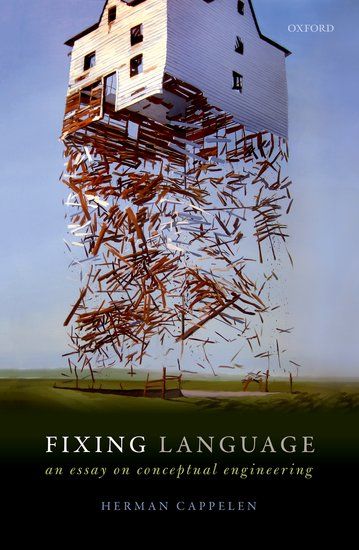
Herman Cappelen investigates ways in which language (and other representational devices) can be defective, and how they can be improved. In all parts of philosophy there are philosophers who criticize the concepts we have and propose ways to improve them. Once one notices this about philosophy, it's easy to see that revisionist projects occur in a range of other intellectual disciplines and in ordinary life. That fact gives rise to a cluster of questions: How does the process of conceptual amelioration work? What are the limits of revision? (How much revision is too much?) How does the process of revision fit into an overall theory of language and communication? Fixing Language aims to answer those questions. In so doing, it aims also to draw attention to a tradition in 20th- and 21st-century philosophy that isn't sufficiently recognized. There's a straight intellectual line from Frege and Carnap to a cluster of contemporary work that isn't typically seen as closely related: much work on gender and race, revisionism about truth, revisionism about moral language, and revisionism in metaphysics and philosophy of mind. These views all have common core commitments: revision is both possible and important. They also face common challenges about the methods, assumptions, and limits of revision.
When theorizing about language, we tend to assume that speakers are cooperative, honest, helpful, and so on. This, of course, isn't remotely true of a lot of real-world language use. Bad Language is the first textbook to explore non-idealized language use, the linguistic behaviour of those who exploit language for malign purposes. Two eminent philosophers of language present a lively and accessible introduction to a wide range of topics including lies and bullshit, slurs and insults, coercion and silencing: Cappelen and Dever offer theoretical frameworks for thinking about these all too common linguistic behaviours. As the text does not assume prior training in philosophy or linguistics, it is ideal for use as part of a philosophy of language course for philosophy students or for linguistics students. Bad Language belongs to the series Contemporary Introductions to Philosophy of Language, in which each book introduces an important area of the philosophy of language, suitable for students at any level.
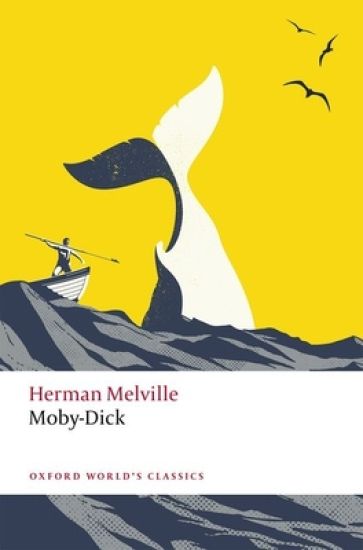
"It will be a strange sort of a book, tho', I fear; blubber is blubber you know; tho' you may get oil out of it, the poetry runs as hard as sap from a frozen maple tree;--& to cook the thing up, one must needs throw in a little fancy.... Yet I mean to give the truth of the thing, spite of this." Moby-Dick has a monumental reputation. Less well known are the novel's unexpectedly weird, funny, tantalizing, messy, and wondrous moments. Narrator Ishmael, along with the whaleship Pequod's other "meanest mariners, and renegades and castaways", is beguiled into joining Captain Ahab in his vengeful pursuit of the white whale that "dismasted" him. But along the way, Ishmael takes the reader along many a detour into variegated ways of knowing. In a tone "strangely compounded of fun and fury", Moby-Dick brings outlandish curiosity to bear on the multitudinous, oceanic scale of our diverse world. ABOUT THE SERIES: For over 100 years Oxford World's Classics has made available the widest range of literature from around the globe. Each affordable volume reflects Oxford's commitment to scholarship, providing the most accurate text plus a wealth of other valuable features, including expert introductions by leading authorities, helpful notes to clarify the text, up-to-date bibliographies for further study, and much more.
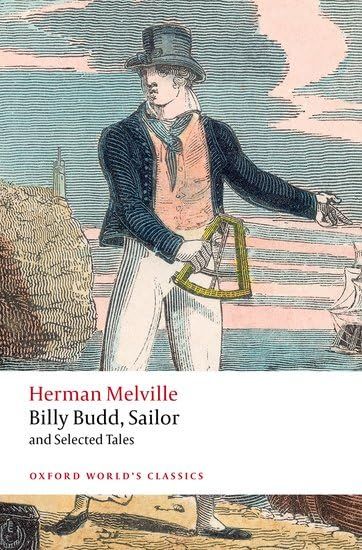
'Struck dead by an angel of God! Yet the angel must hang!' Outwardly a compelling narrative of events aboard a British man-of-war during the turmoil of the Napoleonic Wars, Billy Budd is a nautical recasting of the Fall, a parable of good and evil, a meditation on justice and political governance, and a searching portrait of three extraordinary men. The passion it has aroused in its readers over the years is a measure of how deeply it addresses some of the fundamental questions of experience that every age must reexamine for itself. This edition draws on a new authoritative edition of Billy Budd, Sailor, which corrects the inaccuracies and excesses of former editions of Melville's notoriously incomplete final novella. Accompanied by extensive critical apparatus that draws on a wealth of recent Melville scholarship which highlights his contemporary relevance for questions of economics, ecology, identity, and sexuality and connects it to the key formal and interpretive issues at stake in understanding his art of fiction. It also includes a selection of Melville's short stories, as well as his review of Hawthorne's short fiction, 'Hawthorne and His Mosses'. ABOUT THE SERIES: For over 100 years Oxford World's Classics has made available the widest range of literature from around the globe. Each affordable volume reflects Oxford's commitment to scholarship, providing the most accurate text plus a wealth of other valuable features, including expert introductions by leading authorities, helpful notes to clarify the text, up-to-date bibliographies for further study, and much more.
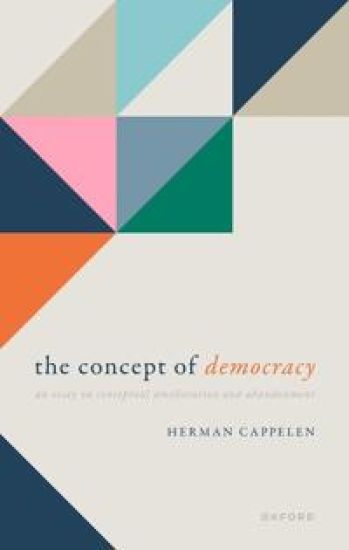
This is an open access title available under the terms of a CC BY-NC-ND 4.0 International licence. It is free to read on Oxford Academic and offered as a free PDF download from OUP and selected open access locations. If we don't know what the words 'democracy' and 'democratic' mean, then we don't know what democracy is. This book defends a radical view: these words mean nothing and should be abandoned. The argument for Abolitionism is simple: those terms are defective and we can easily do better, so let's get rid of them. According to the abolitionist, the switch to alternative devices would be a significant communicative, cognitive, and political advance. The first part of the book presents a general theory of abandonment: the conditions under which language should be abandoned. The rest of the book applies this general theory to the case of 'democracy' and 'democratic'. Cappelen shows that 'democracy' and 'democratic' are semantically, pragmatically, and communicatively defective. Abolitionism is not all gloom and doom. It also contains a message of good cheer: we have easy access to conceptual devices that are more effective than 'democracy'. We can do better. These alternative linguistic devices will enable us to ask better questions, provide genuinely fruitful answers, and have more rational discussions. Moreover, those questions and answers better articulate the communicative and cognitive aims of those who use empty terms like 'democracy' and 'democratic'.
Dean & Dyer's Digest of Intellectual Property Law
Herman Blignaut; Marco van der Merwe; Megan Reimers; Eben van Wyk; John Foster; Mohamed Khader; Tyrone Grant; David Cochrane; Lodewyk Cilliers; Tshepo Shabangu; Tertia Beharie; Dina Biagio; Sadulla Karjiker; Cobus Jooste; Mikhalien Du Bois
Oxford University Press Southern Africa
2014
nidottu
Authored as a collaboration between Spoor & Fisher and the Anton Mostert Chair of Intellectual Property at Stellenbosch University, Dean and Dyer's Digest of Intellectual Property Law presents a substantial, engaging and applied first course in intellectual property law. The text provides a thorough and accessible introduction to the broad spectrum of intellectual property law in South Africa, including intellectual property in the digital environment. The text brings the value of practical expertise together with an enquiring, analytical and critical approach, resulting in a dynamic and indispensable reference. The text offers a clear pedagogical structure, which supports learning and develops independent, critical and reflective engagement with the subject matter. Ancillary materials are available to support teaching and learning. Dean and Dyer's Digest of Intellectual Property Law is suited as core course material for students who are studying intellectual property law as a module of the LLB degree, or at postgraduate level. It is also a useful resource for legal practitioners who may wish to clarify new or foundational principles of the field.