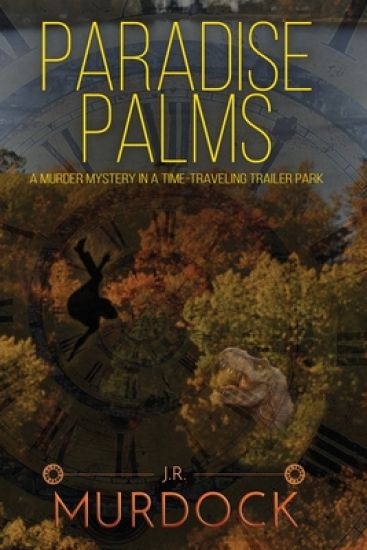
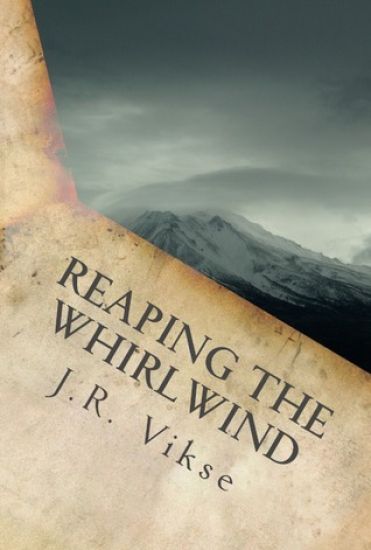
Half a body is not half a mystery. Sam Jeffery's friend has been killed and someone made off with half the body. Or did they? Sam Jeffrey knows the Minnesota woods. He's spent his entire life in them. There should have been signs of a struggle or getaway, but there's nothing. When the police discover the severed head of a giant reptile, Myra Tolie, an archeologist specializing in dinosaurs from the Science Museum of Minnesota, is brought in to help identify it. Excited by the discovery, she heads to the Paradise Palms trailer park to see if there could be a hidden nest of dinosaurs living there. Strange occurrences draw together several members of the trailer park to find out what is going on and how to stop the trailer pack from teleporting back in time.
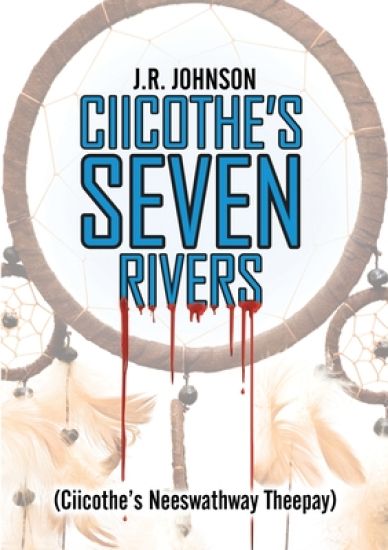
It is 1963 when a half-breed twelve-year-old from Ohio decides to follow through with a daredevil move that leaves him injured and at the bottom of a sand pit. A short time later, after his rescue, the boy recovers in bed-a captive audience to another one of his Grandma Wick's stories. With an Indian smoking pipe firmly wedged between her teeth, Grandma Wick leads the boy back into the 1800's as she spins this fascinating tale about a Shawnee Indian girl and her life with her people. Ciicothe worked as a slave and abolitionist who eventually assimilated into the white world while displaying an unending love for her family. With additional insight from his Grandma Lu, the story ultimately reveals dark, long-held family secrets that include a shocking revelation about the first assassination of a United States president. Ciicothe's Seven Rivers shares the tale of a half-Native American boy whose grandmothers weave the legend of a Shawnee woman that ultimately unveils his lineage and dark family secrets.
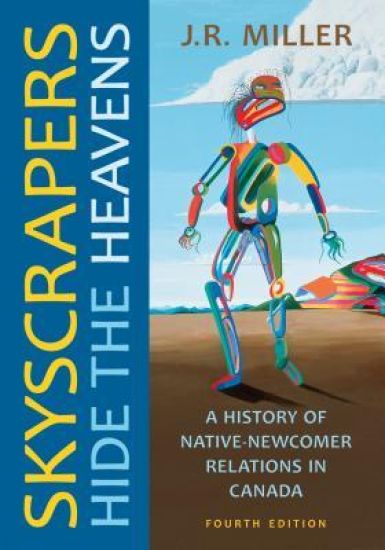
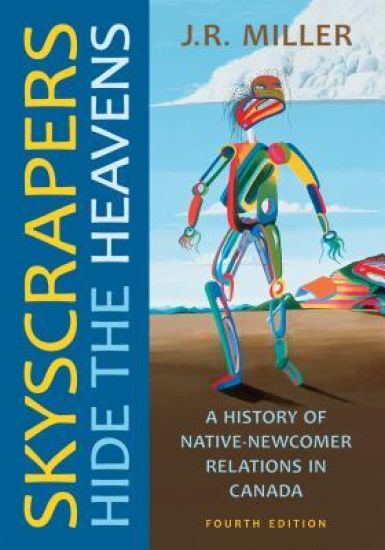
First published in 1989, Skyscrapers Hide the Heavens continues to earn wide acclaim for its comprehensive account of Native-newcomer relations throughout Canada’s history. Author J.R. Miller charts the deterioration of the relationship from the initial, mutually beneficial contact in the fur trade to the current displacement and marginalization of the Indigenous population. The fourth edition of Skyscrapers Hide the Heavens is the result of considerable revision and expansion to incorporate current scholarship and developments over the past twenty years in federal government policy and Aboriginal political organization. It includes new information regarding political organization, land claims in the courts, public debates, as well as the haunting legacy of residential schools in Canada. Critical to Canadian university-level classes in history, Indigenous studies, sociology, education, and law, the fourth edition of Skyscrapers will be also be useful to journalists and lawyers, as well as leaders of organizations dealing with Indigenous issues. Not solely a text for specialists in post-secondary institutions, Skyscrapers Hide the Heavens explores the consequence of altered Native-newcomer relations, from cooperation to coercion, and the lasting legacy of this impasse.
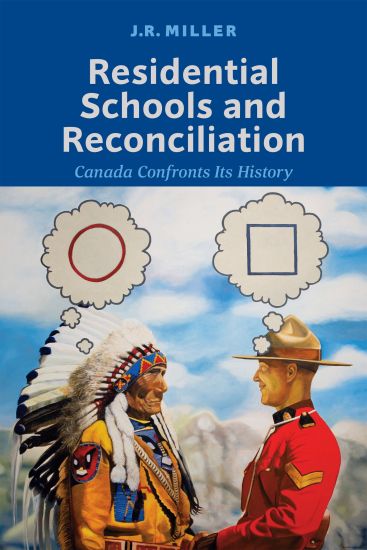
Since the 1980s, successive Canadian institutions and federal governments as well as Christian churches have attempted to grapple with the malignant legacy of residential schooling through official apologies, the Royal Commission on Aboriginal Peoples, the Indian Residential Schools Settlement Agreement, and the Truth and Reconciliation Commission (TRC). In Residential Schools and Reconciliation, award-winning author J.R. Miller tackles and explains these institutional responses to Canada’s residential school legacy. Analysing archival material and interviews with former students, politicians, bureaucrats, church officials, and the Chief Commissioner of the TRC, Miller reveals a major obstacle to achieving reconciliation – the inability of Canadians at large to overcome their flawed, overly positive understanding of their country’s history. This unique, timely, and provocative work asks Canadians to accept that the root of the problem was Canadians like them in the past who acquiesced to aggressively assimilative policies.
First published in 1989, Skyscrapers Hide the Heavens continues to earn wide acclaim for its comprehensive account of Native-newcomer relations throughout Canada’s history. Author J.R. Miller charts the deterioration of the relationship from the initial, mutually beneficial contact in the fur trade to the current displacement and marginalization of the Indigenous population. The fourth edition of Skyscrapers Hide the Heavens is the result of considerable revision and expansion to incorporate current scholarship and developments over the past twenty years in federal government policy and Aboriginal political organization. It includes new information regarding political organization, land claims in the courts, public debates, as well as the haunting legacy of residential schools in Canada. Critical to Canadian university-level classes in history, Indigenous studies, sociology, education, and law, the fourth edition of Skyscrapers will be also be useful to journalists and lawyers, as well as leaders of organizations dealing with Indigenous issues. Not solely a text for specialists in post-secondary institutions, Skyscrapers Hide the Heavens explores the consequence of altered Native-newcomer relations, from cooperation to coercion, and the lasting legacy of this impasse.
Since the 1980s, successive Canadian institutions and federal governments as well as Christian churches have attempted to grapple with the malignant legacy of residential schooling through official apologies, the Royal Commission on Aboriginal Peoples, the Indian Residential Schools Settlement Agreement, and the Truth and Reconciliation Commission (TRC). In Residential Schools and Reconciliation, award-winning author J.R. Miller tackles and explains these institutional responses to Canada’s residential school legacy. Analysing archival material and interviews with former students, politicians, bureaucrats, church officials, and the Chief Commissioner of the TRC, Miller reveals a major obstacle to achieving reconciliation – the inability of Canadians at large to overcome their flawed, overly positive understanding of their country’s history. This unique, timely, and provocative work asks Canadians to accept that the root of the problem was Canadians like them in the past who acquiesced to aggressively assimilative policies.
Thirty years ago, two teenagers arrived in Tranthaea and saved the world. Now, the Keepers believe they have secured a lasting peace. But evil does not sleep forever... A forgotten threat lurks on the borders of Tranthaea. Hidden traitors plot from within. And an old enemy watches all, waiting for the perfect time to strike. Enter Hiari White and Aiden Swift. Torn from their lives and transported to a fantastic new world, Aiden and Hiari are thrown into the middle of a centuries-old conflict that seems destined to end in disaster. There is only one thing that can save them all: a long-lost pair of ancient weapons with astonishing powers. Unfortunately, the two teens are not the only people who have heard the legends...Battling their enemies, their pasts, and their fears, Hiari and Aiden struggle to stay alive, uncover the truth, and find their places in this incredible world. But when everyone has an ulterior motive, how can they tell friend from foe? With two unbelievable weapons missing somewhere in Tranthaea, the hunt is on.After the success of the first instalment in J.R. Vikse's new youth fantasy series, The Keeper Chronicles: Playing with Fire, this highly-anticipated second volume will certainly not disappoint. The story continues, and Tranthaea awaits, filled with more action, adventure, and fantastic creatures. This amazing trilogy is perfect for fans of The Chronicles of Narnia and the Harry Potter series. With his trademark wit and well-drawn characters, Vikse creates an incredible new world like nothing you've ever seen before. Prepare to return to the world of Tranthaea.