Kirjojen hintavertailu. Mukana 12 390 323 kirjaa ja 12 kauppaa.

Kirjahaku

Etsi kirjoja tekijän nimen, kirjan nimen tai ISBN:n perusteella.

1000 tulosta hakusanalla JAMES LINDSAY

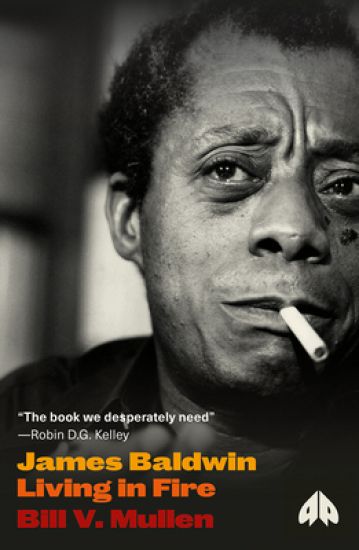
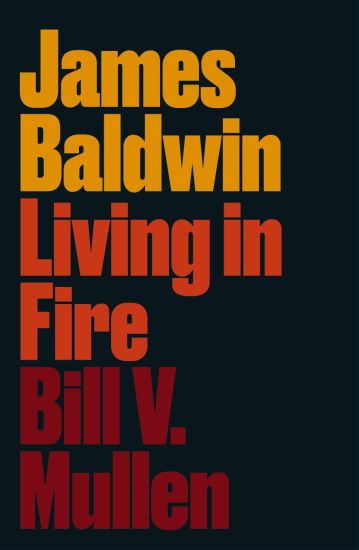
James Baldwin

James Baldwin

Bill V. Mullen

PLUTO PRESS
2024
pokkari
'A scrupulous biography' Publishers Weekly 'Fresh, incisive, and uplifting' Kirkus 'If you want to know the real Baldwin, this is the book to read' Robin D.G. Kelley, author of Thelonious Monk James Baldwin is an icon of liberation who created some of the most important literary works of his time, including the novels Go Tell It on the Mountain and If Beale Street Could Talk. Here, Bill V. Mullen celebrates the life of the great African-American writer and activist. As a lifelong anti-imperialist, black queer advocate, and feminist, James Baldwin was a passionate chronicler of the rise of the Civil Rights Movement, the US war against Vietnam, the Palestinian liberation struggle, and the rise of LGBTQ+ rights. Mullen pays homage to Baldwin's truly radical approach to his life, writing and activism. Constantly in struggle for an anti-racist, emancipated world, Baldwin's philosophy and politics were ahead of their time, predicting many of today's movements such as Black Lives Matter.
James Baldwin

James Baldwin

Bill V. Mullen

Pluto Press
2019
sidottu
'A scrupulous biography' Publishers Weekly 'Fresh, incisive, and uplifting' Kirkus 'If you want to know the real Baldwin, this is the book to read' Robin D.G. Kelley, author of Thelonious Monk James Baldwin is an icon of liberation who created some of the most important literary works of his time, including the novels Go Tell It on the Mountain and If Beale Street Could Talk. Here, Bill V. Mullen celebrates the life of the great African-American writer and activist. As a lifelong anti-imperialist, black queer advocate, and feminist, James Baldwin was a passionate chronicler of the rise of the Civil Rights Movement, the US war against Vietnam, the Palestinian liberation struggle, and the rise of LGBTQ+ rights. Mullen pays homage to Baldwin's truly radical approach to his life, writing and activism. Constantly in struggle for an anti-racist, emancipated world, Baldwin's philosophy and politics were ahead of their time, predicting many of today's movements such as Black Lives Matter.
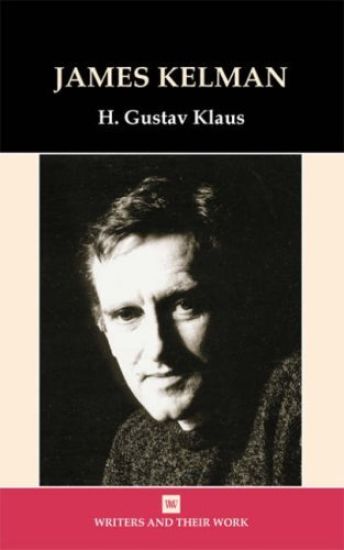
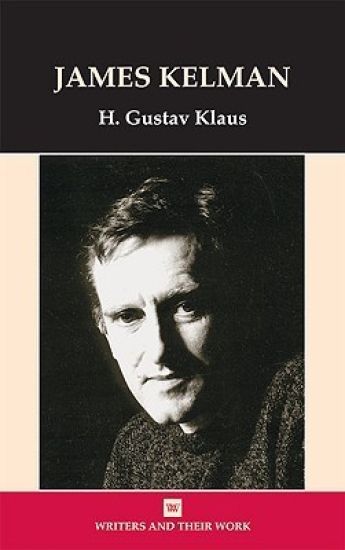
James Kelman

James Kelman

H. Gustav Klaus

Northcote House Publishers Ltd
2005
nidottu
One of the most powerful and provocative writers to have emerged in Britain in recent years, James Kelman has engendered a good deal of controversy over his widely reported, but often misconceived use of ‘bad’ language words. This introduction to the whole range of his works, from the early short stories through the plays and essays to the Booker Prize winning novel How Late it Was, How Late and the latest experimental fiction, examines the embattled Kelman’s literary politics. H. Gustav Klaus pays close attention to the Scottish culture in which Kelman’s writing was nurtured, to the uncompromising treatment of the ‘underclass’, the intricacies of the narrative voice and the existentialist anguish behind it. A writer of international reputation now, Kelman’s principled anti-authoritarianism raises uncomfortable questions about the continuing reality of class, dominant social and literary values and the role of writers in our time.
James Kelman

James Kelman

H. Gustav Klaus

Northcote House Publishers Ltd
2004
sidottu
One of the most powerful and provocative writers to have emerged in Britain in recent years, James Kelman has engendered a good deal of controversy over his widely reported, but often misconceived use of ‘bad’ language words. This introduction to the whole range of his works, from the early short stories through the plays and essays to the Booker Prize winning novel How Late it Was, How Late and the latest experimental fiction, examines the embattled Kelman’s literary politics. H. Gustav Klaus pays close attention to the Scottish culture in which Kelman’s writing was nurtured, to the uncompromising treatment of the ‘underclass’, the intricacies of the narrative voice and the existentialist anguish behind it. A writer of international reputation now, Kelman’s principled anti-authoritarianism raises uncomfortable questions about the continuing reality of class, dominant social and literary values and the role of writers in our time.
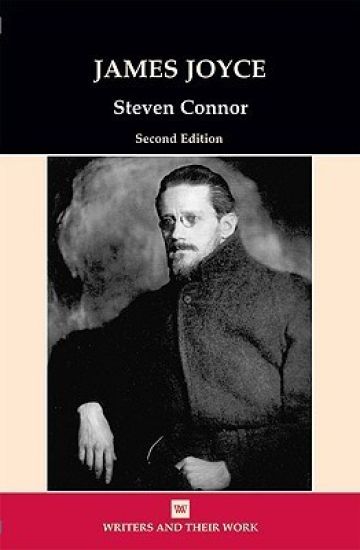
James Joyce

James Joyce

Steven Connor

Liverpool University Press
2012
nidottu
The works of James Joyce have long been regarded as central to European modernism. It is also clear what a continuing provocation and source of renewal Joyce’s works are for contemporary cultural theory, especially feminism, post modernism and postcolonialism. This new edition of Steven Connor’s book is an animated, accessible critique to the whole range of Joyce’s work, from Dubliners through to Finnegans Wake. It contains a revised bibliography and critical evaluation, taking account of the ever-rowing corpus of literary criticism of Joyce and his work. Steven Connor is a foremost scholar of modern literature, and his book traces the leading concerns of Joyce’s work with language, sexual and cultural identity, and the transforming experiences of modernity, and considers the relations between Joyce and postmodernity.
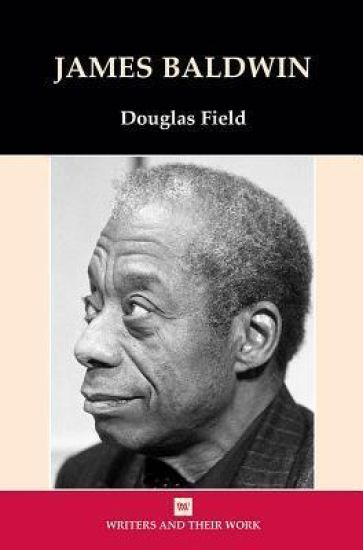
James Baldwin

James Baldwin

Douglas Field

Liverpool University Press
2011
sidottu
This study provides an engaging overview and clear analysis of the fiction, non-fiction and drama of African-American writer James Baldwin (1924-1987). Whilst giving close attention to Baldwin’s popular works such as Go Tell it on the Mountain and Another Country; it also explores the important but less well known themes and texts including the use of the blues, masculinity, race and sexuality.
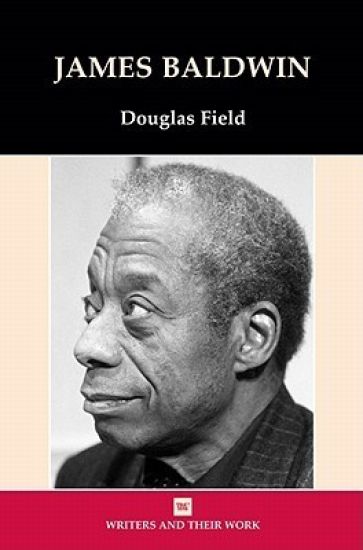
James Baldwin

James Baldwin

Douglas Field

Liverpool University Press
2011
nidottu
This study provides an engaging overview and clear analysis of the fiction, non-fiction and drama of African-American writer James Baldwin (1924-1987). Whilst giving close attention to Baldwin’s popular works such as Go Tell it on the Mountain and Another Country; it also explores the important but less well known themes and texts including the use of the blues, masculinity, race and sexuality.
The General Correspondence of James Boswell, 17661769

The General Correspondence of James Boswell, 17661769

James Boswell

Edinburgh University Press
1993
sidottu
This is the first of two volumes containing Boswell's correspondence with more than 200 people, including Pitt, Rousseau, Paoli, John Wilkes, Sir Alexander Dick, Baretti and numerous women friends. The letters date from a three year period between 1766, when Boswell returned from his Grand Tour, to 1769, and his marriage to his cousin Margaret Montgomerie. They show Boswell in the happiest days of his life as the law student became a practising advocate, the literary hopeful a best-selling author, the pursuer of rich heiresses a family man, and the dreamer a landowner as the Laird of Dalblair. The letters to and from his correspondents are reprinted in full, with extensive explanatory notes.
James Boswell's Life of Johnson

James Boswell's Life of Johnson

James Boswell

Edinburgh University Press
2012
sidottu
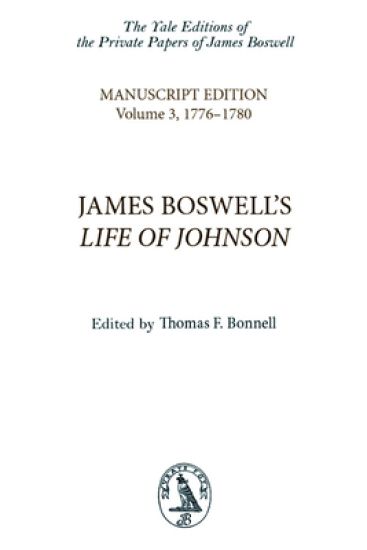
This volume is the third and penultimate in the Yale Boswell Editions' transcription of Boswell's heavily revised manuscript of his biography of Johnson. Designed as a research supplement to the Hill-Powell version of the 'Life' and employing the complex but accessible system devised for the series by the late Marshall Waingrow, the edition traces Boswell's processes of composition from first draft to final publication. It restores much deleted material, passages lost or overlooked at proof and revise stage, and corrects a host of compositorial and other errors and misreadings. Professor Bonnell's annotation clarifies a wide range of textual and editorial issues, and sheds new light on Boswell's processes of selection and deletion.
James Boswell's 'Life of Johnson'

James Boswell's 'Life of Johnson'

James Boswell

Edinburgh University Press
2019
sidottu
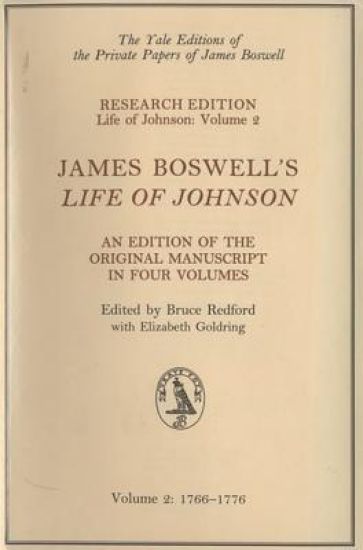
This edition of Boswell's "Life of Johnson" details how Boswell's original words were changed during the publication process, and offers a fresh reading of Boswell's work. Marshall Waingrow charts the changes made during composition and at the proof stage, and corrects and explains the printer's misreadings and author's errors which crept into the final edition. This edition of the manuscript is a companion work to the standard scholarly edition of the "Life of Johnson", known as the "Hill-Powell" version.
James Boswell's Life of Johnson

James Boswell's Life of Johnson

James Boswell

Edinburgh University Press
1999
sidottu
Marshall Waingrow's opus magnum is not a corrected edition of the printed text of Boswell's Life of Johnson. Rather, Waingrow presents an edition of the manuscript which enables us to follow Boswell's compositional process through successive revisions.
The Correspondence of James Boswell and William Johnson Temple, 17561795
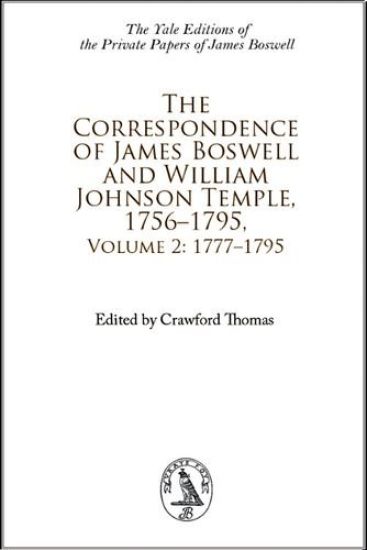
These letters chart the friendship between Boswell and the man he called his "most intimate friend", William Johnson Temple. Covering the period from Boswell and Temple's student days at Edinburgh University until their mid-30s, the dialogue reveals the two men's thoughts on their families, ambitions, sex-life and friendship. Each is the other's "brother confessor" and the letters provide glimpses into Boswell's personality and the subjective life of an 18th-century country parson.
The Correspondence and Other Papers of James Boswell Relating to the Making of the Life of Johnson
This edition, expanded to include the text of letters unavailable at the time of the volume's first publication in 1969, records James Boswell's quest over a period of more than twenty years to amplify his knowledge of his major biographical subject, Samuel Johnson, through a detailed correspondence with a wide network of friends, informants, and other authorities. The volume, with revised and updated annotation, shows not just Boswell's struggles through his personal distresses to gather material for his Life of Johnson, but notes many of his revisions of his sources, changes made in manuscript and proof, and revisions of the first and second editions. It presents letters that illuminate the contemporary reception of his powerfully innovative, controversial, and influential biography (which appeared first in 1791), taking the story as far as exchanges in 1808 between Boswell's friend and editor, Edmond Malone, and his son, James Boswell the younger, about corrections for the sixth edition of 1811. Throughout, the annotation brings to life an extensive range of eighteenth-century figures, issues and topics.The Times Literary Supplement (23 July 1970) found the interest of this 'fascinating' volume threefold: 'It gives fresh evidence of Boswell's scrupulousness, ability and tact; it leads us to a fuller understanding of what people expected from biography, and what were eighteenth-century notions of propriety and accuracy; and it enables us perhaps to define more clearly the achievement of Boswell's masterpiece. ' This corrected and enlarged version (the first edition has been out of print for two decades) will serve as a valuable supplement and companion to the Yale manuscript edition of the Life of Johnson, upon which all future editions of Boswell's biography will need to draw.
James Hogg: A Life

James Hogg: A Life

Gillian Hughes

Edinburgh University Press
2007
sidottu
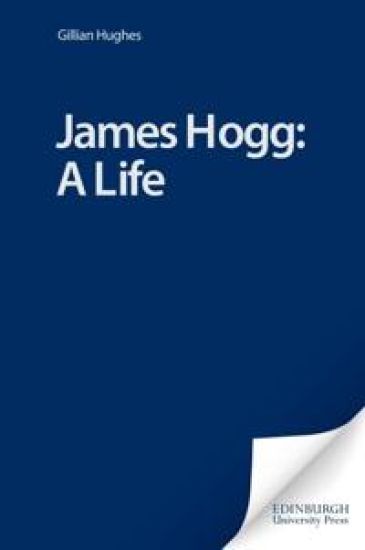
James Hogg's life-story is one of extraordinary transitions and in his own lifetime he was best known as a heaven-inspired and naive Scottish rustic who featured as the boozing buffoon of Blackwood's Edinburgh Magazine. In his own fascinating Memoir this notoriously open-hearted man was curiously reticent about certain passages in his life. He was a man of apparent contradictions: a partisan Tory with Radical friends; an upholder of oral tradition who eagerly embraced every new development in early nineteenth-century print culture; a man who wrote against biographical intrusions yet in his own life writing, stories and poems emphasised his persona and origins as the Ettrick Shepherd. His formidable intelligence and drive were seldom acknowledged, and his most challenging work disturbed conventional readerly preconceptions. Key Features: *Documents a life from ragged boy cowherd to famous author. *Gives due weight to the neglected parts of Hogg's story for the first time. *Draws extensively on Hogg's correspondence and a rich archive of documentary material.
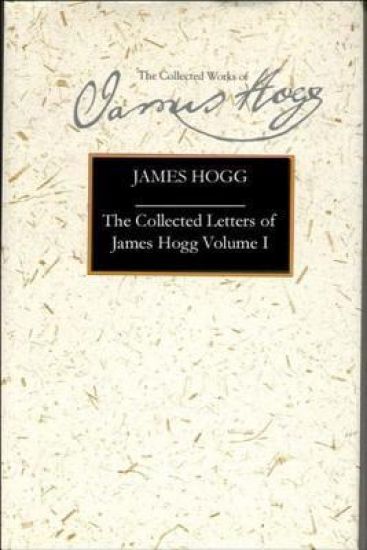
The Collected Letters of James Hogg, Volume 1, 1800-1819
Hogg was a superb letter-writer, and this is the initial volume of the first collected edition of his letters (to be completed in three volumes). Many of the letters have never been published before, or published only in part. They vividly reflect Hogg's varied social experience and shed new light on his own writings and those of his contemporaries. Among his famous correspondents were writers such as Scott, Byron, and Southey, antiquarians such as Robert Surtees, politicians such as Sir Robert Peel, and editors and publishers such as John Murray, William Blackwood, and Robert Chambers. But there are also letters to shepherds, farmers, aristocrats, musicians, young ladies, and bluestockings. Hogg first appears in this volume in 1800 as a young shepherd with literary ambitions, and becomes the famous author of The Queen's Wake (1813) and a key supporter of the early Blackwood's Edinburgh Magazine (1817). Among the final letters it contains are some tender if idiosyncratic love-letters to the Dumfriesshire girl he married in 1820 at the mature age of forty-nine.Hogg's entertaining and informative letters are supplemented by detailed annotation and a full editorial apparatus, including biographical notes on his chief correspondents and a concise overview of this phase of his life. This edition of Hogg's Letters has its roots in the late 1970s and 1980s, when the four founder members of the James Hogg Society (Gillian Hughes, Douglas Mack, Robin MacLachlan, and Elaine Petrie) began work on tracing and transcribing Hogg's surviving letters. The major tasks of completing this work and preparing a full-scale edition of Hogg's Letters were subsequently passed to Gillian Hughes, who is now bringing this important research project to fruition. Key Features: * The first ever edition of Hogg's letters to be published * Includes many letters never previously published * Features Hogg's correspondence with figures such as Sir Walter Scott, Lord Byron and Sir Robert Peel
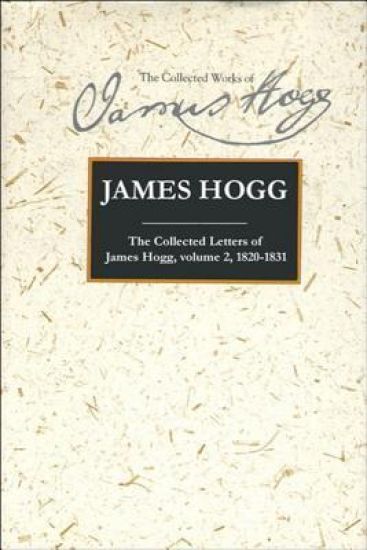
The Collected Letters of James Hogg, Volume 2, 1820-1831
The letters in the second volume of Gillian Hughes's pioneering edition vividly reflect Hogg's varied social experience and shed new light on his own writings and those of his contemporaries. His correspondents included major writers such as Scott and Byron, politicians such as Sir Robert Peel, and publishers such as John Murray and William Blackwood. But there are also letters to shepherds, farmers, aristocrats, musicians, young ladies, and bluestockings. In this meticulous and thoroughly researched edition, Hogg's entertaining and informative letters are illuminatingly placed in context by an editorial apparatus that includes full annotation and biographical notes on Hogg's chief correspondents.
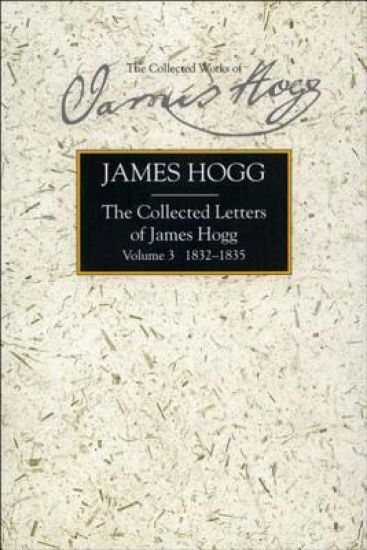
The Collected Letters of James Hogg, Volume 3, 1832-1835
The third and final volume of the first collected edition of Hogg's letters reveals his versatility in old age. In 1832 he visits London for the first time and becomes the literary lion of the season. As communications improve in the early 1830s he explores the possibility of writing for American periodicals, and deals (mostly) gracefully with the various claims made on his time as a celebrity author. The loss of old friends is compensated for by a circle of young admirers and proteges, and Hogg turns an acutely observant eye on an age of cheap periodicals and of political reform. A full editorial apparatus includes biographical notes on his chief correspondents and an overview of this phase of his life. The volume also contains an index to all three volumes of this complete edition of Hogg's letters.