Kirjojen hintavertailu. Mukana 11 627 220 kirjaa ja 12 kauppaa.

Kirjahaku

Etsi kirjoja tekijän nimen, kirjan nimen tai ISBN:n perusteella.

1000 tulosta hakusanalla James Stratton

James Dickey and the Gentle Ecstasy of Earth

James Dickey and the Gentle Ecstasy of Earth

Robert Kirschten

Louisiana State University Press
1999
nidottu
Robert Kirschten maintains that most formal analyses of Jams Dickey's poetry have been unsatisfactory or at best only partially complete. Some critics have labeled Dickey an American romantic, while others have called him a mystic, a pantheist, a comic poet.In James Dickey and the Gentle Ecstasy of Earth, Kirschten provides a fuller understanding of Dickey's lyric vision by employing what Ronald Crane calls ""multiple working hypotheses."" The first three of these, mysticism, neoplatonism, and romanticism, serve primarily to align general traits in Dickey's poetry with familiar literary traditions. The fourth of Kirschten's hypotheses, primitivism, is drawn from the field of anthropology. Kirschten shows that such anthropological concepts as magic, rites of passage, and ritual violence are vital in describing Dickey's central methods.After synthesizing the four hypotheses to establish a critical base, Kirschten investigates three crucial elements in Dickey's poetry: his lyric speakers, central narrative devices, and poetic diction. The final chapter, in a culmination of the entire investigation, offers a reading of the long poem ""The Shark's Parlor.""Kirschten's study reveals a sure grasp of the philosophical principles of literary criticism as well as a wide range of reading, especially in the literature of romanticism. This lucid examination gives us genuine new insights into the work of one of the country's premier poets.
James Hamilton of South Carolina

James Hamilton of South Carolina

Robert Tinkler

Louisiana State University Press
2004
sidottu
An esteemed planter, politician, and military leader influential in the affairs of both South Carolina and Texas, James Hamilton (1786-1857) so declined in reputation during the last twenty years of his life that his home state refused to acknowledge him when he died. Robert Tinkler's superb, first-published biography of Hamilton conveys the enormous drama, dignity, and pathos that marked Hamilton's pursuit of the greatness achieved by his prominent Revolutionary-era forebears and his subsequent profound reversal brought on by debt.While a member of Congress during the 1820s, Hamilton came to champion states' interests over a strong central national government. As governor of South Carolina, 1830-1832, he reached the pinnacle of his political and social glory when he presided over the Nullification Crisis of 1832. Hamilton's undoing began with a series of ill-advised cotton speculations that left him deeply and very publicly in arrears by 1839. He desperately sought relief - even supporting the Compromise of 1850 in hopes of monetary benefit, while alienating his old allies in the process. To his fellow southerners, Hamilton became a scourge and embarrassment as one who compromised his political beliefs because of fiscal distress.Perhaps even more than his political apostasy, Hamilton's unforgivable offense may have been to remind planters of their own struggles with chronic debt. Tinkler's extraordinary research into both Hamilton's life and the dynamics of reputation and debt in the antebellum South suggests that many contemporaries simply wished to forget Hamilton's plight so as to avoid facing their own financial reality. Possessing the weight of tragedy, James Hamilton of South Carolina documents a powerful man's achievements and the events and personal flaws that led to his fall.
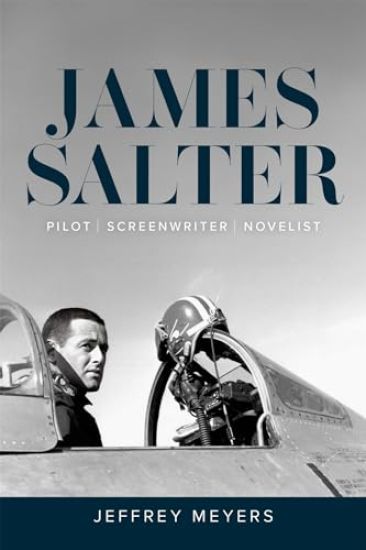
James Salter

James Salter

Jeffrey Meyers

LOUISIANA STATE UNIVERSITY PRESS
2024
sidottu
Biographer and critic Jeffrey Meyers knew the novelist James Salter (1925–2015) during the last decade of his life, visited him twice on Long Island, and received eighty letters from him. Meyers's knowledge of Salter's life provides many new insights about the personal, literary, and historical background of his work. This appreciative book, the first full-length study in twenty-six years, is intended to introduce Salter to new readers and show his achievement as a writer of novels, stories, screenplays, memoirs, and travel essays. Salter had an extraordinary range of experience as West Point graduate; fighter pilot in the Korean War; downhill skier, rock climber, and mountain climber; screenwriter and film director; connoisseur of food and wine; world traveler and sophisticated observer. In an elegant blend of literary criticism and intimate memoir, with crisp prose and an eye for telling detail, Meyers discusses Salter's family and friends; the significance of his book and chapter titles; characters' names and cultural allusions; literary influences, especially Ernest Hemingway and F. Scott Fitzgerald; development of his fictional style and techniques; awareness of weather and light; supreme delineation of sexual ecstasy; recurrent themes of war and love; strange career and late recognition. A detailed chronology tracks the key dates and events in Salter's life, and a chronological bibliography shows the development of his literary reputation. For Meyers, Salter's lyrical evocation of people and places, of luxurious decadence and the danger of death, are unsurpassed in contemporary literature. This book appears just before the centenary of Salter's birth.
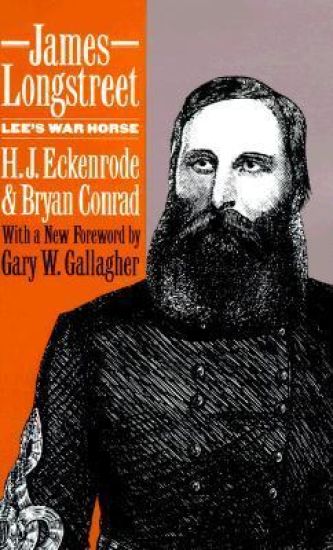
James Longstreet

James Longstreet

Conrad Bryan

The University of North Carolina Press
1999
nidottu
James Longstreet stood with Robert E. Lee and Stonewall Jackson in the great triumvirate of the Army of Northern Virginia. He fought from First Manassas through Appomattox and served as Lee's senior subordinate for most of that time. In this classic work, first published by UNC Press in 1936, H. J. Eckenrode and Bryan Conrad follow Longstreet from his leading role in the military history of the Confederacy through his controversial postwar career and eventual status as an outcast in Southern society. Though they acknowledge his considerable gifts as a corps commander and absolve him of guilt for the Gettysburg debacle, the authors also call attention to the consequences of Longstreet's unbridled ambition, extreme self-confidence, and stubbornness. |A biography of James Longstreet, from his leading role as commander of Lee's Army of Northern Virginia through his controversial postwar career. Although the authors absolve Longstreet of guilt for Gettysburg, they call attention to the consequences of his unbridled ambition and stubbornness.
James Wilson

James Wilson

Smith Charles Page

The University of North Carolina Press
2011
nidottu
James Wilson, signer of the federal constitution and one of the most influential leaders in the formative period of the republic, has been the only great figure of his age to be without a biography. As a consequence his name is virtually unknown to the general public. It was in the task of framing a sound government for the republic that Wilson, one of the principal theorists of federalism, made his greatest contribution to the future welfare and stability of his country.A UNC Press Enduring Edition -- UNC Press Enduring Editions use the latest in digital technology to make available again books from our distinguished backlist that were previously out of print. These editions are published unaltered from the original, and are presented in affordable paperback formats, bringing readers both historical and cultural value.
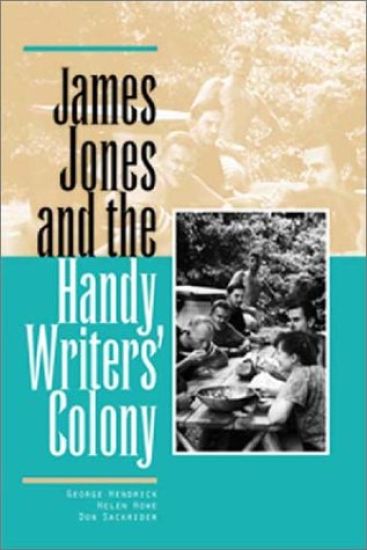
James Jones and the Handy Writers' Colony

James Jones and the Handy Writers' Colony

George Hendrick; Helen Howe; Don Sackrider

SOUTHERN ILLINOIS UNIVERSITY PRESS
2001
sidottu
This story of James Jones and the Handy Colony is a popular account of one of the most unusual writing colonies ever established in the United States.Between his Army enlistment in 1939 and the wound that sent him to a Memphis hospital in 1943, James Jones suffered the loss of both his mother and his father, a victim of suicide. Psychologically precarious, Jones drank heavily, often brawling in bars. Concerned about his erratic behavior, his aunt took Jones to meet Lowney Handy, who took virtual control of his life, securing his discharge from the army and, with her husband Harry, inviting him into their home. Lowney became Jones's writing teacher--and his lover. An aspiring but unpublished writer when she began the Handy Writers' Colony in Marshall, Illinois, Lowney Handy developed a reputation as an inspirational teacher of writing. Her husband, an oil refinery executive from nearby Robinson, supported her in this endeavor, which proved quite successful. The Handy colony achieved national attention through the success of Jones, its most celebrated member and the author of From Here to Eternity and Some Came Running.
The James Sallis Reader (Point Blank)

The James Sallis Reader (Point Blank)

James Sallis

Wildside Press
2005
pokkari
The POINT BLANK READER series is dedicated to introducing you to the finest novelists in the mystery and crime fiction genres in carefully selected volumes that each include a full length novel, selected shorter fiction and other writings by the author. JAMES SALLIS is the author of the acclaimed Lew Griffin series of detective novels, multiple collections of short fiction, essays, poems, musicology, a biography of Chester Himes, and several other books. This volume includes his novels DEATH WILL HAVE YOUR EYES and RENDERINGS, numerous short stories, poems, personal essays and articles on crime writers such as Patricia Highsmith, Gerald Kersh and others. "Ever among the most unconventional and interesting writers of crime fiction." KIRKUS REVIEWS
James Joyce and the Philosophers at Finnegans Wake

James Joyce and the Philosophers at Finnegans Wake

Donald Phillip Verene

Northwestern University Press
2016
nidottu
James Joyce and the Philosophers at Finnegans Wake explores how Joyce used the philosophers Nicholas Cusanus, Giordano Bruno, and Giambattista Vico as the basis upon which to write Finnegans Wake. Very few Joyce critics know enough about these philosophers and therefore often miss their influence on Joyce’s great work. Joyce embraces these philosophic companions to lead him through the underworld of history with all its repetitions and resurrections, oppositions and recombinations.We as philosophical readers of the Wake go along with them to meet everybody and in so doing are bound “to encounter for the millionth time the reality of experience and to forge in the smithy” of our souls the “uncreated conscience” of humankind. Verene builds his study on the basis of years of teaching Finnegans Wake side by side with Cusanus, Bruno, and Vico, and his book will serve as a guide to readers of Joyce’s novel.
James P. Johnson

James P. Johnson

Scott Brown; Robert Hilbert

Scarecrow Press
1992
sidottu
Known to serious students of jazz as the "Father of Stride Piano," James P. Johnson has only recently begun to receive the acclaim he merits. Born in New Brunswick, NJ and reared in the cultural hotbed of Harlem, Johnson spanned the ragtime era, through the roaring twenties (to which he contributed its theme song the Charleston) and into the swing era. Part I is a chronological biography, with listings of his musical revues, extended compositions, film work, and all other song and instrumental pieces; a comprehensive bibliography; and photos. Part II is an exhaustive discography.
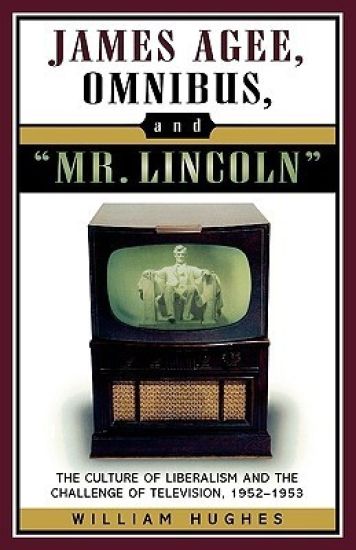
James Agee, Omnibus, and Mr. Lincoln

James Agee, Omnibus, and Mr. Lincoln

William Hughes

Scarecrow Press
2004
nidottu
In 1952 CBS, in conjunction with the Ford Foundation, launched Omnibus, a remarkable experiment in television. The objective was to raise the programming standards of an emerging medium that figured to profoundly influence American life. The centerpiece of Omnibus during its inaugural season was "Mr. Lincoln," a series of five films about the early life of our foremost political icon. James Agee, the distinguished American author, was the principal creator of "Mr. Lincoln." At the time, his scripts were hailed as 'the most beautiful writing ever done for television," and even today Agee's characterization of Lincoln remains " among the finest—perhaps the finest—film about Abraham Lincoln ever made." Regrettably, this important and sensitive work, a revealing expression of American culture at mid-century, has been consigned to the archives and has not been available to the public for many years. Author William Hughes aims to keep alive Agee's neglected masterpiece, placing "Mr. Lincoln" in the context of the period's prevailing ideology (Cold War liberalism) and conveying the institutional framework in which the work originated. In addition, Hughes takes into account Agee's personal experiences, his social and political views, and his related writings (for and about film), all of which came into play when he reworked the Lincoln legend for the television age. Based on extensive archive research and an interview with Norman Lloyd, who directed the five films, this book fully documents the cultural and historical importance of "Mr. Lincoln."
James M. Cain

James M. Cain

David Madden; Kristopher Mecholsky

Scarecrow Press
2011
sidottu
James M. Cain wrote some of the grittiest novels in American literature, including such classics as The Postman Always Rings Twice, Double Indemnity, and Mildred Pierce. James M. Cain: Hard-Boiled Mythmaker is a critical overview of the author's life, work, and legacy. An updated and expanded edition of two of David Madden's scholarly works on Cain, this new book improves upon the previous works by collecting the most essential writing on Cain by Madden into one volume. In addition to melding existing material, this work contains updated and new material, including fresh commentaries on later books, such as Rainbow's End, Cloud Nine, and The Enchanted Isle, as well as later film adaptations, including Butterfly. It also responds to 40 years' worth of criticism on Cain and reevaluates his influence. Providing an overview of all of Cain's fiction, including an analysis of the major themes of his entire literary career, the book also describes Cain's impact on and importance in 20th-century culture, film in particular. In addition to a biographical summary and thematic outline of Cain's nearly 50-year career, Madden and Mecholsky examine how Cain's works explore the nightmare consequences of the persistent American dream. Finally, Madden and Mecholsky consider Cain's technical innovations of the novel and survey the major film adaptations of Cain's novels. With its significant in-depth analysis and a foreword by Edgar-award winning author Max Allan Collins, this volume will be of interest to Cain scholars as well as anyone interested in 20th century American literature and film.
James Joyce: A Critical Introduction

James Joyce: A Critical Introduction

Harry Levin

NEW DIRECTIONS PUBLISHING CORPORATION
1960
nidottu
Because Harry Levin's view is large, as opposed to the many necessary exegeses and close textual studies, he leads the reader easily into the delights to be found in Joyce, from the comparatively simple prose of Dubliners, through Ulysses and into the complexities of Finnegans Wake. The insight and brilliance of this "critical introduction," first published by New Directions in 1941, make it as rewarding for the expert as the student. For this revised edition, Mr. Levin, who is Irving Babbitt Professor of Comparative Literature at Harvard, has made revisions and added a new preface and a long "postscript" which he calls "Revising Joyce." He examines the works that have come to light in the last few years and some of the important later biographical writings about Joyce.
The Love Poems of James Laughlin

The Love Poems of James Laughlin

James Laughlin

New Directions Publishing Corporation
1998
nidottu
As a poet, the late James Laughlin (1914-1997) was perhaps best known for his love lyrics. Marjorie Perloff has written, "Who else . . . writes such bittersweet, ironic, rueful, erotic, toughminded, witty love poems, poems that run the gamut from ecstasy to loss?" Andrei Codrescu wrote, "Under deep cover as Godfather of Modernism, James Laughlin has secretly raised and made himself into the Poetry Chieftain of Sane Eros, the Catullus of fin-de-siecle America." This small paperback edition of his finest love poems is a perfect memorial to one of the twentieth century's most important men of letters.
The Collected Poems of James Laughlin

The Collected Poems of James Laughlin

James Laughlin

New Directions Publishing Corporation
2014
sidottu
Published in his centenary year, The Collected Poems of James Laughlin encompasses in one majestic volume all of the poetry (with the exception of his verse memoirs, Byways) written by the publisher-poet. Witty, technically brilliant, slyly satiric and heartbreakingly poignant about the vagaries of love, Laughlin charted his own poetic course for over six decades prompting astonishment and joy in those fellow poets who had discovered his unique genius. As Charles Simic enthused, “The secret is out, the publisher of Williams and Pound is himself a great lyric poet.” Compiled and edited by Peter Glassgold, Laughlin’s chosen poetry editor for the last two decades, The Collected Poems of James Laughlin includes more than 1250 poems from the early lyrics written in Laughlin’s signature “typewriter” metric, to the “long-line” poems of his later years, to the playful antics of his dopplegänger Hiram Handspring, to the trenchant commentary of the five-line pentastichs that occupied his last days. Despite all the awards and accolades that James Laughlin received for his publishing achievements and service to literature, the honor that pleased him most was his election to the American Academy of Arts and Letters (1996)—as a poet.
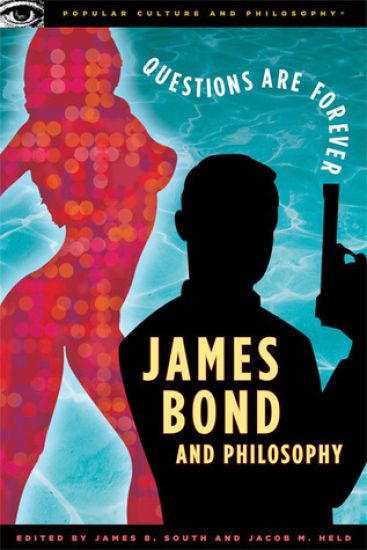
James Bond and Philosophy

James Bond and Philosophy

Open Court Publishing Co ,U.S.
2006
pokkari
"A collection of philosophical essays about the fictional world of James Bond as seen in Ian Fleming's novels and the ongoing film series. Issues addressed include existentialism and the good life, crime and punishment, gender politics, the cold war and nuclear proliferation, and human interrelation with technology"--Provided by publisher.