Kirjojen hintavertailu. Mukana 11 627 220 kirjaa ja 12 kauppaa.

Kirjahaku

Etsi kirjoja tekijän nimen, kirjan nimen tai ISBN:n perusteella.

1000 tulosta hakusanalla Janel Rodriguez

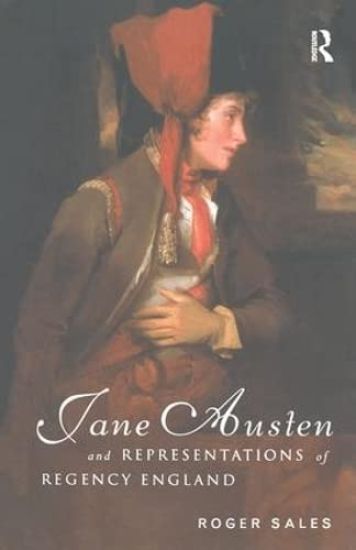
Jane Austen and Representations of Regency England
In Jane Austen and Representations of Regency England, Roger Sales looks at Jane Austen's entire oeuve, and views her historically as a Regency writer voicing concerns on the condition of England. Examining Austen's literary works; her letters - in the context of those of other Regency women; as well as contemporary texts such as television adaptations of her work, Jane Austen and Representations of Regency England reconstructs the breadth of Jane Austen's writing. It also examines: * her representations of dandyism and masculine identities * the events of the Regency crisis of 1810-12 * the way in which Austen engaged in topical debates such as healthcare in both Emma and Persuasion.
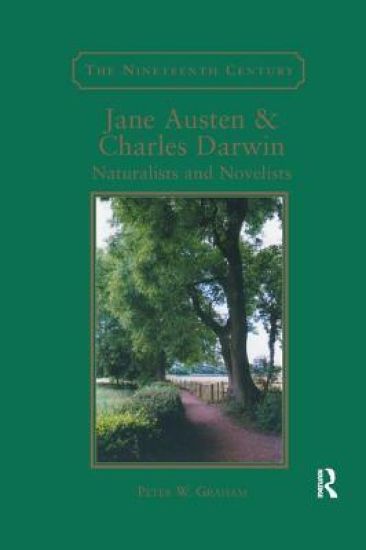
Jane Austen & Charles Darwin

Jane Austen & Charles Darwin

Peter W. Graham

Routledge
2016
nidottu
Are Jane Austen and Charles Darwin the two great English empiricists of the nineteenth century? Peter W. Graham poses this question as he brings these two icons of nineteenth-century British culture into intellectual conversation in his provocative new book. Graham shows that while the one is generally termed a naturalist (Darwin's preferred term for himself) and the other a novelist, these characterizations are at least partially interchangeable, as each author possessed skills that would serve well in either arena. Both Austen and Darwin are naturalists who look with a sharp, cold eye at the concrete particulars of the world around them. Both are in certain senses novelists who weave densely particularized and convincingly grounded narratives that convey their personal observations and perceptions to wide readerships. When taken seriously, the words and works of Austen and Darwin encourage their readers to look closely at the social and natural worlds around them and form opinions based on individual judgment rather than on transmitted opinion. Graham's four interlocked essays begin by situating Austen and Darwin in the English empirical tradition and focusing on the uncanny similarities in the two writers' respective circumstances and preoccupations. Both Austen and Darwin were fascinated by sibling relations. Both were acute observers and analysts of courtship rituals. Both understood constant change as the way of the world, whether the microcosm under consideration is geological, biological, social, or literary. Both grasped the importance of scale in making observations. Both discerned the connection between minute, particular causes and vast, general effects. Employing the trenchant analytical talents associated with his subjects and informed by a wealth of historical and biographical detail and the best of recent work by historians of science, Graham has given us a new entree into Austen's and Darwin's writings.
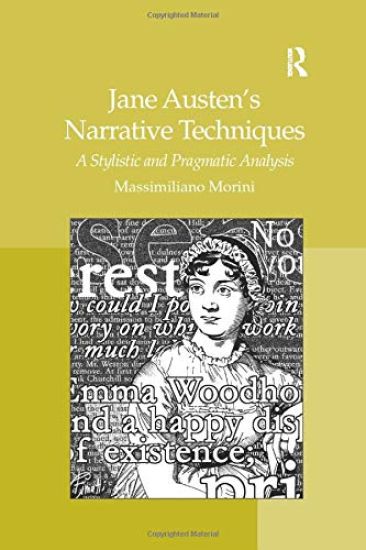
Jane Austen's Narrative Techniques

Jane Austen's Narrative Techniques

Massimiliano Morini

Routledge
2016
nidottu
Combining linguistic theory with analytical concepts and literary interpretation and appreciation, Jane Austen's Narrative Techniques traces the creation and development of Austen's narrative techniques. Massimiliano Morini employs the tools developed by post-war linguistics and above all pragmatics, the study of the ways in which speakers communicate meaning, since Austen's 'wordings' can only be interpreted within the fictional context of character-character, narrator-character, narrator-reader interaction. Examining a wide range of Austen texts, from her unpublished works through masterpieces like Mansfield Park and Emma, Morini discusses familiar Austen themes, using linguistic means to shed fresh light on the question of point of view in Austen and on Austen's much-admired brilliance in creating lively and plausible dialogue. Accessibly written and informed by the latest work in linguistic and literary studies, Jane Austen's Narrative Techniques offers Austen specialists a new avenue for understanding her narrative techniques and serves as a case study for scholars and students of pragmatics and applied linguistics.
Jane Addams on Inequality and Political Friendship
In this book, Wynne Walker Moskop addresses the practical and theoretical problem of how unequal political friendships evolve toward arrangements the parties consider reciprocal and just, a problem neglected by scholars of democracy who associate reciprocity and justice only with equal parties. Jane Addams insisted that Hull House was not a charity with philanthropic aspirations; rather it had to bring “two classes” to a shared purpose and more egalitarian relation. The problem was, and still is, how?Drawing on several bodies of scholarship—including Addams’s writings, secondary works about her collaborations, literature on Aristotelian political friendship, and feminist scholarship on the global migration of care workers—Moskop shows the importance of Addams’s practices to the continuing relevance of unequal economic relations for shaping political friendship.Contributing to a lively conversation about Addams’s work as a pragmatist thinker and social reformer that began three decades ago, Jane Addams on Inequality and Political Friendship is an invaluable resource to students of democratic theory, feminist political theory and philosophy, and American pragmatism. It illuminates the importance of overlooked conditions for friendship and justice in unequal relations, given people’s ongoing subordination because of race, class, gender, and citizenship status in the U.S. and transnationally.
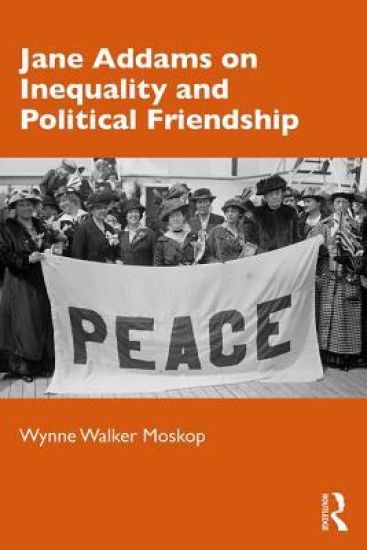
Jane Addams on Inequality and Political Friendship
In this book, Wynne Walker Moskop addresses the practical and theoretical problem of how unequal political friendships evolve toward arrangements the parties consider reciprocal and just, a problem neglected by scholars of democracy who associate reciprocity and justice only with equal parties. Jane Addams insisted that Hull House was not a charity with philanthropic aspirations; rather it had to bring “two classes” to a shared purpose and more egalitarian relation. The problem was, and still is, how?Drawing on several bodies of scholarship—including Addams’s writings, secondary works about her collaborations, literature on Aristotelian political friendship, and feminist scholarship on the global migration of care workers—Moskop shows the importance of Addams’s practices to the continuing relevance of unequal economic relations for shaping political friendship.Contributing to a lively conversation about Addams’s work as a pragmatist thinker and social reformer that began three decades ago, Jane Addams on Inequality and Political Friendship is an invaluable resource to students of democratic theory, feminist political theory and philosophy, and American pragmatism. It illuminates the importance of overlooked conditions for friendship and justice in unequal relations, given people’s ongoing subordination because of race, class, gender, and citizenship status in the U.S. and transnationally.
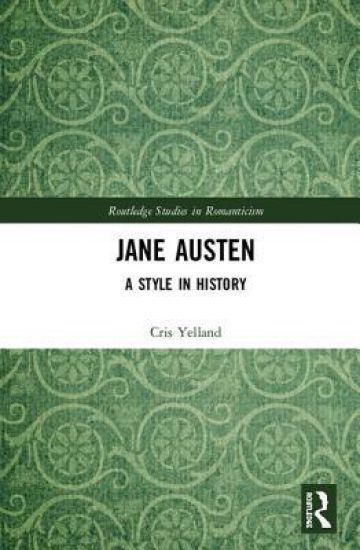
Jane Austen

Jane Austen

Cris Yelland

Routledge
2018
sidottu
From 1809 until just before her death, Jane Austen lived in a small, all-female household at Chawton, where reading aloud was the evening's entertainment and a crucial factor in the way Austen formed and modified her writing. This book looks in detail at Jane Austen's style. It discusses her characteristic abstract vocabulary, her adaptations of Johnsonian syntax and how she came to make her most important contribution to the technique of fiction, free indirect discourse. The book draws extensively on historical sources, especially the work of writers like Johnson, Hugh Blair and Thomas Sheridan, and analyses how Austen negotiated her path between the fundamentally masculine concerns of eighteenth-century prescriptivists and her own situation of a female writer reading her work aloud to a female audience.
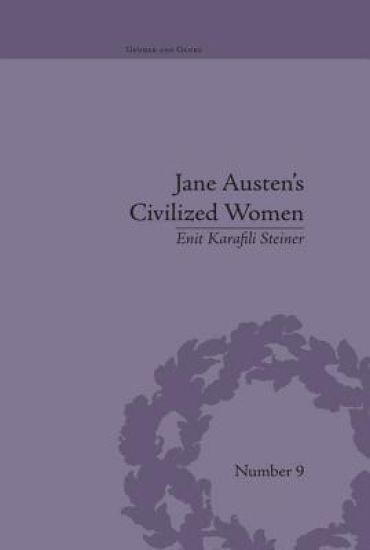
Jane Austen's Civilized Women

Jane Austen's Civilized Women

Enit Karafili Steiner

Routledge
2016
nidottu
Jane Austen’s six complete novels and her juvenilia are examined in the context of civil society and gender. Steiner’s study uses a variety of contexts to appraise Austen’s work: Scottish Enlightenment theories of societal development, early-Romantic discourses on gender roles, modern sociological theories on the civilizing process.