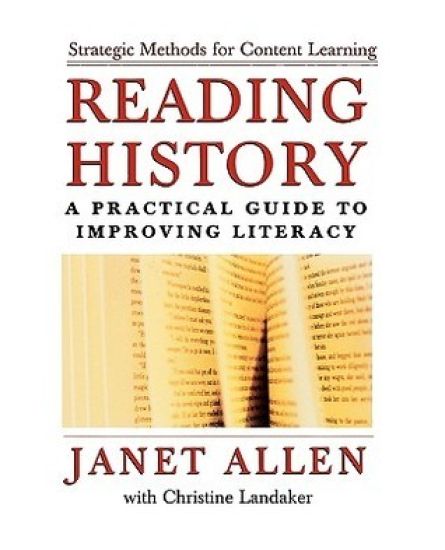
Having trouble interesting your students in history or the history textbook? Concerned about the ability of your students to actually read the textbook? Learn ways to tie reading strategies to the learning of history, and discover sources that will help history come alive for your students. Nationally known literacy advocate Janet Allen discusses strategies for teaching nonfiction reading using Joy Hakim's award winning A History of US series as the center of a blossoming campaign among educators to integrate literacy and history. Classroom tested at a variety of grade levels, real student samples are interspersed throughout the book providing clearer understanding of the strategies in action.
Janet Abu-Lughod for the first time weaves together detailed narratives of major riots with the changing contexts in which they have occurred to show how urban space, political regimes, and economic conditions--not simply an abstract "race conflict"--all structure the nature and extent of urban rebellions. New York's race riots, for instance, have been shorter, more confined, less destructive and less lethal, than those in Chicago and Los Angeles. Abu-Lughod attributes these differences to social diversity, lack of segregation, and a political system that responds to grievances. This book compares six major race riots that occurred in the three largest American metropolitan centers over the course of the twentieth century: in Chicago in 1919 and in 1968; in New York in 1935/1943 and in 1964; and in Los Angeles in 1965 and 1992. Abu-Lughod draws upon archival research, primary and secondary sources, and field work to reconstruct events--especially for the 1964 Harlem riot and Chicago's 1968 riots where no single study currently exists. By focusing on the mechanisms of exclusion and marginalization of African Americans and successful common trends in fostering racial harmony in each city, this work points the way towards alleviating existing and potentially mounting ethnic and racial tensions brought on by globally influenced changes in the economy and demographics of major American cities. Sadly, the author concludes that outbreaks of racial violence may again occur in major urban centers, and foresees a "tectonic" shift from white/black violence to ethnic competition and conflict between poor blacks and incoming Latinos, especially along shared social and physical boundaries.
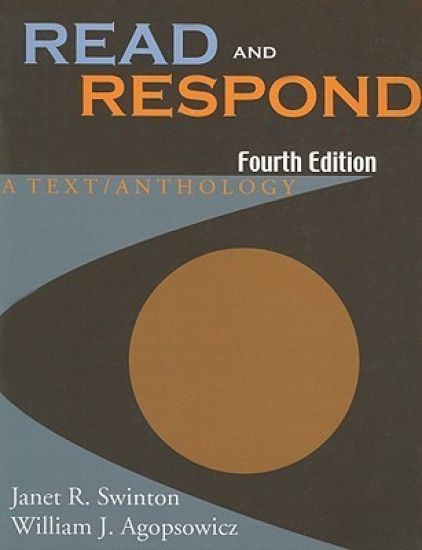
The Fourth Edition of this popular combination text/anthology integrates reading and writing skills. The approach of Read and Respond is unique: students are assessed for comprehension through summary-writing rather than objective testing. After summarizing an article, students write a personal response. Because the summary and personal response are written in the students' own words, the instructor gains valuable insight into their vocabulary and writing ability. As a result, students develop proficiency in reading, writing, and critical thinking. The new edition retains the best features of the previous editions. It integrates reading and writing, offers step-by-step progression, includes models, exercises, and activities in each chapter, and provides additional readings for practice. New features include the following: * A new, improved two-color format, plus overview maps of each chapter. * A new introductory chapter discussing the reading process and main types of reading tasks. * A new chapter offering a wide variety of methods to improve both general and specialized vocabulary. * The addition of content area readings and/or excerpts from a college textbook in every chapter. * New articles for student reading practice in a new chapter entitled "Additional Readings." * An increased emphasis and clarification of student goals, outcomes, and benefits. * The addition of self-check review questions at the end of each chapter to help students review key concepts and consider personal applications of those concepts. The Fourth Edition is complemented by a revised Instructor's Manual, which provides an answer key for all activities, proposed syllabi for a quarter and for a semester, as well as teaching suggestions and strategies.
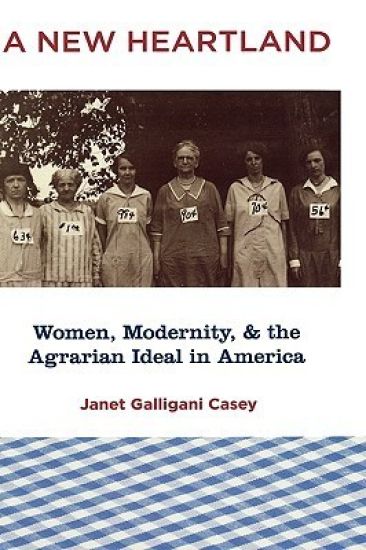
A New Heartland investigates American rurality and modernity as mutually sustaining concepts, and centres on women's special engagement with those concepts. Among its central questions are the following: How has a critical emphasis on the modern-urban imaginary obscured rurality's importance to the American cultural consciousness? In what ways did received attitudes about rurality and nostalgia enable pronounced links between women and the rural? How did actual changes in agriculture reshape interpretive connections between the farm and modernity, and between the farm and women? Finally, how did rurality - traditionally a locus for conservatism - serve as a site through which to challenge orthodox ideas about gender, class, race, commodity consumption, and women's reproductive rights? This study is distinguished by an interdisciplinary approach that considers idea(l)s of women and rurality across a broad field of discourses and representational arenas, including social theory, periodical literature, literary criticism, photography, and, most especially, women's rural fiction ("low" as well as "high"). It touches on such diverse subjects as eugenics, advertising, the economy of literary prizes, and the role of the camera in defining women as modern. It also relies on substantial archival research, and explores at length an underrecognized periodical, The Farmer's Wife, which was the single nationally distributed farm journal for women in the twentieth century. Ultimately, the book's aim is to articulate an alternative mode of American modernism that had signal meaning and appeal for women, and to show how that mode clearly responded to prevalent attitudes in the culture at large.
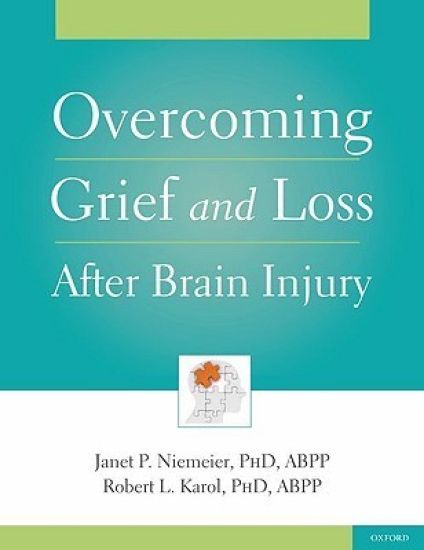
Overcoming Grief and Loss after Brain Injury is a practical, comprehensive, and simply-written book that provides foundational brain injury information and coping resources for persons recovering from and living with the disabilities that accompany this devastating injury. The book guides the reader toward self-assessment of their own concerns related to common post injury domains of impairment. Following help in identifying individual injury-related problems, the book provides clients with instructions and practice in use of a multitude of evidence-based compensatory strategies and coping skills. Clients can use the book to improve their cognitive, emotional, and functional status after brain injury. The book is written to assist patients, even if they are not able to work with a therapist or counselor. The supportive and therapeutic components of the book include the normalizing of brain injury symptoms and emotional responses, supported self-assessment, stress and emotional management techniques, compensatory strategies for a wide range of typical post injury deficits, links to community resources, and ideas for returning to work.
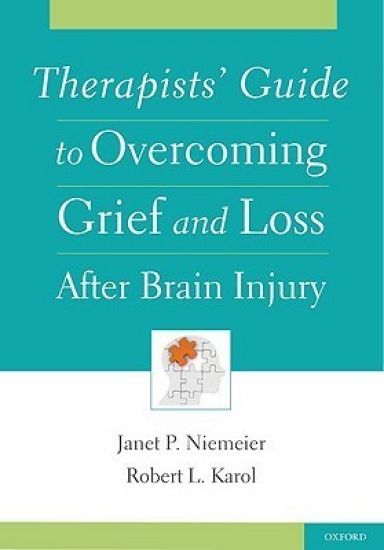
Therapists' Guide to Overcoming Grief and Loss after Brain Injury is written as a neurobehavioral and cognitive intervention manual for clinicians who counsel persons with brain injury. The Therapist's Guide provides step-by-step protocols, using the content of the patient workbook Overcoming Grief and Loss after Brain Injury. Each of the 9 Lessons can be used as a basis for therapy appointments with consumers. Most mental health clinicians do not fully understand the special learning needs of this client population or how to modify the usual psychotherapy or counseling process to accommodate their unique impairments and allow them to benefit. The Therapists' Guide provides the structure, grounded in the current brain injury literature that allows the clinician to teach and guide the client effectively.
Just Practice: A Social Justice Approach to Social Work provides a foundation for critical and creative social work that integrates theory, history, ethics, skills, and rights to respond to the complex terrain of 21st century social work. Just Practice puts the field of social work's expressed commitment to social justice at center stage with a framework that builds upon five key concepts: meaning, context, power, history, and possibility. How do we give meaning to the experiences and conditions that shape our lives? What are the contexts in which those experiences and conditions occur? How do structures and relations of power shape people's lives and the practice of social work? How might a historical perspective help us to grasp the ways in which struggles over meaning and power have played out and to better appreciate the human consequences of those struggles? Taken together, these concepts provide a guide for integrative social work that bridges direct practice and community building. The text prepares readers with the theoretical knowledge and practice skills to address the complex challenges of contemporary social work from direct practice with individuals and families, to group work, organizational and community change, and policy analysis and advocacy. Each chapter includes learning activities, reflection moments, practice examples, and the stories and voices of practitioners and service users to engage students as critical thinkers and practitioners. The author encourages teachers and students alike to take risks, move from safe, familiar, pedagogical spaces and practices, challenge assumptions, and embrace uncertainty.
Music connects the lives of students, teachers, and school communities in many ways. Music is also integrally related to other art forms, history, culture, and other subjects commonly taught in schools. These relationships deserve critical attention, particularly as educators seek to reorient their curricula and pedagogy toward the pressing aims of social justice. Seeking Connections encourages interdisciplinarity as a capacity to be exercised-an orientation or habit of mind that teachers and students can develop. This capacity depends upon viewing music as permeable, recognizing that music influences related ways of knowing, just as related ways of knowing influence music. This book invites teachers to create educational experiences that engage students in exploring an expansive relationship with music. With imaginative examples drawn from diverse musical genres, visual art, poetry, and historical cases, Seeking Connections provides thoughtful principles, models, and instructional strategies to deepen students' understandings of musical works and inspire interdisciplinary inquiry throughout elementary and secondary music programs, as well as settings in music teacher education and professional development.
Music connects the lives of students, teachers, and school communities in many ways. Music is also integrally related to other art forms, history, culture, and other subjects commonly taught in schools. These relationships deserve critical attention, particularly as educators seek to reorient their curricula and pedagogy toward the pressing aims of social justice. Seeking Connections encourages interdisciplinarity as a capacity to be exercised-an orientation or habit of mind that teachers and students can develop. This capacity depends upon viewing music as permeable, recognizing that music influences related ways of knowing, just as related ways of knowing influence music. This book invites teachers to create educational experiences that engage students in exploring an expansive relationship with music. With imaginative examples drawn from diverse musical genres, visual art, poetry, and historical cases, Seeking Connections provides thoughtful principles, models, and instructional strategies to deepen students' understandings of musical works and inspire interdisciplinary inquiry throughout elementary and secondary music programs, as well as settings in music teacher education and professional development.
Imagine someone who attended a Beethoven Symphony in 1805. Now imagine a listener attending the same symphony today. Both create meanings by relying on previous experiences, but no one assumes they leave their concerts with the same experience. Yet, when analyzing music, we often rely on "ideal listeners," presuming all have the same experience. Who Listens? Experience, Cognition, and Musical Meaning is a fascinating look into the importance of who is listening and how. Author Janet Bourne presents a new set of cognitively-based tools for analyzing music from the perspective of the listener. This book shows how listening is an active and creative act, and that many people make sense of music largely by drawing on their previous experiences, particularly experiences with music. According to research in cognitive science, listeners use a musical form of analogy and categorization to relate what they previously heard to what they hear in the moment. To demonstrate that listeners draw on this experience to perceive meaning when listening, Bourne combines music analytic tools, empirical psychological methods, and reception history. Drawing on analogy and categorization, Bourne has designed cognitively-based tools for analyzing music from the perspective of the listener to create different interpretations for different listeners. While Part 1 outlines the analytical tools, Part 2 analyzes pieces by Beethoven from the perspective of three groups of listeners: Beethoven's early 19th-century contemporaries; late 20th- and 21st-century musicians and music scholars; and 21st-century film-goers. In so doing, this book illuminates how musical meanings change when considering different listeners' backgrounds and ways of listening, giving voice to overlooked reception histories and musical meanings.
Imagine someone who attended a Beethoven Symphony in 1805. Now imagine a listener attending the same symphony today. Both create meanings by relying on previous experiences, but no one assumes they leave their concerts with the same experience. Yet, when analyzing music, we often rely on "ideal listeners," presuming all have the same experience. Who Listens? Experience, Cognition, and Musical Meaning is a fascinating look into the importance of who is listening and how. Author Janet Bourne presents a new set of cognitively-based tools for analyzing music from the perspective of the listener. This book shows how listening is an active and creative act, and that many people make sense of music largely by drawing on their previous experiences, particularly experiences with music. According to research in cognitive science, listeners use a musical form of analogy and categorization to relate what they previously heard to what they hear in the moment. To demonstrate that listeners draw on this experience to perceive meaning when listening, Bourne combines music analytic tools, empirical psychological methods, and reception history. Drawing on analogy and categorization, Bourne has designed cognitively-based tools for analyzing music from the perspective of the listener to create different interpretations for different listeners. While Part 1 outlines the analytical tools, Part 2 analyzes pieces by Beethoven from the perspective of three groups of listeners: Beethoven's early 19th-century contemporaries; late 20th- and 21st-century musicians and music scholars; and 21st-century film-goers. In so doing, this book illuminates how musical meanings change when considering different listeners' backgrounds and ways of listening, giving voice to overlooked reception histories and musical meanings.
The language used by American military personnel can be intense and confrontational, yet the relationship between language and military violence is rarely examined in depth. This groundbreaking book offers a unique perspective on how language facilitates the work of combat infantry-the state's killable killers. Through vivid ethnographic research, Janet McIntosh meticulously traces the nuances of military “kill talk” as it permeates the vast nervous system of the military, from the first exposure to yelling in Marine Corps basic training to the dark humor and nihilistic expressions found in war zones in Vietnam and the Middle East. McIntosh reveals how military trainers use language to deindividuate, toughen, and masculinize recruits, while infantry soldiers develop distinct linguistic repertoires and attitudes to suppress empathy, dehumanize and racialize the enemy, cope with loss, and dwell in a moral gray zone. Kill Talk also addresses national debates over language use in a diverse world, exploring tensions between calls for sensitivity and restraint in military speech and the perception that these can threaten national security. The book highlights the contradictions between the rhetoric of military honor and moral integrity and the harsh, sometimes depraved, language of combatants, suggesting that these paradoxes enable military violence yet contribute to moral injury. It concludes with an exploration of veteran poets and artists who have found innovative ways to use language and other forms of expression to critique military institutions and begin the process of demilitarizing their psyches.
The language used by American military personnel can be intense and confrontational, yet the relationship between language and military violence is rarely examined in depth. This groundbreaking book offers a unique perspective on how language facilitates the work of combat infantry-the state's killable killers. Through vivid ethnographic research, Janet McIntosh meticulously traces the nuances of military “kill talk” as it permeates the vast nervous system of the military, from the first exposure to yelling in Marine Corps basic training to the dark humor and nihilistic expressions found in war zones in Vietnam and the Middle East. McIntosh reveals how military trainers use language to deindividuate, toughen, and masculinize recruits, while infantry soldiers develop distinct linguistic repertoires and attitudes to suppress empathy, dehumanize and racialize the enemy, cope with loss, and dwell in a moral gray zone. Kill Talk also addresses national debates over language use in a diverse world, exploring tensions between calls for sensitivity and restraint in military speech and the perception that these can threaten national security. The book highlights the contradictions between the rhetoric of military honor and moral integrity and the harsh, sometimes depraved, language of combatants, suggesting that these paradoxes enable military violence yet contribute to moral injury. It concludes with an exploration of veteran poets and artists who have found innovative ways to use language and other forms of expression to critique military institutions and begin the process of demilitarizing their psyches.
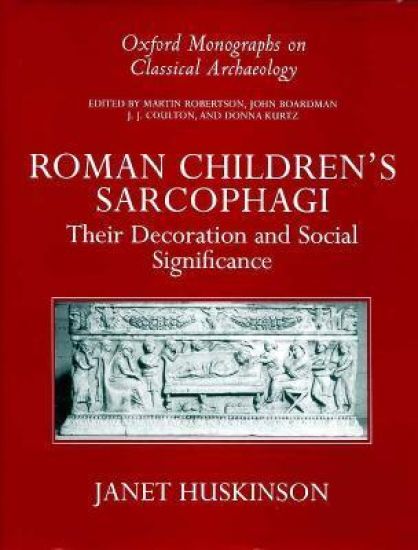
This book is the first major study of the themes which were used in the decoration of sarcophagi made for children in Rome and Ostia from the late first to early fourth century AD. It provides a selective catalogue of examples of each type, followed by discussion of how these fit into the general pattern. This allows certain themes to be identified which are virtually exclusive to childre's sarcophagi. The second part of the book discusses the choice of subjects and how these reflect the standing of children in Roman society: to what extent, for instance, was childhood shown as a differentiated stage of life, or was it dominated by aspirations of the adult world? How is the death of a child treated in art? There are separate sections on the role of workshops and customers in the development of child-specific imagery, and on material from the early Christian era, providing some interesting differences resulting from differing attitudes towards children and beliefs about life and death.
`I have little but praise for this study. The crisp insights of the conclusion are symptomatic of its lucidity and sophistication.' British Journal of Aesthetics
The Issue of how assets are distributed after death is of increasing significance for larger numbers of people. In this original and path-breaking study, the authors examine the principle means through which people plan to dispose of their assets after death: by the use of wills. By offering an empirical study of 800 English wills, the book identifies significant patterns of bequeathing among a cross-section of the population, and not just among those sections of society who enjoy substantial wealth. This leads us to focus upon what wills tell us about the family and kin relationships, and upon how people transmit their assets across generations: to their families and to institutions and organizations.
Theft, deception, bribery, rogue trading and money laundering present massive and apparently insuperable problems for governments worldwide. On a national and international scale, these types of activities may have social, economic and political repercussions. This new book is primarily concerned with the impact of these activities upon private individuals. The text analyses the position of the victim, the fraudster, recipients of property and accessories. The focus is upon the civil law aspects of fraud and the increasing significance of money laundering legislation and the law of human rights. The main theme of this book is an examination of the extent to which fraudulent activity triggers special rules which are exceptions to the general principles of civil law. There is the further question of the extent to which theft and fraud affect transactions which are interlinked. Policy issues are weighed in the balance, such as the protection of property rights against the need to ensure the free circulation of goods and the security of good faith purchase, and the demand for certainty in the law against the need to deter fraud.
Fathers, sons, brothers, kings. Does the predominantly masculine symbolism of the Biblical writings exclude women or overlook the riches of their spiritual life? If Christ is 'the second Adam' and the one on whom all Christian life must be patterned, then what about Eve? This book from a leading scholar of religious language and feminism opens up the Bible's imagery for sex, gender, and kinship and does so by discussing its place in the central teachings of Christian theology: the doctrine of God and spirituality, Imago Dei and anthropology, Creation, Christology and the Cross, the Trinity, and eschatology.
Fathers, sons, brothers, kings. Does the predominantly masculine symbolism of the Biblical writings exclude women or overlook the riches of their spiritual life? If Christ is 'the second Adam' and the one on whom all Christian life must be patterned, then what about Eve? This book from a leading scholar of religious language and feminism opens up the Bible's imagery for sex, gender, and kinship and does so by discussing its place in the central teachings of Christian theology: the doctrine of God and spirituality, Imago Dei and anthropology, Creation, Christology and the Cross, the Trinity, and eschatology.