Kirjojen hintavertailu. Mukana 12 016 292 kirjaa ja 12 kauppaa.

Kirjahaku

Etsi kirjoja tekijän nimen, kirjan nimen tai ISBN:n perusteella.

1000 tulosta hakusanalla Johan Reftel

Islam in Post-Soviet Uzbekistan

Islam in Post-Soviet Uzbekistan

Johan Rasanayagam

Cambridge University Press
2010
sidottu
The Uzbekistan government has been criticized for its brutal suppression of its Muslim population. This book, which is based on the author's intimate acquaintance with the region and several years of ethnographic research, is about how Muslims in this part of the world negotiate their religious practices despite the restraints of a stifling authoritarian regime. Fascinatingly, the book also shows how the restrictive atmosphere has actually helped shape the moral context of people's lives, and how understandings of what it means to be a Muslim emerge creatively out of lived experience.
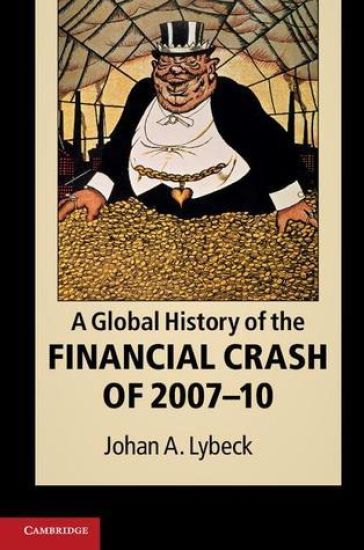
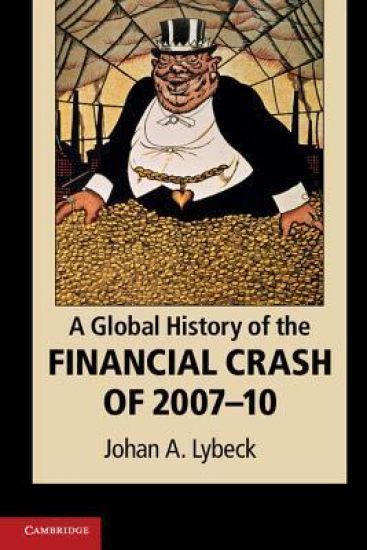
A Global History of the Financial Crash of 2007–10

A Global History of the Financial Crash of 2007–10

Johan A. Lybeck

Cambridge University Press
2011
sidottu
We have just experienced the worst financial crash the world has seen since the Great Depression of the 1930s. While real economies in general did not crash as they did in the 1930s, the financial parts of the economy certainly did, or, at least, came very close to doing so. Hundreds of banks in the United States and Europe have been closed by their supervisory authorities, forcibly merged with stronger partners, nationalized or recapitalized with the tax payers' money. Banks and insurance companies had, by mid 2010, already written off some 2000 billion dollars in credit write-downs on loans and securities. In this book, Johan Lybeck draws on his experience as both an academic economist and a professional banker to present a detailed yet non-technical analysis of the crash. He describes how the crisis began in early 2007, explains why it happened and shows how it compares to earlier financial crises.
Water Resilience for Human Prosperity

Water Resilience for Human Prosperity

Johan Rockström; Malin Falkenmark; Carl Folke; Mats Lannerstad; Jennie Barron; Elin Enfors; Line Gordon; Jens Heinke; Holger Hoff; Claudia Pahl-Wostl

Cambridge University Press
2014
sidottu
The world's human population now constitutes the largest driving force of changes to the biosphere. Emerging water challenges require new ideas for governance and management of water resources in the context of rapid global change. This book presents a new approach to water resources, addressing global sustainability and focusing on socio-ecological resilience to changes. Topics covered include the risks of unexpected change, human impacts and dependence on global water, the prospects for feeding the world's population by 2050, and a pathway for the future. The book's innovative and integrated approach links green and blue freshwater with terrestrial and aquatic ecosystem functions and use. It also links changes arising from land-use alteration with the impacts of those changes on social-ecological systems and ecosystem services. This is an important, state-of-the-art resource for academic researchers and water resource professionals, and a key reference for graduate students studying water resource governance and management.
Quality Standards, Value Chains, and International Development

Quality Standards, Value Chains, and International Development

Johan Swinnen; Koen Deconinck; Thijs Vandemoortele; Anneleen Vandeplas

Cambridge University Press
2015
sidottu
Over the past decades, the world has witnessed an unprecedented growth in global value chains, propelled by increasingly demanding quality standards. These trends lead to concerns about the impact of value chains on development and poverty and about the possible protectionist nature of quality standards in rich countries. This book offers the first integrated theoretical analysis of the economic and political factors which determine the level of quality standards, as well as their economic effects along the value chain. Using realistic assumptions motivated by empirical research, the theoretical framework in this book makes it possible to study the efficiency effects as well as the distributional consequences of one of the most striking evolutions affecting global trade and development today.
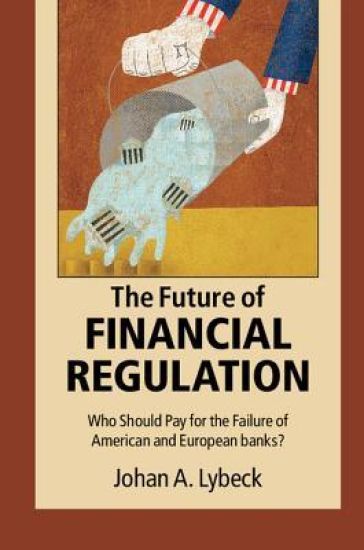
The Future of Financial Regulation

The Future of Financial Regulation

Johan A. Lybeck

Cambridge University Press
2016
sidottu
A number of changes have been made to the supervision and regulation of banks as a result of the recent financial meltdown. Some are for the better, such as the Basel III rules for increasing the quality and quantity of capital in banks, but legal changes on both sides of the Atlantic now make it much more difficult to resolve failing banks by means of taxpayer funded bail-outs and could hinder bank resolution in future financial crises. In this book, Johan A. Lybeck uses case studies from Europe and the United States to examine and grade a number of bank resolutions in the last financial crisis and establish which were successful, which failed, and why. Using in-depth analysis of recent legislation, he explains how a bank resolution can be successful, and emphasizes the need for taxpayer-funded bail-outs to create a viable banking system that will promote economic and financial stability.
Logical Dynamics of Information and Interaction

Logical Dynamics of Information and Interaction

Johan van Benthem

Cambridge University Press
2014
pokkari
This book develops a view of logic as a theory of information-driven agency and intelligent interaction between many agents - with conversation, argumentation and games as guiding examples. It provides one uniform account of dynamic logics for acts of inference, observation, questions and communication, that can handle both update of knowledge and revision of beliefs. It then extends the dynamic style of analysis to include changing preferences and goals, temporal processes, group action and strategic interaction in games. Throughout, the book develops a mathematical theory unifying all these systems, and positioning them at the interface of logic, philosophy, computer science and game theory. A series of further chapters explores repercussions of the 'dynamic stance' for these areas, as well as cognitive science.
The Future of Financial Regulation

The Future of Financial Regulation

Johan A. Lybeck

Cambridge University Press
2016
pokkari
A number of changes have been made to the supervision and regulation of banks as a result of the recent financial meltdown. Some are for the better, such as the Basel III rules for increasing the quality and quantity of capital in banks, but legal changes on both sides of the Atlantic now make it much more difficult to resolve failing banks by means of taxpayer funded bail-outs and could hinder bank resolution in future financial crises. In this book, Johan A. Lybeck uses case studies from Europe and the United States to examine and grade a number of bank resolutions in the last financial crisis and establish which were successful, which failed, and why. Using in-depth analysis of recent legislation, he explains how a bank resolution can be successful, and emphasizes the need for taxpayer-funded bail-outs to create a viable banking system that will promote economic and financial stability.
A Global History of the Financial Crash of 2007–10

A Global History of the Financial Crash of 2007–10

Johan A. Lybeck

Cambridge University Press
2011
pokkari
We have just experienced the worst financial crash the world has seen since the Great Depression of the 1930s. While real economies in general did not crash as they did in the 1930s, the financial parts of the economy certainly did, or, at least, came very close to doing so. Hundreds of banks in the United States and Europe have been closed by their supervisory authorities, forcibly merged with stronger partners, nationalized or recapitalized with the tax payers' money. Banks and insurance companies had, by mid 2010, already written off some 2000 billion dollars in credit write-downs on loans and securities. In this book, Johan Lybeck draws on his experience as both an academic economist and a professional banker to present a detailed yet non-technical analysis of the crash. He describes how the crisis began in early 2007, explains why it happened and shows how it compares to earlier financial crises.
Quality Standards, Value Chains, and International Development

Quality Standards, Value Chains, and International Development

Johan Swinnen; Koen Deconinck; Thijs Vandemoortele; Anneleen Vandeplas

Cambridge University Press
2015
pokkari
Over the past decades, the world has witnessed an unprecedented growth in global value chains, propelled by increasingly demanding quality standards. These trends lead to concerns about the impact of value chains on development and poverty and about the possible protectionist nature of quality standards in rich countries. This book offers the first integrated theoretical analysis of the economic and political factors which determine the level of quality standards, as well as their economic effects along the value chain. Using realistic assumptions motivated by empirical research, the theoretical framework in this book makes it possible to study the efficiency effects as well as the distributional consequences of one of the most striking evolutions affecting global trade and development today.
The Challenge of Evolution to Religion

The Challenge of Evolution to Religion

Johan De Smedt; Helen De Cruz

Cambridge University Press
2020
pokkari
This Element focuses on three challenges of evolution to religion: teleology, human origins, and the evolution of religion itself. First, religious worldviews tend to presuppose a teleological understanding of the origins of living things, but scientists mostly understand evolution as non-teleological. Second, religious and scientific accounts of human origins do not align in a straightforward sense. Third, evolutionary explanations of religion, including religious beliefs and practices, may cast doubt on their justification. We show how these tensions arise and offer potential responses for religion. Individual religions can meet these challenges, if some of their metaphysical assumptions are adapted or abandoned.
Money-Pump Arguments

Money-Pump Arguments

Johan E. Gustafsson

Cambridge University Press
2022
pokkari
Suppose that you prefer A to B, B to C, and C to A. Your preferences violate Expected Utility Theory by being cyclic. Money-pump arguments offer a way to show that such violations are irrational. Suppose that you start with A. Then you should be willing to trade A for C and then C for B. But then, once you have B, you are offered a trade back to A for a small cost. Since you prefer A to B, you pay the small sum to trade from B to A. But now you have been turned into a money pump. You are back to the alternative you started with but with less money. This Element shows how each of the axioms of Expected Utility Theory can be defended by money-pump arguments of this kind. This title is also available as Open Access on Cambridge Core.
The Role of the Clinical Nurse Specialist in Cancer Care

The Role of the Clinical Nurse Specialist in Cancer Care

Johan de Munter

JOHN WILEY AND SONS LTD
2023
nidottu
The Role of the Clinical Nurse Specialist in Cancer Care Gain a fresh and insightful perspective on the evolving role of the Clinical Nurse Specialist in the delivery of cancer services. The Role of the Clinical Nurse Specialist in Cancer Care explores the dynamic and essential world of the Clinical Nurse Specialist (CNS) in cancer care, covering both foundational and advanced topics and rooted in robust research and evidence-based practice. Trace the historical development of the CNS role while gaining invaluable patient and carer perspectives that provide essential guidance for professionals in this fieldExamine key aspects such as symptom management and non-medical prescribing, gaining a deeper understanding of the multifaceted responsibilities of Clinical Nurse SpecialistsFind vital subjects like leadership and multidisciplinary teamwork supplemented with practical tools to excel in your roleExplore comprehensive coverage of specialised areas within clinical nursing, including the unique challenges of caring for young adults with cancer, navigating the complexities of COVID-19, and utilising digital tools for enhanced patient care Whether you are a registered nurse aspiring to become a clinical nurse specialist or an established CNS seeking professional growth, The Role of the Clinical Nurse Specialist in Cancer Care provides invaluable insights and development opportunities. This engaging resource is also an excellent companion for advanced practitioners specialising in cancer care, ensuring they stay up-to-date with the latest advancements in this vital field.