
Kirjahaku
Etsi kirjoja tekijän nimen, kirjan nimen tai ISBN:n perusteella.
1000 tulosta hakusanalla John Butler Johnson

A collection of hilarious Facebook statuses from the funniest guy in social media.
John loved Jesus greatly and this shows in his proper regard for God's commandments. He urges believers to show the same love and devotion to God, reminding them it is their solemn duty and love to care for their fellow brethren. Sadly, few modern Christians comply with this biblical model. The first epistle is 'general', while the second and third are private letters to individuals. Nevertheless, the three epistles or letters can be applied to our everyday lives. The book is based on individual Bible studies taught in 2001, and expanded. The author has no time for useless church traditions, so all studies, including the books, are written with readability in mind. Any technical language is explained so concepts can be used in our lives daily. Thus it is not a theological treatise, though its contents are certainly based on theological thought arising from biblical teaching.

LES PREDICATIONS DE JOHN WESLEY - Tome 3 Je revais de partager les predications (ou sermons) de John Wesley. A ce jour, beaucoup de livres parlent de la vie de ce grand homme de Dieu, mais en francophonie il est rare de trouver un livre qui nous donne ses enseignements. Les ecrits de John Wesley m'ont fait grandir dans ma marche chretienne. Sans langue de bois, sans crainte, avec force et amour le predicateur nous revele la parole de Dieu sous un jour tres eclaire. Donc, c'est pousse par l'Esprit de Dieu que j'ai la joie et l'honneur de vous proposer ce livre qui contient de nombreuses predications de John Wesley. Ainsi je participe sur cette terre, a ce que sa memoire ne s'efface pas et qu'il puisse encore nous enseigner aujourd'hui. Que Dieu soit loue Extrait: d'autrui, quand nous croyons n'etre pas coupables de ces

This is my third book of Poetry reflecting my thoughts on life experiences based upon my Christian faith and my own humanity.Poems on The Book of Revelation fill the centrepages.The Poem "The State of Nothing" is my interpetation of a state where nothing exists. The poems on Revelation are, for Christians, the contradictory evidence, offering us the hope and certainty for our future in Him.
Ce petit livre, John Nelson Darby (1800-1882), l'essor d'un heretique total, fait connaitre non seulement les debuts d'un stratege et d'un tacticien ecclesiastique hors pair, mais retrace le premier parcours de ce revolutionnaire religieux qui, au cours des annees 1840 a Lausanne, affuta les armes seductrices et dominatrices d'un manipulateur de genie. Ce qu'il y apprit l'arma pour une oeuvre de conquete des esprits qui, tout particulierement dans le monde anglo-saxon, aboutit a une reorientation radicale de la foi chretienne. Ces pages ne retracent pas uniquement par le detail, les annees lausannoises qui, pour Darby, furent la rude ecole d'un tacticien politique et ideologique, mais revelent, d'une maniere fortement documentee et toute nouvelle, a quel point sa pensee theologique prit un chemin qui l'engagea resolument en faveur d'heresies redoutables tres puissantes, ouvrant ainsi a Satan une voie originale dans la guerre qu'il livre, aujourd'hui encore, a la foi chretienne.


John L. Lewis (1880-1969), who ruled the United Mine Workers for four decades beginning in 1919, defied presidents, challenged Congress, and kept American political life in an uproar. Drawing upon previously untapped resources in the UMW archives and upon oral histories by major figures of the 1930s and 1940s, the authors have created a remarkable portrait of this 'self-made man' and his times.

John Dygon's Proportiones practicabiles secundum Gaffurium
John Dygon
University of Illinois Press
2006
sidottu
A rare example of musical scholarship from the Tudor period, in translation and fully annotated John Dygon was the prior of St. Augustine’s monastery in Canterbury when Henry VIII boldly dissolved the English Catholic Church during the 1530s and reorganized it under royal control. Only a single copy of Dygon’s manuscript on music theory has survived, held by Trinity College, Cambridge. This volume will be the first publication of these two treatises, providing both a scholarly transcription and English translation. Dygon’s treatise provides a rare and important example of musical scholarship from the early Tudor period, demonstrating the status of music education at the time, the affiliations of English scholarship with music study in Europe, and the music that was actually performed in England. The treatises address questions of musical notation, especially regarding rhythmic proportions, as well as practical issues about performance. Theodor Dumitrescu’s introduction situates Dygon’s treatises within the larger history of European music, paying close attention to its borrowings from and adaptations of prior treatises.
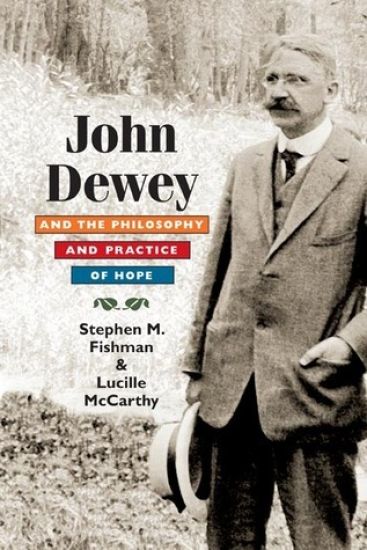
John Dewey and the Philosophy and Practice of Hope
Stephen Fishman; Lucille McCarthy
University of Illinois Press
2007
sidottu
Inspiring new techniques for engaging students with democratic idealsJohn Dewey and the Philosophy and Practice of Hope combines philosophical theory with a study of its effects in an actual classroom. To understand how Dewey, one of the century's foremost philosophers of education, understood the concept of hope, Stephen Fishman begins with theoretical questions like: What is hope? What are its objects? How can hope foster a new understanding of democracy and social justice? The book's second half is a classroom study that mir-rors in practice what Fishman explores in theory, as Lucille McCarthy observes Fishman's undergraduate students reading the theorists. Illustrating students' own vital engagement with the hope literature, McCarthy reveals how the discussions deepen student understandings, simultaneously showing education's power to promote hope and turn social ideals into reality.

John Cage was a giant of American experimental music--composer, writer, and artist. He is most widely known for his 1952 composition 4'33, whose three movements continue to challenge the definition of music by being performed without playing a single note. In questioning fundamental tenets of Western music, Cage was often at the center of controversy, and is regarded as an important contributor to many facets of American culture. To enable readers to understand what makes Cage such an extraordinary figure, David Nicholls masterfully places his striking body of prose and poetry, over 300 music compositions, and prominent performance career into historical, environmental, intellectual, philosophical, and aesthetic contexts. Nicholls’ intimate study of John Cage’s personal and professional life confirms the legacy of this major figure in twentieth-century American culture.

John Sayles is the very paradigm of the contemporary independent filmmaker. By raising much of the funding for his films himself, Sayles functions more independently than most directors, and he has used his freedom to write and produce films with a distinctive personal style and often clearly expressed political positions. From The Return of the Secaucus Seven to Sunshine State, his films have consistently expressed progressive political positions on issues including race, gender, sexuality, class, and disability. In this study, David R. Shumway examines the defining characteristic of Sayles's cinema: its realism. Positing the filmmaker as a critical realist, Shumway explores Sayles's attention to narrative in critically acclaimed and popular films such as Matewan, Eight Men Out, Passion Fish, and Lone Star. The study also details the conditions under which Sayles's films have been produced, distributed, and exhibited, affecting the way in which these films have been understood and appreciated. In the process, Shumway presents Sayles as a teacher who tells historically accurate stories that invite audiences to consider the human world they all inhabit.

Under his own name and numerous pseudonyms, John Brunner (1934–1995) was one of the most prolific and influential science fiction authors of the late twentieth century. During his exemplary career, the British author wrote with a stamina matched by only a few other great science fiction writers and with a literary quality of even fewer, importing modernist techniques into his novels and stories and probing every major theme of his generation: robotics, racism, drugs, space exploration, technological warfare, and ecology. In this first intensive review of Brunner's life and works, Jad Smith carefully demonstrates how Brunner's much-neglected early fiction laid the foundation for his classic Stand on Zanzibar and other major works such as The Jagged Orbit, The Sheep Look Up, and The Shockwave Rider. Making extensive use of Brunner's letters, columns, speeches, and interviews published in fanzines, Smith approaches Brunner in the context of markets and trends that affected many writers of the time, including Brunner's uneasy association with the "New Wave" of science fiction in the 1960s and '70s. This landmark study shows how Brunner's attempts to cross-fertilize the American pulp tradition with British scientific romance complicated the distinctions between genre and mainstream fiction and between hard and soft science fiction and helped carve out space for emerging modes such as cyberpunk, slipstream, and biopunk.
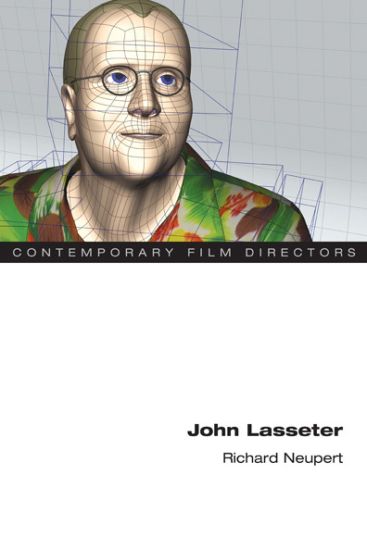
Celebrated as Pixar's "Chief Creative Officer," John Lasseter is a revolutionary figure in animation history and one of today's most important filmmakers. Lasseter films from Luxo Jr. to Toy Story and Cars 2 highlighted his gift for creating emotionally engaging characters. At the same time, they helped launch computer animation as a viable commercial medium and serve as blueprints for the genre's still-expanding commercial and artistic development. Richard Neupert explores Lasseter's signature aesthetic and storytelling strategies and details how he became the architect of Pixar's studio style. Neupert contends that Lasseter's accomplishments emerged from a unique blend of technical skill and artistic vision, as well as a passion for working with collaborators. In addition, Neupert traces the director's career arc from the time Lasseter joined Pixar in 1984. As Neupert shows, Lasseter's ability to keep a foot in both animation and CGI allowed him to thrive in an unconventional corporate culture that valued creative interaction between colleagues. The ideas that emerged built an animation studio that updated and refined classical Hollywood storytelling practices--and changed commercial animation forever.
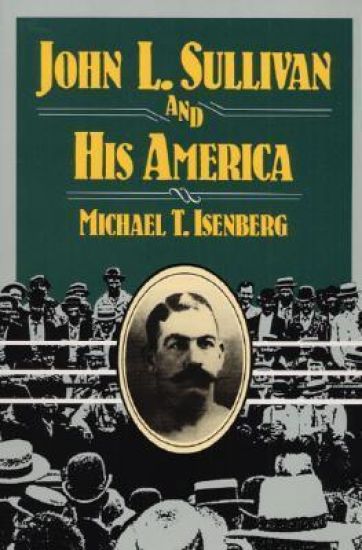
The "Great John L." reigned supreme as world heavyweight champion from his victory over Paddy Ryan in 1882 until James J. Corbett knocked him out in 1892. A drunkard, a wastrel, an adulterer, a wife beater, and a bully, Sullivan still became American's first national sports hero and represented the hopes and aspirations of millions of people. Michael Isenberg traces Sullivan's eventful life from his humble beginnings in Boston to the height of his immense popularity. The boxer moved as easily in the world of reputable workingmen as he did in the shadowlands on the margins of the sport while his success played a major role in transforming boxing into a profitable and ultimately legitimate business. Tapping previously unexplored archival material--including the notorious National Police Gazette and the other sporting papers of the day--Isenberg tells us why presidents, princes, and turn-of-the-century Americans accepted Sullivan as a hero, even as others vilified him for his drunken and belligerent behavior.
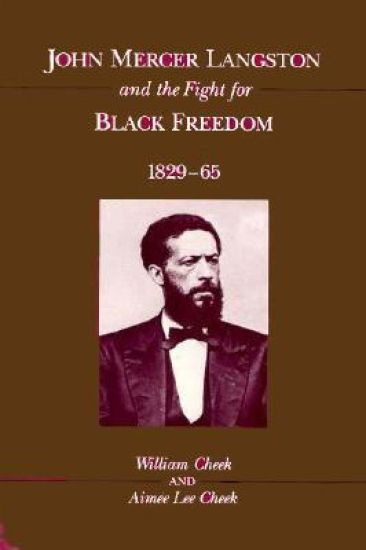
John Mercer Langston and the Fight for Black Freedom, 1829-65
William Cheek; Aimee Lee Cheek
University of Illinois Press
1996
nidottu
A biography of the pioneering Black leader Privileged beyond other members of his race, yet sharing their disadvantages, the young John Mercer Langston stood in an uncertain position in the years before the Civil War. His confrontation with a critical personal question was tempered by a crucial national reality: from what sources could he derive his model of manhood and human dignity? This book explores John Mercer Langston's decisions to work out his destiny through the resources and fortunes of the northern black community. Although Langston, who died in 1897, was a black Politician, orator, lawyer, intellectual, diplomat, and congressman, he has never before been accorded fullscale biographical treatment. Born free on a Virginia plantation, Langston graduated from Oberlin College in 1849, gained admission to the Ohio bar, and by the age of twenty-five, became the first black American to hold elective office. Still in the years of his political apprenticeship, he promoted black civil rights, helped shape the nascent Republican party, aided in the Oberlin-Wellington Rescue and John Brown's raid, and recruited black soldier for the Union cause. In 1864 he became the first president of the National Equal Rights League. From an extensive search of primary sources, the authors construct a richly textured picture of the beginnings of Langston's career as a national black leader. More than a biography, the work also incorporates social and political history. Embedded firmly in a study of northern black community life and activism, it reveals the degree to which Langston and his cohorts set the terms of the fight for freedom and citizenship.
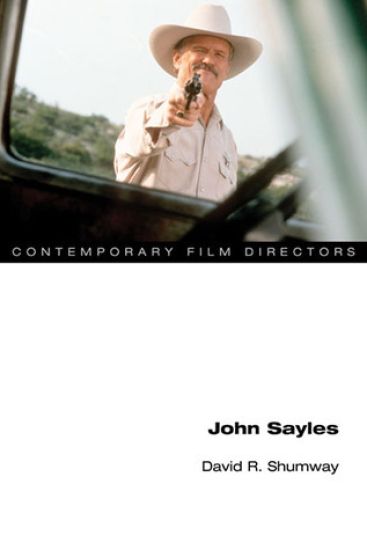
John Sayles is the very paradigm of the contemporary independent filmmaker. By raising much of the funding for his films himself, Sayles functions more independently than most directors, and he has used his freedom to write and produce films with a distinctive personal style and often clearly expressed political positions. From The Return of the Secaucus Seven to Sunshine State, his films have consistently expressed progressive political positions on issues including race, gender, sexuality, class, and disability. In this study, David R. Shumway examines the defining characteristic of Sayles's cinema: its realism. Positing the filmmaker as a critical realist, Shumway explores Sayles's attention to narrative in critically acclaimed and popular films such as Matewan, Eight Men Out, Passion Fish, and Lone Star. The study also details the conditions under which Sayles's films have been produced, distributed, and exhibited, affecting the way in which these films have been understood and appreciated. In the process, Shumway presents Sayles as a teacher who tells historically accurate stories that invite audiences to consider the human world they all inhabit.

Under his own name and numerous pseudonyms, John Brunner (1934–1995) was one of the most prolific and influential science fiction authors of the late twentieth century. During his exemplary career, the British author wrote with a stamina matched by only a few other great science fiction writers and with a literary quality of even fewer, importing modernist techniques into his novels and stories and probing every major theme of his generation: robotics, racism, drugs, space exploration, technological warfare, and ecology. In this first intensive review of Brunner's life and works, Jad Smith carefully demonstrates how Brunner's much-neglected early fiction laid the foundation for his classic Stand on Zanzibar and other major works such as The Jagged Orbit, The Sheep Look Up, and The Shockwave Rider. Making extensive use of Brunner's letters, columns, speeches, and interviews published in fanzines, Smith approaches Brunner in the context of markets and trends that affected many writers of the time, including Brunner's uneasy association with the "New Wave" of science fiction in the 1960s and '70s. This landmark study shows how Brunner's attempts to cross-fertilize the American pulp tradition with British scientific romance complicated the distinctions between genre and mainstream fiction and between hard and soft science fiction and helped carve out space for emerging modes such as cyberpunk, slipstream, and biopunk.
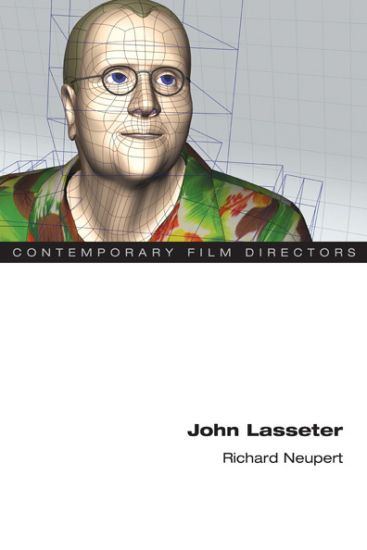
Celebrated as Pixar's "Chief Creative Officer," John Lasseter is a revolutionary figure in animation history and one of today's most important filmmakers. Lasseter films from Luxo Jr. to Toy Story and Cars 2 highlighted his gift for creating emotionally engaging characters. At the same time, they helped launch computer animation as a viable commercial medium and serve as blueprints for the genre's still-expanding commercial and artistic development. Richard Neupert explores Lasseter's signature aesthetic and storytelling strategies and details how he became the architect of Pixar's studio style. Neupert contends that Lasseter's accomplishments emerged from a unique blend of technical skill and artistic vision, as well as a passion for working with collaborators. In addition, Neupert traces the director's career arc from the time Lasseter joined Pixar in 1984. As Neupert shows, Lasseter's ability to keep a foot in both animation and CGI allowed him to thrive in an unconventional corporate culture that valued creative interaction between colleagues. The ideas that emerged built an animation studio that updated and refined classical Hollywood storytelling practices--and changed commercial animation forever.
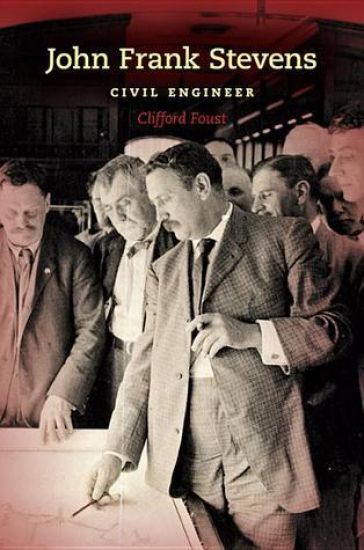
One of America's foremost civil engineers of the past 150 years, John Frank Stevens was a railway reconnaissance and location engineer whose reputation was made on the Canadian Pacific and Great Northern lines. Self-taught and driven by a bulldog tenacity of purpose, he was hired by Theodore Roosevelt as chief engineer of the Panama Canal, creating a technical achievement far ahead of its time. Stevens also served for more than five years as the head of the US Advisory Commission of Railway Experts to Russia and as a consultant who contributed to many engineering feats, including the control of the Mississippi River after the disastrous floods of 1927 and construction of the Boulder (Hoover) Dam. Drawing on Stevens's surviving personal papers and materials from projects with which he was associated, Clifford Foust offers an illuminating look into the life of an accomplished civil engineer.