Kirjojen hintavertailu. Mukana 12 354 520 kirjaa ja 12 kauppaa.

Kirjahaku

Etsi kirjoja tekijän nimen, kirjan nimen tai ISBN:n perusteella.

1000 tulosta hakusanalla John F. Ince

The Social Psychology of Prosocial Behavior

The Social Psychology of Prosocial Behavior

John F. Dovidio; Jane Allyn Piliavin; David A. Schroeder; Louis A. Penner

Psychology Press
2006
sidottu
Written by four leading researchers in the study of prosocial behavior, this book introduces a new perspective on prosocial behavior for the 21st century. Building on the bystander intervention work that has defined this area since the 1960s, The Social Psychology of Prosocial Behavior examines prosocial behavior from a multilevel perspective that explores the diverse influences that promote actions for the benefit of others and the myriad ways that prosocial actions can be manifested. The authors expand the breadth of the field, incorporating analyses of biological and genetic factors that predispose individuals to be concerned for the well being of others, as well as planned helping such as volunteering and organizational citizenship behavior and cooperative behavior within and between groups. They identify both the common and the unique processes that underlie the broad spectrum of prosocial behavior.Each chapter begins with a question about prosocial behavior and ends with a summary that answers the question. The final chapter summarizes the questions and the answers that research provides. Conceptual models that elaborate on and extend the multilevel approach to prosocial behavior are used to tie these findings together. The book concludes with suggestions for future research. The Social Psychology of Prosocial Behavior addressesthe following:*the evolution of altruistic tendencies and other biological explanations of why humans are predisposed to be prosocial;*how the situation and motives that are elicited by these situations affect when and how people help;*the causes and maintenance of long-term helping, such as volunteering;*how prosocial behavior changes over time and the developmental processes responsible for these changes;*the consequences of helping for both the people who provide it and those who receive it;*helping and cooperation within and between groups and the implications of these actions.This accessible text is ideal for advanced courses on helping and altruism or prosocial behavior, taught in psychology, sociology, management, political science, and communication, or for anyone interested in learning more about prosocial behavior in general.
The Social Psychology of Prosocial Behavior

The Social Psychology of Prosocial Behavior

John F. Dovidio; Jane Allyn Piliavin; David A. Schroeder; Louis A. Penner

Psychology Press
2006
nidottu
Written by four leading researchers in the study of prosocial behavior, this book introduces a new perspective on prosocial behavior for the 21st century. Building on the bystander intervention work that has defined this area since the 1960s, The Social Psychology of Prosocial Behavior examines prosocial behavior from a multilevel perspective that explores the diverse influences that promote actions for the benefit of others and the myriad ways that prosocial actions can be manifested. The authors expand the breadth of the field, incorporating analyses of biological and genetic factors that predispose individuals to be concerned for the well being of others, as well as planned helping such as volunteering and organizational citizenship behavior and cooperative behavior within and between groups. They identify both the common and the unique processes that underlie the broad spectrum of prosocial behavior.Each chapter begins with a question about prosocial behavior and ends with a summary that answers the question. The final chapter summarizes the questions and the answers that research provides. Conceptual models that elaborate on and extend the multilevel approach to prosocial behavior are used to tie these findings together. The book concludes with suggestions for future research. The Social Psychology of Prosocial Behavior addressesthe following:*the evolution of altruistic tendencies and other biological explanations of why humans are predisposed to be prosocial;*how the situation and motives that are elicited by these situations affect when and how people help;*the causes and maintenance of long-term helping, such as volunteering;*how prosocial behavior changes over time and the developmental processes responsible for these changes;*the consequences of helping for both the people who provide it and those who receive it;*helping and cooperation within and between groups and the implications of these actions.This accessible text is ideal for advanced courses on helping and altruism or prosocial behavior, taught in psychology, sociology, management, political science, and communication, or for anyone interested in learning more about prosocial behavior in general.
Ancient Egyptian Medicine

Ancient Egyptian Medicine

John F. Nunn

University of Oklahoma Press
1998
nidottu
The skills of the ancient Egyptians in preserving bodies through mummification are well known, but less recognized is their expertise in the everyday medical practices needed to treat the living. John F. Nunn draws on his own experience as a physician and Egyptologist to reassess the evidence on ancient Egyptian medical practices. Nunn has translated and reconsidered the original Egyptian medical papyri and has re-evaluated other sources of information, including skeletons, mummies, statues, tomb paintings, and sarcophagi. Illustrations highlight similarities in the conditions of ancient and modern patients, and Nunn appraises the criteria ancient Egyptian doctors used to make their diagnoses in the context of current medical knowledge--showing that many of their findings are still valid today. He also explores ancient Egyptian spells and incantations and the relationship of magic and religion to medical practices. Incorporating recent insights of modern medicine and Egyptology, Nunn provides readers with a comprehensive and authoritative book on a fascinating subject.
Nahuatl Theater

Nahuatl Theater

John F. Schwaller

University of Oklahoma Press
2008
sidottu
Don Bartolomé de Alva was a mestizo who rose within New Spain's ecclesiastical hierarchy when people of indigenous heritage were routinely excluded from the priesthood. In 1640 and 1641 he translated several theatrical pieces from Spanish into Nahuatl, yet this prodigious accomplishment remained virtually unknown for centuries.Nahuatl Theater, Volume 3 presents for the first time in English the complete dramatic works of Alva, the only known plays from Spain's Golden Age adapted into the lively world of Nahuatl-language theater. Alva's translations - ""The Great Theater of the World,"" ""The Animal Prophet and the Fortunate Patricide,"" ""The Mother of the Best,"" and a farcical intermezzo - represent ambitious attempts to add complex, Baroque dramatic pieces by such literary giants as Lope de Vega and Pedro Calderón de la Barca to the repertory of Nahuatl theater, otherwise dominated by sober one-act religious plays grounded in medieval tradition. The Spanish sources and Alva's Nahuatl, set on facing pages with their English translations, show how Alva ""Mexicanized"" the plays by incorporating Nahuatl linguistic conventions and referencing local symbolism and social life. In their introductory essays, the editors offer contextual and interpretive information that provides an entrée into this rich material.As the only known adaptations of these theatrical works into a Native American language, these plays stand as fine literature in their own right.
The Fifteenth Month

The Fifteenth Month

John F. Schwaller

University of Oklahoma Press
2019
sidottu
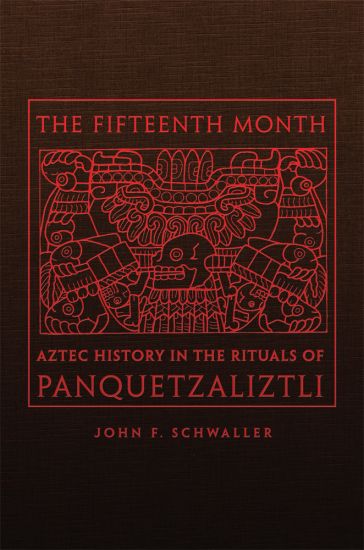
The Mexica (Aztecs) used a solar calendar made up of eighteen months, with each month dedicated to a specific god in their pantheon and celebrated with a different set of rituals. Panquetzaliztli, the fifteenth month, dedicated to the national god Huitzilopochtli (Hummingbird on the Left), was significant for its proximity to the winter solstice, and for the fact that it marked the beginning of the season of warfare. In The Fifteenth Month, John F. Schwaller offers a detailed look at how the celebrations of Panquetzaliztli changed over time and what these changes reveal about the history of the Aztecs. Drawing on a variety of sources, Schwaller deduces that prior to the rise of the Mexica in 1427, an earlier version of the month was dedicated to the god Tezcatlipoca (Smoking Mirror), a war and trickster god. The Mexica shifted the dedication to their god, developed a series of ceremonies - including long-distance running and human sacrifice - that would associate him with the sun, and changed the emphasis of the celebration from warfare alone to a combination of trade and warfare, since merchants played a significant role in Mexica statecraft. Further investigation shows how the resulting festival commemorated several important moments in Mexica history, how it came to include ceremonies associated with the winter solstice, and how it reflected a calendar reform implemented shortly before the arrival of the Spanish. Focused on one of the most important months in the Mexica year, Schwaller's work marks a new methodology in which traditional sources for Mexica culture, rather than being interrogated for their specific content, are read for their insights into the historical development of the people. Just as Christmas re-creates the historic act of the birth of Jesus for Christians, so, The Fifteenth Month suggests, Panquetzaliztli was a symbolic re-creation of events from Mexica myths and history.
The Stations of the Cross in Colonial Mexico

The Stations of the Cross in Colonial Mexico

John F. Schwaller

UNIVERSITY OF OKLAHOMA PRESS
2022
sidottu
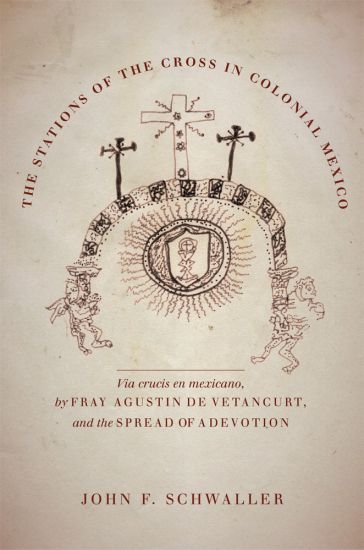
Walking the Stations of the Cross, the Christian faithful re-create the Passion, following the sorrowful path of Jesus Christ from condemnation to crucifixion. While this devotion, now so popular in the Catholic Church and many Protestant denominations, first emerged in Jerusalem and began spreading through Western Europe in the fourteenth century, it did not assume its current form, and earn the Church’s formal recognition, until almost three centuries later. It was at this time, in the last decades of the seventeenth century, that a Franciscan friar in colonial Mexico translated a devotional guide to the Stations of the Cross into the native Nahuatl. This little handbook, Fray Agustin de Vetancurt’s Via crucis en mexicano, proved immensely popular, going through two editions, but survives today only in a copy made by a native scribe from Central Mexico. Reproduced here in Nahuatl and English, Vetancurt’s handbook offers unique insight into the history, the practice, and the meaning of the Stations of the Cross in the New World and the Old. With the Via crucis en mexicano as a starting point, John F. Schwaller explores the history of the development and spread of the Stations of the Cross, placing the devotion in the context of the Catholic Reformation and the Baroque, the two trends that exalted this type of religious expression. He describes how the devotion, exported to New Spain in the sixteenth century, was embraced by Spanish and natives alike. For the native Americans, Schwaller suggests, the Via crucis resonated because of its performative aspects, reminiscent of rituals and observances from before the arrival of the Spanish. And for missionaries, the devotion offered a means of deepening the faith of the newly converted. In Schwaller’s deft analysis—which extends from the origins of the devotion, to the processions and public rituals of the Mexica (Aztecs), to the text and illustrations of the Vetancurt manuscript—the Via crucis en mexicano opens a window on the practice and significance of the Stations of the Cross—and of private devotions generally—in Mexico, Hispanic America, and around the world.
Nahuatl Theater

Nahuatl Theater

John F. Schwaller

UNIVERSITY OF OKLAHOMA PRESS
2023
nidottu
Don BartolomÉ de Alva was a mestizo who rose within New Spain’s ecclesiastical hierarchy when people of indigenous heritage were routinely excluded from the priesthood. In 1640 and 1641 he translated several theatrical pieces from Spanish into Nahuatl, yet this prodigious accomplishment remained virtually unknown for centuries.Nahuatl Theater, Volume 3 presents for the first time in English the complete dramatic works of Alva, the only known plays from Spain’s Golden Age adapted into the lively world of Nahuatl-language theater. Alva’s translations—“The Great Theater of the World,” “The Animal Prophet and the Fortunate Patricide,” “The Mother of the Best,” and a farcical intermezzo—represent ambitious attempts to add complex, Baroque dramatic pieces by such literary giants as Lope de Vega and Pedro CalderÓn de la Barca to the repertory of Nahuatl theater, otherwise dominated by sober one-act religious plays grounded in medieval tradition. The Spanish sources and Alva’s Nahuatl, set on facing pages with their English translations, show how Alva “Mexicanized” the plays by incorporating Nahuatl linguistic conventions and referencing local symbolism and social life. In their introductory essays, the editors offer contextual and interpretive information that provides an entrÉe into this rich material.As the only known adaptations of these theatrical works into a Native American language, these plays stand as fine literature in their own right.
The Petticoat Affair

The Petticoat Affair

John F. Marszalek

Louisiana State University Press
2000
nidottu
In The Petticoat Affair, prize-winning historian John F. Marszalek offers the first in--depth investigation of the earliest -- and perhaps greatest -- political sex scandal in American history. During Andrew Jackson's first term in office, Margaret Eaton, the wife of Secretary of State John Henry Eaton, was branded a ""loose woman"" for her unconventional public life. The brash, outgoing, and beautiful daughter of a Washington innkeeper, Margaret had socialized with her father's guests and married Eaton very soon after the death of her first husband, shocking genteel society. Jackson saw attacks on Eaton as part of a conspiracy to topple his administration, and his strong defense of her character dominated the first two years of his term, and led to the resignation of his entire cabinet.
Civilizing the Machine: Technology and Republican Values in America, 1776-1900
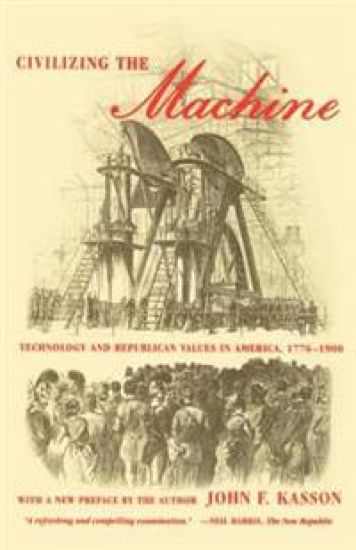
In Civilizing the Machine, John F. Kasson asks how new technologies have affected this drive for a republican civilization-and the question is as vital now as ever. A major theme of American history has always been the desire to achieve a genuinely republican way of life that values liberty, order, and virtue. Civilizing the Machine was an innovative and compelling work when it first appeared two decades ago: Kasson's analysis of the technical developments in transportation, communication, and manufacture from the Revolution to the of the nineteenth century showed how technologies were dealt with in sources as diverse as the debates of Hamilton and Jefferson; the factories of Lowell, Massachusetts; the writings of Ralph Waldo Emerson; the prints of Currier & Ives; and the utopian and dystopian novels of Howells and Twain. Kasson's profound, wide-ranging inquiry into this central issue in American history is now available again with a new Introduction by the author.
Houdini, Tarzan, and the Perfect Man
A remarkable new work from one of our premier historians In his exciting new book, John F. Kasson examines the signs of crisis in American life a century ago, signs that new forces of modernity were affecting men's sense of who and what they really were. When the Prussian-born Eugene Sandow, an international vaudeville star and bodybuilder, toured the United States in the 1890s, Florenz Ziegfeld cannily presented him as the Perfect Man, representing both an ancient ideal of manhood and a modern commodity extolling self-development and self-fulfillment. Then, when Edgar Rice Burroughs's Tarzan swung down a vine into the public eye in 1912, the fantasy of a perfect white Anglo-Saxon male was taken further, escaping the confines of civilization but reasserting its values, beating his chest and bellowing his triumph to the world. With Harry Houdini, the dream of escape was literally embodied in spectacular performances in which he triumphed over every kind of threat to masculine integrity -- bondage, imprisonment, insanity, and death. Kasson's liberally illustrated and persuasively argued study analyzes the themes linking these figures and places them in their rich historical and cultural context. Concern with the white male body -- with exhibiting it and with the perils to it --reached a climax in World War I, he suggests, and continues with us today.
Sherman

Sherman

John F. Marszalek

Southern Illinois University Press
2007
nidottu
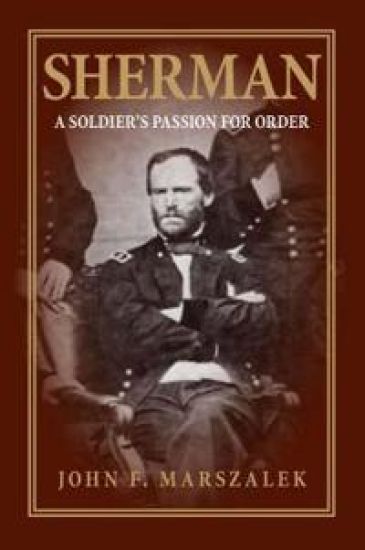
Sherman: A Soldier's Passion for Order is the premier biography of William Tecumseh Sherman, the Civil War commander known for his ""destructive war"" policy against Confederates and as a consummate soldier. This updated edition of John F. Marszalek's award-winning book presents the general as a complicated man who, fearing anarchy, searched for the order that he hoped would make his life a success. Sherman was profoundly influenced by the death of his father and his subsequent relationship with the powerful Whig politician Thomas Ewing and his family. Although the Ewings treated Sherman as one of their own, the young Sherman was determined to make it on his own. He graduated from West Point and moved on to service at military posts throughout the South. This volume traces Sherman's involvement in the Mexican War in the late 1840s, his years battling prospectors and deserting soldiers in gold-rush California, and his 1850 marriage to his foster sister, Ellen. Later he moved to Louisiana, and, after the state seceded, Sherman returned to the North to fight for the Union. Sherman covers the general's early Civil War assignments in Kentucky and Missouri and his battles against former Southern friends there, the battle at Shiloh, and his rise to become second only to Grant among the Union leadership. Sherman's famed use of destructive war, controversial then and now, is examined in detail. The destruction of property, he believed, would convince the Confederates that surrender was their best option, and Sherman's successful strategy became the stuff of legend. This definitive biography, which includes forty-six illustrations, effectively refutes misconceptions surrounding the controversial Union general and presents Sherman the man, not the myth.
Lincoln and the Military

Lincoln and the Military

John F. Marszalek

Southern Illinois University Press
2014
sidottu
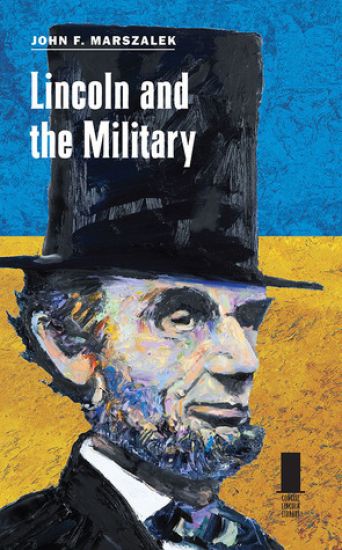
When Abraham Lincoln was elected president of the United States in 1860, he came into office with practically no experience in military strategy and tactics. Consequently, at the start of the Civil War, he depended on leading military men to teach him how to manage warfare. As the war continued and Lincoln matured as a military leader, however, he no longer relied on the advice of others and became the major military mind of the war. In this brief overview of Lincoln’s military actions and relationships during the war, John F. Marszalek traces the sixteenth president’s evolution from a nonmilitary politician into the commander in chief who won the Civil War, demonstrating why Lincoln remains America’s greatest military president.As tensions erupted into conflict in 1861, Lincoln turned to his generals, including Winfield Scott, George B. McClellan, and Henry W. Halleck, for guidance in running the war. These men were products of the traditional philosophy of war, which taught that armies alone wage war and the way to win was to maneuver masses of forces against fractions of the enemy at the key point in the strategic area. As Marszalek shows, Lincoln listened at first, and made mistakes along the way, but he increasingly came to realize that these military men should no longer direct him. He developed a different philosophy of war, one that advocated attacks on all parts of the enemy line and war between not just armies but also societies. Warfare had changed, and now the generals had to learn from their commander in chief. It was only when Ulysses S. Grant became commanding general, Marszalek explains, that Lincoln had a leader who agreed with his approach to war. Implementation of this new philosophy, he shows, won the war for the Union forces.Tying the necessity of emancipation to preservation of the Union, Marszalek considers the many presidential matters Lincoln had to face in order to manage the war effectively and demonstrates how Lincoln’s determination, humility, sense of humor, analytical ability, and knack for quickly learning important information proved instrumental in his military success. Based primarily on Lincoln’s own words, this succinct volume offers an easily-accessible window into a critical period in the life of Abraham Lincoln and the history of the nation.
Mortuary Science

Mortuary Science

John F. Szabo

Scarecrow Press
1993
nidottu
Now available in paperback! In this first reference book devoted entirely to mortuary science, Szabo presents a thorough bibliographical examination of the funeral industry and related subjects, including even the most specialized area in the field. Most citations are annotated, with special notes on editions and reprints. Areas covered include autopsy, cremation, burial rites and ceremonies, caskets and vaults, cemeteries, embalming, epitaphs, ethnic customs, funeral dress and apparel, funeral music, funeral reform, grave markers, laws and regulations, liturgies and sermons, memorial societies, organ and body donation, premature burial, pre-need service, restorative art, and several others. The text is organized by subject, with author and title indexes. Five appendixes feature addresses for associations and organizations, information on schools of mortuary science, accreditation procedures and standards of the American Board of Funeral Service Education, periodicals in the field, and a list of state funeral service examining boards. Will be useful to students, librarians, and researchers as well as funeral service personnel.
Historical Dictionary of Republic of the Congo

Historical Dictionary of Republic of the Congo

John F. Clark; Samuel Decalo

Scarecrow Press
2012
sidottu
The fourth edition of the Historical Dictionary of Republic of the Congo provides a comprehensive set of references on the country’s history, politics, economics, and culture. It traces the careers of the country’s leading personalities into the era following the democratic experiment of the 1990s. It updates the country’s social, economic, and political evolution through the first decade of the 21st century. Clark and Decalo provide a snapshot of the Republic of the Congo through a chronology, an introductory essay, appendixes, an extensive bibliography, and the dictionary section of over 700 cross-referenced entries on important personalities, leading political figures, institutions, economic enterprises, ethnic communities, and cultural features. It provides information on many aspects of Congolese society, culture, and society not available on any web-based source or in any other publication. It is an excellent access point for students, researchers, and anyone wanting to know more about the Republic of the Congo.
Death and Dying

Death and Dying

John F. Szabo

Scarecrow Press
2009
sidottu
While it can be traced to the 1700s, the term thanatology has gained traction in recent decades to refer to the study of death. Because of the breadth of the published material and the challenges of discovery in large bibliographic databases and catalogs, finding and identifying monographic material on death, dying, grief, and bereavement can be extremely challenging. Although there have been several bibliographical resources published on thanatology, those titles were incomplete, limited in scope, or leaned heavily toward one area of the field. In Death and Dying: An Annotated Bibliography of the Thanatological Literature, John F. Szabo provides more than 2,200 citations of monographs on the science and study of death and dying. Among the areas this volume addresses are the psychological, philosophical, and attitudinal aspects; coping and dealing with the burdens of caregiving and working in the helping professions; instructional and educational topics for practitioners, primarily health care providers; cultural differences in bereavement rituals; and grief, mourning, and loss. In addition, notable titles on or relating to death and dying in popular culture, death themes in literature, methods of death, or specific ethical, policy, or public issues are also included when they contribute important information to subject areas on which the book focuses. This book will be helpful to students, researchers, academics, caregivers, health care professionals, psychologists, social workers, and anyone with an interest in death, dying, bereavement, or the care of the terminally ill.
Conducting and Rehearsing the Instrumental Music Ensemble
Conducting and Rehearsing the Instrumental Music Ensemble is the most comprehensive guide on the rehearsal process for conducting instrumental music ensembles. Ideal for the advanced instrumental music conductor seeking to look beyond basic conducting technique, this work breaks the multidimensional activity of working with an ensemble, orchestra, or band into its constituent components. Advanced students of conducting will find within the full range of conducting activities: • Chapters on the infrastructure of the rehearsal, the rehearsal environment, 10 rehearsal essentials, score study, music imagery, inner singing, and rehearsal procedures (with an emphasis on an integrated approach to rehearsing) • The technical priorities of intonation and tuning, rhythm patterns, ensemble sonority (tone, balance, blend, color and texture), and articulation • The musical priorities of tempo and ensemble precision, phrasing and the musical line, style and interpretation, dynamics and musical expression • Emphasizing the expectations of 21st-century conductors, the challenges of conducting and rehearsing contemporary music, preparing conductor profiles and self-evaluations, and moving from the rehearsal process to concert performance Conducting and Rehearsing the Instrumental Music Ensemble is a great resource for teachers and students of conducting, as well as current conductors wishing to further hone their skills.
Backyard Birdfeeding

Backyard Birdfeeding

John F. Gardner

Stackpole Books
1996
pokkari
How to set up backyard feeding stations to attract a wide variety of songbirds. Covers the best types of feeders, the proper types of feeders, the proper times to feed, and the most desirable foods.
Beat Cop to Top Cop

Beat Cop to Top Cop

John F. Timoney

University of Pennsylvania Press
2010
sidottu
Born in a rough-and-tumble neighborhood of Dublin, John F. Timoney moved to New York with his family in 1961. Not long after graduating from high school in the Bronx, he entered the New York City Police Department, quickly rising through the ranks to become the youngest four-star chief in the history of that department. Timoney and the rest of the command assembled under Police Commissioner Bill Bratton implemented a number of radical strategies, protocols, and management systems, including CompStat, that led to historic declines in nearly every category of crime. In 1998, Mayor Ed Rendell of Philadelphia hired Timoney as police commissioner to tackle the city's seemingly intractable violent crime rate. Philadelphia became the great laboratory experiment: Could the systems and policies employed in New York work elsewhere? Under Timoney's leadership, crime declined in every major category, especially homicide. A similar decrease not only in crime but also in corruption marked Timoney's tenure in his next position as police chief of Miami, a post he held from 2003 to January 2010. Beat Cop to Top Cop: A Tale of Three Cities documents Timoney's rise, from his days as a tough street cop in the South Bronx to his role as police chief of Miami. This fast-moving narrative by the man Esquire magazine named "America's Top Cop" offers a blueprint for crime prevention through first-person accounts from the street, detailing how big-city chiefs and their teams can tame even the most unruly cities. Policy makers and academicians have long embraced the view that the police could do little to affect crime in the long term. John Timoney has devoted his career to dispelling this notion. Beat Cop to Top Cop tells us how.