Kirjojen hintavertailu. Mukana 11 717 486 kirjaa ja 12 kauppaa.

Kirjahaku

Etsi kirjoja tekijän nimen, kirjan nimen tai ISBN:n perusteella.

1000 tulosta hakusanalla John R. Howe

Handbook of Pest Management

Handbook of Pest Management

John R. Ruberson

CRC Press Inc
1999
sidottu
"Provides a detailed summary of pest management principles and techniques, outlining a broad selection of critical issues regarding current practice and future technology in this area. Discusses the role of soils, weather, and surrounding habitats in regulating pest occurrence and severity."
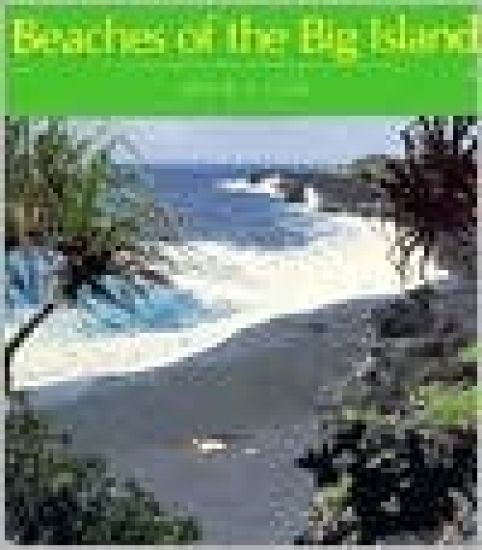
Beaches of the Big Island

Beaches of the Big Island

John R. K. Clark

University of Hawai'i Press
1985
nidottu
The Big Island, world famous for its active volcanoes and coral gardens, has many wonderful beaches. In fact its shoreline is as diverse and dynamic as the rest of this massive island and includes more than 100 black, green, and white sand beaches.The Beaches series by John R. K. Clark include Beaches of Maui County, Beaches of the Big Island, Beaches of Kauai and Niihau, and The Beaches of Oahu. The author, an ocean recreation consultant, includes comprehensive site descriptions of hundreds of beaches in the Hawaiian Islands and shares his extensive knowledge of, and deep respect for, Hawaii's shorelines.
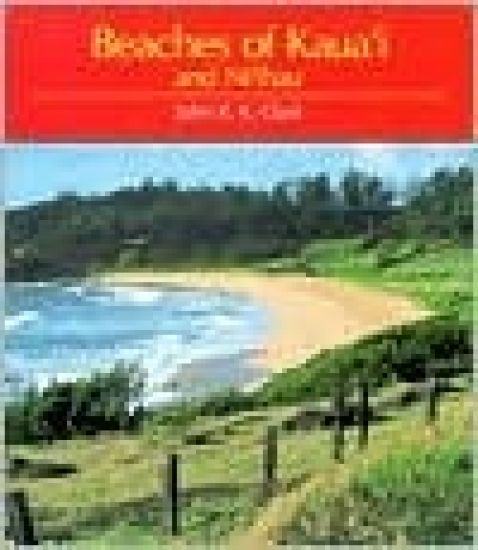
Beaches of Kaua'i and Ni'ihau

Beaches of Kaua'i and Ni'ihau

John R. K. Clark

University of Hawai'i Press
1989
nidottu
Kaua'i has more sand beaches per mile of shoreline than any other island in Hawai'i. Its spectacular shoreline ranges from cliffs of bird sanctuaries to a fishpond in a volcanic crater to the traditional swimming, snorkeling, surfing, and beachcombing beaches. Although the owners of Ni'ihau discourage visitors, author John Clark includes fascinating sketches of the island to complete his inventory of Hawai'i's beaches. The Beaches series by John R. K. Clark include Beaches of Maui County, Beaches of the Big Island, Beaches of Kaua'i and Ni'ihau, and The Beaches of O'ahu. The author, an ocean recreation consultant, includes comprehensive site descriptions of hundreds of beaches in the Hawaiian Islands and shares his extensive knowledge of, and deep respect for, Hawai'i's shorelines.
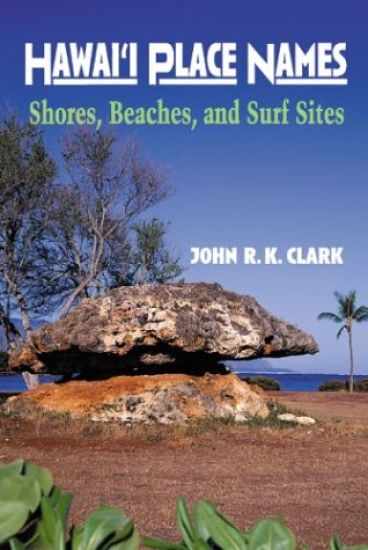
Hawai'i Place Names

Hawai'i Place Names

John R. K. Clark

University of Hawai'i Press
2003
nidottu
This title gives us the many captivating stories behind the hundreds of Hawai'i place names associated with the ocean - the names of shores, beaches, and other sites where people fish, swim, dive, surf, and paddle. Significant features and landmarks on or near shores, such as fishponds, monuments, shrines, reefs, and small islands, are also included. The names of surfing sites are the most numerous and among the most colourful: from the purely descriptive (Black Rock, Blue Hole) to the humorous (No Can Tell, Pray for Sex).
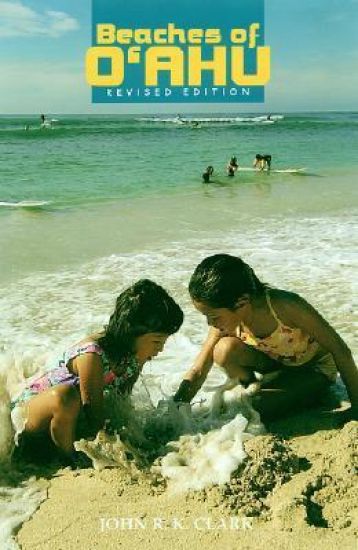
Beaches of O'ahu

Beaches of O'ahu

John R. K. Clark

University of Hawai'i Press
2004
nidottu
Now completely revised and updated, this edition of Beaches of O'ahu offers sixty new color photos of the island's spectacular beaches and coastline by photographer Mike Waggoner, a water safety section, and 22 newly drawn maps locating more than 130 beaches and shoreline parks. The beach descriptions and maps include many of the island's popular surfing sites. All beaches, known and relatively unknown, are listed with their physical characteristics, recreational uses, historic and cultural significance, and any dangers that beach-goers may encounter. Each beach is identified by its official and unofficial, or popular, name (if any) used by residents. When available, the author has added brief histories of beaches as handed down through the native Hawaiian oral tradition and related Hawaiian chants and verses.
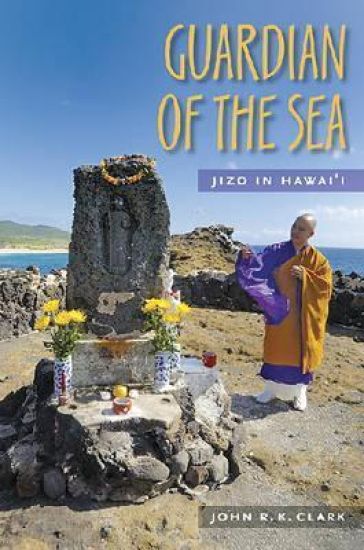
Guardian of the Sea

Guardian of the Sea

John R. K. Clark

University of Hawai'i Press
2007
nidottu
Jizo, one of the most beloved Buddhist deities in Japan, is known primarily as the guardian of children and travelers. In coastal areas, fishermen and swimmers also look to him for protection. Soon after their arrival in the late 1800s, issei (first-generation Japanese) shoreline fishermen began casting for ulua on Hawai'i's treacherous sea cliffs, where they risked being swept off the rocky ledges. In response to numerous drownings, Jizo statues were erected near dangerous fishing and swimming sites, including popular Bamboo Ridge, near the Blowhole in Hawai'i Kai; Kawaihapai Bay in Mokule'ia; and Kawailoa Beach in Hale'iwa. ""Guardian of the Sea"" tells the story of a compassionate group of men who raised these statues as a service to their communities. Written by an authority on Hawai'i's beaches and water safety, ""Guardian of the Sea"" shines a light on a little-known facet of Hawai'i's past. It incorporates valuable firsthand accounts taken from interviews with nisei (second-generation) fishermen and residents and articles from Japanese-language newspapers dating as far back as the early 1900s. In addition to background information on Jizo as a guardian deity and historical details on Jizo statues in Hawai'i, the author discusses shorecasting techniques and organizations, which once played a key role in the lives of local Japanese. Although shorecasting today is done more for sport than subsistence, it remains an important ocean activity in the Islands. In examining Jizo and the lives of issei, ""Guardian of the Sea"" makes a significant contribution to our understanding of recent Hawai'i history.
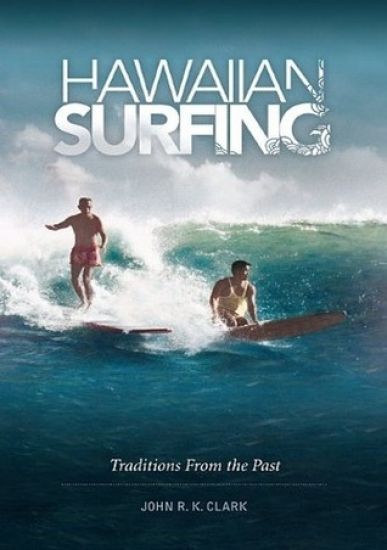
Hawaiian Surfing

Hawaiian Surfing

John R. K. Clark

University of Hawai'i Press
2011
nidottu
Hawaiian Surfing is a history of the traditional sport narrated primarily by native Hawaiians who wrote for the Hawaiian-language newspapers of the 1800s. An introductory section covers traditional surfing, including descriptions of the six Hawaiian surf-riding sports (surfing, bodysurfing, canoe surfing, body boarding, skimming, and river surfing). This is followed by an exhaustive Hawaiian-English dictionary of surfing terms and references from Hawaiian-language publications and a special section of Waikiki place names related to traditional surfing. The information in each of these sections is supported by passages in Hawaiian, followed by English translations. The work concludes with a glossary of English-Hawaiian surfing terms and an index of proper names, place names, and surf spots.
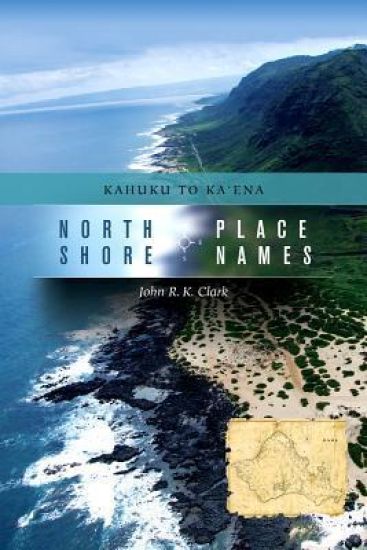
North Shore Place Names

North Shore Place Names

John R.K. Clark

University of Hawai'i Press
2014
nidottu
In his latest book, John Clark, author of Hawaiian Surfing: Traditions from the Past and Hawai`i Place Names: Shores, Beaches, and Surf Sites, continues his fascinating look at Hawai`i history as told through the stories hidden in its place names. North Shore Place Names: Kahuku to Ka`ena takes the reader on a historical tour of the North Shore of O`ahu conveyed by Hawaiian place names. To research information on place names Clark tapped into 125,000 pages of Hawaiian-language newspapers published from 1834 to 1948, an archive available online in the Papakilo Database, the Office of Hawaiian Affairs’ repository of historically and culturally significant data collections.The author collected an enormous number of references to specific North Shore locations and presents the material in the original Hawaiian with English translations in an easy-to-use dictionary style format. An invaluable resource for anyone interested in Hawai`i history and the Hawaiian language, North Shore Place Names: Kahuku to Ka`ena brings to life the names, places, and events of the historic North Shore community.
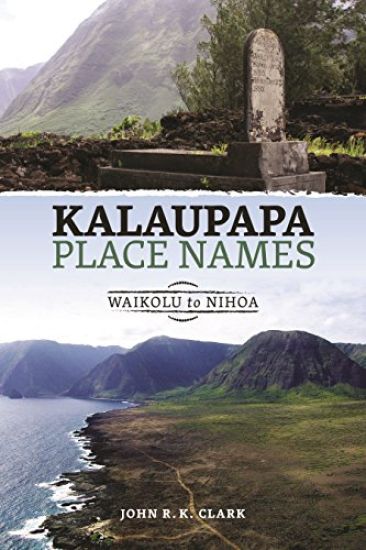
Kalaupapa Place Names

Kalaupapa Place Names

John R. K. Clark

University of Hawai'i Press
2018
nidottu
In Kalaupapa Place Names, John Clark presents a unique history of the leprosy settlement on Moloka‘i, based on his meticulous research of more than three hundred Hawaiian-language newspaper articles. He first assembled an extensive list of familiar and long-forgotten place names associated with the Kalaupapa peninsula and then searched for them in the online repository of Hawaiian-language newspapers. With translation assistance by I?sona Ellinwood and Keao NeSmith, he discovered articles that show a community of Hawaiians from every island except uninhabited Kaho‘olawe. Their stories reveal an active community with its members trying to live their lives as normally as possible in the face of a debilitating disease.The first section of the book contains newspaper articles arranged under an alphabetical listing of place names. The second section organizes the material into chronological segments, from before the establishment of the Kalaupapa Settlement to the death of Mother Marianne Cope in 1918. These two sections are followed by a collection of kanikau or lamentations, interviews with Kalaupapa residents, and a list of Hawaiian language newspapers. Introductory paragraphs for groupings of newspaper articles assist the reader in visualizing the physical landscape and understanding the history and significance of a particular location.Kalaupapa Place Names is a treasure trove of information, with its intimate look at a community brought together by adversity, but held together by a determination to achieve a sense of normalcy.
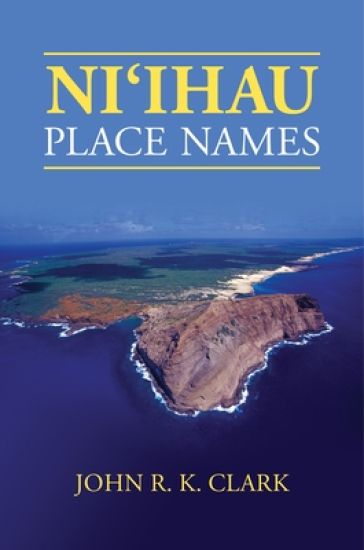
Ni?ihau Place Names

Ni?ihau Place Names

John R. K. Clark

UNIVERSITY OF HAWAI'I PRESS
2023
sidottu
The story of Ni‘ihau has been told many times by many people, but Ni‘ihau Place Names adds new information to the island’s history from a unique source: Hawaiian-language newspapers. From 1834 to 1948, approximately 125,000 pages of Native Hawaiian expression were printed in more than 100 different papers. In this book, John Clark has gathered and edited a large collection of invaluable articles that recorded daily life on Ni?ihau, events and topics of interest, and the island’s place names. Additionally, Keao NeSmith, a Native Hawaiian of Kaua‘i and an applied linguist, translator, and researcher fluent in ‘olelo Hawai‘i, translated each passage into English. Most of these excerpts have not appeared in any other publication.Ni‘ihau is unique in the State of Hawai‘i because it is the only privately-owned island. In 1864, Kamehameha V, the monarch of the Kingdom of Hawai‘i,sold the island to the Sinclairs, a wealthy immigrant family looking to establish a ranching business. Descendants of the Sinclairs still own the island today. Many diverse opinions about the sale of Ni?ihau were published in newspapers across the Hawaiian Islands, and this book traces the development and aftershocks of this historic event.Ni‘ihau Place Names contains over thirty kanikau (dirges, poetic chants) written and published from 1845 to 1931 to honor deceased Ni?ihau residents. These compositions of deep emotion are treasuries of language, history, genealogy, cultural knowledge, and especially place names. Another important contribution in this volume is the identification of ‘olelo no‘eau (proverbs and poetical sayings) with demonstrations of their use in everyday conversation.The book is divided into two main sections. Ni‘ihau Places Names is an alphabetical list of prominent place names on the island, accompanied by relevant passages in Hawaiian and their English translations. The list also includes Lehua, the small island near the northwest tip of Ni‘ihau. “Ni‘ihau History” is an additional collection of articles that includes many lesser-known place names and elucidates other topics deemed worthy by reporters and contributors of the time. Following the main text, readers will find helpful indexes of general terms, place names, and personal names.
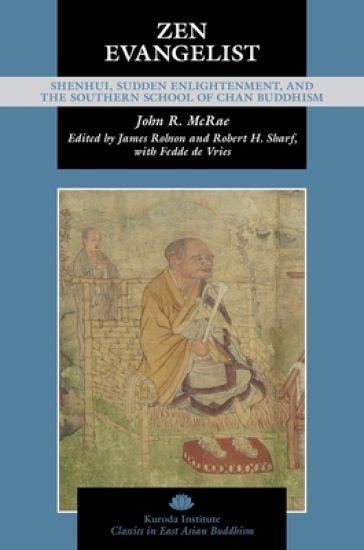
Zen Evangelist

Zen Evangelist

John R. McRae

UNIVERSITY OF HAWAI'I PRESS
2023
sidottu
Huineng (638–713), author and hero of the Platform Sutra, is often credited with founding the Southern school of Chan Buddhism and its radical doctrine of "sudden enlightenment." However, manuscripts discovered at Dunhuang at the beginning of the twentieth century reveal that the real architect of the Southern school was Huineng’s student Shenhui (684–758). An ardent evangelist for his master’s teaching and a sharp critic of rival meditation teachers of his day, Shenhui was responsible for Huineng’s recognition as the "sixth patriarch," for the promotion and eventual triumph of the sudden teaching, and for a somewhat combative style of Chan discourse that came to be known as "encounter dialogue." Shenhui’s historical importance in the rise and success of Chan is beyond dispute, yet until now there has been no complete translation of his corpus into English.This volume brings together John McRae’s lifetime of work on the Shenhui corpus, including extensively annotated translations of all five of Shenhui’s texts discovered at Dunhuang as well as McRae’s seminal studies of Shenhui’s life, teachings, and legacy. McRae’s research explores the degree to which the received view of the Northern school teachings is a fiction created by Shenhui to score rhetorical points and that Northern and Southern teachings may have been closer to one another than the canonical narrative depicts. McRae explains Shenhui’s critical role in shaping what would later emerge as "classical Chan," while remaining skeptical about the glowing image of Shenhui as an effective mentor and inspired revolutionary. This posthumously published book is the fulfillment of McRae’s wish to make Shenhui’s surviving writings accessible through carefully annotated English translations, allowing readers to form their own opinions.
Ni?ihau Place Names

Ni?ihau Place Names

John R. K. Clark

UNIVERSITY OF HAWAI'I PRESS
2023
nidottu
The story of Ni‘ihau has been told many times by many people, but Ni‘ihau Place Names adds new information to the island’s history from a unique source: Hawaiian-language newspapers. From 1834 to 1948, approximately 125,000 pages of Native Hawaiian expression were printed in more than 100 different papers. In this book, John Clark has gathered and edited a large collection of invaluable articles that recorded daily life on Ni?ihau, events and topics of interest, and the island’s place names. Additionally, Keao NeSmith, a Native Hawaiian of Kaua‘i and an applied linguist, translator, and researcher fluent in ‘olelo Hawai‘i, translated each passage into English. Most of these excerpts have not appeared in any other publication.Ni‘ihau is unique in the State of Hawai‘i because it is the only privately-owned island. In 1864, Kamehameha V, the monarch of the Kingdom of Hawai‘i,sold the island to the Sinclairs, a wealthy immigrant family looking to establish a ranching business. Descendants of the Sinclairs still own the island today. Many diverse opinions about the sale of Ni?ihau were published in newspapers across the Hawaiian Islands, and this book traces the development and aftershocks of this historic event.Ni‘ihau Place Names contains over thirty kanikau (dirges, poetic chants) written and published from 1845 to 1931 to honor deceased Ni?ihau residents. These compositions of deep emotion are treasuries of language, history, genealogy, cultural knowledge, and especially place names. Another important contribution in this volume is the identification of ‘olelo no‘eau (proverbs and poetical sayings) with demonstrations of their use in everyday conversation.The book is divided into two main sections. Ni‘ihau Places Names is an alphabetical list of prominent place names on the island, accompanied by relevant passages in Hawaiian and their English translations. The list also includes Lehua, the small island near the northwest tip of Ni‘ihau. “Ni‘ihau History” is an additional collection of articles that includes many lesser-known place names and elucidates other topics deemed worthy by reporters and contributors of the time. Following the main text, readers will find helpful indexes of general terms, place names, and personal names.
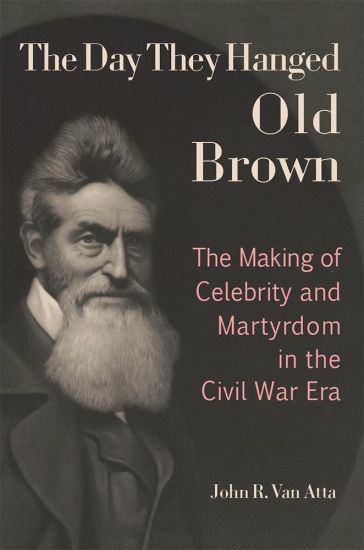
The Day They Hanged Old Brown

The Day They Hanged Old Brown

John R. Van Atta

UNIVERSITY OF MISSOURI PRESS
2025
sidottu
Abolitionist, fanatic, terrorist, freedom fighter, alleged murderer—all of those labels fit John Brown. Yet he also qualified as a mid-nineteenth-century celebrity. Reserved only for a few, celebrity in Brown’s time was, in historian Carolyn Eastman’s words, a quality “of being well known, an attribute, a degree of popularity and fame—the state of being celebrated by others,” as Brown certainly was. Brown’s lifespan covered most of the period between the Revolution and the Civil War, a time of the still-early beginnings of the United States. Only then had his kind of “celebrity” started to matter. From different economic and moral perspectives, politically aware Americans clashed over different visions for the future of the country. At that time, any disruptive figure might be taken as a barometer of the progress or the decline of the republic. A function of the widely varying newspapers and magazines of that day, celebrity offered Americans an angle of vision, happily or not, as to who they were or were becoming or believed themselves to be—as if by a mirror reflection. In The Day They Hanged Old Brown, John Van Atta examines the creation of celebrity in John Brown’s time and how it differed from modern day perceptions. Yet, as applicable as the concept of celebrity is in this case, the story of Brown’s notoriety represents far more. To his admirers, Brown was not merely a celebrity; he was a hero and, after his sacrificial death, a martyr. Not all celebrities rise to such levels. This book traces the meaning of heroism and martyrdom—as well as the opposite side of that coin, villainy—and suggests that John Brown’s story and legacy helped to redefine these concepts for many Americans during the era of the Civil War, before modern historians began to deliberate him.
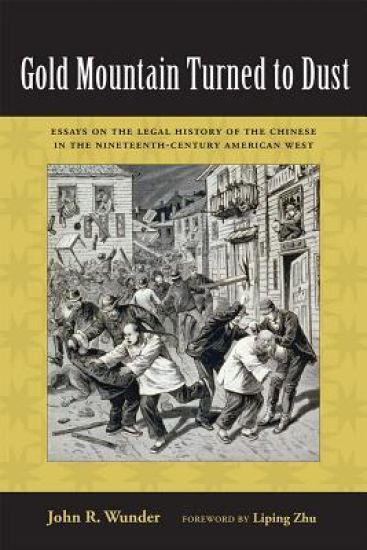
Gold Mountain Turned to Dust

Gold Mountain Turned to Dust

John R. Wunder; Liping Zhu

University of New Mexico Press
2018
nidottu
Some half million Chinese immigrants settled in the American West in the nineteenth century. In spite of their vital contributions to the economy in gold mining, railroad construction, the founding of small businesses, and land reclamation, the Chinese were targets of systematic political discrimination and widespread violence. This legal history of the Chinese experience in the American West, based on the author's lifetime of research in legal sources all over the West-from California to Montana to New Mexico-serves as a basic account of the legal treatment of Chinese immigrants in the West.The first two essays deal with anti-Chinese racial violence and judicial discrimination. The remainder of the book examines legal precedents and judicial doctrines derived from Chinese cases in specific western states. The Chinese, Wunder shows, used the American legal system to protect their rights and test a variety of legal doctrines, making vital contributions to the legal history of the American West.
Science, Technology and Global Governance

Science, Technology and Global Governance

John R. De La Mothe

Routledge
2001
nidottu
Science, technology and innovation have long been key factors in the competitive advantage of nations. Today, however, the new international political economy is being increasingly driven by science and technology in new ways. Integration, globalization and internationalization have all become watchwords for a series of dynamic processes in which science and technology are deeply implicated. As a result, not only are the policies of national governments being exposed in terms of the limits of their sovereignty, but science and technology are being increasingly implicated in a wide array of public issues - ranging from security, privacy, development and economic growth to employment, environment, foreign policy and geopolitics. Clearly, in today's emerging world, the ways in which governments organize their science and technology policy, their science and technology intelligence, and their research advisory structures and resources matter more today than ever before. In turn, the contract between science and democracy is being rapidly redefined. This book is the first to comprehensively discuss these critical issues.
Science, Technology and Global Governance

Science, Technology and Global Governance

John R. De La Mothe

Routledge
2001
sidottu
Science, technology and innovation have long been key factors in the competitive advantage of nations. Today, however, the new international political economy is being increasingly driven by science and technology in new ways. Integration, globalization and internationalization have all become watchwords for a series of dynamic processes in which science and technology are deeply implicated. As a result, not only are the policies of national governments being exposed in terms of the limits of their sovereignty, but science and technology are being increasingly implicated in a wide array of public issues - ranging from security, privacy, development and economic growth to employment, environment, foreign policy and geopolitics. Clearly, in today's emerging world, the ways in which governments organize their science and technology policy, their science and technology intelligence, and their research advisory structures and resources matter more today than ever before. In turn, the contract between science and democracy is being rapidly redefined. This book is the first to comprehensively discuss these critical issues.
Dewey's Empirical Theory of Knowledge and Reality

Dewey's Empirical Theory of Knowledge and Reality

John R. Shook

Vanderbilt University Press
2000
nidottu
The ongoing revival of interest in the work of American philosopher and pragmatist John Dewey has given rise to a burgeoning flow of commentaries, critical editions, and reevaluations of Dewey's writings. While previous studies of Dewey's work have taken either a historical or a topical focus, Shook offers an innovative, organic approach to understanding Dewey and eloquently shows that Dewey's instrumentalism grew seamlessly out of his idealism. He argues that most current scholarship operates under a mistaken impression of Dewey's early philosophical positions and convincingly demonstrates a number of key points: that Dewey's metaphysical empiricism remained more indebted to Kant and Hegel than is commonly supposed; that Dewey owed more to the influence of Wundt than is commonly believed; that the influence of Peirce and James was not as significant for the development of Dewey's theories of mind and truth as has been argued in the past; and that Dewey's pragmatic theory of knowledge never really abandoned idealism.Shook's exposition of the unity of Dewey's thought challenges a large scholarly industry devoted to suppressing or explaining away the consistency between Dewey's early thought and his later work. In every respect, Dewey's Empirical Theory of Knowledge and Reality is a provocative and engaging study that will occupy a unique niche in this field. It is certain to stimulate discussion and controversy, forcing Dewey traditionalists out of habitual modes of thought and transforming our conventional understanding of the development of classical American philosophy.
Oportunidades y retos contextuales

Oportunidades y retos contextuales

John R W Stott

Zondervan
2011
pokkari
Thoroughly revised and updated by Roy McCloughry and fully endorsed by John Stott, this fourth edition continues a two-decades-plus legacy of bringing important current issues under the lens of biblically informed thinking. Combining a keen global awareness with a gift for penetrating analysis, the authors examine such vital topics as Pluralism and Christian witness, cohabitation, Environmentalism and ecological stewardship, War and peace, abortion and euthanasia ... and much more. An entirely new chapter on bio-engineering has been contributed by Professor John Wyatt of University College London. Including a study guide, Issues Facing Christians Today is essential reading for Christians who wish to engage our culture with insight, passion, and faith, knowing that the gospel is as relevant and deeply needed today as at any time in history. As the culture wars continue, this book will remain a critical contribution, helping to define Christian social and ethical thinking in the years ahead.