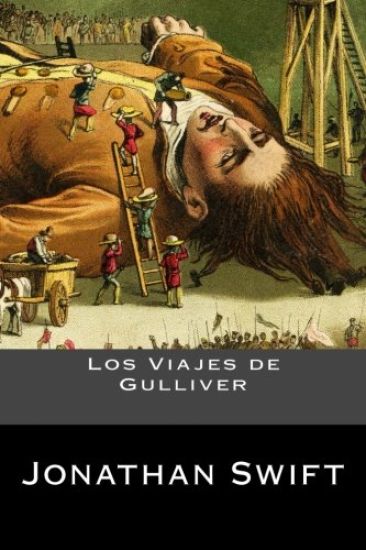
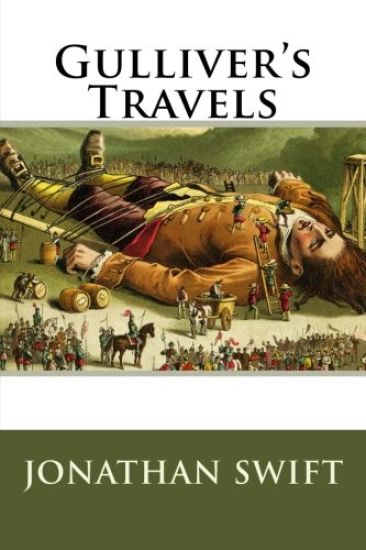
El libro se nos presenta como la narraci n de un viajero con el falso t tulo Viajes a varias remotas Naciones del Mundo, su autor a solo se asigna a Lemuel Gulliver, siendo al principio un cirujano, y luego un capit n de diversos barcos. El texto es presentado como una narraci n en primera persona por el supuesto autor, y el nombre Gulliver no aparece en el libro m s que en el t tulo. Diferentes versiones del libro contienen diferentes versiones del material introductorio que son casi los mismos en los libros modernos. El libro propiamente dicho est dividido en cuatro partes, cada una representando un viaje.
Jonathan Swift (Dubl n, 30 de noviembre de 1667-ib d., 19 de octubre de 1745) fue un escritor sat rico irland s. Su obra principal es Los viajes de Gulliver, que constituye una de las cr ticas m s amargas, y a la vez sat ricas, que se han escrito contra la sociedad y la condici n humana.
Cuento de una barrica ("A Tale of a Tub"), tambi n conocida como Historia de una barrica o Cuento de un tonel, es la primera obra mayor de Jonathan Swift, compuesta entre 1694 y 1697, y publicada en 1704. Se trata de su s tira m s dif cil y probablemente la mejor. La historia (en ingl s "tale", cuento) es una parodia en prosa dividida en dos secciones: "digresi n" e "historia". La "historia" presenta una nica s tira, por cap tulos, sobre el exceso religioso, mientras que la digresi n est compuesta de una serie de parodias sobre la literatura contempor nea en los campos de la propia literatura, as como de la pol tica, la teolog a, la interpretaci n de la Biblia, y la medicina. La parodia se extiende a la cr tica del entusiasmo, el orgullo, y la credulidad.
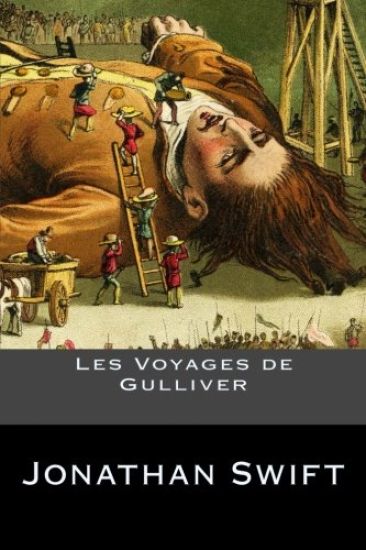
Les Voyages de Gulliver ou Les Voyages extraordinaires de Gulliver (en anglais Gulliver's Travels) est un roman satirique crit par Jonathan Swift en 1721. Une version censur e et modifi e par son diteur para t pour la premi re fois en 1726; ce n'est qu'en 1735 qu'il para tra en version compl te. Il appara t pour la premi re fois en fran ais sous le titre Voyages du capitaine Lemuel Gulliver au xviiie si cle, traduit par l'abb Desfontaines. Ces r cits, tr s riches, m lent, en les relativisant, critique et raison, folie et pamphlet, fantastique et science-fiction. En ce sens, Swift amorce l' re des Lumi res anglaise et pr c de Oscar Wilde, Lewis Carroll, mais aussi Edgar Allan Poe.
The context In 1726, Swift began Gulliver's Travels which marks a peak of social and political satire through mixing elements on the pamphlet or the mode of the narrative, philosophy, logic, and fantasy science fiction. The novel was written by Swift after the crash of 1720. He had bought shares in the South Sea Company for 1000 pounds. Speculation had increased the value of a share of 128 pounds to 1050 pounds, before collapsing ruining many British traders. This increase and miniaturization of wealth in a very short time had to give Swift the idea of the relative size of changes in its main character would be a metaphor for this crash Swift giving the opportunity to make fun of through the society of his time. Jonathan Swift, born November 30, 1667 in Dublin, Ireland, and died October 19, 1745 in the same city is a writer, satirist, essayist, pamphleteer Anglo-Irish politics. 1] He is also a poet and scholar and, as he was Dean of St Patrick's Cathedral in Dublin. He is famous for writing Gulliver's Travels. Swift is probably the greatest satirist in prose in the English language. He published his works by using pseudonyms as Lemuel Gulliver, Isaac Bickerstaff and M. B. Draper, or even anonymously. Finally, it is known to be a master of two styles of satire, the satire and horacienne juv nalienne satire. He is a member of Scriblerus Club. His first works He returned to Moor Park, where lives Temple. He wrote the Battle of the Books to defend Temple in the quarrel of the Ancients and the Moderns and in 1704, The Tale of the barrel, major work as a ruthless text regarding the stupidity of his contemporaries and who displease Queen Anne. In 1701, he anonymously published his first political pamphlet, A Discourse on the Contests and dissensions in Athens and Rome, where he sided with the Whigs. In 1702, three years after the death of the Temple, he returned to Ireland with Esther Johnson (now aged 20). He quickly gets the benefit of Laracor in County Mealth and a stipend to St. Patrick's Cathedral in Dublin. During the coming to power of the Tories in 1710, Swift supports through articles he wrote for the Examiner from 1711 to 1714, a newspaper of which he is the editor. In 1711, Swift published the political pamphlet "The Conduct of the Allies" attacking the Whig government for its failure to end the war with France. It is thus responsible for preparing public opinion for peace. It is at this time that the Tory government is conducting secret negotiations with France that will lead to the Treaty of Utrecht in 1713, helping to end the war of Spanish Succession.
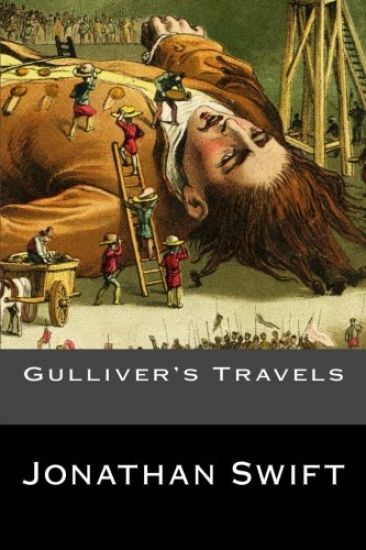
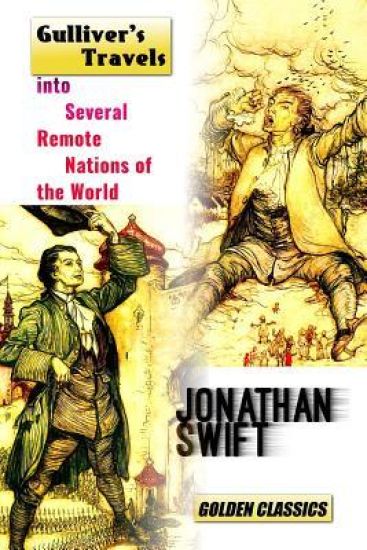
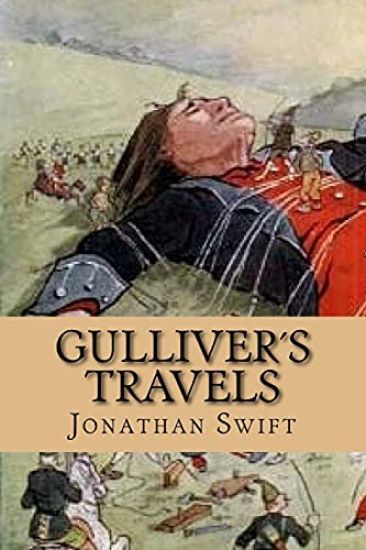
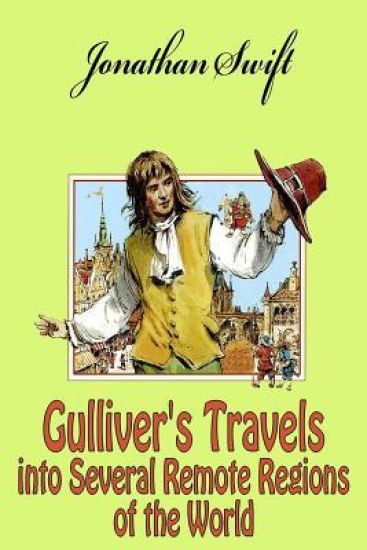
Gulliver's Travels, whose full title is Travels into Several Remote Nations of the World. In Four Parts. By Lemuel Gulliver, First a Surgeon, and then a Captain of Several Ships, (1726, amended 1735), is a prose satire by Irish writer and clergyman Jonathan Swift, that is both a satire on human nature and the "travellers' tales" literary subgenre. It is Swift's best known full-length work, and a classic of English literature. During his first voyage, Gulliver is washed ashore after a shipwreck and finds himself a prisoner of a race of tiny people, less than 6 inches tall, who are inhabitants of the island country of Lilliput. After giving assurances of his good behaviour, he is given a residence in Lilliput and becomes a favourite of the Lilliput Court. However Gulliver soon sets out again on his travels. When the sailing ship Adventure is blown off course by storms and forced to sail for land in search of fresh water, Gulliver is abandoned by his companions and is left on an island. The grass of that island is as tall as a tree. He is then found by a farmer (from a race of giants) who is about 72 feet tall, judging from Gulliver estimating a man's step being 10 yards (9 m) - and he begins his life amongst the Brobdingnagians.Each RADLEY CLASSIC is a meticulously restored, luxurious and faithful reproduction of a classic book; produced with elegant text layout, clarity of presentation, and stylistic features that make reading a true pleasure. Special attention is given to legible fonts and adequate letter sizing, correct line length for readability, generous margins and triple lead (lavish line separation); plus we do not allow any mistakes/changes to creep into the original author's words. Visit RADLEY BOOKS at www.radleybooks.com to see more classic book titles in this series.
Classics for Your Collection: goo.gl/U80LCr --------- Gulliver's Travels, whose full title is Travels into Several Remote Nations of the World. In Four Parts. By Lemuel Gulliver, First a Surgeon, and then a Captain of Several Ships, (1726, amended 1735), is a prose satire by Irish writer and clergyman Jonathan Swift, that is both a satire on human nature and the "travelers' tales" literary subgenre. It is Swift's best known full-length work, and a classic of English literature. He himself claimed that he wrote Gulliver's Travels "to vex the world rather than divert it". The book became popular as soon as it was published. John Gay wrote in a 1726 letter to Swift that "It is universally read, from the cabinet council to the nursery." This ever-green book that has served and entertained many generations is divided into four parts, each describing Gulliver's adventures in a different undiscovered part of the world. Part I is Lilliput, which everyone knows about already; Part II is Brobdingnag, where everyone is much bigger than Gulliver (in contrast to Lilliput); Part III is a voyage to Laputa, Balnibarbi, Luggnagg, Glubbdubdrib, and Japan. And in Part IV Gulliver goes to the country of the Houyhnhnms, an island inhabited by super-intelligent horses. Scroll Up and Grab Your Copy
Les Voyages de Gulliver marquent un sommet de la satire sociale et politique au travers d' l ments m lant, sur le mode du pamphlet ou de la description narrative, de la philosophie, de la logique, du fantastique et de la science-fiction. Le roman a t crit par Swift apr s le krach de 1720. Il avait achet des actions de la Compagnie des mers du Sud pour 1 000 livres. La sp culation avait fait passer la valeur d'une action de 128 livres 1 050 livres, avant de s'effondrer ruinant bon nombre de commer ants britanniques. Cet accroissement puis cette miniaturisation de la richesse en un temps tr s court a d donner Swift l'id e des changements de taille relative de son personnage principal qui serait une m taphore de ce krach en donnant Swift l'occasion de se moquer des travers de la soci t de son temps.
Les Voyages de Gulliver marquent un sommet de la satire sociale et politique au travers d' l ments m lant, sur le mode du pamphlet ou de la description narrative, de la philosophie, de la logique, du fantastique et de la science-fiction. Le roman a t crit par Swift apr s le krach de 1720. Il avait achet des actions de la Compagnie des mers du Sud pour 1 000 livres. La sp culation avait fait passer la valeur d'une action de 128 livres 1 050 livres, avant de s'effondrer ruinant bon nombre de commer ants britanniques. Cet accroissement puis cette miniaturisation de la richesse en un temps tr s court a d donner Swift l'id e des changements de taille relative de son personnage principal qui serait une m taphore de ce krach en donnant Swift l'occasion de se moquer des travers de la soci t de son temps.
Gulliver's Travels, whose full title is Travels into Several Remote Nations of the World. In Four Parts. By Lemuel Gulliver, First a Surgeon, and then a Captain of Several Ships, (1726, amended 1735), is a prose satire by Irish writer and clergyman Jonathan Swift, that is both a satire on human nature and the "travellers' tales" literary subgenre. It is Swift's best known full-length work, and a classic of English literature. He himself claimed that he wrote Gulliver's Travels "to vex the world rather than divert it".
Gulliver's Travels, whose full title is Travels into Several Remote Nations of the World. In Four Parts. By Lemuel Gulliver, First a Surgeon, and then a Captain of Several Ships, (1726, amended 1735), is a prose satire by Irish writer and clergyman Jonathan Swift, that is both a satire on human nature and the "travellers' tales" literary subgenre. It is Swift's best known full-length work, and a classic of English literature. He himself claimed that he wrote Gulliver's Travels "to vex the world rather than divert it".The travel begins with a short preamble in which Lemuel Gulliver gives a brief outline of his life and history before his voyages.During his first voyage, Gulliver is washed ashore after a shipwreck and finds himself a prisoner of a race of tiny people, less than 6 inches (0.50 ft) tall, who are inhabitants of the island country of Lilliput. After giving assurances of his good behavior, he is given a residence in Lilliput and becomes a favorite of the Lilliput Royal Court. He is also given permission by the King of Lilliput to go around the city on condition that he must not harm their subjects.At first, the Lilliputians are hospitable to Gulliver, but they are also wary of the threat that his size poses to them. The Lilliputians reveal themselves to be a people who put great emphasis on trivial matters. For example, which end of an egg a person cracks becomes the basis of a deep political rift within that nation. They are a people who revel in displays of authority and performances of power. Gulliver assists the Lilliputians to subdue their neighbors the Blefuscudians by stealing their fleet. However, he refuses to reduce the island nation of Blefuscu to a province of Lilliput, displeasing the King and the royal court.Gulliver is charged with treason for, among other crimes, "making water" in the capital though he was putting out a fire and saving countless lives. He is convicted and sentenced to be blinded. With the assistance of a kind friend, "a considerable person at court", he escapes to Blefuscu. Here, he spots and retrieves an abandoned boat and sails out to be rescued by a passing ship, which safely takes him back home.
Gulliver's Travels, whose full title is Travels into Several Remote Nations of the World. In Four Parts. By Lemuel Gulliver, First a Surgeon, and then a Captain of Several Ships, (1726, amended 1735), is a prose satire by Irish writer and clergyman Jonathan Swift, that is both a satire on human nature and the "travellers' tales" literary subgenre. It is Swift's best known full-length work, and a classic of English literature. He himself claimed that he wrote Gulliver's Travels "to vex the world rather than divert it".The book became popular as soon as it was published. John Gay wrote in a 1726 letter to Swift that "It is universally read, from the cabinet council to the nursery." It was once compared in terms of book sales with Love in Excess.