Kirjojen hintavertailu. Mukana 11 717 486 kirjaa ja 12 kauppaa.

Kirjahaku

Etsi kirjoja tekijän nimen, kirjan nimen tai ISBN:n perusteella.

1000 tulosta hakusanalla Julius Caesar

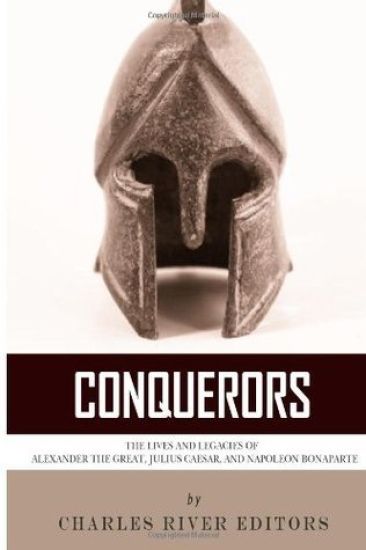
Conquerors: The Lives and Legacies of Alexander the Great, Julius Caesar, and Napoleon Bonaparte
*Includes pictures depicting important people, places, and events in each man's life. *Discusses interesting, lesser known facts about each man and answers common myths and misconceptions about them. Was Alexander referenced in the Qur'an? What were Caesar's last words? Was Napoleon really short? *Includes bibliographies on Napoleon and Alexander for further reading. "There is nothing impossible to him that will but try" - Alexander "I would rather be the first man in a humble village, than the second man in Rome" - Caesar "Courage cannot be counterfeited. It is the one virtue that escapes hypocrisy." - Napoleon Over the last 2,000 years, ambitious men have dreamed of conquering vast empires and attaining eternal glory in battle, but of all the men who took steps toward such dreams, few were as successful as Alexander the Great, Julius Caesar, and Napoleon Bonaparte, all of whom have been inextricably tied together by their successes and ambitions. Over the last 200 years, would-be conquerors and generals hoped to rival Napoleon's accomplishments, while Napoleon aimed to emulate the accomplishments of Julius Caesar. But Caesar himself found inspiration in Alexander the Great (356-323 B.C.), the Macedonian King who managed to stretch an empire from Greece to the Himalayas in Asia at just 30 years old. It took less than 15 years for Alexander to conquer much of the known world. Alexander was responsible for establishing 20 cities in his name across the world, most notably Alexandria in Egypt, and he was directly responsible for spreading Ancient Greek culture as far east as modern day India and other parts of Asia. Alexander was a legend in his own time, and one of the men who viewed his body was possibly the most important man of antiquity, and even all of history: Julius Caesar. The ultimate conqueror, statesman, dictator, visionary, and opportunist, during his time in power Caesar expanded the borders of Rome to almost twice their previous size, revolutionized the infrastructure of the Roman state, and destroyed the Roman Republic for good, leaving a line of emperors in its place. His legacy is so strong that his name has become, in many languages, synonymous with power: the Emperors of Austria and Germany bore the title Kaiser, and the Czars of Russia also owe the etymology of their title to Caesar. His name also crept further eastward out of Europe, even cropping up in Hindi and Urdu, where the term for "Emperor" is Kaisar. When historians are asked to list the most influential people of the last 200 years, a handful of names might vary, but there is no question that the list will include Napoleon Bonaparte (1769-1821), the most successful French leader since Charlemagne and widely acknowledged as one of the greatest generals ever. Indeed, Napoleon was likely the most influential man of the 19th century, leaving an indelible mark on everything from the strategy and tactics of warfare to the Napoleonic Code that drafted laws across the continent. To defeat Napoleon, the Europeans had to form large coalitions multiple times, which helped bring about the entangling alliances that sparked World War I after Europe was rebuilt following Waterloo and the Congress of Vienna. Conquerors chronicles the amazing lives and accomplishments of these conquerors, while discussing and explaining some of the myths and legends that have surrounded them for centuries. Along with pictures of important people, places, and events, you will learn about Alexander the Great, Julius Caesar, and Napoleon Bonaparte like you never have before, in no time at all.
Schenck's Official Stage Play Formatting Series: Vol. 9: The Tragedy of Julius Caesar

Schenck's Official Stage Play Formatting Series: Vol. 9: The Tragedy of Julius Caesar

William Shakespeare; Jr. Walter Joseph Schenck

Createspace Independent Publishing Platform
2018
nidottu
Shakespeare's play is finally correctly formatted by award winning author, award-winning poet, award-winning biographer, Walter Joseph Schenck, Jr. Walter has created the Official Stage Formatting Series which follows the guidelines that he has established for all classic plays. "How To Correctly Format A Stage Play." Walter Schenck's series offers: 8.5 by 11 size. 1.5 inches from left edge. Character names centered in caps with .5 offset. Exit and enter directions on right side Stage Directions and Dialogue instructions properly placed. Dialogue Line Numbering. Courier 12 point font
The Roman Empire: The History and Legacy of the Ancient World's Most Famous Empire from Julius Caesar to Its Collapse
*Includes pictures*Includes ancient accounts*Includes online resources and a bibliography for further readingPossibly the most important man of antiquity, and even all of history, was Julius Caesar. Alexander Hamilton, the famous American patriot, once remarked that "the greatest man who ever lived was Julius Caesar". Such a tribute, coming from one of the Founding Fathers of the quintessential modern democracy in reference to a man who destroyed the Roman Republic, is testament to the enduring mark that Caesar left upon the world. The ultimate conqueror, statesman, dictator, visionary, and opportunist, during his time in power Caesar expanded the borders of Rome to almost twice their previous size, revolutionized the infrastructure of the Roman state, and destroyed the Roman Republic for good, leaving a line of emperors in its place. His legacy is so strong that his name has become, in many languages, synonymous with power: the Emperors of Austria and Germany bore the title Kaiser, and the Czars of Russia also owe the etymology of their title to Caesar. His name also crept further eastward out of Europe, even cropping up in Hindi and Urdu, where the term for "Emperor" is Kaisar. Even in his time, Caesar was in many ways larger than life, and because of his legacy as virtual founder of the Roman Empire, much of what was written about - and by - him during his life and immediately after his assassination was politically motivated. His successor, Octavian Augustus, had a strong interest in ensuring that Caesar's life be painted in a favorable light, while Caesar's political enemies attempted to paint him as a corrupt, undemocratic dictator who was destroying the old order of the Republic. This makes it exceedingly difficult to separate historical fact from apocryphal interjection, as the writings of Cicero (a rival of Caesar's) and the later biographies of Suetonius and Plutarch can be misleading. Nonetheless, along with Caesar's De Bello Gallico, his famous notes on his campaign against the Gauls, they remain our chief sources for Caesar's life - a life everyone agreed was nothing short of remarkable and changed the course of history forever. As Roman leaders vied with each other for power and constantly fought civil wars, Rome's famous roads fall into disrepair, the economy was crippled, the continent-wide trade system that had flourished in the previous years was replaced with a basic barter system, and there was a reduction in international trade. People became ever more fearful for their personal safety, and the Imperial Crisis saw an increasing trend toward sacrificing personal liberties and rights in return for guarantees of safety from wealthy landowners. All of this foreshadowed the emergence of the European feudal system and serfdom. These were obviously turbulent times, and given the volatility, many historians have debated how the Roman Empire managed to survive in any form at all, let alone remain robust enough to allow Diocletian and his successors to restore it. Given the many people involved, and the relatively short era in which everything transpired, Rome's Imperial Crisis has been difficult for historians to summarize, which is why, despite being one of the most intriguing periods in Roman history, it is often overlooked by people who have chosen to focus on the more cohesive periods before and after it.The Roman Empire: The History and Legacy of the Ancient World's Most Famous Empire from Julius Caesar to Its Collapse examines the history of Rome after the fall of the Republic. Along with pictures depicting important people, places, and events, you will learn about the empire like never before.
The Roman Empire: The History and Legacy of the Ancient World's Most Famous Empire from Julius Caesar to Its Collapse
*Includes pictures*Includes ancient accounts*Includes online resources and a bibliography for further readingPossibly the most important man of antiquity, and even all of history, was Julius Caesar. Alexander Hamilton, the famous American patriot, once remarked that "the greatest man who ever lived was Julius Caesar". Such a tribute, coming from one of the Founding Fathers of the quintessential modern democracy in reference to a man who destroyed the Roman Republic, is testament to the enduring mark that Caesar left upon the world. The ultimate conqueror, statesman, dictator, visionary, and opportunist, during his time in power Caesar expanded the borders of Rome to almost twice their previous size, revolutionized the infrastructure of the Roman state, and destroyed the Roman Republic for good, leaving a line of emperors in its place. His legacy is so strong that his name has become, in many languages, synonymous with power: the Emperors of Austria and Germany bore the title Kaiser, and the Czars of Russia also owe the etymology of their title to Caesar. His name also crept further eastward out of Europe, even cropping up in Hindi and Urdu, where the term for "Emperor" is Kaisar. Even in his time, Caesar was in many ways larger than life, and because of his legacy as virtual founder of the Roman Empire, much of what was written about - and by - him during his life and immediately after his assassination was politically motivated. His successor, Octavian Augustus, had a strong interest in ensuring that Caesar's life be painted in a favorable light, while Caesar's political enemies attempted to paint him as a corrupt, undemocratic dictator who was destroying the old order of the Republic. This makes it exceedingly difficult to separate historical fact from apocryphal interjection, as the writings of Cicero (a rival of Caesar's) and the later biographies of Suetonius and Plutarch can be misleading. Nonetheless, along with Caesar's De Bello Gallico, his famous notes on his campaign against the Gauls, they remain our chief sources for Caesar's life - a life everyone agreed was nothing short of remarkable and changed the course of history forever. As Roman leaders vied with each other for power and constantly fought civil wars, Rome's famous roads fall into disrepair, the economy was crippled, the continent-wide trade system that had flourished in the previous years was replaced with a basic barter system, and there was a reduction in international trade. People became ever more fearful for their personal safety, and the Imperial Crisis saw an increasing trend toward sacrificing personal liberties and rights in return for guarantees of safety from wealthy landowners. All of this foreshadowed the emergence of the European feudal system and serfdom. These were obviously turbulent times, and given the volatility, many historians have debated how the Roman Empire managed to survive in any form at all, let alone remain robust enough to allow Diocletian and his successors to restore it. Given the many people involved, and the relatively short era in which everything transpired, Rome's Imperial Crisis has been difficult for historians to summarize, which is why, despite being one of the most intriguing periods in Roman history, it is often overlooked by people who have chosen to focus on the more cohesive periods before and after it.The Roman Empire: The History and Legacy of the Ancient World's Most Famous Empire from Julius Caesar to Its Collapse examines the history of Rome after the fall of the Republic. Along with pictures depicting important people, places, and events, you will learn about the empire like never before.
Hour-Long Shakespeare Volume II (Romeo and Juliet, Macbeth and Julius Caesar)
Abridged specifically for all those interested in Shakespeare's plays, especially teachers and students of English and drama, these one-hour performance scripts maintain the arcs of Shakespeare's plots without compromising the integrity of his original language. What remains are manageable performance texts and the essential elements needed for an introduction to three of Shakespeare's most popular plays.
Conquerors: The Lives and Legacies of Alexander the Great, Julius Caesar, and Napoleon Bonaparte
*Includes pictures depicting important people, places, and events in each man's life. *Discusses interesting, lesser known facts about each man and answers common myths and misconceptions about them. Was Alexander referenced in the Qur'an? What were Caesar's last words? Was Napoleon really short? *Includes bibliographies on Napoleon and Alexander for further reading. "There is nothing impossible to him that will but try" - Alexander "I would rather be the first man in a humble village, than the second man in Rome" - Caesar "Courage cannot be counterfeited. It is the one virtue that escapes hypocrisy." - Napoleon Over the last 2,000 years, ambitious men have dreamed of conquering vast empires and attaining eternal glory in battle, but of all the men who took steps toward such dreams, few were as successful as Alexander the Great, Julius Caesar, and Napoleon Bonaparte, all of whom have been inextricably tied together by their successes and ambitions. Over the last 200 years, would-be conquerors and generals hoped to rival Napoleon's accomplishments, while Napoleon aimed to emulate the accomplishments of Julius Caesar. But Caesar himself found inspiration in Alexander the Great (356-323 B.C.), the Macedonian King who managed to stretch an empire from Greece to the Himalayas in Asia at just 30 years old. It took less than 15 years for Alexander to conquer much of the known world. Alexander was responsible for establishing 20 cities in his name across the world, most notably Alexandria in Egypt, and he was directly responsible for spreading Ancient Greek culture as far east as modern day India and other parts of Asia. Alexander was a legend in his own time, and one of the men who viewed his body was possibly the most important man of antiquity, and even all of history: Julius Caesar. The ultimate conqueror, statesman, dictator, visionary, and opportunist, during his time in power Caesar expanded the borders of Rome to almost twice their previous size, revolutionized the infrastructure of the Roman state, and destroyed the Roman Republic for good, leaving a line of emperors in its place. His legacy is so strong that his name has become, in many languages, synonymous with power: the Emperors of Austria and Germany bore the title Kaiser, and the Czars of Russia also owe the etymology of their title to Caesar. His name also crept further eastward out of Europe, even cropping up in Hindi and Urdu, where the term for "Emperor" is Kaisar. When historians are asked to list the most influential people of the last 200 years, a handful of names might vary, but there is no question that the list will include Napoleon Bonaparte (1769-1821), the most successful French leader since Charlemagne and widely acknowledged as one of the greatest generals ever. Indeed, Napoleon was likely the most influential man of the 19th century, leaving an indelible mark on everything from the strategy and tactics of warfare to the Napoleonic Code that drafted laws across the continent. To defeat Napoleon, the Europeans had to form large coalitions multiple times, which helped bring about the entangling alliances that sparked World War I after Europe was rebuilt following Waterloo and the Congress of Vienna. Conquerors chronicles the amazing lives and accomplishments of these conquerors, while discussing and explaining some of the myths and legends that have surrounded them for centuries. Along with pictures of important people, places, and events, you will learn about Alexander the Great, Julius Caesar, and Napoleon Bonaparte like you never have before, in no time at all.

Tragedies: King Lear; Othello; Julius Caesar
Byvajut li ljudi chestnymi i dobrodetelnymi? Tragedii Uiljama Shekspira "Korol Lir", "Otello" i "Julij Tsezar" pokazyvajut, kak legko pod vesom sudbonosnykh reshenij i chelovecheskogo nesovershenstva v nichto obraschajutsja i dobrodetel, i chest. "Korol Lir" - pesa o predannom dochermi monarkhe, chi vladenija rassypajutsja podobno ego razumu, ustupajuschemu mesto khaosu bezumija. "Otello" - tragedija ob uvazhaemom generale, kotoryj popal v iskusno spletennye seti obmana i pozvolil jarostnoj revnosti zaglushit dovody serdtsa i rassudka. "Julij Tsezar" - istorija o chestoljubii i politicheskikh intrigakh, o tom, chto ljudi oshibajutsja, a vlast vlechet slishkom mnogikh.Nasladites izjaschnym slogom Shekspira na jazyke originala za chteniem velichajshikh tragedij v istorii anglijskoj literatury.
A Complete History Of England, From The Descent Of Julius Caesar, To The Treaty Of Aix La Chapelle, 1748. Containing The Transactions Of One Thousand Eight Hundred And Three Years (Volume Iv)
A Complete History Of England, From The Descent Of Julius Caesar, To The Treaty Of Aix La Chapelle, 1748. Containing The Transactions Of One Thousand Eight Hundred And Three Years (Volume Iv) has been considered by academicians and scholars of great significance and value to literature. This forms a part of the knowledge base for future generations. So that the book is never forgotten we have represented this book in a print format as the same form as it was originally first published. Hence any marks or annotations seen are left intentionally to preserve its true nature.
A Complete History Of England, From The Descent Of Julius Caesar, To The Treaty Of Aix La Chapelle, 1748. Containing The Transactions Of One Thousand Eight Hundred And Three Years (Volume V)
A Complete History Of England, From The Descent Of Julius Caesar, To The Treaty Of Aix La Chapelle, 1748. Containing The Transactions Of One Thousand Eight Hundred And Three Years (Volume V) has been considered by academicians and scholars of great significance and value to literature. This forms a part of the knowledge base for future generations. So that the book is never forgotten we have represented this book in a print format as the same form as it was originally first published. Hence any marks or annotations seen are left intentionally to preserve its true nature.
Yo, Julio César / I, Julius Caesar

Yo, Julio César / I, Julius Caesar

Alfred de Montesquiou

Reservoir Books
2026
sidottu
La vida de Julio C sar contada por s mismo. La novela gr fica m s completa jam s dibujada sobre el hombre m s poderoso de la Antigua Roma: 32 historiadores, 16 pa ses y tres a os de investigaci n. C mo fue posible que Julio, un adolescente de constituci n fr gil y sin dinero, se convirtiera en C sar, el hombre m s poderoso del mundo? C mo pudo derrotar a todos sus enemigos y luego morir a manos de sus amigos? Construida sobre un impresionante edificio de investigaci n hist rica, esta biograf a --contada en primera persona por su protagonista-- refleja v vidamente el incre ble destino de una figura nica. ENGLISH DESCRIPTION The life of Julius Caesar told by Caesar himself. The most complete graphic novel ever drawn about the most powerful man of Ancient Rome: 32 historians, 16 countries, and three years of research. How was it possible that Julius, a teenager with a fragile constitution and no money, became Caesar, the most powerful man in the world? How could he defeat all his enemies and then die at the hands of his friends? Built on an impressive foundation of historical research, this biography, told in the first person by its protagonist--vividly reflects the incredible destiny of a unique figure.
The Top 5 Greatest Generals: Alexander the Great, Hannibal, Julius Caesar, Genghis Khan, and Napoleon Bonaparte
Includes pictures depicting important people, places, and events in each man's life. Discusses interesting, lesser known facts about each man and answers common myths and misconceptions about them. Was Alexander referenced in the Qur'an? What were Caesar's last words? Was Napoleon really short? Includes bibliographies on Napoleon and Alexander for further reading. Over the last 2,000 years, ambitious men have dreamed of conquering vast empires and attaining eternal glory in battle, but of all the men who took steps toward such dreams, few were as successful as Alexander the Great, Hannibal, Julius Caesar, Genghis Khan, and Napoleon Bonaparte, all of whom have been inextricably tied together by their successes and ambitions. Over the last 200 years, would-be conquerors and generals hoped to rival Napoleon's accomplishments, while Napoleon aimed to emulate the accomplishments of Julius Caesar. But Caesar himself found inspiration in Alexander the Great (356-323 B.C.), the Macedonian King who managed to stretch an empire from Greece to the Himalayas in Asia at just 30 years old. It took less than 15 years for Alexander to conquer much of the known world. Alexander was responsible for establishing 20 cities in his name across the world, most notably Alexandria in Egypt, and he was directly responsible for spreading Ancient Greek culture as far east as modern day India and other parts of Asia. Hannibal has the distinction of being the only man who nearly brought Rome to its knees before its decline almost 700 years later. Rome never suffered a more horrifying defeat in its history than at Cannae, and indeed, Hannibal nearly rewrote the course of Western history during the Second Punic War. Even today there remains great debate on just how he accomplished his masterful invasion of Italy across the Alps. Since his army included war elephants, historians still argue over exactly where and how he crossed over 2,000 years after he managed that incredible feat. Hannibal will always be listed among history's greatest generals, and his military campaign in Italy during the Second Punic War will always be studied, but part of the aura and mystique surrounding the Carthaginian legend is that there is still a lot of mystery. The ultimate conqueror, statesman, dictator, visionary, and opportunist, during his time in power Caesar expanded the borders of Rome to almost twice their previous size, revolutionized the infrastructure of the Roman state, and destroyed the Roman Republic for good, leaving a line of emperors in its place. His legacy is so strong that his name has become, in many languages, synonymous with power: the Emperors of Austria and Germany bore the title Kaiser, and the Czars of Russia also owe the etymology of their title to Caesar. His name also crept further eastward out of Europe, even cropping up in Hindi and Urdu, where the term for "Emperor" is Kaisar. In a world fascinated by men like Alexander the Great and Julius Caesar, Genghis Khan is one of history's greatest and most famous conquerors. No man, before or since, has ever started with so little and gone on to achieve so much. From a noble family but raised in poverty that drove him to the brink of starvation, Genghis Khan rose to control the second-largest empire the world has ever known (the largest being, arguably, the British Empire of the 18th and 19th centuries), and easily the largest empire conquered by a single man. Napoleon Bonaparte was the most successful French leader since Charlemagne and widely acknowledged as one of the greatest generals ever. Indeed, Napoleon was likely the most influential man of the 19th century, leaving an indelible mark on everything from the strategy and tactics of warfare to the Napoleonic Code that drafted laws across the continent. To defeat Napoleon, the Europeans had to form large coalitions multiple times, which helped bring about the entangling alliances that sparked World War
The Chronological Historian; or, a record of public events ... illustrative of the ... history of Great Britain and its dependencies from the invasion of Julius Cæsar to the present time.
Title: The Chronological Historian; or, a record of public events ... illustrative of the ... history of Great Britain and its dependencies from the invasion of Julius C sar to the present time.Publisher: British Library, Historical Print EditionsThe British Library is the national library of the United Kingdom. It is one of the world's largest research libraries holding over 150 million items in all known languages and formats: books, journals, newspapers, sound recordings, patents, maps, stamps, prints and much more. Its collections include around 14 million books, along with substantial additional collections of manuscripts and historical items dating back as far as 300 BC.The HISTORY OF BRITAIN & IRELAND collection includes books from the British Library digitised by Microsoft. As well as historical works, this collection includes geographies, travelogues, and titles covering periods of competition and cooperation among the people of Great Britain and Ireland. Works also explore the countries' relations with France, Germany, the Low Countries, Denmark, and Scandinavia. ++++The below data was compiled from various identification fields in the bibliographic record of this title. This data is provided as an additional tool in helping to insure edition identification: ++++ British Library Toone, William; 1828. 2 vol.; 8 . 9503.ee.2.