
Kirjahaku
Etsi kirjoja tekijän nimen, kirjan nimen tai ISBN:n perusteella.
1000 tulosta hakusanalla Keith Harding


A unique collection recalling the year in which the Cheetahs were resurrected after the stadium nearly closed. Numerous photos illustrate the facts of the matches as well as some stories of the fight to save and preserve Cowley Stadium.

This is a pictorial scrapbook of memories of speedway between the years 1974 to 1978- a collection of photos taken by journalist and trackside photographer, Keith Lawson. The photos have been scanned from rescued negatives that had long been neglected in a box in his attic but the current trend of nostalgia for the golden age of speedway drove him to spend hundreds of hours on the task, so they could be shared and enjoyed. Anyone involved in speedway at this time, will love the trip down memory lane.


'Dark and Civil' deals with the subject of terrorism and its manipulation by both government and civil rights groups.
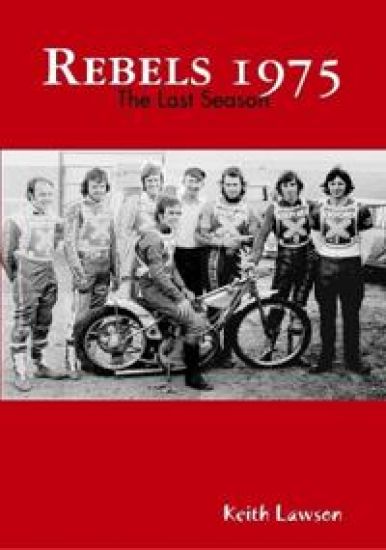
A unique collection of over 300 photos recalling the final year of Oxford Rebels (1975) - the riders, the races, the champions. With references and photos of all the British League teams that year. Plus the results of the matches with individual riders' scores.

This volume is the first book-length study of the extensive career and prolific works of D.A. Pennebaker, one of the pioneers of direct cinema, a documentary form that emphasizes observation and a straightforward portrayal of events. With a career spanning decades, Pennebaker's many projects have included avant-garde experiments (Daybreak Express), ground-breaking television documentaries (Primary), celebrity films (Dont Look Back), concert films (Monterey Pop), and innovative fusions of documentary and fiction (Maidstone). Exploring the concept of "performing the real," Keith Beattie interprets Pennebaker's films as performances in which the act of filming is in itself a performative transgression of the norms of purely observational documentary. He examines the ways in which Pennebaker's presentation of unscripted everyday performances is informed by connections between documentary filmmaking and other experimental movements such as the New American Cinema. Through his collaborations with such various artists as Richard Leacock, Shirley Clarke, Norman Mailer, and Jean-Luc Godard, Pennebaker has continually reworked and redefined the forms of documentary filmmaking. This book also includes a recent interview with the director and a full filmography.
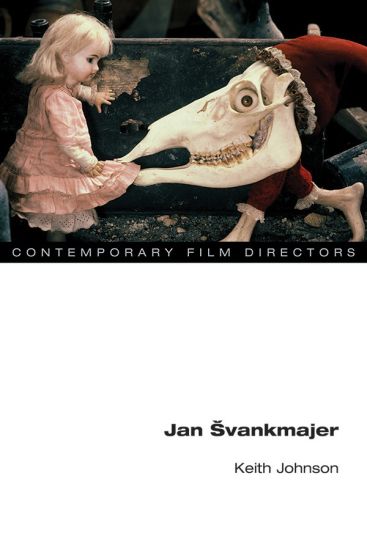
Jan Svankmajer enjoys a curious sort of anti-reputation: he is famous for being obscure. Unapologetically surrealist, Svankmajer draws on the traditions and techniques of stop-motion animation, collage, montage, puppetry, and clay to craft bizarre filmscapes. If these creative choices are off-putting to some, they have nonetheless won the Czech filmmaker recognition as a visionary animator. Keith Leslie Johnson explores Svankmajer's work as a cinema that spawns new and weird life forms "hybrids of machine, animal, and non-organic materials like stone and dust. Johnson's ambitious approach unlocks access to the director's world, a place governed by a single, uncanny order of being where all things are at once animated and inert. For Svankmajer, everything is at stake in every aspect of life, whether that life takes the form of an object, creature, or human. Sexuality, social bonds, religious longings "all get recapitulated on the stage of inanimate things. In Johnson's view, Svankmajer stands as the proponent of a biopolitical, ethical, and ecological outlook that implores us to reprogram our relationship with the vital matter all around us, including ourselves and our bodies.

Black Manhood in James Baldwin, Ernest J. Gaines, and August Wilson
Keith Clark
University of Illinois Press
2004
nidottu
Challenging the standard portrayals of Black men in African American literature From Frederick Douglass to the present, the preoccupation of black writers with manhood and masculinity is a constant. Black Manhood in James Baldwin, Ernest J. Gaines, and August Wilson explores how in their own work three major African American writers contest classic portrayals of black men in earlier literature, from slave narratives through the great novels of Richard Wright and Ralph Ellison. Keith Clark examines short stories, novels, and plays by Baldwin, Gaines, and Wilson, arguing that since the 1950s the three have interrupted and radically dismantled the constricting literary depictions of black men who equate selfhood with victimization, isolation, and patriarchy. Instead, they have reimagined black men whose identity is grounded in community, camaraderie, and intimacy. Delivering original and startling insights, this book will appeal to scholars and students of African American literature, gender studies, and narratology.
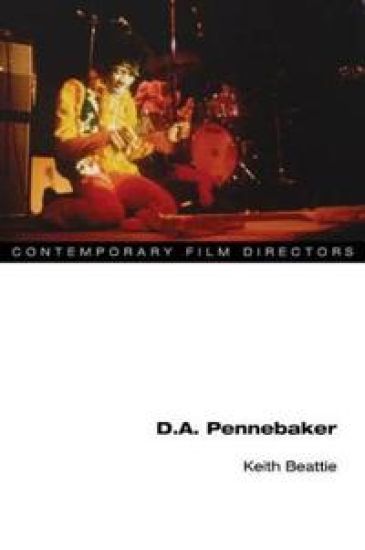
This volume is the first book-length study of the extensive career and prolific works of D.A. Pennebaker, one of the pioneers of direct cinema, a documentary form that emphasizes observation and a straightforward portrayal of events. With a career spanning decades, Pennebaker's many projects have included avant-garde experiments (Daybreak Express), ground-breaking television documentaries (Primary), celebrity films (Dont Look Back), concert films (Monterey Pop), and innovative fusions of documentary and fiction (Maidstone). Exploring the concept of "performing the real," Keith Beattie interprets Pennebaker's films as performances in which the act of filming is in itself a performative transgression of the norms of purely observational documentary. He examines the ways in which Pennebaker's presentation of unscripted everyday performances is informed by connections between documentary filmmaking and other experimental movements such as the New American Cinema. Through his collaborations with such various artists as Richard Leacock, Shirley Clarke, Norman Mailer, and Jean-Luc Godard, Pennebaker has continually reworked and redefined the forms of documentary filmmaking. This book also includes a recent interview with the director and a full filmography.

Jan Svankmajer enjoys a curious sort of anti-reputation: he is famous for being obscure. Unapologetically surrealist, Svankmajer draws on the traditions and techniques of stop-motion animation, collage, montage, puppetry, and clay to craft bizarre filmscapes. If these creative choices are off-putting to some, they have nonetheless won the Czech filmmaker recognition as a visionary animator. Keith Leslie Johnson explores Svankmajer's work as a cinema that spawns new and weird life forms "hybrids of machine, animal, and non-organic materials like stone and dust. Johnson's ambitious approach unlocks access to the director's world, a place governed by a single, uncanny order of being where all things are at once animated and inert. For Svankmajer, everything is at stake in every aspect of life, whether that life takes the form of an object, creature, or human. Sexuality, social bonds, religious longings "all get recapitulated on the stage of inanimate things. In Johnson's view, Svankmajer stands as the proponent of a biopolitical, ethical, and ecological outlook that implores us to reprogram our relationship with the vital matter all around us, including ourselves and our bodies.

The underground Macedonian Revolutionary Organization recruited and mobilized over 20,000 supporters to take up arms against the Ottoman Empire between 1893 and 1903. Challenging conventional wisdom about the role of ethnic and national identity in Balkan history, Keith Brown focuses on social and cultural mechanisms of loyalty to describe the circuits of trust and terror—webs of secret communications and bonds of solidarity—that linked migrant workers, remote villagers, and their leaders in common cause. Loyalties were covertly created and maintained through acts of oath-taking, record-keeping, arms-trading, and in the use and management of deadly violence.
The underground Macedonian Revolutionary Organization recruited and mobilized over 20,000 supporters to take up arms against the Ottoman Empire between 1893 and 1903. Challenging conventional wisdom about the role of ethnic and national identity in Balkan history, Keith Brown focuses on social and cultural mechanisms of loyalty to describe the circuits of trust and terror—webs of secret communications and bonds of solidarity—that linked migrant workers, remote villagers, and their leaders in common cause. Loyalties were covertly created and maintained through acts of oath-taking, record-keeping, arms-trading, and in the use and management of deadly violence.

" . . . are dinosaurs social constructs? Do we really know anything about dinosaurs? Might not all of our beliefs about dinosaurs merely be figments of the paleontological imagination? A few years ago such questions would have seemed preposterous, even nonsensical. Now they must have a serious answer." At stake in the "Science Wars" that have raged in academe and in the media is nothing less than the standing of science in our culture. One side argues that science is a "social construct," that it does not discover facts about the world, but rather constructs artifacts disguised as objective truths. This view threatens the authority of science and rejects science's claims to objectivity, rationality, and disinterested inquiry. Drawing Out Leviathan examines this argument in the light of some major debates about dinosaurs: the case of the wrong-headed dinosaur, the dinosaur "heresies" of the 1970s, and the debate over the extinction of dinosaurs. Keith Parsons claims that these debates, though lively and sometimes rancorous, show that evidence and logic, not arbitrary "rules of the game," remained vitally important, even when the debates were at their nastiest. They show science to be a complex set of activities, pervaded by social influences, and not easily reducible to any stereotype. Parsons acknowledges that there are lessons to be learned by scientists from their would-be adversaries, and the book concludes with some recommendations for ending the Science Wars.

Louis Johnson and the Arming of America
Keith D. McFarland; David L. Roll
Indiana University Press
2005
sidottu
"Without question this is an important new addition to World War II and Cold War historiography. . . . Highly recommended." —Douglas Brinkley, author of Dean Acheson: The Cold War Years and The Unfinished Presidency: Jimmy Carter's Journey beyond the White House "A remarkably objective, yet sympathetic, study of Louis Johnson's life and career. Now only half-remembered, . . . Johnson was a major national figure. Colorful, aggressive, independent-minded, egotistical, his strong views and conflicts with Dean Acheson proved to be his undoing. All in all, a fascinating tale." —James R. Schlesinger, former Secretary of Defense "McFarland and Roll have performed a real service in rescuing from obscurity this Democratic mover and shaker. Their account of the rise and fall of Louis Johnson provides us with the fullest depiction yet of an important Washington figure employed for better or worse as a blunt instrument of policy change by both Franklin Roosevelt and Harry Truman." —Alonzo L. Hamby, author of Man of the People: A Life of Harry S. Truman and For the Survival of Democracy: Franklin Roosevelt and the World Crisis of the 1930s "[Johnson's] career is a cautionary tale of how even the most ruthlessly effective men can become pawns in the Washington power game. McFarland and Roll bring Johnson to life in this thorough and well-told history." —Evan Thomas, Newsweek, author of Robert Kennedy: His Life and The Very Best Men: The Early Years of the CIA Louis Johnson was FDR's Assistant Secretary of War and the architect of the industrial mobilization plans that put the nation on a war footing prior to its entry into World War II. Later, as Truman's Secretary of Defense, Johnson was given the difficult job of unifying the armed forces and carrying out Truman's orders to dramatically reduce defense expenditures. In both administrations, he was asked to confront and carry out extremely unpopular initiatives—massive undertakings that each president believed were vital to the nation's security and economic welfare. Johnson's conflicts with Henry Morganthau, Secretary of War Harry H. Woodring, Winston Churchill, Harry Hopkins, Dean Acheson, Averell Harriman, and Paul Nitze find contemporary parallels in the recent disagreements between the national defense establishment and the State Department.
Examining the role of implicit, unconscious thinking on reasoning, decision making, problem solving, creativity, and its neurocognitive basis, for a genuinely psychological conception of rationality.This volume contributes to a current debate within the psychology of thought that has wide implications for our ideas about creativity, decision making, and economic behavior. The essays focus on the role of implicit, unconscious thinking in creativity and problem solving, the interaction of intuition and analytic thinking, and the relationship between communicative heuristics and thought. The analyses move beyond the conventional conception of mind informed by extra-psychological theoretical models toward a genuinely psychological conception of rationality-a rationality no longer limited to conscious, explicit thought, but able to exploit the intentional implicit level.The contributors consider a new conception of human rationality that must cope with the uncertainty of the real world; the implications of abandoning the normative model of classic logic and adopting a probabilistic approach instead; the argumentative and linguistic aspects of reasoning; and the role of implicit thought in reasoning, creativity, and its neurological base.ContributorsMaria Bagassi, Linden J. Ball, Jean Baratgin, Aron K. Barbey, Tilmann Betsch, Eric Billaut, Jean-Francois Bonnefon, Pierre Bonnier, Shira Elqayam, Keith Frankish, Gerd Gigerenzer, Ken Gilhooly, Denis Hilton, Anna Lang, Stefanie Lindow, Laura Macchi, Hugo Mercier, Giuseppe Mosconi, Ian R. Newman, Mike Oaksford, David Over, Guy Politzer, Johannes Ritter, Steven A. Sloman, Edward J. N. Stupple, Ron Sun, Nicole H. Therriault, Valerie A. Thompson, Emmanuel Trouche-Raymond, Riccardo Viale
Why we don't live in a post-truth society but rather a myside society: what science tells us about the bias that poisons our politics. In The Bias That Divides Us, psychologist Keith Stanovich argues provocatively that we don't live in a post-truth society, as has been claimed, but rather a myside society. Our problem is not that we are unable to value and respect truth and facts, but that we are unable to agree on commonly accepted truth and facts. We believe that our side knows the truth. Post-truth? That describes the other side. The inevitable result is political polarization. Stanovich shows what science can tell us about myside bias: how common it is, how to avoid it, and what purposes it serves. Stanovich explains that although myside bias is ubiquitous, it is an outlier among cognitive biases. It is unpredictable. Intelligence does not inoculate against it, and myside bias in one domain is not a good indicator of bias shown in any other domain. Stanovich argues that because of its outlier status, myside bias creates a true blind spot among the cognitive elite--those who are high in intelligence, executive functioning, or other valued psychological dispositions. They may consider themselves unbiased and purely rational in their thinking, but in fact they are just as biased as everyone else. Stanovich investigates how this bias blind spot contributes to our current ideologically polarized politics, connecting it to another recent trend: the decline of trust in university research as a disinterested arbiter.
The Rationality Quotient
Keith E. Stanovich; Richard F. West; Maggie E. Toplak
MIT Press
2018
pokkari
How to assess critical aspects of cognitive functioning that are not measured by IQ tests: rational thinking skills.Why are we surprised when smart people act foolishly? Smart people do foolish things all the time. Misjudgments and bad decisions by highly educated bankers and money managers, for example, brought us the financial crisis of 2008. Smart people do foolish things because intelligence is not the same as the capacity for rational thinking. The Rationality Quotient explains that these two traits, often (and incorrectly) thought of as one, refer to different cognitive functions. The standard IQ test, the authors argue, doesn't measure any of the broad components of rationality-adaptive responding, good judgment, and good decision making. The authors show that rational thinking, like intelligence, is a measurable cognitive competence. Drawing on theoretical work and empirical research from the last two decades, they present the first prototype for an assessment of rational thinking analogous to the IQ test: the CART (Comprehensive Assessment of Rational Thinking).The authors describe the theoretical underpinnings of the CART, distinguishing the algorithmic mind from the reflective mind. They discuss the logic of the tasks used to measure cognitive biases, and they develop a unique typology of thinking errors. The Rationality Quotient explains the components of rational thought assessed by the CART, including probabilistic and scientific reasoning; the avoidance of "miserly" information processing; and the knowledge structures needed for rational thinking. Finally, the authors discuss studies of the CART and the social and practical implications of such a test. An appendix offers sample items from the test.

An investigation of intelligence as an emergent phenomenon, integrating the perspectives of evolutionary biology, neuroscience, and artificial intelligence.Emergence-the formation of global patterns from solely local interactions-is a frequent and fascinating theme in the scientific literature both popular and academic. In this book, Keith Downing undertakes a systematic investigation of the widespread (if often vague) claim that intelligence is an emergent phenomenon. Downing focuses on neural networks, both natural and artificial, and how their adaptability in three time frames-phylogenetic (evolutionary), ontogenetic (developmental), and epigenetic (lifetime learning)-underlie the emergence of cognition. Integrating the perspectives of evolutionary biology, neuroscience, and artificial intelligence, Downing provides a series of concrete examples of neurocognitive emergence. Doing so, he offers a new motivation for the expanded use of bio-inspired concepts in artificial intelligence (AI), in the subfield known as Bio-AI.One of Downing's central claims is that two key concepts from traditional AI, search and representation, are key to understanding emergent intelligence as well. He first offers introductory chapters on five core concepts: emergent phenomena, formal search processes, representational issues in Bio-AI, artificial neural networks (ANNs), and evolutionary algorithms (EAs). Intermediate chapters delve deeper into search, representation, and emergence in ANNs, EAs, and evolving brains. Finally, advanced chapters on evolving artificial neural networks and information-theoretic approaches to assessing emergence in neural systems synthesize earlier topics to provide some perspective, predictions, and pointers for the future of Bio-AI.