Kirjojen hintavertailu. Mukana 12 016 292 kirjaa ja 12 kauppaa.

Kirjahaku

Etsi kirjoja tekijän nimen, kirjan nimen tai ISBN:n perusteella.

1000 tulosta hakusanalla Keith Rande

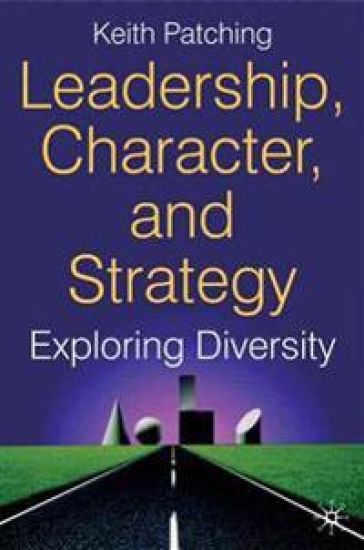
Leadership, Character and Strategy

Leadership, Character and Strategy

Keith Patching

Palgrave Macmillan
2006
sidottu
Understanding how genetic and environmental differences influence people's characters allows leaders as different as Ghandi and Margaret Thatcher to be influential in their own way. Based on over two decades of experience and research this is a practioner's guide to developing a leadership strategy.
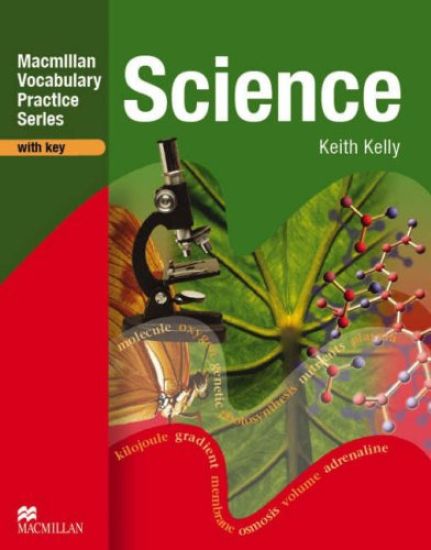
Vocabulary Practice Book: Science with key

Vocabulary Practice Book: Science with key

Keith Kelly

Macmillan Education
2008
nidottu
This Science edition contains 28 units of various science topics with engaging activities that help to consolidate meaning and ensure contextual understanding. Clear glossaries help to further student understanding and illustrated diagrams visually represent scientific concepts. An answer key is included at the back of the book to review answers.
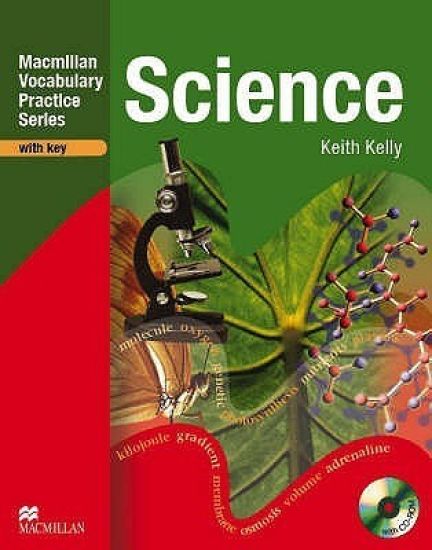
Vocabulary Practice Book: Science without key Pack
This Science edition contains 28 units of various science topics with engaging activities that help to consolidate meaning and ensure contextual understanding. Clear glossaries help to further student understanding and diagrams visually represent scientific concepts. Compatible with an IWB, the CD-ROM contains a wealth of extra material.
Vocab Practice Book: Science with key Pack
This Science edition contains 28 units of various science topics with engaging activities that help to consolidate meaning and ensure contextual understanding. Clear glossaries help to further student understanding and helpfull diagrams visually represent scientific concepts. Also, included is a CD-ROM with interactive activties and an answer key.
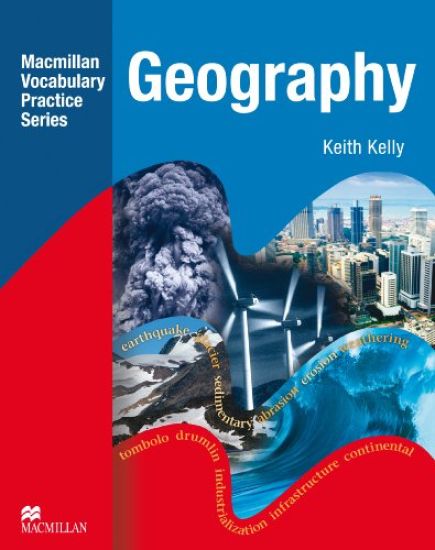
Vocab Practice Book Geography without key

Vocab Practice Book Geography without key

Keith Kelly

Macmillan Education
2009
nidottu
This Geography edition contains 18 units of various geography topics with engaging activities that help to consolidate meaning and ensure contextual understanding. Clear glossaries help to further student understanding and illustrated diagrams visually represent geography concepts.
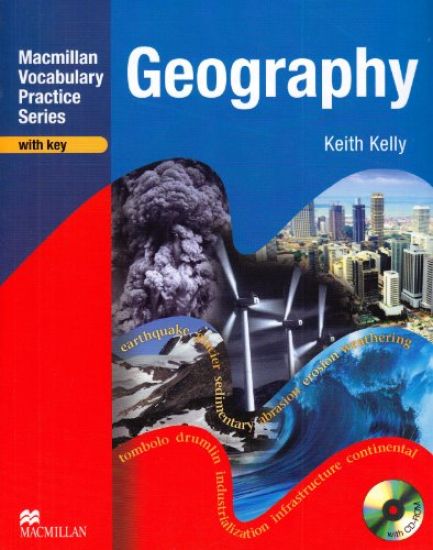
Vocab Practice Book Geography with key

Vocab Practice Book Geography with key

Keith Kelly

Macmillan Education
2009
nidottu
This Geography edition contains 18 units of various geography topics with engaging activities that help to consolidate meaning and ensure contextual understanding. Clear glossaries help to further student understanding and diagrams visually represent geography concepts. An answer key is included at the back of the book to review answers.
Vocab Practice Book Geography with key Pack
This Geography edition contains 18 units of various geography topics with engaging activities that help to consolidate meaning and ensure contextual understanding. Clear glossaries help to further student understanding and diagrams visually represent geography concepts. Also, included is a CD-ROM with interactive activties and an answer key.
Vocabulary Practice Book: Geography without key Pack
This Geography edition contains 18 units of various geography topics with engaging activities that help to consolidate meaning and ensure contextual understanding. Clear glossaries help to further student understanding and diagrams visually represent geography concepts. Compatible with an IWB, the CD-ROM contains a wealth of extra material.
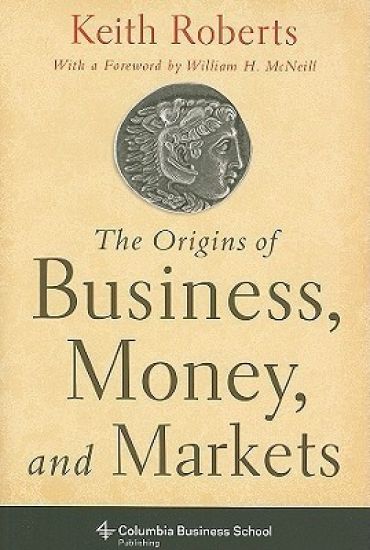
The Origins of Business, Money, and Markets

The Origins of Business, Money, and Markets

Keith Roberts

Columbia University Press
2011
sidottu
To understand business and its political, cultural, and economic context, it helps to view it historically, yet most business histories look no further back than the nineteenth century. The full sweep of business history actually begins much earlier, with the initial cities of Mesopotamia. In the first book to describe and explain these origins, Roberts depicts the society of ancient traders and consumers, tracing the roots of modern business and underscoring the relationship between early and modern business practice. Roberts's narrative begins before business, which he defines as selling to voluntary buyers at a profit. Before business, he shows, the material conditions and concepts for the pursuit of profit did not exist, even though trade and manufacturing took place. The earliest business, he suggests, arose with the long distance trade of early Mesopotamia, and expanded into retail, manufacturing and finance in these command economies, culminating in the Middle Eastern empires. (Part One) But it was the largely independent rise of business, money, and markets in classical Greece that produced business much as we know it. Alexander the Great's conquests and the societies that his successors created in their kingdoms brought a version of this system to the old Middle Eastern empires, and beyond. (Part Two) At Rome this entrepreneurial market system gained important new features, including business corporations, public contracting, and even shopping malls. The story concludes with the sharp decline of business after the 3rd century CE. (Part Three) In each part, Roberts portrays the major new types of business coming into existence. He weaves these descriptions into a narrative of how the prevailing political, economic, and social culture shaped the nature and importance of business and the status, wealth, and treatment of business people. Throughout, the discussion indicates how much (and how little) business has changed, provides a clear picture of what business actually is, presents a model for understanding the social impact of business as a whole, and yields stimulating insights for public policy today.
The Origins of Business, Money, and Markets

The Origins of Business, Money, and Markets

Keith Roberts

Columbia University Press
2015
pokkari
To understand business and its political, cultural, and economic context, it helps to view it historically, yet most business histories look no further back than the nineteenth century. The full sweep of business history actually begins much earlier, with the initial cities of Mesopotamia. In the first book to describe and explain these origins, Roberts depicts the society of ancient traders and consumers, tracing the roots of modern business and underscoring the relationship between early and modern business practice. Roberts's narrative begins before business, which he defines as selling to voluntary buyers at a profit. Before business, he shows, the material conditions and concepts for the pursuit of profit did not exist, even though trade and manufacturing took place. The earliest business, he suggests, arose with the long distance trade of early Mesopotamia, and expanded into retail, manufacturing and finance in these command economies, culminating in the Middle Eastern empires. (Part One) But it was the largely independent rise of business, money, and markets in classical Greece that produced business much as we know it. Alexander the Great's conquests and the societies that his successors created in their kingdoms brought a version of this system to the old Middle Eastern empires, and beyond. (Part Two) At Rome this entrepreneurial market system gained important new features, including business corporations, public contracting, and even shopping malls. The story concludes with the sharp decline of business after the 3rd century CE. (Part Three) In each part, Roberts portrays the major new types of business coming into existence. He weaves these descriptions into a narrative of how the prevailing political, economic, and social culture shaped the nature and importance of business and the status, wealth, and treatment of business people. Throughout, the discussion indicates how much (and how little) business has changed, provides a clear picture of what business actually is, presents a model for understanding the social impact of business as a whole, and yields stimulating insights for public policy today.
The Ecocentrists

The Ecocentrists

Keith Makoto Woodhouse

Columbia University Press
2018
sidottu
Disenchanted with the mainstream environmental movement, a new, more radical kind of environmental activist emerged in the 1980s. Radical environmentalists used direct action, from blockades and tree-sits to industrial sabotage, to save a wild nature that they believed to be in a state of crisis. Questioning the premises of liberal humanism, they subscribed to an ecocentric philosophy that attributed as much value to nature as to people. Although critics dismissed them as marginal, radicals posed a vital question that mainstream groups too often ignored: Is environmentalism a matter of common sense or a fundamental critique of the modern world?In The Ecocentrists, Keith Makoto Woodhouse offers a nuanced history of radical environmental thought and action in the late-twentieth-century United States. Focusing especially on the group Earth First!, Woodhouse explores how radical environmentalism responded to both postwar affluence and a growing sense of physical limits. While radicals challenged the material and philosophical basis of industrial civilization, they glossed over the ways economic inequality and social difference defined people’s different relationships to the nonhuman world. Woodhouse discusses how such views increasingly set Earth First! at odds with movements focused on social justice and examines the implications of ecocentrism’s sweeping critique of human society for the future of environmental protection. A groundbreaking intellectual history of environmental politics in the United States, The Ecocentrists is a timely study that considers humanism and individualism in an environmental age and makes a case for skepticism and doubt in environmental thought.
The Ecocentrists

The Ecocentrists

Keith Makoto Woodhouse

Columbia University Press
2020
pokkari
Disenchanted with the mainstream environmental movement, a new, more radical kind of environmental activist emerged in the 1980s. Radical environmentalists used direct action, from blockades and tree-sits to industrial sabotage, to save a wild nature that they believed to be in a state of crisis. Questioning the premises of liberal humanism, they subscribed to an ecocentric philosophy that attributed as much value to nature as to people. Although critics dismissed them as marginal, radicals posed a vital question that mainstream groups too often ignored: Is environmentalism a matter of common sense or a fundamental critique of the modern world?In The Ecocentrists, Keith Makoto Woodhouse offers a nuanced history of radical environmental thought and action in the late-twentieth-century United States. Focusing especially on the group Earth First!, Woodhouse explores how radical environmentalism responded to both postwar affluence and a growing sense of physical limits. While radicals challenged the material and philosophical basis of industrial civilization, they glossed over the ways economic inequality and social difference defined people’s different relationships to the nonhuman world. Woodhouse discusses how such views increasingly set Earth First! at odds with movements focused on social justice and examines the implications of ecocentrism’s sweeping critique of human society for the future of environmental protection. A groundbreaking intellectual history of environmental politics in the United States, The Ecocentrists is a timely study that considers humanism and individualism in an environmental age and makes a case for skepticism and doubt in environmental thought.
Home- and Community-Based Services for Older Adults

Home- and Community-Based Services for Older Adults

Keith Anderson; Holly Dabelko-Schoeny; Noelle Fields

Columbia University Press
2018
sidottu
As older adults and their families opt out of nursing homes, a range of home and community-based services (HCBS) have risen up to provide care. HCBS span platforms and approaches, from home health care to assisted living to community-based hospice to adult day services. These models are, for most, preferable to nursing homes and allow older adults to “age in place”—live longer in their own homes and communities. Home- and Community-Based Services for Older Adults examines the existing and emerging models of HCBS, including the history, theory, research, policy, and practices across care settings. Emphasizing the multidisciplinary and interprofessional practice approaches used to deliver care, this book is an essential learning tool for students interested in medicine, nursing, social work, allied health professions, case management, health care administration, and gerontology. As the population of older adults grows, the authors ask, how can we best meet the needs of older adults and their families in the most effective, cost-conscious way while honoring their care choices?
Home- and Community-Based Services for Older Adults

Home- and Community-Based Services for Older Adults

Keith Anderson; Holly Dabelko-Schoeny; Noelle Fields

Columbia University Press
2018
pokkari
As older adults and their families opt out of nursing homes, a range of home and community-based services (HCBS) have risen up to provide care. HCBS span platforms and approaches, from home health care to assisted living to community-based hospice to adult day services. These models are, for most, preferable to nursing homes and allow older adults to “age in place”—live longer in their own homes and communities. Home- and Community-Based Services for Older Adults examines the existing and emerging models of HCBS, including the history, theory, research, policy, and practices across care settings. Emphasizing the multidisciplinary and interprofessional practice approaches used to deliver care, this book is an essential learning tool for students interested in medicine, nursing, social work, allied health professions, case management, health care administration, and gerontology. As the population of older adults grows, the authors ask, how can we best meet the needs of older adults and their families in the most effective, cost-conscious way while honoring their care choices?
The Evidence for God

The Evidence for God

Keith Ward

Darton,Longman Todd Ltd
2014
nidottu
‘It is remarkable how atheism is becoming fashionable. It has become almost compulsory to say that you do not believe in God. … I believe that science itself points in a very different direction. There is a huge amount of evidence for the reality of a spiritual dimension to the world.’ There is a level of being that is deeper than the physical universe, writes Keith Ward. It has purpose and value, and we can sometimes feel it and find in it resources of strength, hope, and inspiration. Through an exploration of six areas of human experience – the arts, morality, philosophy, science, religion and personal experience – Ward demonstrates the existence of more than simply physical facts. His evidence builds to an impressive argument for a ‘sense for the spiritual dimension’ that is beyond and yet expressed in and through physical facts.
Ableton Live 8 and Suite 8

Ableton Live 8 and Suite 8

Keith Robinson

Focal Press
2009
nidottu
Learn how to create, produce and perform a whole new way; prepare to unlock the power of Live! In this brand new title for Ableton Live 8 and Suite 8 users, author Keith Robinson details exactly what Abelton Live can deliver. The book is engineered to follow Live's non-linear music environment - the book look and feels like the program! Its unique format utilizes the terms and creative features of Live - tabs, keys, pointers, and labels. Packed with professional testimonials, concepts, definitions, hundreds of tips, tricks and hidden features, Ableton Live 8 and Suite 8 covers the software's nuts and bolts and creative technique to create, produce, perform and make music on the fly.The accompanying website contains "Live sets" and web pointer information to sync and download as well as interviews, additional hints, tips and video
Unleashing the Power of Digital Signage
Implement a successful content strategy that optimizes the return-on-message performance of your digital signage program. Learn the message attributes for each of the three core network types (Point of Wait, Point of Sale, and Point of Transit), how to measure the program's effectiveness and strike a balance that uses messages effectively alongside the other advertising campaign elements. Through the included interviews, gain access to the wisdom of more than 45 experts, each of whom has deployed and operated successful digital signage networks. The companion website, www.5thscreen.info, features real-world implementations and video blog programming that includes interviews with industry notables.You'll learn how to: create a strategic communications blueprint and style guide for your network keep content flowing automatically-and therefore remaining relevant use data on viewers and traffic to build a programming schedule legally acquire and repurpose content more accurately predict where the future of content will leadForeword by Joe Pine and Jim Gilmore authors of "The Experience Economy" and "Authenticity"