
Kirjahaku
Etsi kirjoja tekijän nimen, kirjan nimen tai ISBN:n perusteella.
1000 tulosta hakusanalla Kenneth Graham Duffield
The Legacy of John Kenneth Galbraith
TAYLOR FRANCIS LTD
2024
nidottu
When John Kenneth Galbraith passed away on April 29, 2006, the economics profession lost one of its true giants. And this is not just because Galbraith was an imposing figure at 6 feet, 9 inches tall. Throughout his life, Galbraith advised Presidents, made important professional contributions to the discipline of economics, and also tried to explain economic ideas to the general public. This volume pays tribute to Galbraith’s life and career by explaining some of his major contributions to the canon of economic ideas. The papers describe the series of unique contributions that Galbraith made in many different areas. He was a founder of the Post Keynesian view of money, and a proponent of the Post Keynesian view that price controls were necessary to deal with the problem of inflation in a modern economy where large firms already control prices and prices are not determined by the market. He promulgated the view that firms manipulate individual preferences and tastes, through advertising and other means of persuasion, and he drew out the economic implications of this view. He was a student of financial frauds and euphoria, and a forerunner of the Post Keynesian/Minskean view of finance and how financial markets really work. This book was published as a special issue of the Review of Political Economy.
The recent financial crisis has once again seen John Kenneth Galbraith return to the bestseller lists. Yet, despite the continued popular success of his works, Galbraith's contribution to economic theory is rarely recognized by today's economists. This book redresses the balance by providing an introductory and sympathetic discussion of Galbraith's theoretical contributions, introducing the reader to his economics and his broader vision of the economic process. The book highlights and explains key features of Galbraith's economic thought, including his penetrating critique of society, his distinctive methodology, his specific brand of Keynesianism and his original - but largely ignored - contribution to the theory of the firm. It also presents, for the first time, a detailed examination of Galbraith's monetary economics and revisits his analysis of financial euphoria. This unique work seeks to rehabilitate Galbraith's contribution, setting out several directions for possible future research in the Galbraithian tradition.

A Study Guide for Kenneth Lonergan's "This Is Our Youth"
Cengage Learning Gale
Gale, Study Guides
2017
pokkari
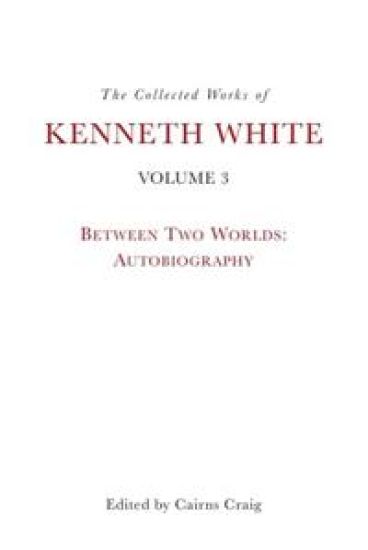
The Collected Works of Kenneth White, Volume 3
EDINBURGH UNIVERSITY PRESS
2025
sidottu
Kenneth White achieved fame in his adopted country of France as a poet, essayist and travel writer. His status was confirmed in 1983 by his appointment as Professor of Twentieth-Century Poetics at the Sorbonne in Paris, from which position, in 1989, he founded the International Institute of Geopoetics which helped establish 'geopoetics', that White had first proposed in the 1970s, as a distinct and recognised discipline in the humanities. Between Two Worlds is White's account of how a working-class Scot from Ayrshire became a prominent figure in French cultural and intellectual life, despite having been sacked by the university where he was teaching for his part in the student revolt of 1968. It explains the intellectual energies that went into the creation of 'geopoetics' and the style and purpose of his distinctive mode of travel-writing. It is also the story of how he and his wife Marie-Claude set about bringing back to life abandoned properties in the Ardeche and in Brittan.

Lineage of Neva and Kenneth Bower
Larry R. Fry
Createspace Independent Publishing Platform
2017
nidottu

Southern Oregon Timber: The Kenneth Ford Family Legacy
Rennie Guyer; R. J. Guyer
History Press Library Editions
2015
sidottu
Forestry defined the culture of southern Oregon. Kenneth and Hallie Ford rose from humble beginnings with a single sawmill during the Great Depression and helped transform the state's timber industry. They founded one of the largest privately owned wood-products companies in the country, bringing the title "Timber Capital of the Nation" to Roseburg, Oregon. Their legacy remains today through the Ford Family Foundation, dedicated to educational grants and community improvements. Author R.J. Guyer explores the evolution of logging and the challenges faced by the hearty men and women who plied this trade.

The Redemption of Kenneth Galt
Will N. Harben
Createspace Independent Publishing Platform
2017
nidottu
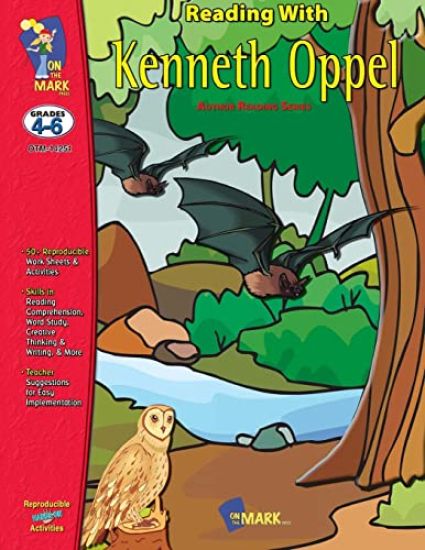
Reading with Kenneth Oppel Author Study Grades 4-6 Silverwing, Sunwing & Firewing
Michael Doucette
On the Mark Press
2006
pokkari
Silverwing, Sunwing and Firewing Student will love reading this trilogy and you will love the NO PREP worksheets to teach reading fluency and literacy strategies Story summaries, teacher suggestions, a resource list, student tracking sheet, and answer key make each resource easy to use.Expectations: 1. To identify and explore the various members and places that contribute to a successful community.2. To negotiate and cooperate with others in order to meet a common goal.3. To correctly answer questions by category and to answer extended comprehension questions using supporting evidence from the text.List of SkillsSpecific Work: 1. Outline a book report for children using questions by category and extended comprehension.2. Research contemporary issues, as mentioned in the novel.3. Use new words that can be used for vocabulary and sentence structure skills.4. Skim for information to develop claim and support skills.Work Appropriate Kenneth Oppel NovelsVisual Arts1. Illustrate a scene from any one of the novels2. Construct origami bats3. Construct a peephole boxScience1. Read about the diversity of living things2. Bat research projectGrammar, Punctuation and Vocabulary1. Cloze activities2. Crossword Puzzles3. Word Scrambles4. Missing Letters Activities5. Word Shapes6. Punctuation Activities: commas, quotation marks, periods, apostrophes7. Decoding Activities8. Matching Activities9. Definition Activities10. Word Map ActivitiesWriting1. Venn Diagrams2. Character Sketches3. Chapter Summaries4. Personal Opinions5. Claim and Support Writing6. Extended Comprehension7. Questions by CategoryDrama1. Character Chair2. Communicative Book TalkCreative and Critical Thinking1. Research myths about bats2. Research and compare different species of bats3. Research construction of bat houses4. Identify emotions and instincts as a help or a hindrance5. Choose and expand on an alternate plotline6. Summarize the stories in a news report7. Discuss the importance of the antagonist in a novel

The Rhetorical Imagination of Kenneth Burke
Ross Wolin
University of South Carolina Press
2001
sidottu
WIDELY HAILED as one of America's greatest rhetorical theorists, Kenneth Burke (1897-1993) ranged freely across many fields of knowledge, investigating the ways language, literature, and ideas relate to one another and to the social and political aspects of life. Skeptical of disciplinary boundaries, Burke garnered both praise and censure for his eclecticism. While several intellectual movements - including the New Critics - have claimed him as a member, Burke himself strongly resisted such affiliations. In a comprehensive examination of Burke's achievements, Ross Wolin sifts through the misconceptions associated with the critic and uncovers a complex set of theoretical concerns to which Burke devoted his career. In a work that is part biography, part intellectual history, and part rhetorical, theory, Wolin analyzes Burke's early essays of the 1920s and all eight of his theoretical volumes and argues that each of these represented a rearticulation and extension of the writer's previous studies, all of which brought together socially and politically charged ideas born of World War I, the Great Depression, and the aesthetic movement of the 1920s and early 1930s. Wolin suggests that Burke turned to psychology, history, literature, philosophy, and religion, while increasing his focus on rhetoric and the general nature of language, in the hope of overcoming the formidable rhetorical problems that his scrambling of intellectual categories inevitably produced. Wolin recaptures the richness of the critic's vision of ""a better life"" through understanding the nature of language and its social and political uses.
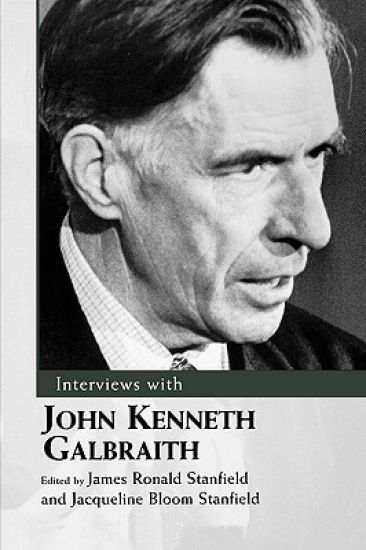
Interviews with John Kenneth Galbraith
University Press of Mississippi
2009
nidottu
For over half a century, Canadian-born John Kenneth Galbraith (b. 1908) has been among the most visible of public intellectuals. His articulate and controversial best-selling books-including The Affluent Society, Economics and the Public Purpose, and The New Industrial State-and his very partisan liberal Democrat political and public service activities secured a place for him among the rich and famous of his time.He worked as an adviser to President John F. Kennedy, served as U.S. ambassador to India (1961-1963), and edited Fortune magazine during the mid-1940s. Among American economists of any era, he is rivaled only by Thorstein Veblen for the introduction of phrases that take on a life of their own in the literate idiom. Such Galbraithian phrases as ""the conventional wisdom"" and the ""affluent society"" have become familiar even beyond Galbraith's remarkably wide readership. No other economist of the twentieth century, excepting perhaps John Maynard Keynes, can claim so secure a place in the belles-lettres of the English-speaking world.This collection of interviews documents the long career of an influential economist and political philosopher who has spent much of his professional life in the public eye. Many of the interviews are occasioned by publication of his books and contain their key themes such as the importance of Keynes, the need to include power in economic thinking, and the neglected priorities of aesthetics, poverty, and the environment in affluent America. The interviews also indicate Galbraith's wide-ranging public service and his frequent hobnobbing with the political and intellectual elite. Through the collection, which spans over four decades, Galbraith's erudition, wit, and impassioned liberalism shine through, making this volume an essential companion to his works.


Forestry defined the culture of southern Oregon. Kenneth and Hallie Ford rose from humble beginnings with a single sawmill during the Great Depression and helped transform the state's timber industry. They founded one of the largest privately owned wood-products companies in the country, bringing the title Timber Capital of the Nation to Roseburg, Oregon. Their legacy remains today through the Ford Family Foundation, dedicated to educational grants and community improvements. Author R.J. Guyer explores the evolution of logging and the challenges faced by the hearty men and women who plied this trade.
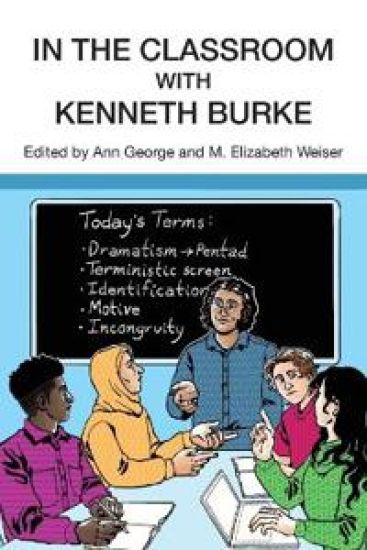
In the Classroom with Kenneth Burke
Parlor Press
2023
pokkari
Teaching students to be "symbol-wise" about the world is vital not simply to students in a successful class but to citizens in a functioning nation. Humans make sense of their world through language, and Kenneth Burke, the "word man," spent a lifetime considering how language symbols help us better understand ourselves and our interactions with others. Becoming symbol-wise is a skill teachable-and relevant-to any student of communal life in these divisive times. IN THE CLASSROOM WITH KENNETH BURKE pulls together some of the long-standing icons of Burkean pedagogy and some of its newest voices to show how any teacher can teach Burke's concepts of symbolic analysis, updated for modern classrooms and incorporating his ideas into full courses, assignment sequences, or single units. The authors share helpful pointers, syllabi, and lesson plans that make teaching Burke accessible to students in everything from a first-year composition course to an advanced graduate program-in rhetoric, writing and communication, political science, education, even the health professions. IN THE CLASSROOM WITH KENNETH BURKE provides practical approaches to and passionate arguments for teaching Burke's ideas and methods to new generations of students, who now, more than ever, must effectively engage with complex issues of identity, power, and conflict.Contributors include James Beasley, Elvera Berry, David Blakesley, Bryan Crable, Rachel Chapman Daugherty, Ann George, Annie Laurie Nichols, Kris Rutten, Jack Selzer, Jarron Slater, Jouni Tilli, Laura Van Beveren, Shannon Walters, and M. Elizabeth Weiser.Ann George is Professor of English at Texas Christian University. Her most recent book is Kenneth Burke's Permanence and Change: . M. Elizabeth Weiser is Arts & Sciences Distinguished Professor of English at The Ohio State University. Her most recent book is Museum Rhetoric: Building Civic Identity in National Spaces.

Happy Birthday Kenneth - The Big Birthday Activity Book: Personalized Children's Activity Book
Birthdaydr
Createspace Independent Publishing Platform
2018
nidottu
Happy Birthday Kenneth is a personalized kids activity book, it includes personalized crosswords, word searches, number puzzles, jokes, drawing and coloring >It is suitable for children between 6-11 years old It is the perfect birthday present for Kenneth, and is a great keepsake for parents to remember their child's early years and birthdays This personalized book is available for other names also This is a great gift for children and an amazing keepsake for parents Happy Birthday Kenneth

The Sculpture of Kenneth Armitage
James Scott; Antony Gormley
Lund Humphries Publishers Ltd
2016
sidottu
The Sculpture of Kenneth Armitage, which is being published to coincide with the artist's centenary in 2016, is the first book to feature a fully illustrated inventory of all of Armitage's known sculptures. It will be the only available illustrated reference book on the sculptural work of this important 20th-century artist. Through an inventory of 298 pieces and an accompanying narrative text, the book undertakes an examination of Armitage’s significant contribution to sculpture nationally and internationally during the second half of the 20th century, starting with the ‘geometry of fear’ exhibition at the 1952 Venice Biennale and Armitage’s solo contribution to the Biennale in 1958. It will be an essential reference resource for researchers, curators, dealers and collectors which will complement the complete sculpture catalogues already produced for Armitage’s sculptor contemporaries Lynn Chadwick, Elisabeth Frink, Robert Adams and Reg Butler, enhancing our understanding of post-war British sculpture.
Landmark Essays on Kenneth Burke
Lawrence Erlbaum Associates Inc
1995
sidottu
In the inaugural series of "Landmark Essay" books, this is the only volume which focuses on the work of one scholar. Kenneth Burke -- poet, scholar, critic, iconoclast, eccentric, and Yankee crank -- is the major figure in American humanities in the twentieth century. He does not fit tidily into any philosophical school, nor is he reducible to any simple set of principles and ideas. Scholars from many fields -- communication, English, history, sociology, and more -- have studied Burke's theories and critical methods which have spawned reams of commentary, extension, debate, and application. More than a single intellectual worker, he is the ore for a scholarly industry. This book contains a few outstanding examples of the products of that industry. Readers will find models of what it means to be Burkean, to study Burke, and to use Burke in developing an understanding of the human condition. The essays in this volume show that one can borrow ideas from Burke, or one can become wholly immersed in him. However, his work cannot be reduced to or equated with any other figure, method, or school of thought. The reader may find some striking similarities among the papers in this book. Written by scholars from several disciplines, they nevertheless address many of the same themes during the course of their exposition. What is also striking is the fact that most of the essays enter that Burkean system of themes from different starting points. Thus, they are models of what Burke claims for any critical vocabulary -- including his own -- that they are cycles of terms, any one of which leads into another.

An Analysis of Kenneth Waltz's Theory of International Politics
Riley Quinn
Macat International Limited
2017
nidottu
Kenneth Waltz’s 1979 Theory of International Politics is credited with bringing about a “scientific revolution” in the study of international relations – bringing the field into a new era of systematic study. The book is also a lesson in reasoning carefully and critically. Good reasoning is exemplified by arguments that move systematically, through carefully organised stages, taking into account opposing stances and ideas as they move towards a logical conclusion. Theory of International Politics might be a textbook example of how to go about structuring an argument in this way to produce a watertight case for a particular point of view.Waltz’s book begins by testing and critiquing earlier theories of international relations, showing their strengths and weaknesses, before moving on to argue for his own stance – what has since become known as “neorealism”. His aim was “to construct a theory of international politics that remedies the defects of present theories.” And this is precisely what he did; by showing the shortcomings of the prevalent theories of international relations, Waltz was then able to import insights from sociology to create a more comprehensive and realistic theory that took full account of the strengths of old schemas while also remedying their weaknesses – reasoning out a new theory in the process.