Kirjojen hintavertailu. Mukana 11 238 394 kirjaa ja 12 kauppaa.

Kirjahaku

Etsi kirjoja tekijän nimen, kirjan nimen tai ISBN:n perusteella.

1000 tulosta hakusanalla Kenneth Stuart

Social Choice and Multicriterion Decision-Making

Social Choice and Multicriterion Decision-Making

Kenneth J. Arrow; Hervé Raynaud

MIT Press
1986
pokkari
This study comes to grips with the industrial outranking problem, one of the major outstanding problems of current operations research and managerial decision-making. The problem, simply stated, is this: given a large but finite set of criteria, and a large but finite number of alternatives, how can the criteria be ranked in priority order, and how should the alternatives be ranked from best to worst consistent with the ordering of criteria that may be conflicting or incommensurable?There have been many proposed solutions to the problem. Numerous empirical recipes-among them the majority method-have been submitted, based in large part on the subjective judgments and biases of various observers. The authors argue that the axiomatic formulation offers the surest path to a solution that is as objective as possible, minimally distorted by the unwitting imposition of personal values. They then develop a system of consistent and appealing axioms, confront the paradoxes that put axiomatic systems in general at risk, and demonstrate the applicability of their system to realistic industrial outranking problems.Even within the axiomatic framework, however, some leeway remains for subjective choice and conscious value decisions. One ad hoc criterion of choice the authors selected was that their method should be neither so flexible and open that personal biases might easily slip in, nor so artificially rigid that the play of intuition and creativity was systematically excluded. The book also takes a hard look at the theoretical and practical defects of the majority method, the favored proposed solution, and at such associated issues as committee decision techniques, strategic majority voting; and restriction conditions.
Building Problem Solvers

Building Problem Solvers

Kenneth D. Forbus; Johan De Kleer

Bradford Books
1993
pokkari
For nearly two decades, Kenneth Forbus and Johan de Kleer have accumulated a substantial body of knowledge about the principles and practice of creating problem solvers. In some cases they are the inventors of the ideas or techniques described, and in others, participants in their development.Building Problem Solvers communicates this knowledge in a focused, cohesive manner. It is unique among standard artificial intelligence texts in combining science and engineering, theory and craft to describe the construction of AI reasoning systems, and it includes code illustrating the ideas.After working through Building Problem Solvers, readers should have a deep understanding of pattern directed inference systems, constraint languages, and truth maintenance systems. The diligent reader will have worked through several substantial examples, including systems that perform symbolic algebra, natural deduction, resolution, qualitative reasoning, planning, diagnosis, scene analysis, and temporal reasoning.
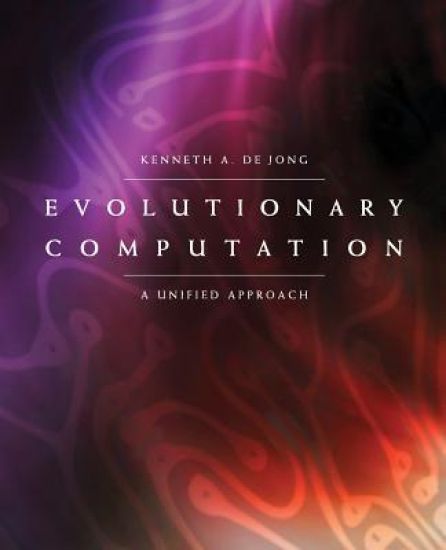
Evolutionary Computation

Evolutionary Computation

Kenneth A. De Jong

Bradford Books
2016
pokkari
Evolutionary computation, the use of evolutionary systems as computational processes for solving complex problems, is a tool used by computer scientists and engineers who want to harness the power of evolution to build useful new artifacts, by biologists interested in developing and testing better models of natural evolutionary systems, and by artificial life scientists for designing and implementing new artificial evolutionary worlds. In this clear and comprehensive introduction to the field, Kenneth De Jong presents an integrated view of the state of the art in evolutionary computation. Although other books have described such particular areas of the field as genetic algorithms, genetic programming, evolution strategies, and evolutionary programming, Evolutionary Computation is noteworthy for considering these systems as specific instances of a more general class of evolutionary algorithms. This useful overview of a fragmented field is suitable for classroom use or as a reference for computer scientists and engineers.
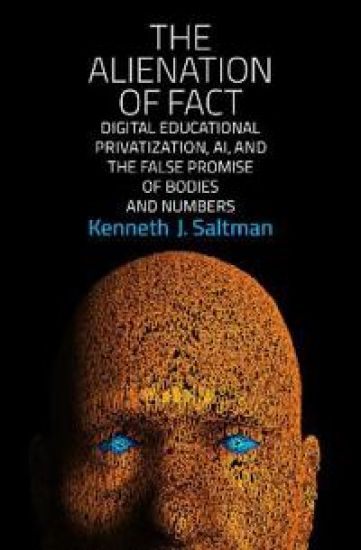
The Alienation of Fact

The Alienation of Fact

Kenneth J. Saltman

MIT PRESS LTD
2022
nidottu
An investigation of the role of educational privatization and technology in the crises of truth and agency. Today, conspiracy theories run rampant, attacks on facts have become commonplace, and systemic inequities are on the rise as individual and collective agency unravels. The Alienation of Fact explains the educational, technological, and ideological preconditions for these contemporary crises of truth and agency and explores the contradictions and competing visions for the future of education that lie at the center of the problem. Schools are increasingly reimagined as businesses, and high-stakes standardized testing and curricula, for-profit charter schools, and the rise of educational AI put capital and technology at the center of education. Yet even as our society demands measure, data, and facts, politicians and news outlets regularly make unfounded assertions. How should we make sense of the contradictions between the demand for radical data-driven empiricism and the flight from evidence, argument, or theoretical justification? In this critical investigation of the new digital directions of educational privatization--AI education, adaptive learning technology, biometrics, the quantification of play and social emotional learning--and the politics of the body, Saltman shows how the false certainty of bodies and numbers replaces deliberative and thoughtful agency in a time of increasing precarity. A distinctive contribution to scholarship on public school privatization and educational technology, politics, policy, pedagogy, and theory, The Alienation of Fact is a spirited call for democratic education that values creating a society of "thinking people" over capitalistic gains.
Numerical Methods in Economics

Numerical Methods in Economics

Kenneth L. Judd

MIT PRESS LTD
2023
pokkari
To harness the full power of computer technology, economists need to use a broad range of mathematical techniques. In this book, Kenneth Judd presents techniques from the numerical analysis and applied mathematics literatures and shows how to use them in economic analyses. The book is divided into five parts. Part I provides a general introduction. Part II presents basics from numerical analysis on R n, including linear equations, iterative methods, optimization, nonlinear equations, approximation methods, numerical integration and differentiation, and Monte Carlo methods. Part III covers methods for dynamic problems, including finite difference methods, projection methods, and numerical dynamic programming. Part IV covers perturbation and asymptotic solution methods. Finally, Part V covers applications to dynamic equilibrium analysis, including solution methods for perfect foresight models and rational expectation models. A website contains supplementary material including programs and answers to exercises.
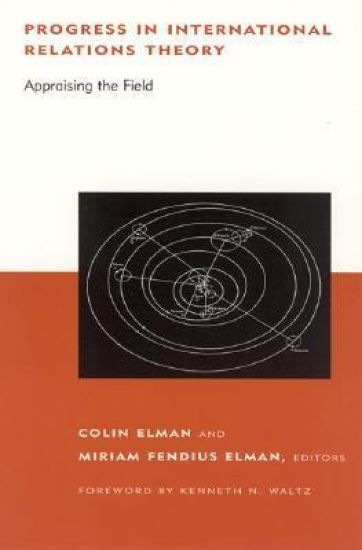
Progress in International Relations Theory
All academic disciplines periodically appraise their effectiveness, evaluating the progress of previous scholarship and judging which approaches are useful and which are not. Although no field could survive if it did nothing but appraise its progress, occasional appraisals are important and if done well can help advance the field. This book investigates how international relations theorists can better equip themselves to determine the state of scholarly work in their field. It takes as its starting point Imre Lakatos's influential theory of scientific change, and in particular his methodology of scientific research programs (MSRP). It uses MSRP to organize its analysis of major research programs over the last several decades and uses MSRP's criteria for theoretical progress to evaluate these programs. The contributors appraise the progress of institutional theory, varieties of realist and liberal theory, operational code analysis, and other research programs in international relations. Their analyses reveal the strengths and limits of Lakatosian criteria and the need for metatheoretical metrics for evaluating scientific progress.
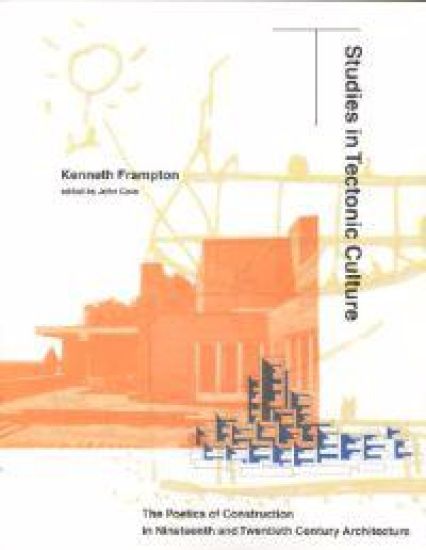
Studies in Tectonic Culture

Studies in Tectonic Culture

Kenneth Frampton

MIT Press
2001
pokkari
Composed of ten essays and an epilogue that trace the history of contemporary form as an evolving poetic of structure and construction, the book's analytical framework rests on Frampton's close readings of key French and German, and English sources from the eighteenth century to the present.Kenneth Frampton's long-awaited follow-up to his classic A Critical History of Modern Architecture is certain to influence any future debate on the evolution of modern architecture. Studies in Tectonic Culture is nothing less than a rethinking of the entire modern architectural tradition. The notion of tectonics as employed by Frampton—the focus on architecture as a constructional craft—constitutes a direct challenge to current mainstream thinking on the artistic limits of postmodernism, and suggests a convincing alternative. Indeed, Frampton argues, modern architecture is invariably as much about structure and construction as it is about space and abstract form.Composed of ten essays and an epilogue that trace the history of contemporary form as an evolving poetic of structure and construction, the book's analytical framework rests on Frampton's close readings of key French and German, and English sources from the eighteenth century to the present. He clarifies the various turns that structural engineering and tectonic imagination have taken in the work of such architects as Perret, Wright, Kahn, Scarpa, and Mies, and shows how both constructional form and material character were integral to an evolving architectural expression of their work. Frampton also demonstrates that the way in which these elements are articulated from one work to the next provides a basis upon which to evaluate the works as a whole. This is especially evident in his consideration of the work of Perret, Mies, and Kahn and the continuities in their thought and attitudes that linked them to the past.Frampton considers the conscious cultivation of the tectonic tradition in architecture as an essential element in the future development of architectural form, casting a critical new light on the entire issue of modernity and on the place of much work that has passed as "avant-garde."A copublication of the Graham Foundation for Advanced Studies and The MIT Press.
Acoustic Phonetics

Acoustic Phonetics

Kenneth N. Stevens

MIT Press
2000
pokkari
This book presents a theory of speech-sound generation in the human vocal system.This book presents a theory of speech-sound generation in the human vocal system. The comprehensive acoustic theory serves as one basis for defining categories of speech sounds used to form distinctions between words in languages. The author begins with a review of the anatomy and physiology of speech production, then covers source mechanisms, the vocal tract as an acoustic filter, relevant aspects of auditory psychophysics and physiology, and phonological representations. In the remaining chapters he presents a detailed examination of vowels, consonants, and the influence of context on speech-sound production. Although he focuses mainly on the sounds of English, he touches briefly on sounds in other languages.The book will serve as a reference for speech scientists, speech pathologists, linguists interested in phonetics and phonology, psychologists interested in speech perception and production, and engineers concerned with speech processing applications.
God's Two Books

God's Two Books

Kenneth J. Howell

University of Notre Dame Press
2004
sidottu
How do we resolve conflicts when fundamental sources of knowledge and belief—such as science and theology—are involved? In God's Two Books, Kenneth Howell offers a historical analysis of how sixteenth- and seventeenth-century astronomers and theologians in Northern Protestant Europe used science and religion to challenge and support one another. Howell reveals that the cosmological schemes developed during this era remain monumental solutions to the enduring problem of how theological interpretation and empirical investigation interact with one another. "Writing history requires a constant shedding of our misconceptions about the past," says Howell. God's Two Books reshapes our understanding of the interaction of cosmological thought and biblical interpretation in the emerging astronomy of the Scientific Revolution by analyzing new texts and offering interpretations that cast old materials in a new light. The central argument of this compelling book is that the use of the Bible in early modern cosmology is considerably more complex and subtle than has previously been recognized. Drawing on the writings of Lutheran and Calvinist astronomers, natural philosophers, and theologians, Howell analyzes several underlying patterns of interpretation which affected how these historical figures viewed the mutual interaction of the books of nature and Scripture. He argues that while they differed on how the disciplines of astronomy, physics, and theology should relate to one another, most thinkers shared the common goal of finding and explaining the true system of the universe. Howell introduces the notion of a convergent realism to describe Protestant intellectuals' approach to incorporating empirical and theological perspectives into a holistic version of the universe. They believed the sacred page was relevant to cosmology but denied that the Bible had scientific content. At the same time, these thinkers argued that the theological truths expressed in the Bible were interwoven into nature in subtle, yet revealing, ways. Their resulting interpretations show continuity with Catholic thinkers and discard oversimplifications such as literal versus figurative hermeneutics or Copernican versus anti-Copernican cosmologies. Among Howell's many original contributions in this cogent study is a distinctive approach to Kepler's exegesis of nature and an introduction to the debate of many Calvinist thinkers who have previously received little attention.
Introductory Modal Logic

Introductory Modal Logic

Kenneth J. Konyndyk

University of Notre Dame Press
1986
nidottu
Modal logic, developed as an extension of classical propositional logic and first-order quantification theory, integrates the notions of possibility and necessity and necessary implication. Arguments whose understanding depends on some fundamental knowledge of modal logic have always been important in philosophy of religion, metaphysics, and epistemology. Moreover, modal logic has become increasingly important with the use of the concept of "possible worlds" in these areas. Introductory Modal Logic fills the need for a basic text on modal logic, accessible to students of elementary symbolic logic. Kenneth Konyndyk presents a natural deduction treatment of propositional modal logic and quantified modal logic, historical information about its development, and discussions of the philosophical issues raised by modal logic. Characterized by clear and concrete explanations, appropriate examples, and varied and challenging exercises, Introductory Modal Logic makes both modal logic and the possible-worlds metaphysics readily available to the introductory level student.
Adventures in Philosophy at Notre Dame

Adventures in Philosophy at Notre Dame

Kenneth M. Sayre

University of Notre Dame Press
2014
nidottu
Adventures in Philosophy at Notre Dame recounts the fascinating history of the University of Notre Dame's Department of Philosophy, chronicling the challenges, difficulties, and tensions that accompanied its transition from an obscure outpost of scholasticism in the 1940s into one of the more distinguished philosophy departments in the world today. Its author, Kenneth Sayre, who has been a faculty member for over five decades, focuses on the people of the department, describing what they were like, how they got along with each other, and how their personal predilections and ambitions affected the affairs of the department overall. The book follows the department's transition from its early Thomism to the philosophical pluralism of the 1970s, then traces its drift from pluralism to what Sayre terms "professionalism," resulting in what some perceive as a severance from its Catholic roots by the turn of the century. Each chapter includes an extensive biography of an especially prominent department member, along with biographical sketches of other philosophers arriving during the period it covers. Central to the story overall are the charismatic Irishmen Ernan McMullin and Ralph McInerny, whose interaction dominated affairs in the department in the 1960s and 1970s, and who continued to play major roles in the following decades. Philosophers throughout the English-speaking world will find Adventures in Philosophy at Notre Dame essential reading. The book will also appeal to readers interested in the history of the University of Notre Dame and of American higher education generally.
Introductory Modal Logic

Introductory Modal Logic

Kenneth J. Konyndyk

University of Notre Dame Press
1986
sidottu
Modal logic, developed as an extension of classical propositional logic and first-order quantification theory, integrates the notions of possibility and necessity and necessary implication. Arguments whose understanding depends on some fundamental knowledge of modal logic have always been important in philosophy of religion, metaphysics, and epistemology. Moreover, modal logic has become increasingly important with the use of the concept of "possible worlds" in these areas. Introductory Modal Logic fills the need for a basic text on modal logic, accessible to students of elementary symbolic logic. Kenneth Konyndyk presents a natural deduction treatment of propositional modal logic and quantified modal logic, historical information about its development, and discussions of the philosophical issues raised by modal logic. Characterized by clear and concrete explanations, appropriate examples, and varied and challenging exercises, Introductory Modal Logic makes both modal logic and the possible-worlds metaphysics readily available to the introductory level student.
Color

Color

Kenneth A. McClane

University of Notre Dame Press
2009
nidottu
In 1991, acclaimed poet Kenneth A. McClane published Walls: Essays, 1985-1990, a volume of essays dealing with life in Harlem, the death of his alcoholic brother, and the complexities of being black and middle-class in America. Now, in Color: Essays on Race, Family, and History, McClane contributes further to his self-described "autobiographical sojourn" with a second collection of interconnected essays. In McClane's words, "All concern race, although they, like the human spirit, wildly sweep and yaw." A timely installment in our national narrative, Color is a chronicle of the black middle class, a group rarely written about with sensitivity and charity. In evocative, trenchant, and poetic prose, McClane employs the art of the memoirist to explore the political and the personal. He details the poignant narrative of racial progress as witnessed by his family during the 1950s, '60s, and '70s. We learn of his parents' difficult upbringing in Boston, where they confronted much racism; of the struggles they and McClane encountered as they became the first blacks to enter previously all-white institutions, including the oldest independent school in the United States; and of the part his parents played in the civil rights movement, working with Dr. King and others. The book ends with a tender account of his parents in the throes of Alzheimer's disease, which claimed both their lives.
Walls

Walls

Kenneth A. McClane

University of Notre Dame Press
2010
nidottu
Walls: Essays, 1985-1990, Kenneth McClane's first book of autobiographical essays (originally published in 1991), is closely related to his second collection, Color, published by the University of Notre Dame Press in 2009. Walls is a powerful and deeply moving meditation on relationships. It begins with an essay on the death of McClane's brother, Paul, which "changed everything. Time, my work, everything found a new calculus." His brother's life and death are present in some way in all the essays that follow "A Death in the Family," as McClane tells us about giving a poetry reading in a maximum-security prison; his experience of being one of the first two African American students to attend America's oldest private school; teaching creative writing; his sister, Adrienne; a divestment protest at Cornell; and his encounters with James Baldwin. McClane has written a new preface to this paperback edition of Walls, in which he reminds us that we are inevitably interconnected: we are each other's witness.
Plato's Literary Garden: How to Read a Platonic Dialogue

Plato's Literary Garden: How to Read a Platonic Dialogue

Kenneth M. Sayre

UNIVERSITY OF NOTRE DAME PRESS
1995
sidottu
Plato's dialogues are universally acknowledged as standing among the masterworks of the Western philosophic tradition. What most readers do not know, however, is that Plato also authored a public letter in which he unequivocally denies ever having written a work of philosophy. If Plato did not view his written dialogues as works of philosophy, how did he conceive them, and how should readers view them? In Plato's Literary Garden, Kenneth M. Sayre brings over thirty years of Platonic scholarship to bear on these questions, arguing that Plato did not intend the dialogues to serve as repositories of philosophic doctrine, but instead composed them as teaching instruments.
Plato's Literary Garden

Plato's Literary Garden

Kenneth M. Sayre

University of Notre Dame Press
2002
nidottu
Plato's dialogues are universally acknowledged as standing among the masterworks of the Western philosophic tradition. What most readers do not know, however, is that Plato also authored a public letter in which he unequivocally denies ever having written a work of philosophy. If Plato did not view his written dialogues as works of philosophy, how did he conceive them, and how should readers view them? In Plato's Literary Garden, Kenneth M. Sayre brings over thirty years of Platonic scholarship to bear on these questions, arguing that Plato did not intend the dialogues to serve as repositories of philosophic doctrine, but instead composed them as teaching instruments.
Needs of the Heart

Needs of the Heart

Kenneth P. Serbin

University of Notre Dame Press
2006
sidottu
Needs of the Heart traces five centuries of conflict and change in the life of the clergy in Brazil, home to the world's largest and arguably the most dynamic branch of the Roman Catholic Church. Serbin examines how priests participated in the colonization of Brazil, educated the elite and poor in the faith, propped up the socioeconomic status quo, and reinforced the institution of slavery, all the while living in relative freedom from church authority. Earthy men, many flouted the rule of celibacy and became embroiled in politics. Serbin also describes the conservative modernization of the clergy, effected through seminary education, in the late nineteenth and early twentieth centuries. Emphasizing discipline, the seminaries aimed to mold a new kind of priest—moral, isolated from politics and social entanglements, and, above all, obedient and celibate. However, the social, cultural, and religious upheavals of the 1960s and 1970s led students to reject the seminary. Seminarians worked to form a national union, and many left seminaries to establish greater contact with the people. The seminarians' movement sparked the practice of liberation theology; it also reflected the quest for professional and individual development, including optional celibacy. The Church responded to its seminarians' demands for personalized education by attempting to build an ambitious program in liberation psychology, a phenomenon as important as liberation theology. Seminaries necessarily dealt in the psychology of sexuality, friendship, and other basic human tendencies—what historian Marc Bloch has called the "secret needs of the heart." Serbin argues that the "needs of the heart" were a cause of the political transformation of the Brazilian Church, a transformation catalyzed by the profound identity crisis experienced by clergymen and seminarians in the 1960s and 1970s. The story of this generation of seminarians and priests is intermingled with the challenges and fears present during the repressive military dictatorship (1964 to 1985) and its aftermath. Serbin's definitive history of the Brazilian clergy combines social science research, including over one hundred interviews, with cultural and social theory and a sweeping historical perspective. Through his history of the clergy and seminaries, he provides a history of modern Brazil itself.
Unearthed

Unearthed

Kenneth M. Sayre

University of Notre Dame Press
2010
nidottu
In Unearthed: The Economic Roots of Our Environmental Crisis, Kenneth M. Sayre argues that the only way to resolve our current environmental crisis is to reduce our energy consumption to a level where the entropy (degraded energy and organization) produced by that consumption no longer exceeds the biosphere's ability to dispose of it. Tangible illustrations of this entropy buildup include global warming, ozone depletion, loss of species diversity, and unmanageable amounts of nonbiodegradable waste. Degradation of the biosphere is tied directly to human energy use, which has been increasing exponentially since the Industrial Revolution. Energy use, in turn, is directly correlated with economic production. Sayre shows how these three factors are invariably bound together. The unavoidable conclusion is that the only way to resolve our environmental crisis is to reverse the present pattern of growth in the world economy. Economic growth is motivated by social values. Key among them are the desire for wealth and consumer values including gratification, convenience, and acquisition of goods. Sayre maintains that economic growth can be reversed only by eliminating these social values in favor of others more conducive to environmental health. Eliminating these values will involve major changes in lifestyle within industrial societies generally. Only with such changes in lifestyle, he argues, does human society as we know it have a chance of survival. Clearly written and thoroughly documented, this book provides a comprehensive overview of our complex environmental predicament.