Kirjojen hintavertailu. Mukana 12 016 292 kirjaa ja 12 kauppaa.

Kirjahaku

Etsi kirjoja tekijän nimen, kirjan nimen tai ISBN:n perusteella.

1000 tulosta hakusanalla Larry Horowitz

Revising the Revolution

Revising the Revolution

Larry E. Holmes

Indiana University Press
2021
pokkari
The clash between scholarship and politics—between truth and propaganda—was ruthless for historians in Istpart, the Russian Communist Central Committee's official historical department. Istpart was tasked with preserving the documentary record, compiling memoirs, and upholding ideological conformism within the national narrative of the 1917 revolution. In Revising the Revolution, Larry E. Holmes examines the role of Istpart's historians, in both the Moscow office and a regional branch in Viatka, who initially believed they could adhere to the traditional standards of research and simultaneously provide a history useful to the party. However, they quickly realized that the party rejected any version of history that suggested nonideological or nonpolitical sources of truth. By 1928, Istpart had largely abandoned its mission to promote scholarly work on the 1917 revolution and instead advanced the party's master narrative. Revising the Revolution explores the battle for the Russian national narrative and the ways in which history can be used to centralize power.
Win or Else

Win or Else

Larry E. Holmes

INDIANA UNIVERSITY PRESS
2024
sidottu
In Win or Else, Larry E. Holmes shows us how Soviet football culture regularly disregarded official ideological and political imperatives and skirted the boundaries between socialism and capitalism. In the early 1920s, the Soviet press denounced football as a bourgeois sport that was injurious to both mind and body. Within that same decade, however, it blew up, becoming the most popular spectator sport in the USSR and growing into a fiercely competitive business with complex regional and national bureaucracies, a strong international presence, and a conviction that victory on the field was also a victory of Soviet supremacy. Writing as both historian and fan, Holmes focuses his study on the provincial Kirov team Dinamo from 1979 to 1985, when the club played at both its worst and its best. Spurred by a dismal 1979 season, the team's administrators and regional authorities had two options: obey Moscow's edict to reduce expenditures on professional sports or seek out new—and often illicit—funding sources to fill out a team of champions. Drawing on rich archival materials as well as newspapers and interviews with former players, Win or Else reveals the foundations of Soviet sports culture—and the hazards that teams faced both in victory and in loss.
Win or Else

Win or Else

Larry E. Holmes

INDIANA UNIVERSITY PRESS
2024
pokkari
In Win or Else, Larry E. Holmes shows us how Soviet football culture regularly disregarded official ideological and political imperatives and skirted the boundaries between socialism and capitalism. In the early 1920s, the Soviet press denounced football as a bourgeois sport that was injurious to both mind and body. Within that same decade, however, it blew up, becoming the most popular spectator sport in the USSR and growing into a fiercely competitive business with complex regional and national bureaucracies, a strong international presence, and a conviction that victory on the field was also a victory of Soviet supremacy. Writing as both historian and fan, Holmes focuses his study on the provincial Kirov team Dinamo from 1979 to 1985, when the club played at both its worst and its best. Spurred by a dismal 1979 season, the team's administrators and regional authorities had two options: obey Moscow's edict to reduce expenditures on professional sports or seek out new—and often illicit—funding sources to fill out a team of champions. Drawing on rich archival materials as well as newspapers and interviews with former players, Win or Else reveals the foundations of Soviet sports culture—and the hazards that teams faced both in victory and in loss.
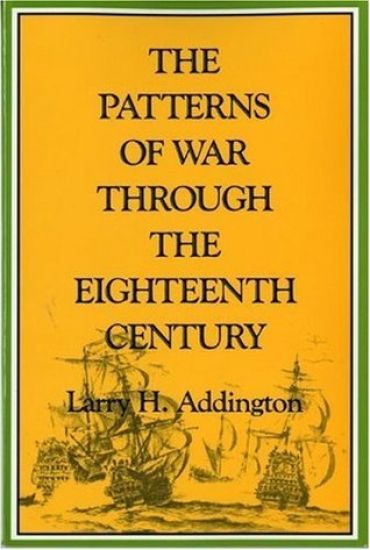
The Patterns of War Through the Eighteenth Century

The Patterns of War Through the Eighteenth Century

Larry H. Addington

Indiana University Press
2009
pokkari
" . . . a concise, highly readable survey of pre- 19th-century warfare." —Choice "A remarkable tour de force covering a vast span of time, different cultures, warfare by land and sea." —Gunther Rothenberg A history of war and warfare from ancient to early modern times, Larry Addington's new book completes his survey of the patterns of war in the Western world. It explains not only what happened in warfare but why war in a certain time and culture took on distinct and recognizable patterns.
John Dewey's Pragmatic Technology

John Dewey's Pragmatic Technology

Larry A. Hickman

Indiana University Press
1990
pokkari
" . . . a comprehensive canvass of Dewey's logic, metaphysics, aesthetics, philosophy of history, and social thought." —Choice " . . . a major addition to the recent accumulation of in-depth studies of Dewey." —Journal of Speculative Philosophy "Larry Hickman has done an exemplary job in demonstrating the relevance of John Dewey's philosophy to modern-day discussions of technology." —Ethics
The Patterns of War Since the Eighteenth Century

The Patterns of War Since the Eighteenth Century

Larry H. Addington

Indiana University Press
1994
pokkari
"This important work . . . synthesizes the evolution of warfare from 1775 to the present." —Military Review A thorough revision of a highly successful text, this new edition provides a comprehensive picture of the evolution of modern warfare. From reviews of the first edition: "There is nothing else in print that tells so much so concisely about how war has been conducted since the days of Gen. George Washington." —Russell F. Weigley "A superior synthesis. Well written, nicely organized, remarkably comprehensive, and laced with facts." —Military Affairs
America's War in Vietnam

America's War in Vietnam

Larry H. Addington

Indiana University Press
2000
pokkari
"This book has been long needed: a concise, complete and dispassionate survey of the Vietnam War. . . . Best of all, the no-nonsense approach answers questions as soon as they arise in the reader's mind." —Kliatt "If there is such a thing as an objective account [of the Vietnam War], this is it. . . . If you want to read one book about Vietnam, read this one." —New York Review of Books A short, narrative history of the origins, course, and outcome of America's military involvement in Vietnam by an experienced guide to the causes and conduct of war, Larry H. Addington. He begins with a history of Vietnam before and after French occupation, the Cold War origins of American involvement, the domestic impact of American policies on public support, and the reasons for the ultimate failure of U.S. policy.
Philosophical Tools for Technological Culture

Philosophical Tools for Technological Culture

Larry A. Hickman

Indiana University Press
2001
pokkari
"Hickman['s] . . . style of pragmatism provides us with flexible, philosophical 'tools' which can be used to analyze and penetrate various technology and technological cultural problems of the present. He, himself, uses this toolkit to make his analyses and succeeds very well indeed." —Don Ihde A practical and comprehensive appraisal of the value of philosophy in today's technological culture. Philosophical Tools for Technological Culture contends that technology—a defining mark of contemporary culture—should be a legitimate concern of philosophers. Larry A. Hickman contests the perception that philosophy is little more than a narrow academic discipline and that philosophical discourse is merely redescription of the ancient past. Drawing inspiration from John Dewey, one of America's greatest public philosophers, Hickman validates the role of philosophers as cultural critics and reformers in the broadest sense. Hickman situates Dewey's critique of technological culture within the debates of 20th-century Western philosophy by engaging the work of Richard Rorty, Albert Borgmann, Jacques Ellul, Walter Benjamin, Jürgen Habermas, and Martin Heidegger, among others. Pushing beyond their philosophical concerns, Hickman designs and assembles a set of philosophical tools to cope with technological culture in a new century. His pragmatic treatment of current themes—such as technology and its relationship to the arts, technosciences and technocrats, the role of the media in education, and the meaning of democracy and community life in an age dominated by technology—reveals that philosophy possesses powerful tools for cultural renewal. This original, timely, and accessible work will be of interest to readers seeking a deeper understanding of the meanings and consequences of technology in today's world.
The Kremlin and the Schoolhouse

The Kremlin and the Schoolhouse

Larry E. Holmes

Indiana University Press
1991
sidottu
" . . . an exciting, first-rate contribution to our understanding of Soviet history on several levels . . . and the relationship between tsarist and Soviet educational policies and practices." —Ben Eklof "Larry E. Holmes' book is a fine, expert study of a difficult topic." —The Historian " . . . this first-rate work definitely points the way toward a new understanding of the Soviet Union in the 1920s." —Journal of Modern History " . . . a succinct and original study of early Soviet education and an engaging disaggregation of the convoluted relations among ideology, politics, and social reality in a revolutionary society . . . This well-researched, innovative, and insightful study is required reading for any serious student of early Soviet history." —The Russian Review ". . . elegantly written, a pithy fast paced, and intersting book . . ." —East West Education Larry Holmes examines Soviet school policy from 1917 to 1931 in its ideological, political, institutional, and social dimensions.
Natural Resources as Capital

Natural Resources as Capital

Larry Karp

MIT Press
2017
pokkari
An introduction to the concepts and tools of natural resource economics, including dynamic models, market failures, and institutional remedies.This introduction to natural resource economics treats resources as a type of capital; their management is an investment problem requiring forward-looking behavior within a dynamic setting. Market failures are widespread, often associated with incomplete or nonexistent property rights, complicated by policy failures. The book covers standard resource economics topics, including both the Hotelling model for nonrenewable resources and models for renewable resources. The book also includes some topics in environmental economics that overlap with natural resource economics, including climate change.The text emphasizes skills and intuition needed to think about dynamic models and institutional remedies in the presence of both market and policy failures. It presents the nuts and bolts of resource economics as applied to nonrenewable resources, including the two-period model, stock-dependent costs, and resource scarcity. The chapters on renewable resources cover such topics as property rights as an alternative to regulation, the growth function, steady states, and maximum sustainable yield, using fisheries as a concrete setting. Other, less standard, topics covered include microeconomic issues such as arbitrage and the use of discounting; policy problems including the "Green Paradox"; foundations for policy analysis when market failures are important; and taxation. Appendixes offer reviews of the relevant mathematics. The book is suitable for use by upper-level undergraduates or, with the appendixes, masters-level courses.
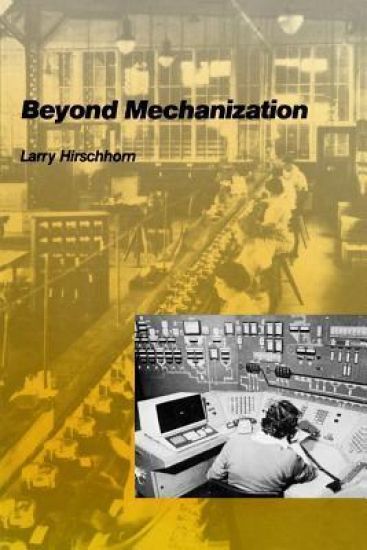
Beyond Mechanization

Beyond Mechanization

Larry Hirschhorn

MIT Press
1986
pokkari
Human skill and judgment are needed now more than ever to effectively run today's complex computerized production systems. In this thought-provoking study of work, worker, and machine in the postindustrial age, Hirschhorn points out that factories will become places of learning where the worker must be able to diagnose and solve an array of problems generated by error-prone machine systems. With numerous examples he shows that the new technology can fail in unexpected ways and that human judgment has become increasingly important. The new technology also blurs the line between managing and working, requiring workers - craftsmen, machine operators, or engineers - to become generalists who will have to deal with unstructured and open-ended problems. Hirschhorn links theory to the shop floor, examining such issues as the role of unions and the economics of the job shop and describes a new type of factory setting where supervisors are teachers and workers are organized into teams paid according to how much they have learned.
Reworking Authority

Reworking Authority

Larry Hirschhorn

MIT Press
1998
pokkari
Assesses the new culture of authority - increasingly prevalent in the working environment - which expects people to bring more of themselves psychologically to the job. The text explores how organizations can create a culture of openness in which people become more psychologically present.
Evolutionary Games and Equilibrium Selection
The author examines the interplay between evolutionary game theory and the equilibrium selection problem in noncooperative games.Evolutionary game theory is one of the most active and rapidly growing areas of research in economics. Unlike traditional game theory models, which assume that all players are fully rational and have complete knowledge of details of the game, evolutionary models assume that people choose their strategies through a trial-and-error learning process in which they gradually discover that some strategies work better than others. In games that are repeated many times, low-payoff strategies tend to be weeded out, and an equilibrium may emerge. Larry Samuelson has been one of the main contributors to the evolutionary game theory literature. In Evolutionary Games and Equilibrium Selection, he examines the interplay between evolutionary game theory and the equilibrium selection problem in noncooperative games. After providing an overview of the basic issues of game theory and a presentation of the basic models, the book addresses evolutionary stability, the dynamics of sample paths, the ultimatum game, drift, noise, backward and forward induction, and strict Nash equilibria.
The Coming Crisis

The Coming Crisis

Larry D. Welch

MIT Press
2000
pokkari
How will continued proliferation of nuclear weapons change the global political order? This collection of essays comes to conclusions at odds with the conventional wisdom. Stephen Rosen and Barry Posen explore how nuclear proliferation may affect US incentives to confront regional aggression. Stephen Walt argues that regional allies will likely prove willing to stand with a strong and ready United States against nuclear-backed aggression. George Quester and Brad Roberts examine long-term strategic objectives in responding to nuclear attack by a regional aggressor. Richard Betts highlights the potential for disastrous mistakes in moving toward and living in a world heavily populated with nuclear-armed states. Scott Sagan explains how the nuclear nonproliferation policies best suited to some states can spur proliferation by others. Caroline Ziemke shows how the analysis of a state's strategic personality can provide insights into why it might want nuclear weapons and how its policies may develop once it gets them. And, Victor Utgoff concludes that the United States seems more likely to intervene against regional aggression when the aggressor has nuclear weapons than when it does not.
Tragic Method and Tragic Theology

Tragic Method and Tragic Theology

Larry D. Bouchard

Pennsylvania State University Press
1989
pokkari
The book moves in a nonreductive way between literary and theological criticism to show how drama and religious thought discern the experience of evil. "Tragic method" refers to how tragic art functions as inquiry; "tragic theology" refers to how drama and theology render in thematic or symbolic form certain irreducible dimensions of evil and negativity. Bouchard defines no single tragic method or any single view of evil but searches for the distinctive interplay of tragic method of theology in each dramatist.The work opens by scrutinizing certain important interpretations of Greek tragedy. Paul Ricoeur's interpretation of "the Wicked God and the Tragic Vision" receives major focus, as does Sophocles, who as a tragedian dramatized the action of inquiry and interpretation.Bouchard then examines Augustine's views of evil and sin, Reinhold Niebuhr's critique of the ironies of history, and Tillich's conceptions of the demonic. By interpreting tragedy in terms of sin or the effects of sin, each theologian resists implications in his own thought pointing to a less resolvable tragic theology. And yet these theologians also contribute very creative understandings of the irreducible character of evil and tragic experience. Substantive and original readings of three playwrights are offered: Rolf Hochhuth's tragedy of vocation, The Deputy, Robert Lowell's trilogy of American historical blindness, The Old Glory, and Peter Shaffer's dreams of tragic awareness and accountability in Equus and Amadeus, revealing new permutations of the irreducibility of evil in contemporary Christian and Jewish religious thinkers who may be helpful in this task, and concludes with a description of the experience of perplexed thought, self-critical in view of tragedy's witness to irreducibility of evil.
Revitalizing the U.S. Economy

Revitalizing the U.S. Economy

Larry Ledebur

Praeger Publishers Inc
1986
sidottu
This collection of essays explores the fundamental sources of U.S. economic performance, and the public policies that sustain or weaken that performance. Revitalizing the U.S. Economy explores such issues as stimulating and channelling private investment, modifying rules of competition, and reconceptualizing the economy and economic policy. This book surveys industrial policy from a national perspective, examines development policies at the subnational level, analyzes issues in human resources policy, and critiques the policy making process.