Kirjojen hintavertailu. Mukana 11 468 762 kirjaa ja 12 kauppaa.

Kirjahaku

Etsi kirjoja tekijän nimen, kirjan nimen tai ISBN:n perusteella.

1000 tulosta hakusanalla Linus Müller

Linux+ Powered by LPI Exams LX-0-103 and LX0-104 uCertify Course and Lab Student Access Card
Welcome to CompTIA Linux+ Powered by LPI Exams LX0-103 and LX0-104 uCertify Course and Labs CompTIA Linux+ Powered by LPI Exams LX0-103 and LX0-104 uCertify Course and Labs is an easy-to-use online course that allows you to assess your readiness and teaches you what you need to know to pass the CompTIA Linux+ LX0-103 and LX0-104 exams. Master all of the CompTIA Linux+ LX0-103 and LX0-104 exam objectives in the framework of Linux+ Exam 1 and Exam 2 interactive eBook. The interactive eBook includes informative text, tables, step-by-step lists, images, interactive exercises, glossary flash cards, and review activities. The course comes complete with extensive pre- and post-assessment tests. The award-winning uCertify Labs help bridge the gap between conceptual knowledge and real-world application by providing competency-based, interactive, online, 24x7 training. uCertify Labs simulate real-world hardware, software applications and operating systems, and command-line interfaces. The labs are supplemented with videos demonstrating lab solutions. Students can feel safe working in this virtual environment resolving real-world operating system and hardware problems. All of the content–the complete eBook, the practice questions, the exercises, and the labs–is focused around the official Linux+ exam objectives.

Linux Essentials for Cybersecurity

Linux Essentials for Cybersecurity

William Rothwell; Denise Kinsey

Pearson IT Certification
2018
nidottu
ALL YOU NEED TO KNOW TO SECURE LINUX SYSTEMS, NETWORKS, APPLICATIONS, AND DATA–IN ONE BOOK From the basics to advanced techniques: no Linux security experience necessaryRealistic examples & step-by-step activities: practice hands-on without costly equipmentThe perfect introduction to Linux-based security for all students and IT professionals Linux distributions are widely used to support mission-critical applications and manage crucial data. But safeguarding modern Linux systems is complex, and many Linux books have inadequate or outdated security coverage. Linux Essentials for Cybersecurity is your complete solution. Leading Linux certification and security experts William “Bo” Rothwell and Dr. Denise Kinsey introduce Linux with the primary goal of enforcing and troubleshooting security. Their practical approach will help you protect systems, even if one or more layers are penetrated. First, you’ll learn how to install Linux to achieve optimal security upfront, even if you have no Linux experience. Next, you’ll master best practices for securely administering accounts, devices, services, processes, data, and networks. Then, you’ll master powerful tools and automated scripting techniques for footprinting, penetration testing, threat detection, logging, auditing, software management, and more. To help you earn certification and demonstrate skills, this guide covers many key topics on CompTIA Linux+ and LPIC-1 exams. Everything is organized clearly and logically for easy understanding, effective classroom use, and rapid on-the-job training. LEARN HOW TO: Review Linux operating system components from the standpoint of security Master key commands, tools, and skills for securing Linux systems Troubleshoot common Linux security problems, one step at a time Protect user and group accounts with Pluggable Authentication Modules (PAM), SELinux, passwords, and policies Safeguard files and directories with permissions and attributes Create, manage, and protect storage devices: both local and networked Automate system security 24/7 by writing and scheduling scripts Maintain network services, encrypt network connections, and secure network-accessible processes Examine which processes are running–and which may represent a threat Use system logs to pinpoint potential vulnerabilities Keep Linux up-to-date with Red Hat or Debian software management tools Modify boot processes to harden security Master advanced techniques for gathering system information
Lines of Authority

Lines of Authority

Zwicker Steven N.

CORNELL UNIVERSITY PRESS
1993
sidottu
Focusing on the turbulent years between the execution of Charles I and the triumph of William III, Steven N. Zwicker reads English literature as a series of brilliant and deeply engaged polemical contests. Zwicker juxtaposes overtly polemical writings—pamphlets, broadsides, and ballads—with canonical works, including epic, historical verse, tragedy, and satire, in order to demonstrate how literature not only reflected on political action but also formed an important site of political exchange. Zwicker maintains that the sources of Restoration culture lay within the civil war years of the 1640s and that the memory of those years shaped writing and politics for the remainder of the century. In sensitive readings of such classic texts as Walton's Compleat Angler, Marvell's First Anniversary and Last Instructions, Milton's Paradise Lost, Dryden's Annus Mirabilis and Absalom and Achitophel, and Locke's Two Treatises of Government, he shows how these texts both engaged with pamphlet, squib, and broadside and challenged one another over the possession of cultural authority. Zwicker's analysis provides a new understanding of the connections between politics and aesthetics in the later seventeenth century and an appreciation for the texture of this culture. Successfully integrating literary history and political analysis, Lines of Authority will be valuable reading for a broad audience in the fields of Restoration and Protectorate literature, literary history, cultural and intellectual history, and the history of political thought.
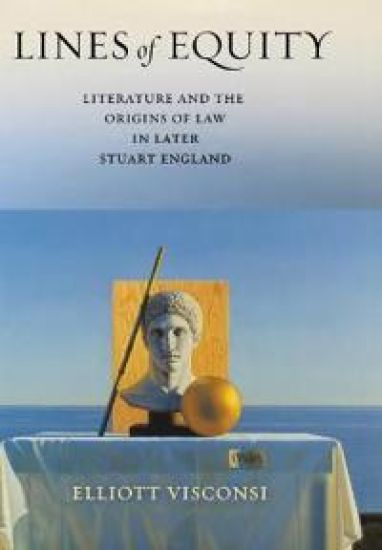
Lines of Equity

Lines of Equity

Elliott Visconsi

Cornell University Press
2008
sidottu
The late seventeenth century was a period of major crises in science, politics, and economics in England. Confronted by a public that seemed to be sunk in barbarism and violence, English writers including John Milton, John Dryden, and Aphra Behn imagined serious literature as an instrument for change. In Lines of Equity, Elliott Visconsi reveals how these writers fictionalized the original utterance of laws, the foundation of states, and the many vivid contemporary transitions from archaic savagery to civil modernity. In their writings, they considered the nature of government, the extent of the rule of law, and the duties of sovereign and subject. They asked their audience to think like kings and judges: through the literary education of the individual conscience, the barbarous tendencies of the English people might be effectively banished. Visconsi calls this fictionalizing program "imaginative originalism," and demonstrates the often unintended consequences of this literary enterprise. By inviting the English people to practice equity as a habit of thought, a work such as Milton's Paradise Lost helped bring into being a mode of individual conduct—the rights-bearing deliberative subject—at the heart of political liberalism. Visconsi offers an original view of this transitional moment that will appeal to anyone interested in the cultural history of law and citizenship, the idea of legal origins in the early modern period, and the literary history of later Stuart England.
Lines of Equity

Lines of Equity

Elliott Visconsi

CORNELL UNIVERSITY PRESS
2011
muu
Confronted by a public that seemed to be sunk in barbarism and violence, English writers including John Milton, John Dryden, and Aphra Behn imagined serious literature as an instrument for change.
Lines of Equity

Lines of Equity

Elliott Visconsi

CORNELL UNIVERSITY PRESS
2011
muu
Confronted by a public that seemed to be sunk in barbarism and violence, English writers including John Milton, John Dryden, and Aphra Behn imagined serious literature as an instrument for change.
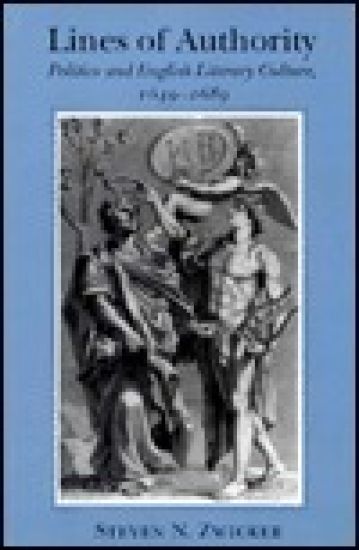
Lines of Authority

Lines of Authority

Steven N. Zwicker

Cornell University Press
1996
pokkari
Focusing on the turbulent years between the execution of Charles I and the triumph of William III, Steven N. Zwicker reads English literature as a series of brilliant and deeply engaged polemical contests. Zwicker juxtaposes overtly polemical writings—pamphlets, broadsides, and ballads—with canonical works, including epic, historical verse, tragedy, and satire, in order to demonstrate how literature not only reflected on political action but also formed an important site of political exchange. Zwicker maintains that the sources of Restoration culture lay within the civil war years of the 1640s and that the memory of those years shaped writing and politics for the remainder of the century. In sensitive readings of such classic texts as Walton's Compleat Angler, Marvell's First Anniversary and Last Instructions, Milton's Paradise Lost, Dryden's Annus Mirabilis and Absalom and Achitophel, and Locke's Two Treatises of Government, he shows how these texts both engaged with pamphlet, squib, and broadside and challenged one another over the possession of cultural authority. Zwicker's analysis provides a new understanding of the connections between politics and aesthetics in the later seventeenth century and an appreciation for the texture of this culture. Successfully integrating literary history and political analysis, Lines of Authority will be valuable reading for a broad audience in the fields of Restoration and Protectorate literature, literary history, cultural and intellectual history, and the history of political thought.
Links

Links

William A. Link

University Press of Florida
2012
sidottu
Arthur Link (1920-1998) was one of the great historians of his generation, a prolific author with a wide following inside and outside the profession. For many years the foremost authority on Woodrow Wilson, he wrote a five-volume biography of the president and edited a sixty-nine volume edition of Wilson’s papers. Margaret Link (1918-1996), his wife and fellow North Carolinian, was the emotional core of the family. As an activist, she helped form an interdenominational crisis ministry in Princeton that reached out to the poor with counselling, clothing, and food, and she was a cofounder and president of the Association for the Advancement of Mental Health. In Links, their youngest son--an accomplished and award-winning historian--offers a moving and unsentimental biography of two individuals who experienced the intense change and tumult of the South during the mid-twentieth century. Drawing from a rich trove of letters, interviews with friends and family, and unique insights, Link offers a highly detailed, evocative portrait of the coming of age and lifelong partnership of his parents. Links combines the objectivity and critical judgement of the professional historian with the subjectivity and deep emotional connection of the memoirist who participated directly in part of the story.
Lines on the Land

Lines on the Land

Scott Herring

University of Virginia Press
2004
sidottu
The nineteenth-century photographer William Henry Jackson once complained of the skepticism with which early descriptions of Yellowstone were met: the place was too wondrous to be believed. The public demanded proof, and a host of artists and writers obliged. These early explorers possessed a vigorous devotion to the young nation's wilderness - the naturalist John Muir famously toured the land from Wisconsin to Florida on foot - and through their work established aesthetic categories that exist to this day. In Lines on the Land, Scott Herring contends that these writers and artists were canon makers, recognizing the national parks as naturally occurring works of art and conferring upon them a cultural prestige: the parks were the splendid focal points of the American landscape. These early, canonizing works are homages to a vast, untouched wilderness. This praise would gradually give way, however, to a distinctly American anger - what Herring calls ""outraged idealism."" Later generations were faced with a changing culture that had imperfectly absorbed, and even misrepresented, the national-park aesthetic. The postwar park was overrun by cars and tourists who could not possibly match the pioneering naturalists' profound commitment to and appreclation for their surroundings. The collective tone of the parks' chroniclers, as a result, evolved from celebration of awesome beauty to indignation over the perceived corruption of the parks, both as an ideal and as actual physical settings. Herring traces this shift through the work of a wide spectrum of creative minds, from early figures such as Muir and Thomas Moran to later observers of the parks such as Ansel Adams, Sylvia Plath, Edward Abbey, and Rick Bass. The text is punctuated by autobiographical ""interchapters"" in which Herring relates the book's chief themes to his own experiences in Yellowstone National Park.
Lines on the Land

Lines on the Land

Scott Herring

University of Virginia Press
2004
nidottu
The nineteenth-century photographer William Henry Jackson once complained of the skepticism with which early descriptions of Yellowstone were met: the place was too wondrous to be believed. The public demanded proof, and a host of artists and writers obliged. These early explorers possessed a vigorous devotion to the young nation's wilderness - the naturalist John Muir famously toured the land from Wisconsin to Florida on foot - and through their work established aesthetic categories that exist to this day. In Lines on the Land, Scott Herring contends that these writers and artists were canon makers, recognizing the national parks as naturally occurring works of art and conferring upon them a cultural prestige: the parks were the splendid focal points of the American landscape. These early, canonizing works are homages to a vast, untouched wilderness. This praise would gradually give way, however, to a distinctly American anger - what Herring calls ""outraged idealism."" Later generations were faced with a changing culture that had imperfectly absorbed, and even misrepresented, the national-park aesthetic. The postwar park was overrun by cars and tourists who could not possibly match the pioneering naturalists' profound commitment to and appreclation for their surroundings. The collective tone of the parks' chroniclers, as a result, evolved from celebration of awesome beauty to indignation over the perceived corruption of the parks, both as an ideal and as actual physical settings. Herring traces this shift through the work of a wide spectrum of creative minds, from early figures such as Muir and Thomas Moran to later observers of the parks such as Ansel Adams, Sylvia Plath, Edward Abbey, and Rick Bass. The text is punctuated by autobiographical ""interchapters"" in which Herring relates the book's chief themes to his own experiences in Yellowstone National Park.
Lines of Flight, Assemblages of Home

Lines of Flight, Assemblages of Home

Leila Hudson

SYRACUSE UNIVERSITY PRESS
2025
sidottu
While humanitarian organizations and media outlets often reduce Syrian refugees to statistics or brief anecdotes, the real story of displacement unfolds in the intimate spaces of family life. Through the interwoven narratives of five middle-aged sisters from Damascus, Lines of Flight, Assemblages of Home reveals how Syrian women navigate war, exile, and the profound transformation of their families and identities. Drawing on extensive interviews conducted between 2015 and 2017, this book follows an extended Sunni Muslim family as they flee their homes in Damascus’s Eastern Ghouta suburbs and scatter across Lebanon, Jordan, Turkey, Egypt, and eventually Europe. As these women move through an increasingly hostile landscape of border controls, refugee camps, and human trafficking networks, they must reinvent themselves—from stable middle-class mothers to resourceful survivors, from guardians of tradition to architects of change. Their journeys challenge conventional assumptions about refugee experiences, revealing how displacement reconfigures family networks, religious practices, and gender roles. Leila Hudson’s intimate portrait of Syrian displacement offers vital insights for researchers and practitioners working in humanitarian assistance, refugee resettlement, and forced migration. It provides essential reading for anyone seeking to understand how ordinary families navigate extraordinary circumstances, and how women in particular bear both the burdens and opportunities of displacement.
Lines in Water

Lines in Water

Syracuse University Press
2013
sidottu
This collection examines the projections and fantasies conflict and cooperation, and borrowing and purifying that takes place around religious boundaries in South Asia and in the South Asian diaspora.
Lines and Curves

Lines and Curves

Victor Gutenmacher; N.B. Vasilyev

Birkhauser Boston Inc
2004
nidottu
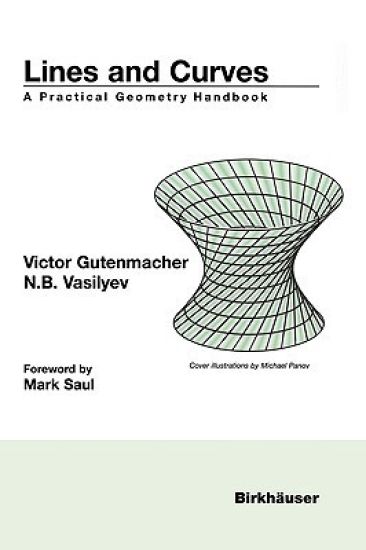
Originally written in Russian and used in the Gelfand Correspondence School, "Lines and Curves" has since become a classic: the exposition maintains mathematical rigor while balancing creative storytelling and unusual examples of geometric properties. One of the key strengths of the text is its reinterpretation of geometry in the context of motion, whereby curves are realized as trajectories of moving points instead of as stationary configurations in the plane. This novel approach, rooted in physics and kinematics, yields surprisingly intuitive and straightforward proofs of many otherwise difficult results. This newly revised and expanded edition includes more than 200 theoretical and practical problems in which formal geometry provides simple and elegant insight, including problems of maxima and minima and the construction of sets satisfying specific geometric constraints. Hence Lines and Curves is well positioned for companion use with software packages like The Geometer’s Sketchpad®, and it can serve as a guidebook for engineers. Its deeper, interdisciplinary treatment is ideal for more theoretical readers, and the development from first principles makes the book accessible to undergraduates, advanced high school students, teachers, and puzzle enthusiasts alike.
Lines in the Sand

Lines in the Sand

Timothy James Lockley

University of Georgia Press
2004
pokkari
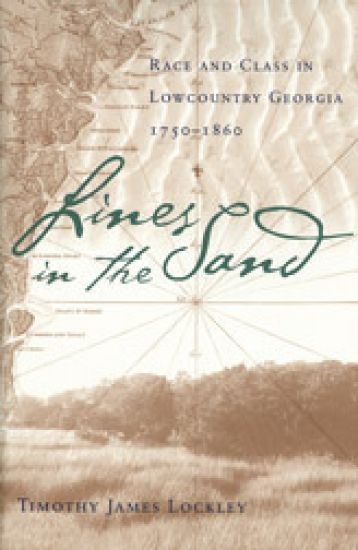
Lines in the Sand is Timothy Lockley’s nuanced look at the interaction between nonslaveholding whites and African Americans in lowcountry Georgia from the introduction of slavery in the state to the beginning of the Civil War. The study focuses on poor whites living in a society where they were dominated politically and economically by a planter elite and outnumbered by slaves. Lockley argues that the division between nonslaveholding whites and African Americans was not fixed or insurmountable. Pulling evidence from travel accounts, slave narratives, newspapers, and court documents, he reveals that these groups formed myriad kinds of relationships, sometimes out of mutual affection, sometimes for mutual advantage, but always in spite of the disapproving authority of the planter class.Lockley has synthesized an impressive amount of material to create a rich social history that illuminates the lives of both blacks and whites. His abundant detail and clear narrative style make this first book-length examination of a complicated and overlooked topic both fascinating and accessible.
Lines of Thought

Lines of Thought

Claudia Brodsky Lacour

Duke University Press
1996
pokkari
It is considerably easier to say that modern philosophy began with Descartes than it is to define the modernity and philosophy to which Descartes gave rise. In Lines of Thought, Claudia Brodsky Lacour describes the double origin of modern philosophy in Descartes’s Discours de la méthode and Géométrie, works whose interrelation, she argues, reveals the specific nature of the modern in his thought. Her study examines the roles of discourse and writing in Cartesian method and intuition, and the significance of graphic architectonic form in the genealogy of modern philosophy.While Cartesianism has long served as a synonym for rationalism, the contents of Descartes’s method and cogito have remained infamously resistant to rational analysis. Similarly, although modern phenomenological analyses descend from Descartes’s notion of intuition, the “things” Cartesian intuitions represent bear no resemblance to phenomena. By returning to what Descartes calls the construction of his “foundation” in the Discours, Brodsky Lacour identifies the conceptual problems at the root of Descartes’s literary and aesthetic theory as well as epistemology. If, for Descartes, linear extension and “I” are the only “things” we can know exist, the Cartesian subject of thought, she shows, derives first from the intersection of discourse and drawing, representation and matter. The crux of that intersection, Brodsky Lacour concludes, is and must be the cogito, Descartes’s theoretical extension of thinking into material being. Describable in accordance with the Géométrie as a freely constructed line of thought, the cogito, she argues, extends historically to link philosophy with theories of discursive representation and graphic delineation after Descartes. In conclusion, Brodsky Lacour analyzes such a link in the writings of Claude Perrault, the architectural theorist whose reflections on beauty helped shape the seventeenth-century dispute between “the ancients and the moderns.”Part of a growing body of literary and interdisciplinary considerations of philosophical texts, Lines of Thought will appeal to theorists and historians of literature, architecture, art, and philosophy, and those concerned with the origin and identity of the modern.
Lines of Thought

Lines of Thought

Claudia Brodsky Lacour

Duke University Press
1996
sidottu
It is considerably easier to say that modern philosophy began with Descartes than it is to define the modernity and philosophy to which Descartes gave rise. In Lines of Thought, Claudia Brodsky Lacour describes the double origin of modern philosophy in Descartes’s Discours de la méthode and Géométrie, works whose interrelation, she argues, reveals the specific nature of the modern in his thought. Her study examines the roles of discourse and writing in Cartesian method and intuition, and the significance of graphic architectonic form in the genealogy of modern philosophy.While Cartesianism has long served as a synonym for rationalism, the contents of Descartes’s method and cogito have remained infamously resistant to rational analysis. Similarly, although modern phenomenological analyses descend from Descartes’s notion of intuition, the “things” Cartesian intuitions represent bear no resemblance to phenomena. By returning to what Descartes calls the construction of his “foundation” in the Discours, Brodsky Lacour identifies the conceptual problems at the root of Descartes’s literary and aesthetic theory as well as epistemology. If, for Descartes, linear extension and “I” are the only “things” we can know exist, the Cartesian subject of thought, she shows, derives first from the intersection of discourse and drawing, representation and matter. The crux of that intersection, Brodsky Lacour concludes, is and must be the cogito, Descartes’s theoretical extension of thinking into material being. Describable in accordance with the Géométrie as a freely constructed line of thought, the cogito, she argues, extends historically to link philosophy with theories of discursive representation and graphic delineation after Descartes. In conclusion, Brodsky Lacour analyzes such a link in the writings of Claude Perrault, the architectural theorist whose reflections on beauty helped shape the seventeenth-century dispute between “the ancients and the moderns.”Part of a growing body of literary and interdisciplinary considerations of philosophical texts, Lines of Thought will appeal to theorists and historians of literature, architecture, art, and philosophy, and those concerned with the origin and identity of the modern.
Lines of Flight

Lines of Flight

Stefan Mattessich

Duke University Press
2002
sidottu
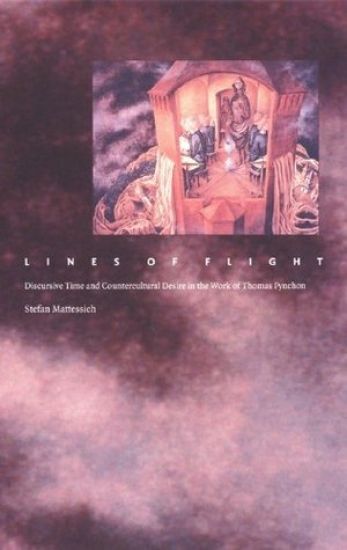
For Thomas Pynchon, the characteristic features of late capitalism-the rise of the military-industrial complex, consumerism, bureaucratization and specialization in the workplace, standardization at all levels of social life, and the growing influence of the mass media-all point to a transformation in the way human beings experience time and duration. Focusing on Pynchon’s novels as representative artifacts of the postwar period, Stefan Mattessich analyzes this temporal transformation in relation not only to Pynchon’s work but also to its literary, cultural, and theoretical contexts.Mattessich theorizes a new kind of time-subjective displacement-dramatized in the parody, satire, and farce deployed through Pynchon’s oeuvre. In particular, he is interested in showing how this sense of time relates to the counterculture of the 1960s and 1970s. Examining this movement as an instance of flight or escape and exposing the beliefs behind it, Mattessich argues that the counterculture’s rejection of the dominant culture ultimately became an act of self-cancellation, a rebellion in which the counterculture found itself defined by the very order it sought to escape. He points to parallels in Pynchon’s attempts to dramatize and enact a similar experience of time in the doubling-back, crisscrossing, and erasure of his writing. Mattessich lays out a theory of cultural production centered on the ethical necessity of grasping one’s own susceptibility to discursive forms of determination.
Lines of Flight

Lines of Flight

Stefan Mattessich

Duke University Press
2002
pokkari
For Thomas Pynchon, the characteristic features of late capitalism-the rise of the military-industrial complex, consumerism, bureaucratization and specialization in the workplace, standardization at all levels of social life, and the growing influence of the mass media-all point to a transformation in the way human beings experience time and duration. Focusing on Pynchon’s novels as representative artifacts of the postwar period, Stefan Mattessich analyzes this temporal transformation in relation not only to Pynchon’s work but also to its literary, cultural, and theoretical contexts.Mattessich theorizes a new kind of time-subjective displacement-dramatized in the parody, satire, and farce deployed through Pynchon’s oeuvre. In particular, he is interested in showing how this sense of time relates to the counterculture of the 1960s and 1970s. Examining this movement as an instance of flight or escape and exposing the beliefs behind it, Mattessich argues that the counterculture’s rejection of the dominant culture ultimately became an act of self-cancellation, a rebellion in which the counterculture found itself defined by the very order it sought to escape. He points to parallels in Pynchon’s attempts to dramatize and enact a similar experience of time in the doubling-back, crisscrossing, and erasure of his writing. Mattessich lays out a theory of cultural production centered on the ethical necessity of grasping one’s own susceptibility to discursive forms of determination.
Lines That Connect

Lines That Connect

Graeme Were

University of Hawai'i Press
2010
sidottu
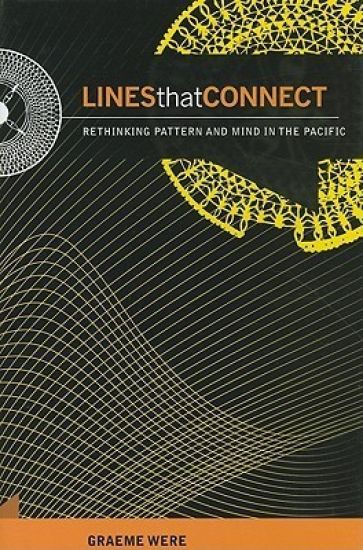
Building on historical and contemporary literature in anthropology and art theory, ""Lines That Connect"" treats pattern as a material form of thought that provokes connections between disparate things through processes of resemblance, memory, and transformation. Pattern is constantly in a state of motion as it traverses spatial and temporal divides and acts as an endless source for innovation through its inherent transformability. Graeme Were argues that it is the ideas carried by pattern's relational capacity that allows Pacific islanders to express their links to land, genealogy, and resources in the most economic ways. In doing so, his book is a timely and unique contribution to the analysis of pattern and decorative art in the Pacific amid growing debates in anthropology and art history. This striking and original study brings together objects and photographs, historical literature and contemporary ethnographic case studies to explore pattern in its logical workings. It presents the first-ever analysis of the well-known patterned shell valuable called kapkap as revealed in New Ireland mortuary feasts. Innovative research in the study of Christianity and the Baha'i faithful in the region shows how pattern has been appropriated in new religious communities. Were argues that pattern is used in various guises in performances, church architecture, and funerary images to contrasting effect. He explores the conditions under which pattern facilitates a connecting of old and new ideas and how missionary processes are implicated in this flow. He then considers the mechanisms under which pattern is internalized, paying particular attention to its embeddedness in spatial and numerical thinking. Finally, he examines how pattern carries new materials and technologies, which in turn provide new resources for sustaining old beliefs. Drawing on a multitude of fields (anthropology; art history; Pacific, museum, and religious studies; education; ethnomathematics), ""Lines That Connect"" raises key questions about the capacity of pattern across the Pacific to bind and sustain ideas about place, body, and genealogy in the most logical of ways.