
Kirjahaku
Etsi kirjoja tekijän nimen, kirjan nimen tai ISBN:n perusteella.
1000 tulosta hakusanalla Louis N Boudrye
Louis Napoleon And Mademoiselle De Montijo (1897)
Imbert De Saint-Amand
KESSINGER PUBLISHING, LLC
2009
pokkari
Louis XIII Et Le Bearn Ou Retablissement Du Catholicisme En Bearn Et Reunion Du Bearn Et De La Navarre A La France (1872)
Pierre Edouard Puyol
KESSINGER PUBLISHING, LLC
2009
pokkari


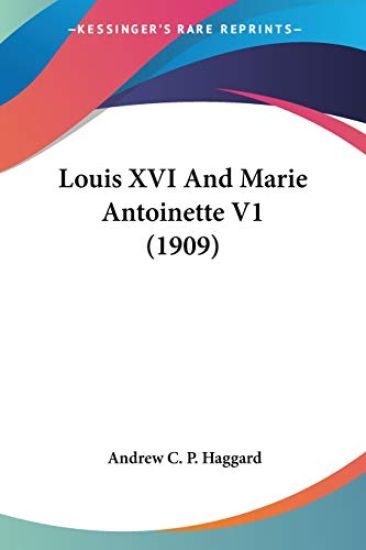
Louis XVI And Marie Antoinette V1 (1909)
Andrew C. P. Haggard
KESSINGER PUBLISHING, LLC
2009
pokkari
Looks at the king and his beliefs, domestic problems, and foreign policy.
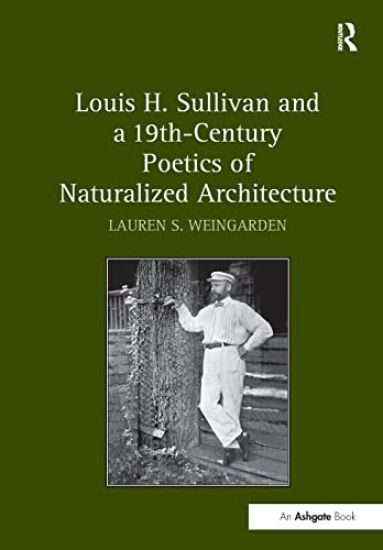
Louis H. Sullivan and a 19th-Century Poetics of Naturalized Architecture
Lauren S. Weingarden
Routledge
2016
nidottu
For most of the twentieth century, modernist viewers dismissed the architectural ornament of Louis H. Sullivan (1856-1924) and the majority of his theoretical writings as emotional outbursts of an outmoded romanticism. In this study, Lauren Weingarden reveals Sullivan's eloquent articulation of nineteenth-century romantic practices - literary, linguistic, aesthetic, spiritual, and nationalistic - and thus rescues Sullivan and his legacy from the narrow role imposed on him as a pioneer of twentieth-century modernism. Using three interpretive models, discourse theory, poststructural semiotic analysis, and a pragmatic concept of sign-functions, she restores the integrity of Sullivan's artistic choices and his historical position as a culminating figure within nineteenth-century romanticism. By giving equal weight to Louis Sullivan's writings and designs, Weingarden shows how he translated both Ruskin's tenets of Gothic naturalism and Whitman's poetry of the American landscape into elemental structural forms and organic ornamentation. Viewed as a site where various romantic discourses converged, Sullivan's oeuvre demands a cross-disciplinary exploration of each discursive practice, and its "rules of accumulation, exclusion, reactivation." The overarching theme of this study is the interrogation and restitution of those Foucauldian rules that enabled Sullivan to articulate architecture as a pictorial mode of landscape art, which he considered co-equal with the spiritual and didactic functions of landscape poetry.
First published in 1999, this is the first study of the noted French music critic and scholar Louis Laloy, and the first collection of his writings. His writings were unique in their time and have never previously been translated. Laloy’s ideas on Debussy, Ravel and Stravinsky are presented here with an introduction by Deborah Priest to each extract, placing it in the context of the period and the composer’s work. Detailed annotations explain technical and cultural references.As a friend of all three composers, but especially of Debussy, Laloy wrote with great authority and influence: his work provides recollections, analytical insights, and insights into reception and performance practice. His erudition and wide range of reference make for fascinating and enlightening reading about the period. Deborah Priest provides a detailed introduction which sets Laloy’s work against the background of the Paris music scene from 1900- 1940.
First published in 1999, this is the first study of the noted French music critic and scholar Louis Laloy, and the first collection of his writings. His writings were unique in their time and have never previously been translated. Laloy’s ideas on Debussy, Ravel and Stravinsky are presented here with an introduction by Deborah Priest to each extract, placing it in the context of the period and the composer’s work. Detailed annotations explain technical and cultural references.As a friend of all three composers, but especially of Debussy, Laloy wrote with great authority and influence: his work provides recollections, analytical insights, and insights into reception and performance practice. His erudition and wide range of reference make for fascinating and enlightening reading about the period. Deborah Priest provides a detailed introduction which sets Laloy’s work against the background of the Paris music scene from 1900- 1940.