

Kirjahaku
Etsi kirjoja tekijän nimen, kirjan nimen tai ISBN:n perusteella.
1000 tulosta hakusanalla Marcel Drouets



Problems in Geometry
Marcel Berger; P. Pansu; J.-P. Berry; X. Saint-Raymond
Springer-Verlag New York Inc.
1984
sidottu
Written as a supplement to Marcel Berger’s popular two-volume set, Geometry I and II (Universitext), this book offers a comprehensive range of exercises, problems, and full solutions. Each chapter corresponds directly to one in the relevant volume, from which it also provides a summary of key ideas. Where the original Geometry volumes tend toward challenging problems without hints, this book offers a wide range of material that begins at an accessible level, and includes suggestions for nearly every problem. Bountiful in illustrations and complete in its coverage of topics from affine and projective spaces, to spheres and conics, Problems in Geometry is a valuable addition to studies in geometry at many levels.

All of science springs from the observation of nature. In this classic book, the late Marcel Minnaert accompanies the reader on a tour of nature's light and color and reveals the myriad phenomena that may be observed outdoors with no more than a pair of sharp eyes and an enquiring mind. From the intriguing shape of the dapples beneath a tree on a sunny day, to rainbows, mirages, and haloes, to the colors of liquid, ice, and the sky, to the appearance of the sun, moon, planets, and stars - Minnaert describes and explains them all in clear language accessible to the layman. This volume includes 80 new photographs, over half in color, illustrating many of the phenomena - ordinary and exotic - discussed in the book. Most of the new photos are by Pekka Parviainen, the renowned Finnish nature photographer.

Differential Geometry: Manifolds, Curves, and Surfaces
Marcel Berger; Bernard Gostiaux
Springer-Verlag New York Inc.
1987
sidottu
This book consists of two parts, different in form but similar in spirit. The first, which comprises chapters 0 through 9, is a revised and somewhat enlarged version of the 1972 book Geometrie Differentielle. The second part, chapters 10 and 11, is an attempt to remedy the notorious absence in the original book of any treatment of surfaces in three-space, an omission all the more unforgivable in that surfaces are some of the most common geometrical objects, not only in mathematics but in many branches of physics. Geometrie Differentielle was based on a course I taught in Paris in 1969- 70 and again in 1970-71. In designing this course I was decisively influ enced by a conversation with Serge Lang, and I let myself be guided by three general ideas. First, to avoid making the statement and proof of Stokes' formula the climax of the course and running out of time before any of its applications could be discussed. Second, to illustrate each new notion with non-trivial examples, as soon as possible after its introduc tion. And finally, to familiarize geometry-oriented students with analysis and analysis-oriented students with geometry, at least in what concerns manifolds.

All of science springs from the observation of nature. In this classic book, the late Marcel Minnaert accompanies the reader on a tour of nature's light and color and reveals the myriad phenomena that may be observed outdoors with no more than a pair of sharp eyes and an enquiring mind. From the intriguing shape of the dapples beneath a tree on a sunny day, to rainbows, mirages, and haloes, to the colors of liquid, ice, and the sky, to the appearance of the sun, moon, planets, and stars - Minnaert describes and explains them all in clear language accessible to the layman. This volume includes 80 new photographs, over half in color, illustrating many of the phenomena - ordinary and exotic - discussed in the book. Most of the new photos are by Pekka Parviainen, the renowned Finnish nature photographer.
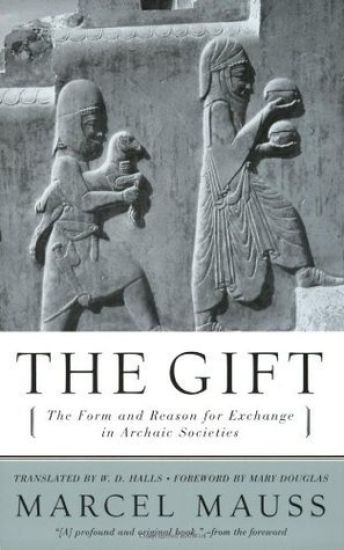
The Gift: The Form and Reason for Exchange in Archaic Societies
Marcel Mauss
W. W. Norton Company
2000
nidottu
A brilliant example of the comparative method, The Gift presents the first systematic study of the custom--widespread in primitive societies from ancient Rome to present-day Melanesia--of exchanging gifts. The gift is a perfect example of what Mauss calls a total social phenomenon, since it involves legal, economic, moral, religious, aesthetic, and other dimensions. He sees the gift exchange as related to individuals and groups as much as to the objects themselves, and his analysis calls into question the social conventions and economic systems that had been taken for granted for so many years. In a modern translation, introduced by distinguished anthropologist Mary Douglas, The Gift is essential reading for students of social anthropology and sociology.

Marcel Proust’s seven-volume masterpiece, In Search of Lost Time (A la recherche du temps perdu), has inspired many superlatives, among them “the greatest novel ever written” and “the greatest novel of the first half of the twentieth century.” Swann’s Way, the first volume of the Recherche and the most widely read and taught of all the volumes, is the ideal introduction to Proust’s inventive genius. This Norton Critical Edition is based on C. K. Scott Moncrieff’s translation, which introduced the English-speaking world to Proust and was published during the author’s lifetime. It is accompanied by Susanna Lee’s introduction, note on the text, and explanatory annotations. Marcel Proust was forty-two years old when Swann’s Way was published, but its foundational ideas and general shape had been evolving for decades. “Contexts” includes a 1912 reader’s report of the manuscript that exemplifies publishers’ complicated reactions to Proust’s new form of writing. Also included are three important post-publication reviews of the novel, by Elie-Joseph Bois, Lucien Daudet, and Paul Souday, as well as André Arnyvelde’s 1913 interview with Proust. The fourteen critical essays and interpretations of Swann’s Way in this volume speak to the novel’s many facets—from the musical to the artistic to its representations of Judaism and homosexuality. Contributors include Gérard Genette, whose “Metonymy in Proust” appears here in English translation for the first time, along with Gilles Deleuze, Roger Shattuck, Claudia Brodsky, Julia Kristeva, Margaret E. Gray, and Alain de Botton, among others. The edition also includes a Chronology of Proust’s Life and Work, a Selected Chronology of French Literature from 1870 to 1929, and a Selected Bibliography.

One of the great works of Western literature, now in the new definitive French Pleiade edition translated by C.K. Scott Moncrieff and Terence Kilmartin. Volume one includes SWANN'S WAY and WITHIN A BUDDING GROVE.

The third and final volume includes THE CAPTIVE, THE FUGITIVE, and TIME REGAINED.

Originally published between 1920-70,The History of Civilization was a landmark in early twentieth century publishing. It was published at a formative time within the social sciences, and during a period of decisive historical discovery. The aim of the general editor, C.K. Ogden, was to summarize the most up to date findings and theories of historians, anthropologists, archaeologists and sociologists. This reprinted material is available as a set or in the following groupings: * Prehistory and Historical Ethnography Set of 12: 0-415-15611-4: £800.00 * Greek Civilization Set of 7: 0-415-15612-2: £450.00 * Roman Civilization Set of 6: 0-415-15613-0: £400.00 * Eastern Civilizations Set of 10: 0-415-15614-9: £650.00 * Judaeo-Christian Civilization Set of 4: 0-415-15615-7: £250.00 * European Civilization Set of 11: 0-415-15616-5: £700.00
First written by Marcel Mauss and Henri Humbert in 1902, A General Theory of Magic gained a wide new readership when republished by Mauss in 1950. As a study of magic in 'primitive' societies and its survival today in our thoughts and social actions, it represents what Claude Lévi-Strauss called, in an introduction to that edition, the astonishing modernity of the mind of one of the century's greatest thinkers. The book offers a fascinating snapshot of magic throughout various cultures as well as deep sociological and religious insights still very much relevant today. At a period when art, magic and science appear to be crossing paths once again, A General Theory of Magic presents itself as a classic for our times.
First written by Marcel Mauss and Henri Humbert in 1902, A General Theory of Magic gained a wide new readership when republished by Mauss in 1950. As a study of magic in 'primitive' societies and its survival today in our thoughts and social actions, it represents what Claude Lévi-Strauss called, in an introduction to that edition, the astonishing modernity of the mind of one of the century's greatest thinkers. The book offers a fascinating snapshot of magic throughout various cultures as well as deep sociological and religious insights still very much relevant today. At a period when art, magic and science appear to be crossing paths once again, A General Theory of Magic presents itself as a classic for our times.

In this, his most famous work, Marcel Mauss presented to the world a book which revolutionized our understanding of some of the basic structures of society. By identifying the complex web of exchange and obligation involved in the act of giving, Mauss called into question many of our social conventions and economic systems. In a world rife with runaway consumption, The Gift continues to excite and challenge.

In this, his most famous work, Marcel Mauss presented to the world a book which revolutionized our understanding of some of the basic structures of society. By identifying the complex web of exchange and obligation involved in the act of giving, Mauss called into question many of our social conventions and economic systems. In a world rife with runaway consumption, The Gift continues to excite and challenge.

Marcel Danesi's outstanding introduction provides a clear guide to brands and brand identity, outlining their historical origins and their increasing centrality in contemporary consumer culture. He introduces: the origins of brands naming and brand image how semiotic theory can be used to analyze brand image brands and consumer culture advertising campaigns brands in the global village the anti-brand movement.Danesi shows how consumer products such as cars, perfume and even websites are sold to us through the creation of powerful brand images, and analyzes the advertising campaigns developed to promote brands such as Coca-Cola, McDonalds, Absolut Vodka, Apple, Gucci and Chanel. He also discusses the rise of the anti-brand movement, and its challenges to the dominance of global brands such as Gap and Nike. Including an annotated guide to further reading, details of useful websites and a comprehensive bibliography, Danesi’s book is an important contribution to the field of marketing and communications.

Marcel Danesi's outstanding introduction provides a clear guide to brands and brand identity, outlining their historical origins and their increasing centrality in contemporary consumer culture. He introduces: the origins of brands naming and brand image how semiotic theory can be used to analyze brand image brands and consumer culture advertising campaigns brands in the global village the anti-brand movement.Danesi shows how consumer products such as cars, perfume and even websites are sold to us through the creation of powerful brand images, and analyzes the advertising campaigns developed to promote brands such as Coca-Cola, McDonalds, Absolut Vodka, Apple, Gucci and Chanel. He also discusses the rise of the anti-brand movement, and its challenges to the dominance of global brands such as Gap and Nike. Including an annotated guide to further reading, details of useful websites and a comprehensive bibliography, Danesi’s book is an important contribution to the field of marketing and communications.

Seasonal Variations of the Eskimo is one of the first books in anthropology to adopt a sociological approach to the analysis of a single society. Mauss links elements of anthropology and human geography, arguing that geographical factors should be considered in relation to a social context in all its complexity. The work is an illuminating source on the Eskimo and a proto-type of what an anthropologist should do with ethnographic data and exerted considerable influence on the development of social anthropology. English translation first published in 1979.