

Kirjahaku
Etsi kirjoja tekijän nimen, kirjan nimen tai ISBN:n perusteella.
1000 tulosta hakusanalla Marcel Rose
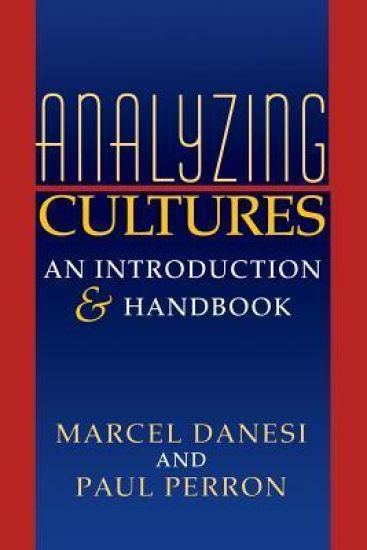
Designed for classroom use in a number of disciplines, this comprehensive introduction to cultural semiotics is also an easy-to-use reference for those who would like a better understanding of the topic. No other text provides this kind of practical framework for the classroom study of semiotics. Each of the 12 chapters is clearly written and self-contained.

"Humans are the only animals who create and solve puzzles—for the sheer pleasure of it—and there is no obvious genetic reason why we would do this. Marcel Danesi explores the psychology of puzzles and puzzling, with scores of classic examples. His pioneering book is both entertaining and enlightening." —Will Shortz, Crossword Editor, The New York Times ". . . Puzzle fanatics will enjoy the many riddles, illusions, cryptograms and other mind-benders offered for analysis." —Psychology Today ". . . a bristlingly clear . . . always intriguing survey of the history and rationale of puzzles. . . . [A] splendid study. . . ." —Knight Ridder Newspapers
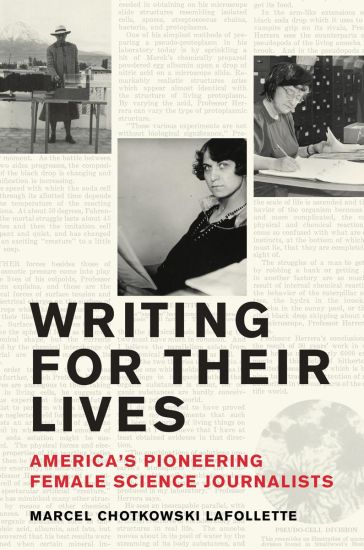
A breathtaking history of America’s trail-blazing female science journalists—and the timely lessons they can teach us about equity, access, collaboration, and persistence.Writing for Their Lives tells the stories of women who pioneered the nascent profession of science journalism from the 1920s through the 1950s. Like the “hidden figures” of science, such as Dorothy Vaughan and Katherine Johnson, these women journalists, Marcel Chotkowski LaFollette writes, were also overlooked in traditional histories of science and journalism. But, at a time when science, medicine, and the mass media were expanding dramatically, Emma Reh, Jane Stafford, Marjorie Van de Water, and many others were explaining theories, discoveries, and medical advances to millions of readers via syndicated news stories, weekly columns, weekend features, and books—and they deserve the recognition they have long been denied.Grounded in extensive archival research and enlivened by passages of original correspondence, Writing for Their Lives addresses topics such as censorship, peer review, and news embargoes, while also providing intimate glimpses into the personal lives and adventures of mid-twentieth-century career women. They were single, married, or divorced; mothers with child-care responsibilities; daughters supporting widowed mothers; urban dwellers who lived through, and wrote about, the Great Depression, World War II, and the dawn of the Atomic Age—all the while, daring to challenge the arrogance and misogyny of the male scientific community in pursuit of information that could serve the public.Written at a time when trust in science is at a premium, Writing for Their Lives is an inspiring untold history that underscores just how crucial dedicated, conscientious journalists are to the public understanding and acceptance of scientific guidance and expertise.

Extreme Brain Workout is a series of puzzles designed to engage the core parts of your brain that are responsible for verbal ability, logical thinking and even your IQ. Each group of puzzles progresses from simple to complex so that they are accessible and challenging for everyone, from the very beginner to the dedicated puzzle master.


La Faculté de décret de l'Université de Paris au 15e siècle; Volume 2
Marcel Fournier; Dorez Léon 1864-1922
Wentworth Press
2018
pokkari

La Faculté de décret de l'Université de Paris au 15e siècle Volume 1; Series 2
Marcel Fournier; Dorez Léon 1864-1922
Wentworth Press
2018
pokkari
Early in his career, Marcel Proust, who greatly admired John Ruskin, published translations of two works by the English critic – La Bible d’Amiens (1900) and Sésame et les Lys (1906). He wrote a substantial preface to each book and provided discursive notes that were themselves often small essays. Rare now, even in their French versions, the preface to La Bible d’Amiens and the notes to both books have never before been available in English. In bringing them together with the preface to Sésame et les Lys, this new book completes the translation into English of the important critical writings of Proust. "Expertly edited and translated and . . . introduced by a brilliant forty-page essay and a fascinating bibliographical note by Richard Macksey. It is an event for celebration. . . . Proust emerges from these essays and notes as one of the truly great critics."—Gabriel Josipovici, Times Literary Supplement"A welcome addition to English-language Proust texts and, I think, one long overdue."—Germain Brée, Kenan Professor Emerita, Wake Forest University
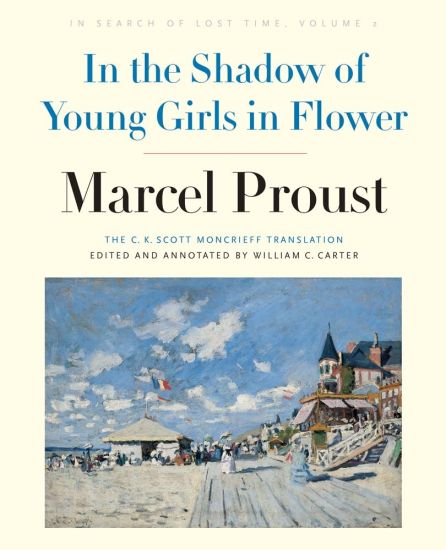
Edited and annotated by leading Proust scholar William Carter, In the Shadow of Young Girls in Flower is the second volume of one of the twentieth century’s great literary triumphs It was this volume that won the Prix Goncourt in 1919, affirming Proust as a major literary figure and dramatically increasing his fame. Here the narrator whose childhood was reflected in Swann’s Way moves further through childhood and into adolescence, as the author brilliantly examines themes of love and youth, in settings in Paris and by the sea in Normandy. The reader again encounters Swann, now married to his former mistress and largely fallen from high society, and meets for the first time several of Proust’s most memorable characters: the handsome, dashing Robert de Saint-Loup, who will become the narrator’s best friend; the enigmatic Albertine, leader of the “little band” of adolescent girls; the profoundly artistic Elstir, believed to be Proust’s composite of Whistler, Monet, and other leading painters; and, making his unforgettable entrance near the end of the volume, the intense, indelible Baron de Charlus. Permeated by the “bloom of youth” and its resonances in memories of love and friendship, In the Shadow of Young Girls in Flower takes readers into the heart of Proust’s comic and poetic genius. As with Swann’s Way, Carter uses C. K. Scott Moncrieff’s beloved translation as the basis for this annotated and fully revised edition. Carter corrects long-standing errors in Scott Moncrieff’s otherwise superlative translation, bringing it closer than ever to the spirit and style of Proust’s original text—and reaching English readers in a way that the Pléiade annotations cannot. Insightful and accessible, Carter’s edition of Marcel Proust’s masterwork will be the go-to text for generations of readers seeking to understand Proust’s remarkable bygone world.
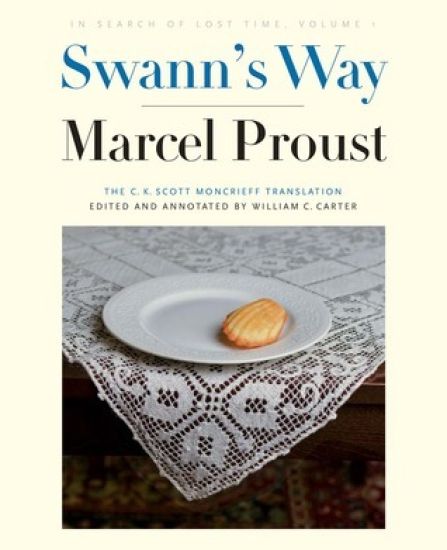
The foremost Proust scholar of our time offers a brilliantly revised and annotated edition of the first volume of the twentieth century’s most acclaimed novel “Carter’s revised edition . . . renews one’s appreciation of Proust. . . . [His] slight but decisive emendations bring the reader closer than ever to the tenor of Proust’s style and diction. . . . A magnificent and enduring achievement.”—Choice One hundred years have passed since Marcel Proust published the first volume of what was to become a seven-volume masterpiece, In Search of Lost Time. In the intervening century his famously compelling novel has never been out of print and has been translated into dozens of languages. English-language readers were fortunate to have an early and extraordinarily fine translation of the novel from Charles Kenneth Scott Moncrieff. With the passage of time, however, the need for corrections, revisions, and annotations to the Scott Montcrieff translation has become apparent. Esteemed Proust scholar William C. Carter celebrates the publication centennial of Swann’s Way with a new, more accurate and illuminating edition of the first volume of In Search of Lost Time. Carter corrects previous translating missteps to bring readers closer to Proust’s intentions while also providing enlightening notes to clarify biographical, historical, and social contexts. Presented in a reader-friendly format alongside the text, these annotations will enrich and deepen the experience of Proust’s novel, immersing readers in the world of an unsurpassed literary genius.
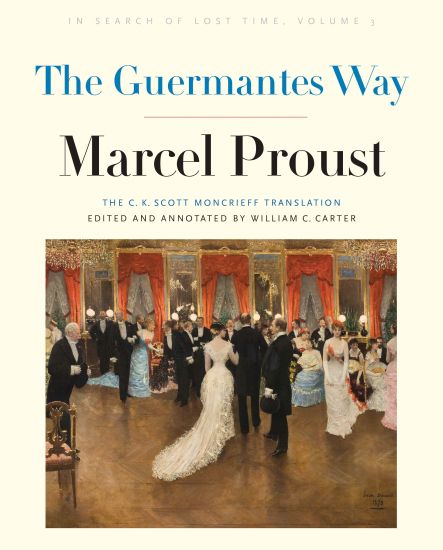
An authoritative new edition of the third volume in Marcel Proust’s epic masterwork, In Search of Lost Time Marcel Proust’s monumental seven-part novel In Search of Lost Time is considered by many to be the greatest novel of the twentieth century. This edition of volume three, The Guermantes Way, is edited and annotated by noted Proust scholar William C. Carter, who endeavors to bring the classic C. K. Scott Moncrieff translation closer to the spirit and style of the author’s original text. Continuing the story begun in Swann’s Way and continued in In the Shadow of Young Girls in Flower, The Guermantes Way follows Proust’s young protagonist as he advances through aristocratic French society in late-nineteenth-century Paris. A departure from the intimacy of the sprawling novel’s previous two installments, part three unfolds against a colorful backdrop of Parisian life, moving from literary salon to opulent social gathering to provide a biting and satirical commentary on culture, human foibles, the ways of the world, and the irretrievable loss of time.
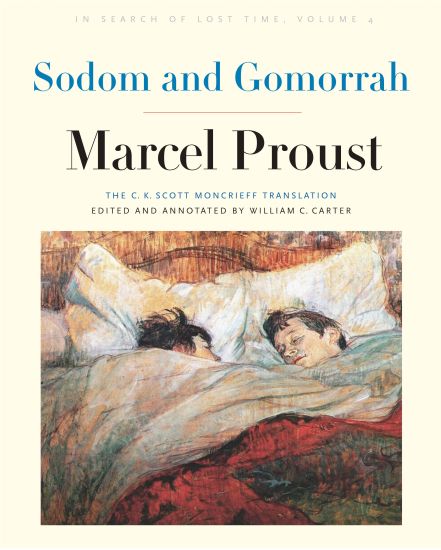
An authoritative new edition of the fourth volume in Marcel Proust’s epic masterwork, In Search of Lost Time series Marcel Proust’s monumental seven-part novel In Search of Lost Time is considered by many to be the greatest novel of the twentieth century. The fourth volume, Sodom and Gomorrah, is notable for its pioneering discussion of homosexuality. After its publication, Colette wrote to Proust, “No one has written pages such as these on homosexuals, no one!” This edition is edited and annotated by noted Proust scholar William C. Carter, who endeavors to bring the classic C. K. Scott Moncrieff translation closer to the spirit and style of the original.
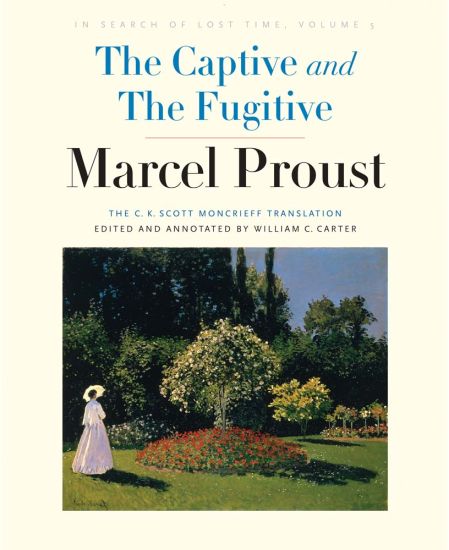
An authoritative new edition of Marcel Proust’s The Captive and The Fugitive, published together as the fifth volume of his epic masterwork, In Search of Lost Time Marcel Proust’s monumental seven-part novel In Search of Lost Time is considered by many to be the greatest novel of the twentieth century. The Captive and The Fugitive, the fifth and sixth volumes of Proust’s masterpiece, contain some of literature’s most beautiful meditations on art, music, desire, jealousy, love and loss, grieving and forgetting. In this work, Proust continues his vast satirical fresco of high society in France just prior to the outbreak of World War I. These volumes and the following volume were published posthumously, as Proust died when he was approximately one-third of the way through correcting the proofs for The Captive. The Fugitive was also the last volume translated by Charles Kenneth Scott Moncrieff, who did not live to finish his enormous task. This edition of the two, published together as the fifth volume, is edited and annotated by noted Proust scholar William C. Carter, who endeavors to bring the classic C. K. Scott Moncrieff translation closer to the spirit and style of the original.
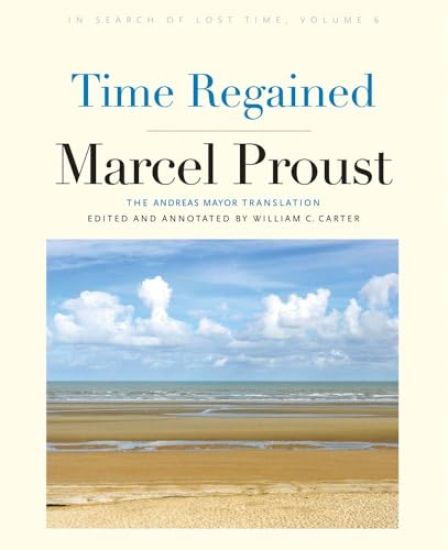
The final volume of Marcel Proust’s masterpiece, In Search of Lost Time Marcel Proust’s monumental seven-part In Search of Lost Time is considered by many to be the greatest novel of the twentieth century. In Time Regained, the final volume, edited and annotated by noted Proust scholar William C. Carter, Proust brilliantly resolves the novel’s main themes: love and jealousy, grief and oblivion, time and memory, and the purpose of art and literature. Among the famous passages is the “masked ball” in which the Narrator, after a long absence from society, attends a party at the Prince de Guermantes’s and at first fails to recognize his old acquaintances because of the changes wrought by the passage of time. The concluding pages, in which the Narrator recovers his will and discovers the subject matter of his future book, contain many observations about life and art that will remain in our memories. For Time Regained, Carter uses the translation by Andreas Mayor, a successor to the translations of the previous volumes by Charles Kenneth Scott Moncrieff, who died before finishing this volume.
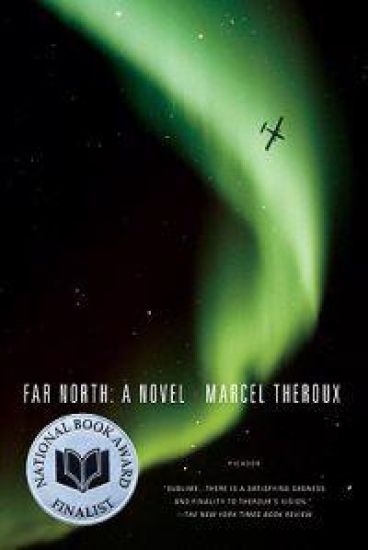
National Book Award Finalist for FictionMy father had an expression for a thing that turned out bad. He'd say it had gone west. But going west always sounded pretty good to me. After all, westwards is the path of the sun. And through as much history as I know of, people have moved west to settle and find freedom. But our world had gone north, truly gone north, and just how far north I was beginning to learn. Out on the frontier of a failed state, Makepeace--sheriff and perhaps last citizen--patrols a city's ruins, salvaging books but keeping the guns in good repair. Into this cold land comes shocking evidence that life might be flourishing elsewhere: a refugee emerges from the vast emptiness of forest, whose existence inspires Makepeace to reconnect with human society and take to the road, armed with rough humor and an unlikely ration of optimism. What Makepeace finds is a world unraveling: stockaded villages enforcing an uncertain justice and hidden work camps laboring to harness the little-understood technologies of a vanished civilization. But Makepeace's journey--rife with danger--also leads to an unexpected redemption. Far North takes the reader on a quest through an unforgettable arctic landscape, from humanity's origins to its possible end. Haunting, spare, yet stubbornly hopeful, the novel is suffused with an ecstatic awareness of the world's fragility and beauty, and its ability to recover from our worst trespasses.
