The career of the Duchess of Castiglione-Colonna, also known by the pseudonym "Marcello", is worth considering from a multidisciplinary perspective. In this work, socio-historians, musicologists and specialists in the literature of the eighteenth and nineteenth centuries examine this multifaceted figure.
Speeches from turbulent times.Cicero (Marcus Tullius, 106–43 BC), Roman lawyer, orator, politician, and philosopher, of whom we know more than of any other Roman, lived through the stirring era that saw the rise, dictatorship, and death of Julius Caesar in a tottering republic. In his political speeches especially and in his correspondence we see the excitement, tension and intrigue of politics and the part he played in the turmoil of the time. Of about 106 speeches, delivered before the Roman people or the Senate if they were political, before jurors if judicial, fifty-eight survive (a few of them incompletely). In the fourteenth century Petrarch and other Italian humanists discovered manuscripts containing more than 900 letters of which more than 800 were written by Cicero and nearly 100 by others to him. These afford a revelation of the man all the more striking because most were not written for publication. Six rhetorical works survive and another in fragments. Philosophical works include seven extant major compositions and a number of others; and some lost. There is also poetry, some original, some as translations from the Greek. The Loeb Classical Library edition of Cicero is in twenty-nine volumes.
Les lettres de Charles Gounod a la duchesse Colonna, sculptrice de renom sous le pseudonyme de Marcello, sont d'un immense interet. De caractere intime, elles offrent egalement des informations sur les projets du compositeur (dont un opera inacheve d'apres l'histoire de Francesca da Rimini), les details materiels de son activite, son manque d'inspiration, ainsi que sur ses conceptions esthetiques et philosophiques. Entre la creation de Romeo et Juliette en 1867 et la fuite de Gounod en Angleterre en 1870, les deux amis partagent leurs joies et leurs preoccupations tant artistiques que personnelles. Cet echange epistolaire enrichit considerablement la comprehension de la personnalite humaine et creatrice de Gounod, ainsi que de son milieu culturel.
A critical edition of Guglielmo Sirleto’s unpublished letters is still missing. The partial transcriptions of this large collection of epistles in the volumes of the Concilium Tridentinum by Gottfried Buschbell only provided partial transcriptions relating to Cardinal Marcello Cervini’s legation during the Council of Trent betwen 1545 and 1547.While scholars have recognized Sirleto’s assistance to Cardinal Cervini’s Tridentine exploitations and compositions of various critical decrees, the larger context of his entry into the household and Roman enterprises oft he powerful cardinal editore Cervini remain largely obscure. The following volume of registered letters corresponding to the first volume of the edited correspondence aims at complementing the edited volume of epistles by including annotated editions of largely unknown manuscripts by distinguished Roman ecclesiastical officeholders, such as the papal librarian Agostino Steuco, addressing the theological issues discussed at the Dialogues of Religin in Germany and which were later reprossed in the published first editions printed by Cardinal Cervini’s Latin and Greek presses in Rome.The volume of registered letters provides a useful instrument in not only offering concisive descriptions of the edited collection of epistles, but offers also valuable materials for future scholarship in reconstructing the intellectual atmosphere at the Roman Curia and Cardinal Marcello Cervini’s agency in strategically manipulating this new group of theological as well as ecclesiastical scholars.
A UNIQUE, DECISION-MAKING TOOL FOR DAILY PRACTICE This evidence-based resource provides expert guidance on the diagnosis and treatment of the most common infertility conditions seen in daily office practice. After a brief introduction to the anatomy, epidemiology, and pathophysiology of infertility problems, you’ll find practical, easy-to-access coverage of: • Both female and male infertility issues • State-of-the-art assisted reproductive technologies • Advances in the understanding of the physiology of infertility • Unexplained infertility, genetics of infertility, and environmental causes Separate sections are devoted to Psychological Aspects of Infertility, Legal Issues, and Ethical Issues. About the Practical Pathways Series: Practical Pathways in Obstetrics & Gynecology is a unique new series especially designed to tackle the challenging clinical topics encountered in daily practice. Each title in the series features a standardized, user-friendly approach that guides you systematically through evaluation, diagnosis, and management: • A high-yield, algorithmic Pathway at the start of most chapters provides an “at a glance” summary of recommended management • What’s the Evidence? questions summarize major clinical trials and their application to daily practice • Guiding Questions review what strategic questions clinicians should ask themselves when first evaluating a patient • Key Points are highlighted in the margins • Case Studies demonstrate the clinical application of concepts, and further hone diagnostic skills • References facilitate further research or study OTHER TITLES IN THE SERIES Craigo and Baker: Medical Complications in Pregnancy Liu and Gass: Management of the Perimenopause Newton: Infections in Women Weber: Office Urogynecology
In Read to Achieve: Comprehending Narrative Text, students work daily to develop comprehension strategies appropriate for fictional and non-fictional texts. Examples using selections of authentic non-fiction trade books are provided in the Anthology. In later units instruction is based around examples taken from Gary Paulsen's award-winning novel Hatchet, as students read and work with the entire text. In the final units of this module the teacher selects a text of their own choosing that will be used for daily examples and classroom work. Your Teacher Materials Package contains everything you need to teach Read to Achieve: Comprehending Narrative Text.
Each year, universities and research centres – most particularly the major space agencies such as NASA, ESA, and NASDA – devote a vast amount of time and money into the research of materials behaviour and production in microgravity. Recently, the possibility of creating special alloys, inorganic and organic crystals, as well as biological (living) tissues in this condition has been investigated. Fluids, Materials and Microgravity provides a solid basis of established knowledge – through literature, fundamental studies, experimental methods, numerical (basic and sophisticated) techniques – as well as the latest in research advancements. Important for the prediction of material behaviour when exposed to the environment of space, this book explores the new knowledge provided by microgravity-based studies in producing unique inorganic, and organic materials on Earth (and in designing related new technological processes). A vital resource for any scientists interested in the understanding and modelling of the new important physical mechanisms disclosed by microgravity research, and in their possible effect on the production and behaviour of materials both in space and on Earth. A vital resource for any scientists interested in the effect of microgravity on the production and behaviour of materials.
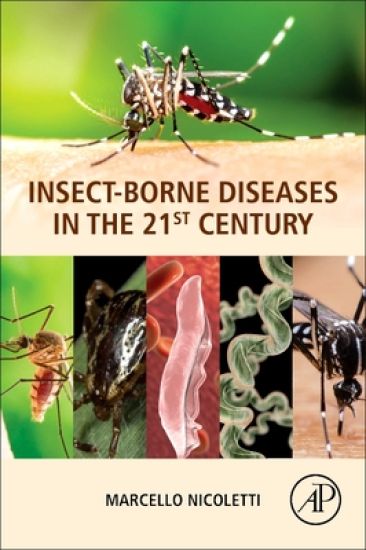
Insect-Borne Diseases in the 21st Century provides a comprehensive look at the most notorious diseases carried by insects. It offers an assessment of current and potential insect-vectored diseases as they relate to human health and agricultural and livestock production. Written by a leading expert in insect-borne diseases, it examines the history of insect-borne diseases, beginning with those that have been well-known to scientists for decades, also including recent outbreaks like Zika. The book takes into consideration environmental conditions and climate change and explores the bionetworks and system biology of potential new superorganisms, offering preventative and protective solutions. This is a must-have resource for entomology researchers and students who seek the most up-to-date information on disease-causing pathogens transmitted by insects. This book will also serve as a resource for ordinary people whose lives may be affected by such diseases.
A splendid Hudson River estate, complete with cook and rose garden. The landscape is inebriating, the women are in full, passionate bloom, and the men are incomprehensible. Susie-chic, smart, spacey, and no longer promiscuous- decides, at forty-five, to do what she would have done at twenty-five: invite a group of amusing friends to spend eight weekends of summer in stunning surroundings. The invitees include her oldest friend, Kay, elegantly nursing a broken heart; her former lover Dodge-still the sexiest man she knows; his randy, neurotic, comedian friend Ron; and Elise, an on-the-cusp artist determined to be in a relationship before she hits forty. Add to the mix Susie's very ardent, very surprising twenty-four-year-old son, and an exhibitionist au pair next door, and you have a delicious romantic farce that deftly slides into and out of something quite a bit darker.
When Bear meets Dragon on an old, rickety bridge, they both refuse to budge. But while they stand and argue, the bridge is getting creakier and creakier.
Combatants are equal under the laws of armed conflict, regardless of whether the wars they fight are just or unjust, legal or illegal. They are permissible targets and can kill each other in battle. This basic feature of international law has been recently put into question by a group of moral philosophers known as revisionists, who argue that just combatants in an unjust war should be considered innocents, and their deaths considered murder. Dr. Prieto Rudolphy explains and assesses the conflict between the revisionist argument and the existing legal norms in The Morality of the Laws of War: War, Law, and Murder. The book provides an in-depth assessment of modern ethical thought on killing in wartime, deconstructing the revisionist view of war and offering a new perspective on the legal equality of combatants. Prieto Rudolphy not only examines the tension between the revisionist morality and the traditional thesis of symmetry between combatants but proposes a contingent justification of the latter and an alternative morality of war. Underlying both is the inescapable fact that regulating war is always a moral compromise. At the same time, she argues that there is urgent moral pressure to improve our laws - to bring them closer to an ideal whereby war does not exist. The Morality of the Laws of War is a must-read for scholars of moral philosophy and international law, from students to experts, providing a thorough account of contemporary debates on the ethics of warfare and using nuanced arguments to illuminate a fresh perspective.
Plants provide the food, shelter, medicines, and biomass that underlie sustainable life. One of the earliest and often overlooked uses of plants is the production of smoke, dating to the time of early hominid species. Plant-derived smoke has had an enormous socio-economic impact throughout human history, being burned for medicinal and recreational purposes, magico-religious ceremonies, pest control, food preservation, and flavoring, perfumes, and incense. In ten illustrated chapters, this global compendium documents and describes approximately 2,000 global uses for over 1,400 plant species. The Uses and Abuses of Plant-Derived Smoke is accessibly written and provides a wealth of information not only on human uses, but also on conservation issues and the role of smoke, fire, and heat in promoting seed germination in biodiversity hot spots. Divided into nine main categories of use, the compendium lists plant-derived smoke's the medicinal, historical, ceremonial, ritual and recreational uses. Plant use in the production of incense and to preserve and flavor foods and beverages is also included. Each entry includes full binomial names and family, an identification of the person who named the plant, as well as numerous references to and other scholarly texts. Of particular interest will be plants such as Tobacco (Nicotiana tabaccum), Boswellia spp (frankincense), and Datura stramonium (smoked as a treatment for asthma all over the world), all of which are described in great detail. In addition, this is one of the first ethnobotanical books to include a section on plant conservation. It addresses issues of over-harvest and invasiveness, the two primary conservation concerns with human-exploited species.
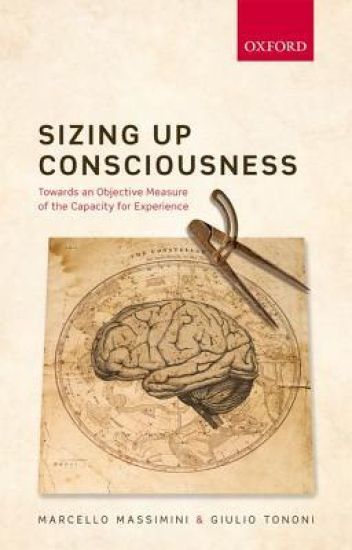
Everyone knows what consciousness is: it is what vanishes when we fall into dreamless sleep and reappears when we wake up or when we dream. However, we become less and less confident when we are called to answer fundamental questions about the relationships between consciousness and the physical world. Why is the cerebral cortex associated with consciousness, but not the liver, the heart, the cerebellum or other neural structures? Why does consciousness fade during deep sleep, while cortical neurons remain active? Can unresponsive patients with an island of active cortex surrounded by widespread damage be conscious? Is an artificial system that outperforms people at driving, recognizing faces and objects, and answering difficult questions conscious? Using the Integrated Information Theory (IIT) as a guiding principle, Sizing up Consciousness explores these questions, taking the reader along a fascinating journey from the cerebral cortex to the cerebellum, from wakefulness to sleep, anesthesia, and coma, supercomputers, octopuses, dolphins, and much more besides. By translating theoretical principles into practical measurements, the book outlines a preliminary attempt to identify a general rule to size up the capacity for consciousness within the human skull and beyond. Sizing up Consciousness is a short, accessible book, spanning neuronal activity to existential considerations and is essential reading for anyone interested in awareness and cognition.
Technological change is key in explaining industrial leadership, but the relationships and interactions between scientific research, industrial innovation, and competitiveness are neither clear nor straightforward. This book analyses the role of technological change in the competitiveness of firms and national economies.
Technological change is central in explaining industrial leadership, but the relationships and interactions between scientific research, industrial innovation, and competitiveness are neither clear nor straightforward. Public research funding and business strategy dictate to a significant extent the manner in, and extent to which innovation occurs within the economy. This book analyses the role of technological change in the competitiveness of firms and national economies. This includes an examination of: * the roles of R&D spending, and the organisational and technological capabilities of firms in the encouragement of innovation; * the way institutions in various nations differ in the way in which they encourage - or discourage - innovation; and the way in which different industrial sectors provide - or fail to provide - incentives to innovate; and * the ways in which trade, the operation of multinationals and international trade negotiations influence national production and innovation systems . The book combines insights of innovation scholars with those from business history, sociology and economics, in exploring the relation between organizational structures and the process of innovation. It places the analysis of innovation within an international perspective and gives historical and current examples of the interaction between organisational and technological capabilities, industrial and innovation policies and economic performance. Examples are drawn from a range of sectors (services, pharmaceuticals, construction, chemicals) and a range of countries (including the UK and other European countries, the USA, East Asia and Latin America).