Living alone in the forest of Jämtland, northern Sweden, Markus Torgeby found silence, stillness and the sense of self he'd been searching for. This beautifully illustrated book is the story of his time living wild in the woods, how he discovered an inner peace and the healing power of nature.
'The most beautiful book I ever read.' – Rune Larsson, ultra-distance runner Markus Torgeby was just 20 years old when he headed off into the remote Swedish forest to live as a recluse and dedicate himself to his one true passion: running. He lived in a tent in the wilderness, braving the harsh Swedish winters – for four years. This is his story. An international bestseller, this extraordinary book is a powerful exploration of running, resilience, loss, and self-discovery. A talented long-distance runner in his teens, Markus Torgeby excelled in training, but often failed inexplicably in competition. Pressurised by his coach and consumed by the suffering of his MS-afflicted mother, he chose to do something that most of us only dream of: escape the modern world. In his stripped-back lifestyle in the woods, surviving with the bare minimum of supplies and enduring extreme cold, he found salvation and ultimately his true direction in life.
This book is open access and available on www.bloomsburycollections.com. It is funded by Knowledge Unlatched.Debates about the legitimacy and ‘essence’ of political rule and the search for ‘ideal’ forms of government have been at the very heart of political thought ever since antiquity. Caesarism in the Post-Revolutionary Age explores the complex relationship between democracy and dictatorship from the 18th century onwards. More concretely, it assesses how democracy emerged as something compatible with dictatorship, both at the level of political thought and practice. Taking Caesarism – a political alternative somewhere between democracy and dictatorship – as its key concept, the book considers: * To what extent was Caesarism seen as a new post-revolutionary form of rule?* What were the flaws and perils, strengths and promises of Caesaristic regimes?* Can 19th-century Caesarism be characterised as a ‘prelude’ to 20th-century totalitarianism?* What is the legacy and ongoing appeal of Caesarism in the contemporary world? This study will be of value to anyone interested in modern political history, but also contemporary politics.
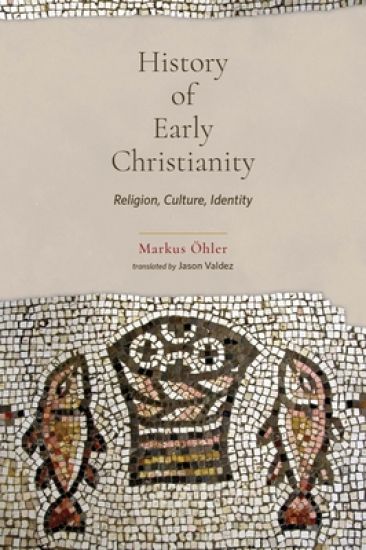
This comprehensive textbook presents the history of early Christianity from its beginnings to the time of the Second Judean Revolt against the backdrop of the social and historical developments of the early imperial period. Markus Öhler offers a thorough overview of the historical, social, and religious contexts of the Jesus movement in Judea and the various forms of Christian communities and traditions in the Greco-Roman world. From this foundation Öhler reconstructs the origins and trajectory of the Jesus movement, beginning with the ministry of Jesus of Nazareth and the events immediately after his death. Attention is given to the different forms of early Christianity in Judea, Galilee, and Samaria as well as the developments in Syrian Antioch. Special emphasis is placed on the presentation of the ministry of Paul of Tarsus and the social structure of the assemblies of Christ-believers founded by him. An item of central importance for the reconstruction of further developments is the ongoing debate about the significance of the Torah for Christian identity formation. The increasing confrontations with forms of state power are dealt with as well as the further processes of change within early Christianity up to 135 CE. Thus, a coherent overall picture emerges, which is suitable both as an introduction to the history of early Christianity and as a stimulus for further research.
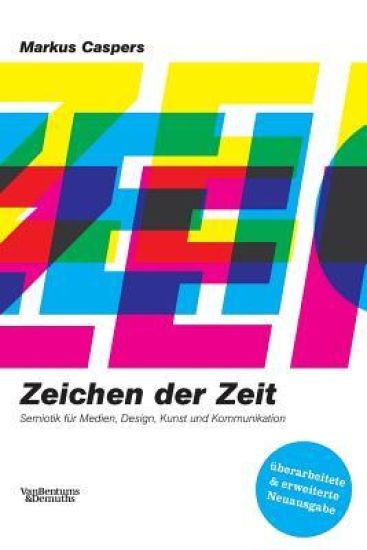
Diese Einf hrung in die Semiotik erkl rt die wichtigsten semiotischen Begriffe und Theoreme, um sie dann anhand von Beispielen aus dem medialen Bereich zu berpr fen. Wer mit Gestaltung, Werbung, Fotografie, Kommunikation und Design als Urheber oder Vermittler zu tun hat, wird hier Methoden finden, um komplexe Zeichensysteme nicht nur zu analysieren, sondern auch zu konstruieren. Ideal f r Einsteiger in die Semiotik, f r Designer, Kommunikationsberater und Kreative aller Art. Ein berblick von den semiotischen Grundbegriffen bis zu den gesellschaftlichen Implikationen der angewandten Zeichentheorie. Komplett berarbeitete und mit vielen Beispielen erweiterte 2. Auflage (Hinweis: In der Vorschau "Blick ins Buch" ist noch die alte Version von 2013 zu sehen )
Ein Mann erwacht nach einem tiefen traumlosen Schlaf. berrascht stellt er fest, dass er sich nicht bewegen kann. War er erkrankt? Tr umte er nur? Anf ngliches Staunen wandelt sich bald in schreckliche Angst. Eine Reise in das Grauen beginnt...
Dieser Roman bildet den ersten Band einer Trilogie um die fiktive Kleinstadt Regnau ( bei Nittenau ) in Bayern und die ebenfalls fiktive Burgruine Drachenfels, die der auch ber die Grenzen der Oberpfalz hinaus bekannten Spukfeste Stockenfels nachempfunden ist. Diese Umgebung k nnte ebenso gut die Heimat des Autors sein, oder ist sie es vielleicht sogar? Im Zentrum der Trilogie steht der alkoholkranke, die Welt und eigentlich Alles verachtende Hank Cooper. Das B se an sich scheint es nur so auf ihn abgesehen zu haben, obwohl es doch eigentlich scheint, er wolle nichts anderes, als sich langsam zu Tode trinken. Nach au en hin ist er der normale Mann mit Frau und Kind, der sich mit einer kleinen Firma ber Wasser h lt. Doch in seinem Inneren lauert etwas Gef hrliches, ihm selbst v llig Unbekanntes. Es ist - ohne sich dessen bewusst zu sein - sein Ich, dass sich vor ihm verstecken will, es sind all seine Fragen, die er an Gott und die Welt zu richten hat, es sind seine privaten ngste, die sich verkleiden, nur um ihn noch mehr zu verbittern. Seine Frau Steff ist ein krankhafter Hypochonder, der bei jedem Wehwehchen gleich f rchtet unheilbar und absolut t dlich erkrankt zu sein. Besorgt wegen des Alkoholkonsums ihres Mannes und die dunklen Wolken einer Ehekrise heraufziehen sehend, erf hrt sie auch noch, dass sie nach vierzehn Jahren zum zweiten Mal schwanger geworden ist; zu einem Zeitpunkt also, der so gar nicht in die momentane Situation passen will. Die Tochter der Coopers, Melanie, hat in ihrem Freundeskreis nur verschrobene Jungs, allen voran Dietmar, genannt der Biber. Ein intelligenter Bursche, der seine Unsicherheiten mit einer sehr gehobenen Sprache zu kaschieren sucht und den sorgf ltigen Wissenschaftler spielt. Zusammen mit Stefan, einem bergewichtigen Griesgram und Andreas, dem geschw tzigsten Buben der Schule bildet dieses verschrobene Quartett den Black Circle, der sich zum Ziel gesetzt hat mit Toten zu kommunizieren oder zumindest das bernat rliche zu erforschen. Schwierigkeiten tauchen aber immer wieder in Gestalt einer blen Bande halbw chsiger Kleinkrimineller auf, die den Teenagern das Leben schwer machen. Zur Hochform aber l uft der Black Circle auf, als Jake, ein krebskranker schwarzer Junge zu der Gruppe st t. Seit seiner Knochenkrebsbehandlung samt Amputation eines Unterschenkels ist Jake sehr empf nglich f r alles Paranormale und kann leider einige Sachen dazu beitragen, dass ein gef hrlicher Untoter aus der H lle zur ckkehrt und mit ihm der Tod in vielen - auch unerwarteten - Facetten. Stefanie Cooper verl sst ihren Mann gerade dann, als Melanie sie am N tigsten h tte und der Horror seinen Lauf nimmt. Hank Cooper wird von seinem Gewissen und seinem Verantwortungsbewusstsein geradezu gezwungen etwas zu unternehmen. Er muss sich dem Kampf stellen...
Als Pastor hatte ich es mir in der schw bischen Kleinstadt Heidenheim an der Brenz sooo gem tlich eingerichtet. Doch eines sch nen Tages kam ganz unverhofft Alfred als Hausmeister in unsere Kirchengemeinde und stellte nicht nur mein Leben, sondern auch das einiger Gemeindemitglieder auf den Kopf.Warum Gott Alfred unbedingt zu uns schicken musste, verstehe ich bis heute nicht, aber scheinbar hatten wir es n tig, wie so manche Geschichte zeigt ...
In einem kleinen Dorf hoch im Norden pflegt eine Kr uterfrau einen Einsiedel, dessen unvermeidlicher Tod gro e Kreise zieht. Ein alter Magier erh lt einen Brief, der eine lang vergessene Frage aufwirft. Auf der Suche nach Antworten begibt er sich weit in die Vergangenheit und st t dabei auf ein altes Geheimnis.Ein junger Adliger reist zu seinem Onkel in die K nigsstadt und ger t mitten in einen Gerichtsprozess, dessen Folgen sein Schicksal bestimmen.
Discover the open source Eclipse Tasking Engine Advanced (TEA) project in this compact to-the-point book. It covers how to automate tasks using TEA and focuses on simplifying and aiding the creation of extensions for the Eclipse IDE in a way which makes them accessible both from the IDE’s UI and in a headless fashion from the command line.Additionally, Eclipse TEA Revealed explores the library of pre-built components included with TEA, mostly in the area of rich client platform (RCP)-based Java application development, for building projects, updating sites, dealing with target platforms, and more. After reading and using this book, you'll be up to speed on the fundamentals of Eclipse TEA and ready to use it for more productive Java-based application builds and developments.What You Will LearnView TEA’s internal architecture Work with TEA’s APIs Write TEA componentsUse the pre-built TEA componentsSet up headless environments using TEAWho This Book Is ForReaders should be Java developers interested in extending the Eclipse IDE and/or setting up headless environments based on Eclipse.
This book explains how you can enrich the data you have loaded into Power BI Desktop by accessing a suite of Artificial Intelligence (AI) features. These AI features are built into Power BI Desktop and help you to gain new insights from existing data. Some of the features are automated and are available to you at the click of a button or through writing Data Analysis Expressions (DAX). Other features are available through writing code in either the R, Python, or M languages. This book opens up the entire suite of AI features to you with clear examples showing when they are best applied and how to invoke them on your own datasets.No matter if you are a business user, analyst, or data scientist – Power BI has AI capabilities tailored to you. This book helps you learn what types of insights Power BI is capable of delivering automatically. You will learn how to integrate and leverage the use of the R and Python languages for statistics, how to integrate with Cognitive Services andAzure Machine Learning Services when loading data, how to explore your data by asking questions in plain English ... and more! There are AI features for discovering your data, characterizing unexplored datasets, and building what-if scenarios.There’s much to like and learn from this book whether you are a newcomer to Power BI or a seasoned user. Power BI Desktop is a freely available tool for visualization and analysis. This book helps you to get the most from that tool by exploiting some of its latest and most advanced features.What You Will LearnAsk questions in natural language and get answers from your dataLet Power BI explain why a certain data point differs from the restHave Power BI show key influencers over categories of dataAccess artificial intelligence features available in the Azure cloudWalk the same drill down path in different parts of your hierarchyLoad visualizations to add smartness to your reportsSimulate changes in data and immediately see the consequencesKnow your data, even before you build your first reportCreate new columns by giving examples of the data that you needTransform and visualize your data with the help of R and Python scriptsWho This Book Is ForFor the enthusiastic Power BI user who wants to apply state-of-the-art artificial intelligence (AI) features to gain new insights from existing data. For end-users and IT professionals who are not shy of jumping into a new world of machine learning and are ready to make that step and take a deeper look into their data. For those wanting to step up their game from doing simple reporting and visualizations by making the move into diagnostic and predictive analysis.
In diesem Buch wird erklärt, wie Sie die in Power BI Desktop geladenen Daten durch den Zugriff auf eine Reihe von Funktionen der künstlichen Intelligenz (KI) anreichern können. Diese KI-Funktionen sind in Power BI Desktop integriert und helfen Ihnen, neue Erkenntnisse aus vorhandenen Daten zu gewinnen. Einige der Funktionen sind automatisiert und stehen Ihnen auf Knopfdruck oder durch das Schreiben von Datenanalyseausdrücken (DAX) zur Verfügung. Andere Funktionen sind durch das Schreiben von Code in den Sprachen R, Python oder M verfügbar. Dieses Buch eröffnet Ihnen die gesamte Palette der KI-Funktionen mit klaren Beispielen, die zeigen, wann sie am besten angewendet werden und wie Sie sie auf Ihre eigenen Datensätze anwenden können. Ganz gleich, ob Sie Geschäftsanwender, Analyst oder Datenwissenschaftler sind - Power BI verfügt über KI-Funktionen, die auf Sie zugeschnitten sind. In diesem Buch erfahren Sie, welche Arten von Erkenntnissen Power BI automatisch liefern kann. Sieerfahren, wie Sie die Sprachen R und Python für Statistiken integrieren und nutzen können, wie Sie beim Laden von Daten mit Cognitive Services und Azure Machine Learning Services zusammenarbeiten, wie Sie Ihre Daten durch Fragen in einfachem Englisch erkunden können ... und vieles mehr! Es gibt KI-Funktionen für die Entdeckung Ihrer Daten, die Charakterisierung unerforschter Datensätze und die Erstellung von Was-wäre-wenn-Szenarien. Es gibt viel zu mögen und von diesem Buch zu lernen, ob Sie ein Neuling in Power BI oder ein erfahrener Benutzer sind. Power BI Desktop ist ein frei verfügbares Tool zur Visualisierung und Analyse. Dieses Buch hilft Ihnen, das Beste aus diesem Tool herauszuholen, indem Sie einige seiner neuesten und fortschrittlichsten Funktionen nutzen. Was Sie lernen werden: - Stellen Sie Fragen in natürlicher Sprache und erhalten Sie Antworten aus Ihren Daten - Lassen Sie sich von Power BI erklären, warum sich ein bestimmter Datenpunkt von den anderen unterscheidet - Lassen Sie Power BI die wichtigsten Einflussfaktoren über Datenkategorien anzeigen - Zugriff auf die in der Azure-Cloud verfügbaren Funktionen für künstliche Intelligenz - Gehen Sie denselben Drilldown-Pfad in verschiedenen Teilen Ihrer Hierarchie - Laden Sie Visualisierungen, um Ihre Berichte intelligenter zu gestalten - Simulieren Sie Änderungen an Daten und sehen Sie sofort die Folgen - Kennen Sie Ihre Daten, noch bevor Sie Ihren ersten Bericht erstellen - Erstellen Sie neue Spalten, indem Sie Beispiele für die benötigten Daten angeben - Transformieren und visualisieren Sie Ihre Daten mit Hilfe von R- und Python-Skripten Für wen dieses Buch gedacht ist: Für den begeisterten Power BI-Anwender, der modernste Funktionen der künstlichen Intelligenz (KI) einsetzen möchte, um neue Erkenntnisse aus vorhandenen Daten zu gewinnen. Für Endanwender und IT-Fachleute, die sich nicht scheuen, in die neue Welt des maschinellen Lernens einzutauchen, und bereit sind, diesen Schritt zu tun und einen tieferen Blick in ihre Daten zu werfen. Für diejenigen, die von einfachen Berichten und Visualisierungen zu diagnostischen und prädiktiven Analysen übergehen wollen.
There is little doubt that information technology is a major force in transforming healthcare systems: physicians need to have considerable patient data at hand, even if diagnosis and treatment are relatively straightforward. But data are only as useful as ICT—information communication technology—systems make them. Inefficient handling of data can quickly lead to chaos, and possibly to fatalities. Strategic ICT Planning in Pathology illuminates these problems, as well as their potential solutions, based on a unique body of research from Australia. Focusing on core strategic factors such as laboratory information systems capability and effectiveness, business-IT alignment, strategic spending, research and education, and end-user involvement, the book explains why pathology labs lag behind other hospital departments. Survey and focus group findings pinpoint the importance of Strategic Information System Planning (SISP), and its relationship to quality service delivery and an improved bottom line [ok?]. Among the topics covered: Approaches to SISP and IS effectiveness measurement. The OpenLabs project and pathology practice. Development of a framework for SISP. Focus groups: the view from the hospital laboratory, the private pathology lab, and the experts. Key findings and their implications for strategy, planning, and business outcomes. Future research directions, including reverse SISP. Strategic ICT Planning in Pathology is a go-to resource for healthcare administrators and researchers in healthcare management, health policy, and health services research interested in troubleshooting systems, conducting surveys on IS, or better understanding how quality ICT works.