Kirjojen hintavertailu. Mukana 11 717 486 kirjaa ja 12 kauppaa.

Kirjahaku

Etsi kirjoja tekijän nimen, kirjan nimen tai ISBN:n perusteella.

1000 tulosta hakusanalla Markus Peter

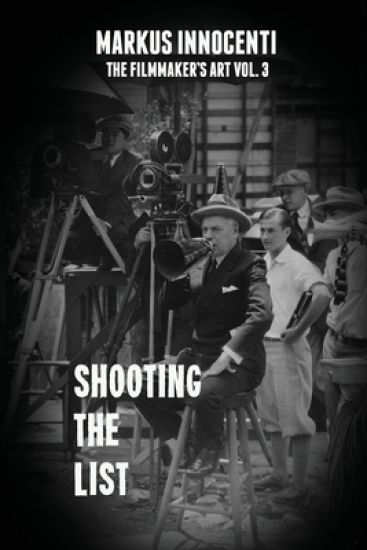
Shooting The List

Shooting The List

Markus Innocenti

Red Dog Logic
2020
nidottu
With the third book in The Filmmaker's Art series, Markus Innocenti takes a deep dive into Shot Listing - an often forgotten or dismissed aspect of the Director's craft. With digital advances replacing many traditional techniques, the author argues that creating an 'old-school' Shot List may still be the smartest thing a filmmaker can do in the final days before Principal Photography begins, No other volume in The Filmmaker's Art series covers a single subject so completely, or reveals in so much detail how a director thinks and prepares.
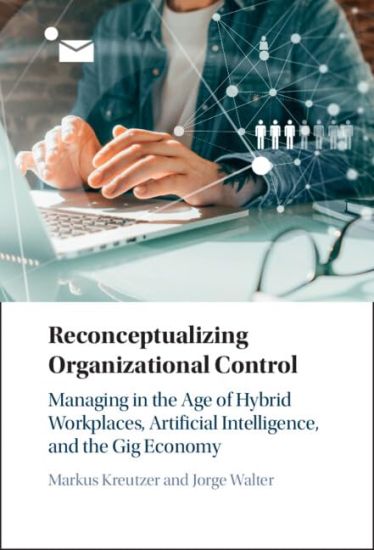
Reconceptualizing Organizational Control

Reconceptualizing Organizational Control

Markus Kreutzer; Jorge Walter

Cambridge University Press
2024
sidottu
Organizational control addresses the fundamental yet vexing managerial problem of aligning workers' capabilities, activities, and performance with organizational goals and aspirations. In recent years, the onset of COVID-19, combined with new developments in information and communication technologies, has brought about profound changes in organizations, and even in the nature of work itself. We have seen surges in virtual and remote work; progression of alternative work arrangements (especially in the gig economy); and an increasingly wide-spread reliance on algorithmic monitoring and control. These changes have exacerbated the tension between the pursuit of individual and organizational interests, exposing the limits of traditional approaches to organizational control, and questioning whether they still reflect contemporary organizational realities. Providing a comprehensive discussion of the multi-disciplinary approaches to organizational control, this book integrates the new and evolving trends in technology, organizations, and society into a reconceptualization of organizational control for twenty-first-century organizations.
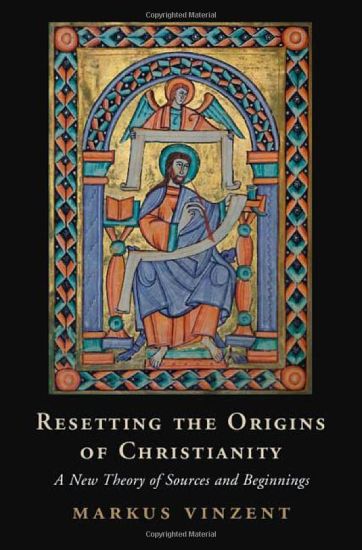
Resetting the Origins of Christianity

Resetting the Origins of Christianity

Markus Vinzent

Cambridge University Press
2023
sidottu
How do we know what we know about the origins of the Christian religion? Neither its founder, nor the Apostles, nor Paul left any written accounts of their movement. The witnesses' testimonies were transmitted via successive generations of copyists and historians, with the oldest surviving fragments dating to the second and third centuries - that is, to well after Jesus' death. In this innovative and important book, Markus Vinzent interrogates standard interpretations of Christian origins handed down over the centuries. He scrutinizes - in reverse order - the earliest recorded sources from the sixth to the second century, showing how the works of Greek and Latin writers reveal a good deal more about their own times and preoccupations than they do about early Christianity. In so doing, the author boldly challenges understandings of one of the most momentous social and religious movements in history, as well as its reception over time and place.
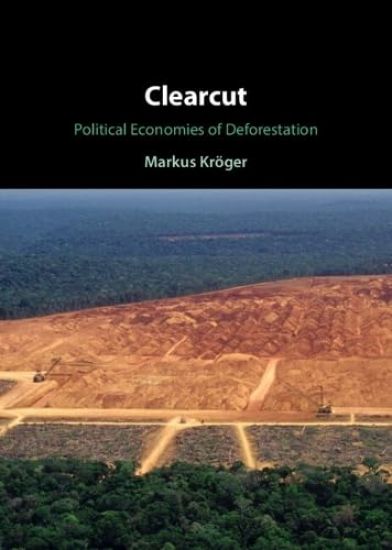
Clearcut

Clearcut

Markus Kröger

Cambridge University Press
2025
sidottu
Regionally dominant extractive sectors - including Brazilian cattle ranching, Amazonian narco-gold mining, and Finnish paper pulping - provide the foundation for this book's analysis of the range of motivations for deforestation. This framing allows for a discussion of the global political economy and ecology in general, and an in-depth examination of the varieties of extractivisms that define land and resource use. The chapters take an interdisciplinary approach, drawing on political ethnography and world systems analyses across the Global North-South divide. The book develops and applies a new theory that identifies regionally dominant political-economic systems as the driving forces behind deforestation. This book is essential reading for advanced students, researchers, and policy makers working in (de)forestation, environmental studies, environmental law, economics, conservation, climate change, and sustainability, leading to a deeper understanding of why our planet's forests are under threat. This title is also available as Open Access on Cambridge Core.
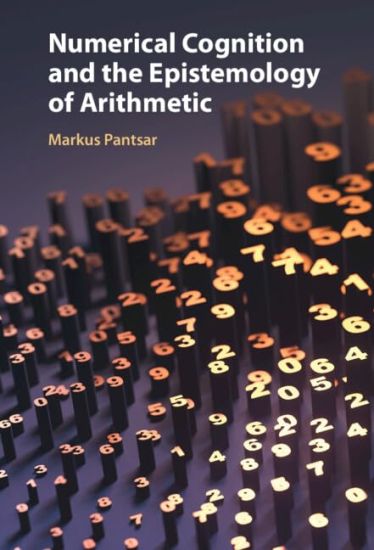
Numerical Cognition and the Epistemology of Arithmetic

Numerical Cognition and the Epistemology of Arithmetic

Markus Pantsar

Cambridge University Press
2024
sidottu
Arithmetic is one of the foundations of our educational systems, but what exactly is it? Numbers are everywhere in our modern societies, but what is our knowledge of numbers really about? This book provides a philosophical account of arithmetical knowledge that is based on the state-of-the-art empirical studies of numerical cognition. It explains how humans have developed arithmetic from humble origins to its modern status as an almost universally possessed knowledge and skill. Central to the account is the realisation that, while arithmetic is a human creation, the development of arithmetic is constrained by our evolutionarily developed cognitive architecture. Arithmetic is a sophisticated cultural development, but it is ultimately based on abilities with numerosities that we already possess as infants and share with many non-human animals. Therefore, arithmetic is not purely conventional, an arbitrary game akin to chess. Instead, arithmetic is deeply connected to our basic cognitive capacities.
Numerical Cognition and the Epistemology of Arithmetic

Numerical Cognition and the Epistemology of Arithmetic

Markus Pantsar

Cambridge University Press
2025
pokkari
Arithmetic is one of the foundations of our educational systems, but what exactly is it? Numbers are everywhere in our modern societies, but what is our knowledge of numbers really about? This book provides a philosophical account of arithmetical knowledge that is based on the state-of-the-art empirical studies of numerical cognition. It explains how humans have developed arithmetic from humble origins to its modern status as an almost universally possessed knowledge and skill. Central to the account is the realisation that, while arithmetic is a human creation, the development of arithmetic is constrained by our evolutionarily developed cognitive architecture. Arithmetic is a sophisticated cultural development, but it is ultimately based on abilities with numerosities that we already possess as infants and share with many non-human animals. Therefore, arithmetic is not purely conventional, an arbitrary game akin to chess. Instead, arithmetic is deeply connected to our basic cognitive capacities.
Power Laws in Astrophysics

Power Laws in Astrophysics

Markus Aschwanden

Cambridge University Press
2024
sidottu
Research applications of complex systems and nonlinear physics are rapidly expanding across various scientific disciplines. A common theme among them is the concept of “self-organized criticality systems”, which this volume presents in detail for observed astrophysical phenomena, such as solar flares, coronal mass ejections, solar energetic particles, solar wind, stellar flares, magnetospheric events, planetary systems, galactic and black-hole systems. The author explores fundamental questions: Why do power laws, the hallmarks of self-organized criticality, exist? What power law index is predicted for each astrophysical phenomenon? Which size distributions have universality? What can waiting time distributions tell us about random processes? This is the first monograph that tests comprehensively astrophysical observations of self-organized criticality systems for students, post-docs, and researchers. A highlight is a paradigm shift from microscopic concepts, such as the traditional cellular automaton algorithms, to macroscopic concepts formulated in terms of physical scaling laws.
Early Christianity and the Challenge of Writing History

Early Christianity and the Challenge of Writing History

Markus Vinzent

Cambridge University Press
2025
sidottu
What is the biggest challenge for the writing of early Christian history? As Markus Vinzent suggests in this study, it is not the interpretation of material evidence. Rather, it is the interpreter herself or himself. Unlike most historical studies, which aim at keeping to sources, facts, and close readings of texts as objectively as possible, Vinzent here offers a new approach: autobiographical historiography and personal methodological reflection, including test cases that advocate transparency, courage, and willingness to be challenged. He takes the reader on a journey through the notions of 'space', 'space in-between', 'the argument from silence', 'cognitive historiography' and 'evolution', 'time', 'scholarship', 'evidence/fact', 'tradition' and 'future'. Proposing a contemporary, post-postmodern reading of history that goes far beyond the field of Early Christianity, Vinzent's anachronological study interrogates traditional historical approaches and challenges both conservative and progressive scholars and students to contradict, engage with, and argue over established interpretations of events.
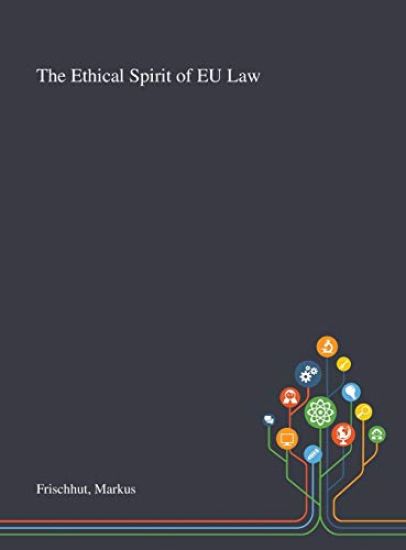
The Ethical Spirit of EU Law

The Ethical Spirit of EU Law

Markus Frischhut

Saint Philip Street Press
2020
pokkari
This open access book seeks to identify the ethical spirit of European Union (EU) law, a context in which we can observe a trend towards increasing references to the terms 'ethics' and 'morality'. This aspect is all the more important because EU law is now affecting more and more areas of national law, including such sensitive ones as the patentability of human life. Especially when unethical behaviour produces legal consequences, the frequent lack of clearly defined concepts remains a challenge, particularly against the background of the principle of legal certainty. This raises the question to which extent the content of these references is determined and whether it is possible to identify an ethical spirit of EU law. Answering that question, in turn, entails addressing the following questions: In references to ethics concerning EU law, can we identify references to a particular theory of practical philosophy at all; and, if so, to one or more normative ethical theories (deontology, consequentialism, or virtue ethics)? Further, should these non-legal concepts be imported in an unaltered way ("absolute approach"), or be adapted to the legal context ("relative approach")? This book explores the different layers of EU law (primary law, agreements, secondary law, and tertiary law), including the role of ethics in EU lawmaking and in EU case law, as well as the implementation of relevant EU directives in selected Member States. In addition to the above-mentioned normative philosophical lens, the book also analyzes the findings from the legal lens of EU integration, i.e., especially EU values, human rights and the cornerstone of human dignity. This work was published by Saint Philip Street Press pursuant to a Creative Commons license permitting commercial use. All rights not granted by the work's license are retained by the author or authors.
The Ethical Spirit of EU Law

The Ethical Spirit of EU Law

Markus Frischhut

Saint Philip Street Press
2020
sidottu
This open access book seeks to identify the ethical spirit of European Union (EU) law, a context in which we can observe a trend towards increasing references to the terms 'ethics' and 'morality'. This aspect is all the more important because EU law is now affecting more and more areas of national law, including such sensitive ones as the patentability of human life. Especially when unethical behaviour produces legal consequences, the frequent lack of clearly defined concepts remains a challenge, particularly against the background of the principle of legal certainty. This raises the question to which extent the content of these references is determined and whether it is possible to identify an ethical spirit of EU law. Answering that question, in turn, entails addressing the following questions: In references to ethics concerning EU law, can we identify references to a particular theory of practical philosophy at all; and, if so, to one or more normative ethical theories (deontology, consequentialism, or virtue ethics)? Further, should these non-legal concepts be imported in an unaltered way ("absolute approach"), or be adapted to the legal context ("relative approach")? This book explores the different layers of EU law (primary law, agreements, secondary law, and tertiary law), including the role of ethics in EU lawmaking and in EU case law, as well as the implementation of relevant EU directives in selected Member States. In addition to the above-mentioned normative philosophical lens, the book also analyzes the findings from the legal lens of EU integration, i.e., especially EU values, human rights and the cornerstone of human dignity. This work was published by Saint Philip Street Press pursuant to a Creative Commons license permitting commercial use. All rights not granted by the work's license are retained by the author or authors.
Studying Complex Interactions and Outcomes Through Qualitative Comparative Analysis
Studying Complex Interactions and Outcomes Through Qualitative Comparative Analysis: A Practical Guide to Comparative Case Studies and Ethnographic Data Analysis offers practical, methodological, and theoretically robust guidelines to systematically study the causalities, dynamics, and outcomes of complex social interactions in multiple source data sets. It demonstrates how to convert data from multisited ethnography of investment politics, mobilizations, and citizen struggles into a Qualitative Comparative Analysis (QCA). In this book, Markus Kröger focuses on how data collected primarily via multisited political ethnography, supplemented by other materials and verified by multiple forms of triangulation, can be systematically analyzed through QCA. The results of this QCA offer insight on how to study the political and economic outcomes in natural resource conflicts, across different contexts and political systems. This book applies the method in practice using examples from the author’s own research. With a focus on social movement studies, it shows how QCA can be used to analyze a multiple data source database, that includes results from multiple case studies.This book is a practical guide for researchers and students in social movement studies and other disciplines that produce ethnographic data from multiple sources on how to analyze complex databases through the QCA.
EU Trade Agreements and European Integration

EU Trade Agreements and European Integration

Markus Gastinger

TAYLOR FRANCIS LTD
2023
sidottu
EU Trade Agreements and European Integration studies 50 bilateral trade agreements negotiated by the European Commission from 1970–2008 and how they shaped European integration.The book argues that the Commission used these trade agreements, signed primarily with countries in Asia and Latin America, to advance European integration by ensuring that they became wider in scope and institutionally deeper by establishing ‘joint bodies’ – even in the face of resistance from member states in the Council of the European Union. Drawing upon principal–agent theory to explain Commission autonomy and Council control as well as extensive archival material and other sources across six in-depth case studies, it shows that the Commission primarily relied on asymmetric information to shape trade agreements in earlier negotiations. In later negotiations, the Commission harnessed its agendasetting power to submit agreements that the Council could only accept or reject. Overall, the book argues that these 50 trade agreements significantly impacted European integration by increasing the Commission’s external action capability, transforming it into a truly global political actor – one trade agreement at a time.This book will be of interest to scholars and students of European Union Studies and EU policy-making, practitioners involved in trade and external relations, and engaged citizens in Europe and abroad, particularly in India, which is prominently featured in the book.Introduction Chapter of this book is freely available as a downloadable Open Access PDF at http://www.taylorfrancis.com under a Creative Commons Attribution-Non Commercial-No Derivatives (CC-BY-NC-ND) 4.0 license.
EU Trade Agreements and European Integration

EU Trade Agreements and European Integration

Markus Gastinger

TAYLOR FRANCIS LTD
2025
nidottu
EU Trade Agreements and European Integration studies 50 bilateral trade agreements negotiated by the European Commission from 1970–2008 and how they shaped European integration.The book argues that the Commission used these trade agreements, signed primarily with countries in Asia and Latin America, to advance European integration by ensuring that they became wider in scope and institutionally deeper by establishing ‘joint bodies’ – even in the face of resistance from member states in the Council of the European Union. Drawing upon principal–agent theory to explain Commission autonomy and Council control as well as extensive archival material and other sources across six in-depth case studies, it shows that the Commission primarily relied on asymmetric information to shape trade agreements in earlier negotiations. In later negotiations, the Commission harnessed its agendasetting power to submit agreements that the Council could only accept or reject. Overall, the book argues that these 50 trade agreements significantly impacted European integration by increasing the Commission’s external action capability, transforming it into a truly global political actor – one trade agreement at a time.This book will be of interest to scholars and students of European Union Studies and EU policy-making, practitioners involved in trade and external relations, and engaged citizens in Europe and abroad, particularly in India, which is prominently featured in the book.Introduction Chapter of this book is freely available as a downloadable Open Access PDF at http://www.taylorfrancis.com under a Creative Commons Attribution-Non Commercial-No Derivatives (CC-BY-NC-ND) 4.0 license.
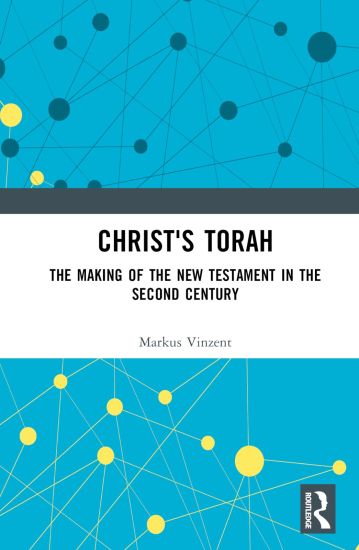
Christ's Torah

Christ's Torah

Markus Vinzent

TAYLOR FRANCIS LTD
2023
sidottu
This volume explores the creation of the collection now known as the New Testament. While it is generally accepted that it did not emerge as a collection prior to the late second century CE, a more controversial question is how it came to be.How did the writings that make up the New Testament - The Gospels, the so-called Praxapostolos (Acts and the canonical letters), the Epistles of Paul, and Revelation - make their way into the collection, and what do we know about their possible historical origins, and in turn the emergence of the New Testament itself? The New Testament as we know it first became recognisable in more detail in Irenaeus of Lyon towards the end of the second century CE. However, questions remain as to how and by whom was it redacted. Was it a slow, organic process in which texts written by different authors, members of different communities and in various places, grew together into one book? Or were certain writings compiled on the basis of an editorial decision by an individual or a group of editors, revised for this purpose and partly harmonised with each other? This volume sketches out the complex development of the New Testament, arguing that key second century scholars played an important role in the emergence of the canonical collection and putting forward the possible historical origins of the text’s composition.Christ’s Torah: The Making of the New Testament in the Second Century is of interest to students and scholars working on the New Testament and anyone with an interest in early Christianity more broadly.
Christ's Torah

Christ's Torah

Markus Vinzent

TAYLOR FRANCIS LTD
2025
nidottu
This volume explores the creation of the collection now known as the New Testament. While it is generally accepted that it did not emerge as a collection prior to the late second century CE, a more controversial question is how it came to be.How did the writings that make up the New Testament - The Gospels, the so-called Praxapostolos (Acts and the canonical letters), the Epistles of Paul, and Revelation - make their way into the collection, and what do we know about their possible historical origins, and in turn the emergence of the New Testament itself? The New Testament as we know it first became recognisable in more detail in Irenaeus of Lyon towards the end of the second century CE. However, questions remain as to how and by whom was it redacted. Was it a slow, organic process in which texts written by different authors, members of different communities and in various places, grew together into one book? Or were certain writings compiled on the basis of an editorial decision by an individual or a group of editors, revised for this purpose and partly harmonised with each other? This volume sketches out the complex development of the New Testament, arguing that key second century scholars played an important role in the emergence of the canonical collection and putting forward the possible historical origins of the text’s composition.Christ’s Torah: The Making of the New Testament in the Second Century is of interest to students and scholars working on the New Testament and anyone with an interest in early Christianity more broadly.
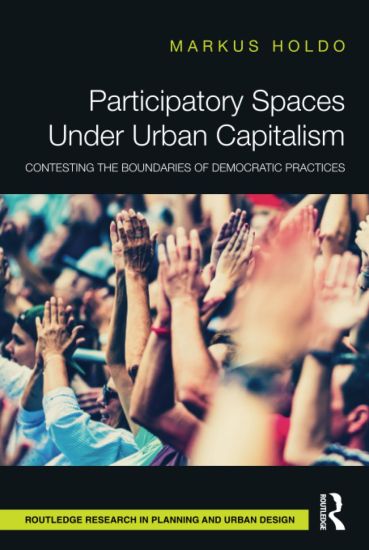
Participatory Spaces Under Urban Capitalism

Participatory Spaces Under Urban Capitalism

Markus Holdo

TAYLOR FRANCIS LTD
2023
sidottu
Can people use new participatory spaces to reclaim their rights as citizens and challenge structures of political power? This book carefully examines the constraints and possibilities for participatory governance under capitalism.To understand what is at stake in the politics of participation, we need to look beyond the values commonly associated with it. Citizens face a dilemma: should they participate, even if this helps to sustain an unjust system, or not participate, thereby turning down rare opportunities to make a difference? By examining the rationale behind democratic innovation and the reasons people have for getting involved, this book provides a theory of how citizens can use new democratic spaces to challenge political boundaries. Connecting numerous international case studies and presenting original research from Rosario, Argentina, this book offers a crucial corrective to previous research. What matters most is not the design of new models of participation nor is it the supposed radical imagination of political leaders. It is whether people use new spaces for participation to renegotiate what democracy means in practice.Bridging critical urban studies and democratic theory, this book will be of interest to researchers and students in the fields of democratic innovations, political economy and urban planning. It will also provide activists and practitioners of participatory democracy with important tools to expand spaces of grassroots democracy.The Open Access version of this book, available at http://www.taylorfrancis.com, has been made available under a CC BY Creative Commons Attribution (CC-BY) 4.0 International license.