

Kirjahaku
Etsi kirjoja tekijän nimen, kirjan nimen tai ISBN:n perusteella.
1000 tulosta hakusanalla Mayer



This deluxe storybook features two "Little Critter" stories in one book In the first story, Little Critter enjoys a day in the city with his mom. Then boys and girls ages 3 to 7 can flip the book over to read about Little Critter's very first camping trip with his dad.
Join Little Critter(r)as he learns why it s important to be thankful for what he has not to be upset about what hedoesn't. Since 1975, Mercer Mayer has been writing and illustrating stories about Little Critter(r)and the antics he stumbles into while growing up. Tommy Nelson is thrilled to bring this beloved brand to the Christian market with the Inspired Kids line of faith-based books featuring Little Critter. In"Being Thankful," Little Critter isn't getting"anything"he wants. Gator gets cool brand-new sneakers, while Little Critter is stuck with his boring blue ones. Tiger s dad has a boat but not Little Critter s dad. And even at the ice cream shop, Little Critter can t enjoy his chocolate ice cream cone because he would rather have a huge ice cream sundae instead. But on a trip to the farm, Grandma shows Little Critter why thankfulness is so important and helps make any situation seem so much happier. Based on Psalm 107:1," "this book will show children what gratitude is and why we should be thankful for all of the blessings God has given us. Features & Benefits: Little Critter(r)brand has humorously portrayed issues kids face for almost 40 yearsFaith-inspired message shows kids how to be thankful for the things they haveMore than 150 million Little Critter books sold"

A child describes the fun he and his grandfather have riding the train to the city, shopping for a new suit, going to a movie, eating at a restaurant, and riding home on the train


Urban Social Movements and the State
M Mayer
Wiley-Blackwell (an imprint of John Wiley Sons Ltd)
1993
nidottu



Music in the French Secular Theater, 1400-1550
Howard Mayer Brown
Harvard University Press
1963
sidottu

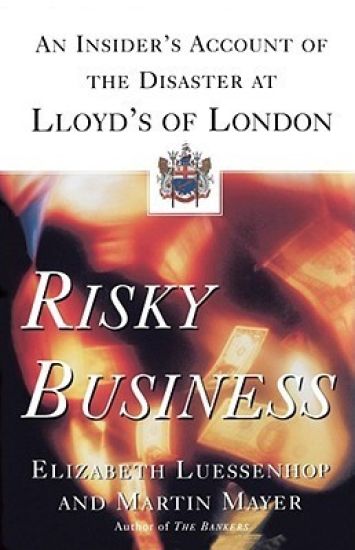
In this fascinating insider’s account, an American woman who became an investor alleges that irresponsibility, incompetence, greed, and fraud at Lloyd’s, the world’s most glamorous insurance enterprise, have caused the company to lose $12 billion in the last ten years. Lloyd’s of London is not simply an insurance company; it is a society comprising thirty thousand Names (roughly 10 percent of whom are Americans)—private individuals like Elizabeth Luessenhop who accepted the risk of unlimited liability and pledged all their wealth to backing the insurance policies written by Lloyd’s. The beauty was that the Names didn’t have to put up any money to receive their profit share. As long as the premium calculations were sound, everybody prospered. But the 1980s were bad years for Lloyd’s—and for the Names who backed its business. It was also a time when the Society of Names grew by 50 percent to cover the disastrous losses the company was beginning to incur. Risky Business, written with veteran financial writer Martin Mayer, is a detailed account of how the mismanagement of Lloyd’s has affected thousands of American investors who, like Luessenhop, sought low-risk, long-term security. Luessenhop and Mayer take us inside a unique business institution and show us that the ramifications of a possible Lloyd’s failure will be severe—and felt worldwide.
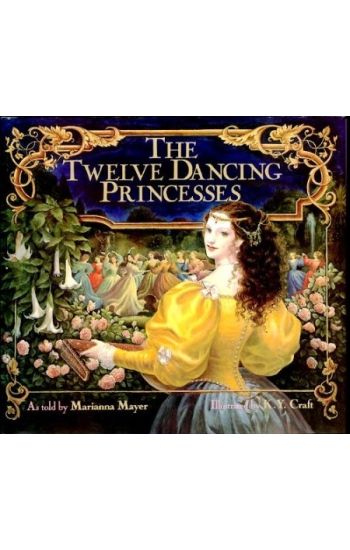
For generations, children have loved the enchanting story of the twelve beautiful princesses and the handsome young lad who solves the mystery of their tattered shoes.Now Marianna Mayer brings to life all the splendor and romance of this beloved classic, from the dazzling forests Of silver, gold, and diamonds to a twilight palace where the bewitched princesses dance to hypnotic music. And award-winning artist Kinuko Craft add, her own magic: a visual feast of exquisite, jewel-like paintings that sweep across the pages.Together, Mayer and Craft have created an unforgettable world that readers of all ages will want to return to again and again.

Sweet, lovely Vasilisa lives with her jealous stepmother and stepsisters on the edge of a dark forest inhabited by the evil witch Baba Yaga. One night the stepmother sends Vasilisa to visit Baba Yaga, an errand from which the gentle girl has little chance of returning alive. "An engaging text and accomplished paintings set this version apart....A stylized and classy offering."--School Library Journal.

Delete looks at the surprising phenomenon of perfect remembering in the digital age, and reveals why we must reintroduce our capacity to forget. Digital technology empowers us as never before, yet it has unforeseen consequences as well. Potentially humiliating content on Facebook is enshrined in cyberspace for future employers to see. Google remembers everything we've searched for and when. The digital realm remembers what is sometimes better forgotten, and this has profound implications for us all. In Delete, Viktor Mayer-Schonberger traces the important role that forgetting has played throughout human history, from the ability to make sound decisions unencumbered by the past to the possibility of second chances. The written word made it possible for humans to remember across generations and time, yet now digital technology and global networks are overriding our natural ability to forget--the past is ever present, ready to be called up at the click of a mouse. Mayer-Schonberger examines the technology that's facilitating the end of forgetting--digitization, cheap storage and easy retrieval, global access, and increasingly powerful software--and describes the dangers of everlasting digital memory, whether it's outdated information taken out of context or compromising photos the Web won't let us forget. He explains why information privacy rights and other fixes can't help us, and proposes an ingeniously simple solution--expiration dates on information--that may. Delete is an eye-opening book that will help us remember how to forget in the digital age.

Still life celebrates the commonplace. But in these simple objects we invest meaning--meaning that can be culturally specific but also universal. From the seventeenth century onward in Europe, a shared visual language developed around the practice of still life painting. In early nineteenth century America, artists adapted established formats to suit new circumstances. Drawing examples from three American and one French museum, this catalogue traces the development of American still life painting and its European precedents. American Enounters: The Simple Pleasures of Still Life is the final installment of the series, a collaborative project between Crystal Bridges Museum of American Art, Musee du Louvre, the High Museum of Art, and the Terra Foundation for American Art investigating four key genres in nineteenth century American art: landscape, genre, portraiture, and still life.