Kirjojen hintavertailu. Mukana 12 249 270 kirjaa ja 12 kauppaa.

Kirjahaku

Etsi kirjoja tekijän nimen, kirjan nimen tai ISBN:n perusteella.

1000 tulosta hakusanalla Michael A. Cook

Solid State and Quantum Theory for Optoelectronics
While applications rapidly change one to the next in our commercialized world, fundamental principles behind those applications remain constant. So if one understands those principles well enough and has ample experience in applying them, he or she will be able to develop a capacity for reaching results via conceptual thinking rather than having to always rely on models to test various conditions. In Solid State and Quantum Theory for Optoelectronics, Michael Parker provides a general conceptual framework for matter that leads to the matter-light interaction explored in the author’s Physics of Optoelectronics (CRC Press). Instead of overburdening readers with the definition–theorem– proof format often expected in mathematics texts, this book instructs readers through the development of conceptual pictures. Employing a proven pedagogic approach, as rigorous as it is intuitive, Professor Parker – Provides several lead-ins to the quantum theory including a brief review of Lagrange and Hamilton’s approach to classical mechanics and the fundamental quantum link with Hilbert space Demonstrates the Schrödinger wave equation from the Feynman path integral Discusses standard topics such as the quantum well, harmonic oscillator, representations, perturbation theory, and spin Expands discussion from the density operator and its applications to quantum computing and teleportation Provides the concepts for ensembles and microstates in detail with emphasis on the derivation of particle population distributions across energy levelsProfessors Parker includes problems to help readers understand and internalize the material. But just as important, the working-through of these problems will help readers develop the sort of approach that, instead of wholly relying on models, enables them to extrapolate solutions guided by informed intuition developed over the course of formal study and laboratory experiment. It is the kind of conceptual thinking that will allow readers to move with deeper understanding from optical applications to more theoretical topics in physics.
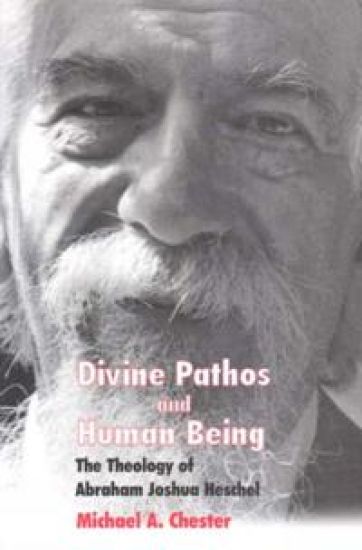
Divine Pathos and Human Being

Divine Pathos and Human Being

Michael A. Chester

Vallentine Mitchell Co Ltd
2005
sidottu
Abraham Joshua Heschel, a Jewish refugee from Nazism, became a significant theologian and social activist in the USA, though relatively unknown in the UK. The first part of this book contains a brief biography, which puts his work into context, personally, culturally and historically. His style is examined and he is located as a theologian, with an examination of his ""depth theology"". Part Two is an examination of ""divine pathos"", its influence on Christian theologians, its major critics, the theological anthropology that relies on it and interfaith dialogue made possible by it.
Cartels and Economic Collusion

Cartels and Economic Collusion

Michael A. Utton

Edward Elgar Publishing Ltd
2012
nidottu
Adam Smith warned of the prevalence of corporate conspiracies more than two hundred years ago. Since then, interest in cartels has sometimes intensified (during the Great Depression, for example) and sometimes diminished, but the need for control has always remained on the antitrust agenda. This well-documented book reviews the economic case against corporate collusion, as well as the arguments made for a more permissive attitude. A survey of recent empirical research reveals not only the prevalence of a wide range of international cartels but also the size of the inefficiencies and costs that they impose on customers and consumers. The antitrust reaction has therefore intensified with greatly increased fines being imposed by the US, the EU and other authorities. At the same time, they have developed sophisticated leniency polices with the aim of destabilizing the illegal conspiracies. After reviewing these measures, the author concludes with the hope that this toughened approach is not modified or reversed during periods of recession. This insightful book will appeal to undergraduates in economics, business and law studying antitrust and law and economics.
The Development of Young Children's Social-Cognitive Skills

The Development of Young Children's Social-Cognitive Skills

Michael A. Forrester

Psychology Press Ltd
1995
nidottu
Understanding how young children begin to make sense out of the social world has become a major concern within developmental psychology. Over the last 25 years research in this area has raised a number of questions which mirror the confluence of interests from cognitive-developmental and social-developmental psychology. The aims of this book are to consider critically the major themes and findings within this growing social-cognitive developmental research, and to present a new theoretical framework for investigating children's social cognitive skills. Beyond being the first major review of the literature in this area, this synopsis articulates why contemporary theoretical ideas (e.g. information processing, Piagetian and social interactionist) are unlikely ever to provide the conceptual basis for understanding children's participative skills. Building upon ideas both within and beyond mainstream developmental psychology, the "eco-structural" approach advocated seeks to draw together the advantages of the ecological approach in perceptual psychology with the considerable insights of the conversational analysts, child language researchers and Goffman's analysis of social interaction. This convergence is centred around the dynamic and participatory realities of engaging in conversational contexts, the locus for acquiring social cognitive skills. The framework provides the building blocks for models of developmental social cognition which can accommodate dynamic aspects of children's conversational skills. This book then is a review of an important area of developmental psychology, a new perspective on how we can study children's participatory social-cognitive skills and a summary of supporting research for the framework advocated.
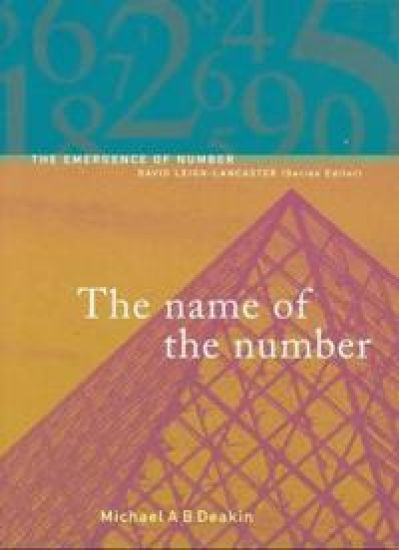
The Name of the Number

The Name of the Number

Michael A B Deakin

Australian Council Educational Research (ACER)
2007
nidottu
Looks at the history and anthropology of the expression of numbers throughout the ages and across different cultures. It deals with the different ways that number representation has been structured, the history and prehistory of number concepts, and the evolution of numerical representation (in word and symbol). These themes are explored through the various expressions of number-concepts in different cultures in different places and times.
Finite Perfection

Finite Perfection

Michael A. Weinstein

University of Massachusetts Press
1985
nidottu
A philosophical essay on personal virtue of self-control, artistry, and love. A contemporary account of how virtue can have significance in a world that has lost the certainty of common and collective meanings.
In Search of the Person

In Search of the Person

Michael A. Arbib

University of Massachusetts Press
1985
nidottu
For twenty-five years Michael Arbib has been studying the workings of the human brain and developing new approaches to the design of intelligent machines. These concerns have often led him to ponder philosophical questions about the nature of mind and knowledge. In this book, Arbib offers a stimulating, speculative discussion of cognitive science and its relation to larger philosophical and social issues. Arbib proposes a theory of mental schemas to explain how the individual brain represents the world around it. He builds on Piaget's studies of how children learn and on his own work in brain theory and artificial intelligence to show how the concept of schemas an be used to link cognitive science to the study of persons in society. He then employs this schema theory as a way of looking at various constructions of reality, including those of Chomsky, Freud, Marx, and Habermas. In the final chapter, he addresses the question of human freedom and suggests a means of avoiding the apparent limitations of mechanistic explanations for human mental processes.
Yellowcake Towns

Yellowcake Towns

Michael A. Amundson

University Press of Colorado
2004
nidottu
Michael Amundson presents a detailed analysis of the four mining communities at the hub of the twentieth-century uranium booms: Moab, Utah; Grants, New Mexico; Uravan, Colorado; and Jeffrey City, Wyoming. He follows the ups and downs of these "Yellowcake Towns" from uranium's origins as the crucial element in atomic bombs and the 1950s boom to its use in nuclear power plants, the Three Mile Island accident, and the 1980s bust. Yellowcake Towns provides a look at the supply side of the Atomic Age and serves as an important contribution to the growing bibliography of atomic history.
The Supreme Court and the Environment
The Supreme Court and the Environment discusses the body of federal statutory law amassed to fight pollution and conserve natural resources that began with the enactment of the National Environmental Policy Act of 1969. Instead of taking the more traditional route of listing court decisions, The Supreme Court and the Environment puts the actual cases in a subsidiary position, as part of a larger set of documents paired with incisive introductions that illustrate the fascinating and sometimes surprising give-and-take with Congress, federal administrative agencies, state and local governments, environmental organizations, and private companies and industry trade groups that have helped define modern environmental policy. ? From the author: When one views the body of modern environmental law—the decisions and the other key documents—the picture that emerges is not one of Supreme Court dominance. In this legal drama, the justices have most often played supporting roles. While we can find the occasional, memorable soliloquy in a Supreme Court majority, concurring, or dissenting opinion, the leading men and women are more likely found in Congress, administrative agencies, state and local legislatures, nongovernmental organizations, private industry, and state and lower federal courts. ? What one learns from studying the Supreme Court’s environmental law output is that the justices for the most part seem more concerned about more general issues of deference to administrative agencies, the rules of statutory interpretation, the role of legislative history, the requisites for standing, and the nature of the Takings Clause than the narrow issues of entitlement to a clean environment, the notion of an environmental ethic that underlies written statutes and regulations, and concerns about ecological diversity and other environmental values. When we widen the lens, however, and focus on the other documents that make up essential parts of the story of the Supreme Court and the environment—complaints by litigants, briefs by parties and by friends of the court, oral argument transcripts, the occasional stirring dissent, lower court decisions, presidential signing statements and press conference transcripts, media reports and editorials, and legislative responses to high court decisions—we discover what is often missing in the body of Supreme Court decisions. --Michael Allan Wolf
Dirrs Encyclopedia of Trees & Shrubs

Dirrs Encyclopedia of Trees & Shrubs

Michael A. Dirr

Timber Press
2003
sidottu
The text reflects the passions of the author and gives full details of the plants, from the latest nomenclatural changes to revisionist thinking on the ever-expanding limits of cold hardiness. Mike Dirr is a legend in the horticultural world, widely acknowledged as a leading expert on trees and shrubs for landscapes. Add to that more than 3500 color photographs, and indispensable backmatter lists for choosing exactly the right plant for the right purpose, and you have an unsurpassed resource for tree and shrub identification and selection, one that will be embraced by garden designers, landscape architects, urban foresters, park managers, nursery professionals---anyone who values hardiness, disease resistance, and beauty in their woody plants.
Dealers of Lightning: Xerox Parc and the Dawn of the Computer Age
In the bestselling tradition of The Soul of a New Machine, Dealers of Lightning is a fascinating journey of intellectual creation. In the 1970s and '80s, Xerox Corporation brought together a brain-trust of engineering geniuses, a group of computer eccentrics dubbed PARC. This brilliant group created several monumental innovations that triggered a technological revolution, including the first personal computer, the laser printer, and the graphical interface (one of the main precursors of the Internet), only to see these breakthroughs rejected by the corporation. Yet, instead of giving up, these determined inventors turned their ideas into empires that radically altered contemporary life and changed the world.Based on extensive interviews with the scientists, engineers, administrators, and executives who lived the story, this riveting chronicle details PARC's humble beginnings through its triumph as a hothouse for ideas, and shows why Xerox was never able to grasp, and ultimately exploit, the cutting-edge innovations PARC delivered. Dealers of Lightning offers an unprecedented look at the ideas, the inventions, and the individuals that propelled Xerox PARC to the frontier of technohistoiy--and the corporate machinations that almost prevented it from achieving greatness.